Ships of the Trade
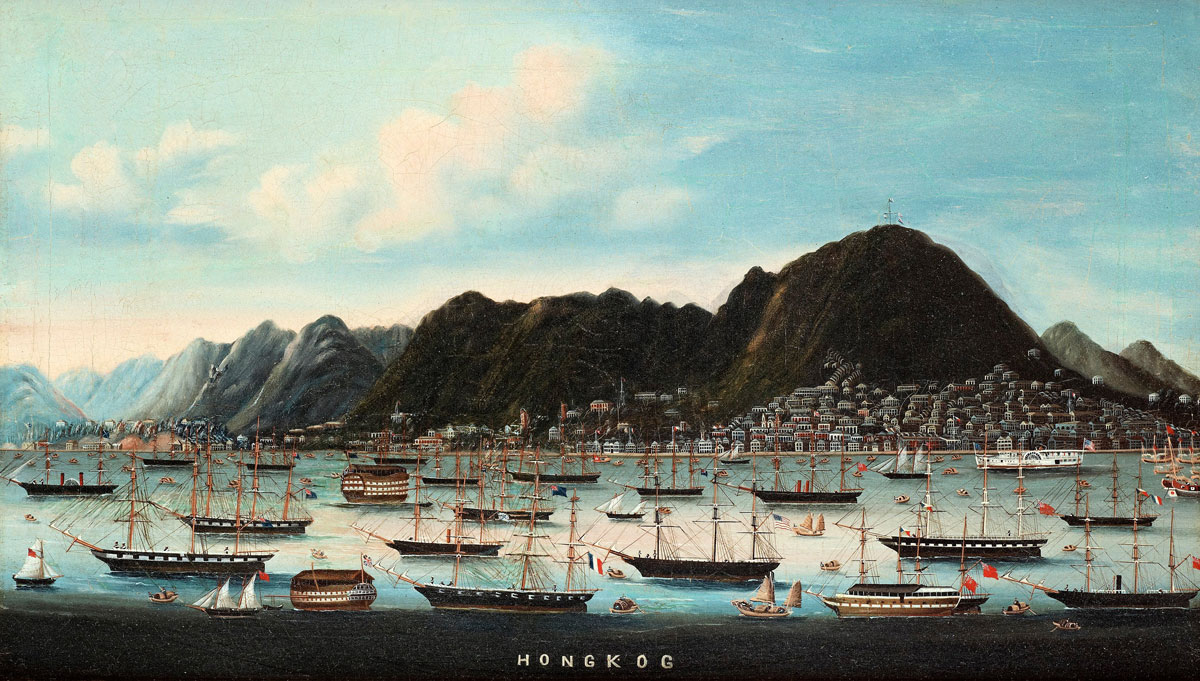
Three centuries of trade in Canton would not have been possible without the ships that carried goods from one stop to the next. A ship might have crossed an ocean to get there, yet still needed a flat-bottomed river craft to carry its cargo the last few miles up the shallow waters to the factories in Canton. Over time the technology evolved, with clipper ships better able to work the trade winds and monsoons, and steamships eventually eliminating the need to rely on them at all. The story of the Canton trade is one of people, silver and goods, but the vessels that carried it all across oceans and up shallow rivers are just as much a part of that history.
River and Coastal Craft
When Lord Macartney arrived in China in 1793 as the head of Britain's first formal embassy to the Qing court, he described the river at Canton as "covered with boats and vessels of various sorts and sizes, all, even the very smallest, constantly and thickly inhabited."
Junks
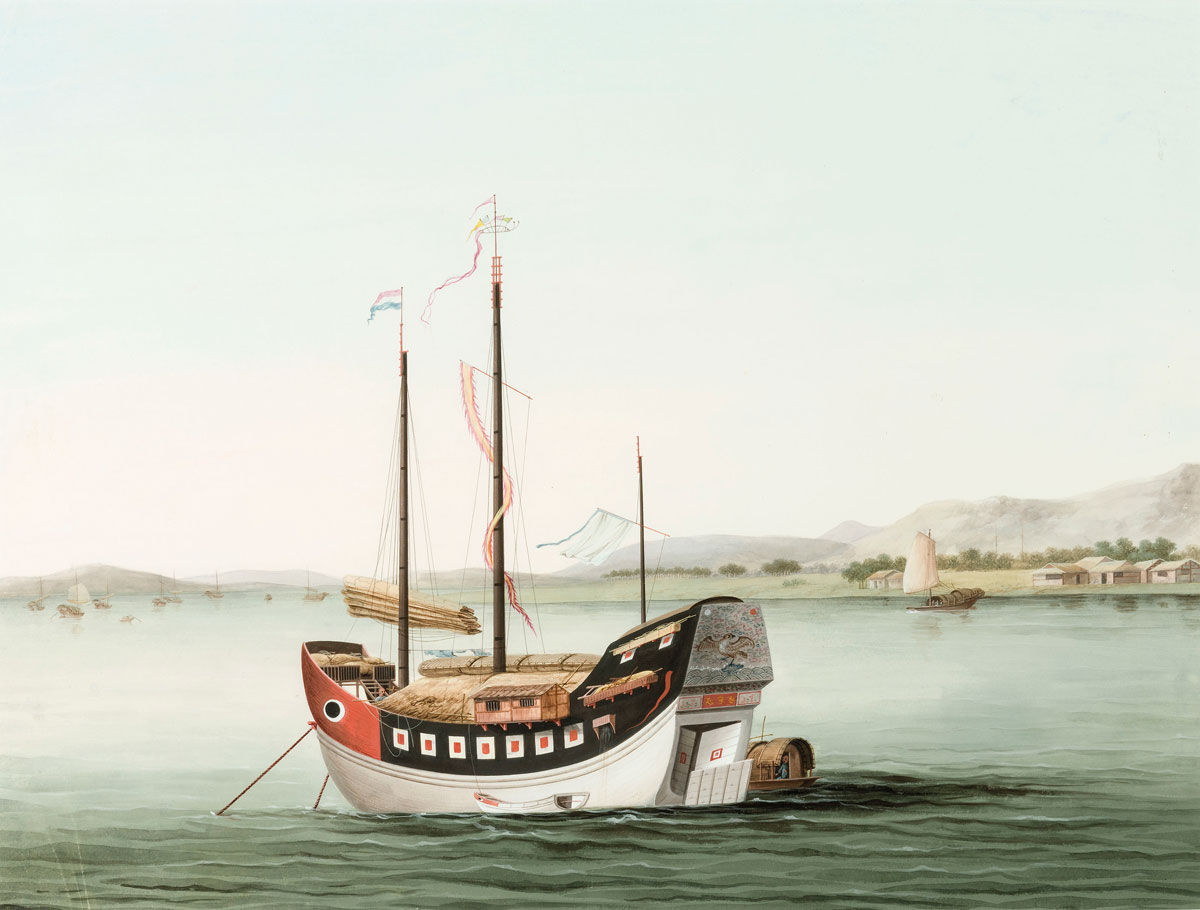
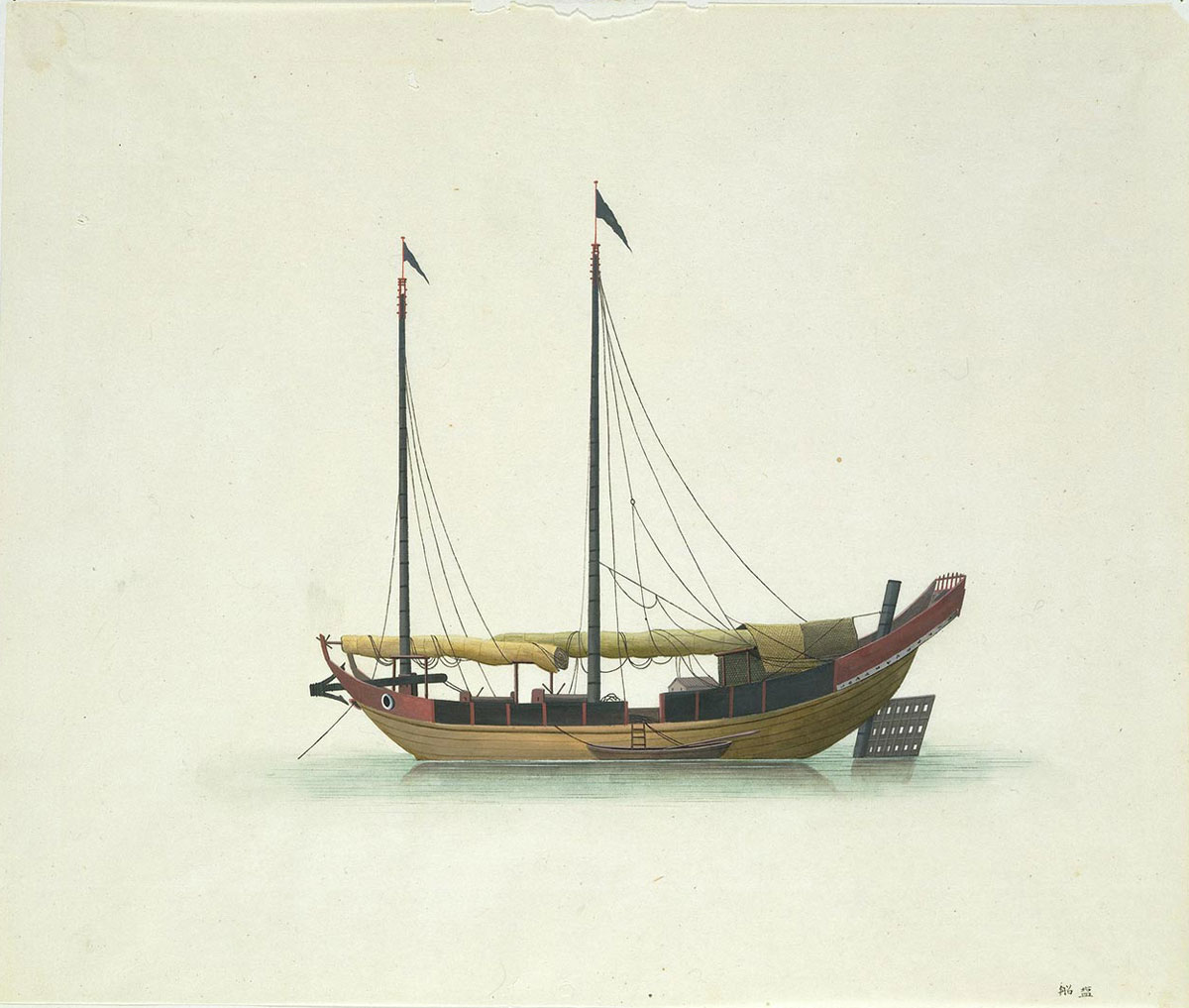
The junk was the workhorse of Chinese maritime commerce, and no single vessel type dominated the Pearl River more completely. Designs varied considerably by purpose and region: the three-masted sea-going junk, typically built of ironwood, carried bulk trade goods along coastal and regional routes, while the smaller salt junk plied fixed inland routes under imperial license, its movements regulated by the Qing salt monopoly. Both shared the characteristic battened lug sail, flat-bottomed hull, and decorated stern panel that Western observers came to associate with Chinese river traffic.
Chop Boat (西瓜扁)
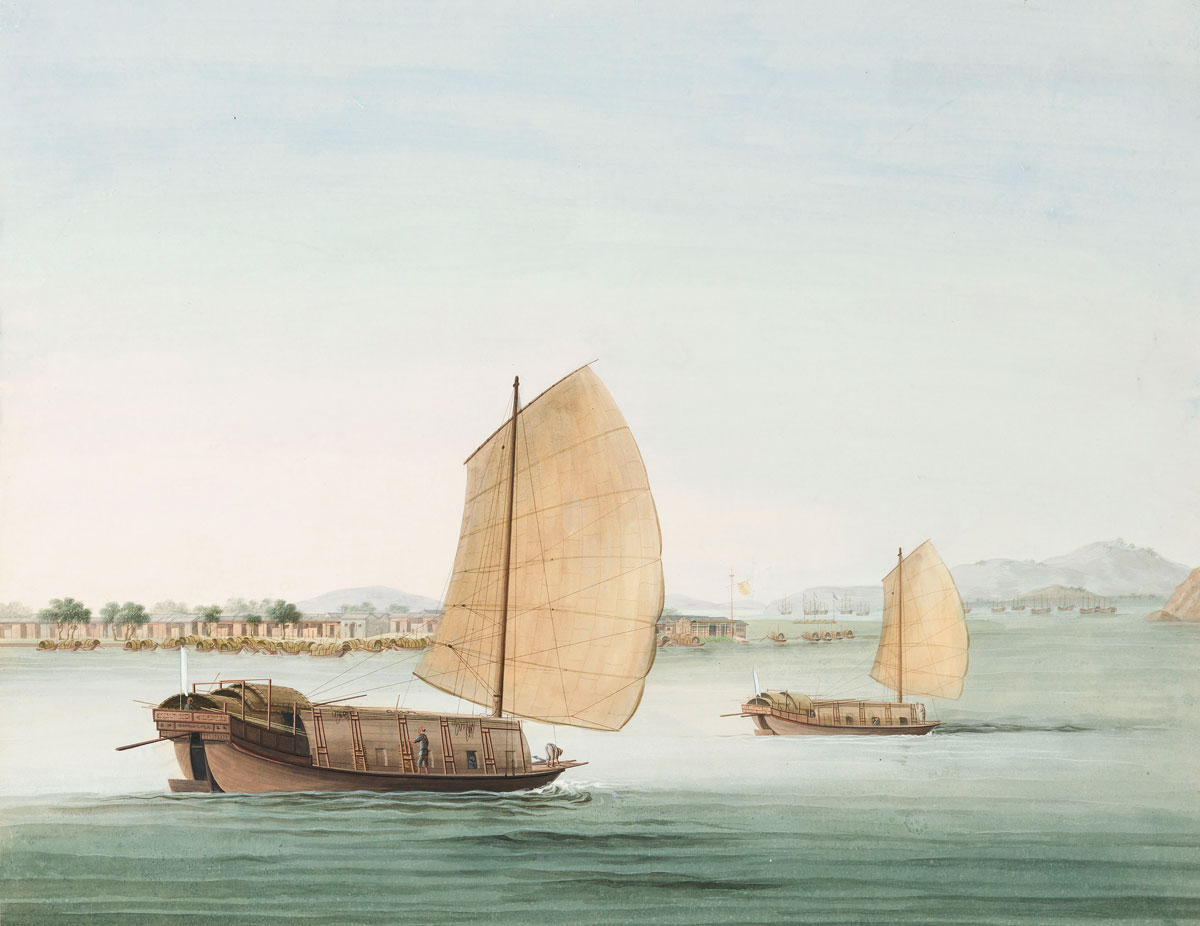
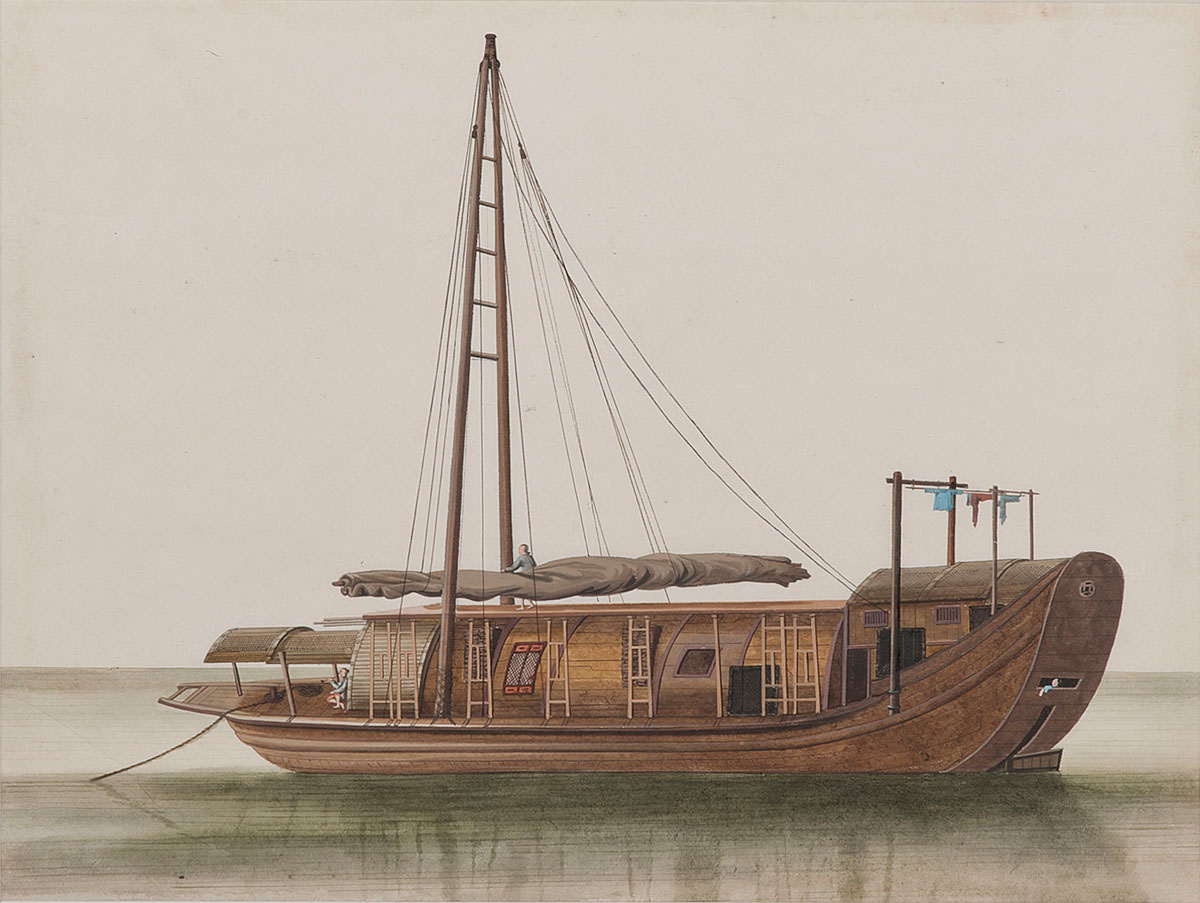
The chop boat took its name from the official customs stamp, or chop, that authorized the movement of cleared cargo along the Pearl River between Whampoa and the Thirteen Factories. Its rounded, melon-shaped hull, which gave it the Chinese name 西瓜扁 or "watermelon flat-boat," was distinctive enough that contemporary artists depicted it as its own vessel category within the broader river traffic. These boats were typically operated by Dan boat families, parents and children working together, for whom the licensed cargo trade represented a recognized economic position within the Canton System.
Sampans (三板)
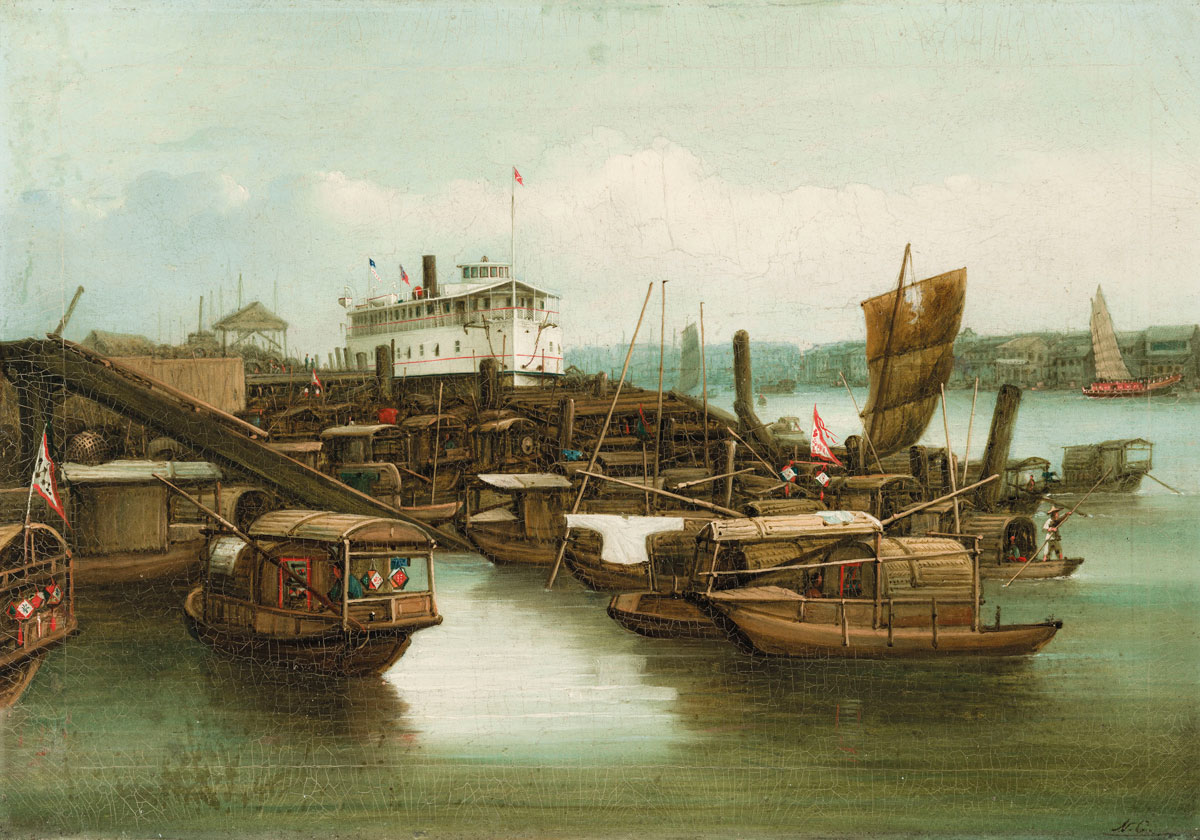
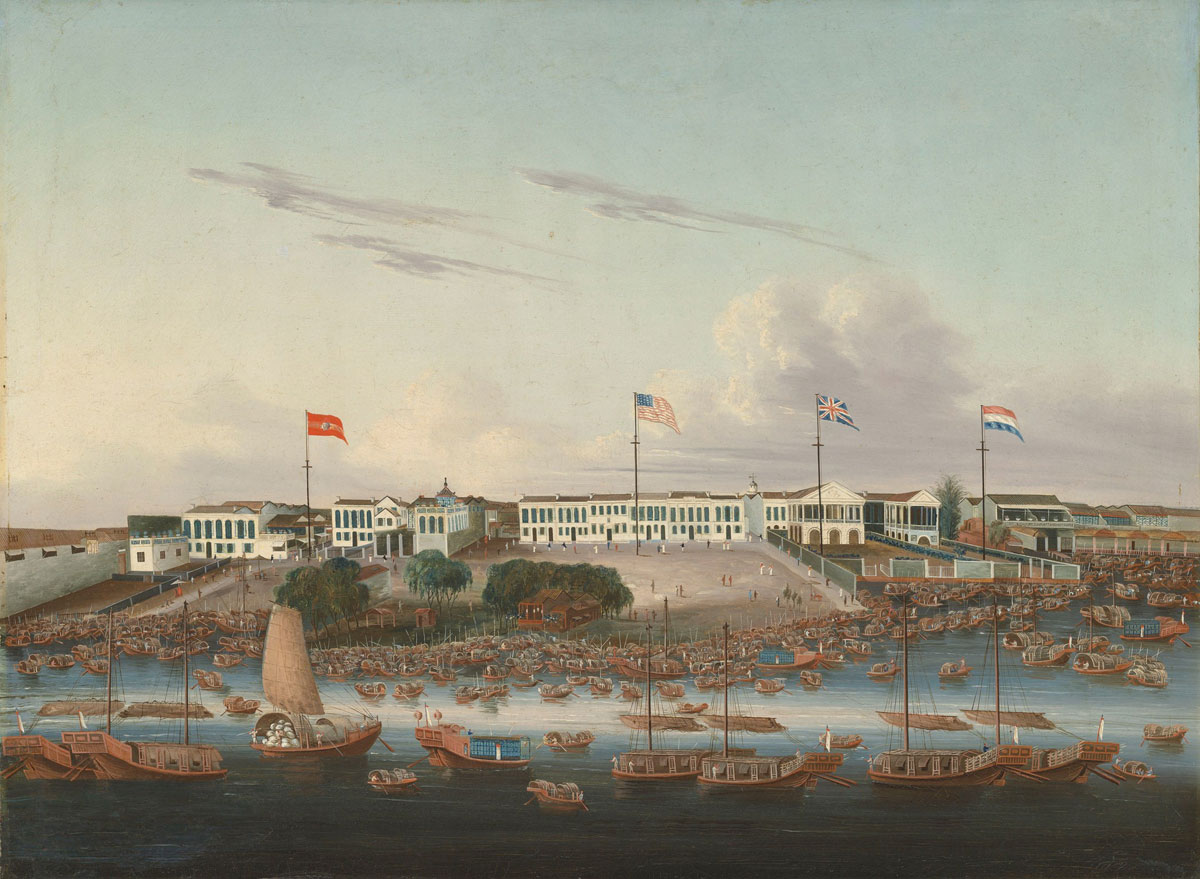
The sampan was the most numerous vessel on the Pearl River by a considerable margin, serving simultaneously as taxi, supply boat, laundry service, message carrier, and permanent dwelling for the Dan boat population. Where the chop boat handled officially documented cargo, the sampan handled everything else the trade required: ferrying supercargoes and compradors between ships and shore, moving silver between the factories and Whampoa, and delivering provisions to vessels at anchor. Contemporary accounts describe the factory waterfront as so densely packed with sampans that the water was scarcely visible beneath them. Interestingly, sampans were apparently not interesting enough as a standalone subject, but often painted into water scenes, as seen above.
Fast Crab Boat (快蟹)
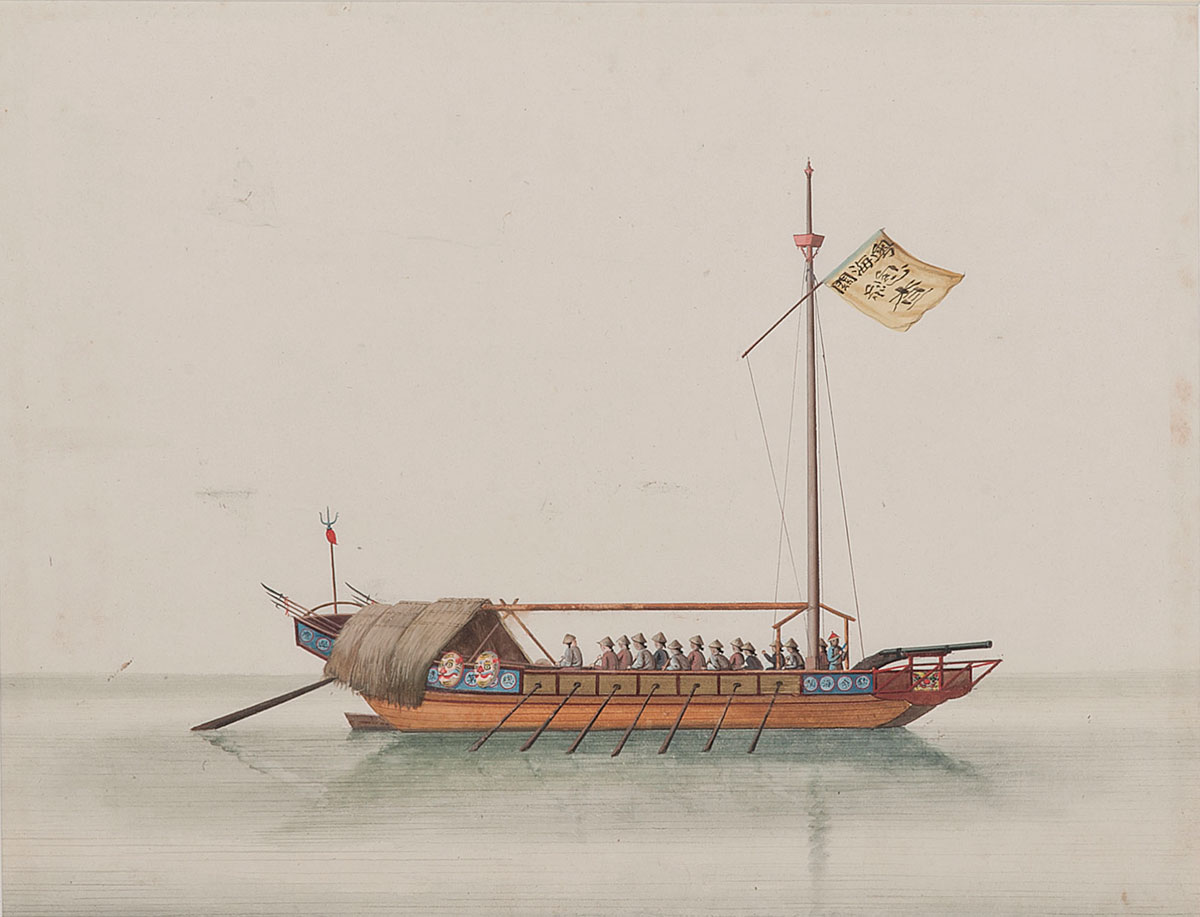
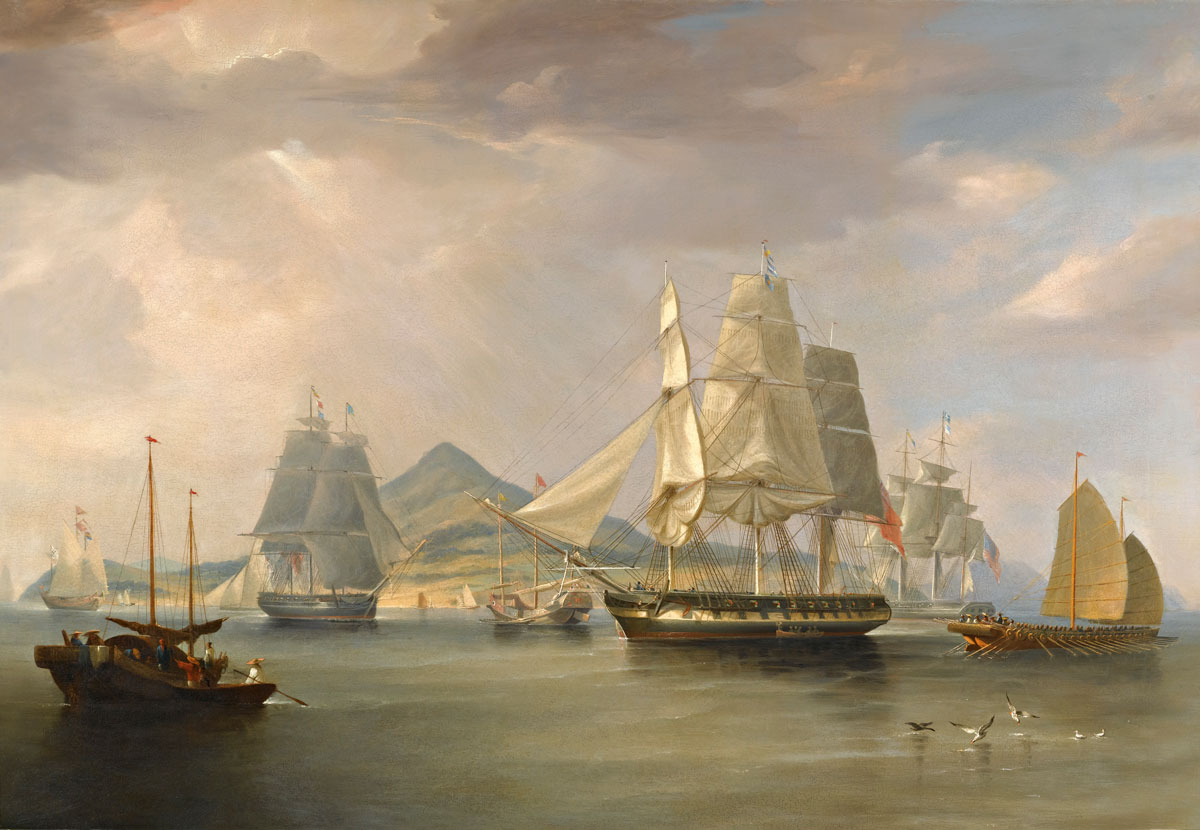
The fast crab boat was built for one purpose: speed. Its long, low hull carried a disciplined row of oarsmen, typically fifteen or more, whose synchronized strokes gave the vessel a pace no sailing junk could match in the shallow, variable-wind conditions of the Pearl River Delta. Originally associated with smuggling operations along the outer coast, the type became inseparable from the opium trade of the 1820s and 1830s, when fleets of armed fast crabs ferried contraband from the outer anchorage at Lintin Island into the river under cover of darkness, accelerating the pressures that would eventually bring the Canton System to an end.
Hong Merchant's Boat (花舫)
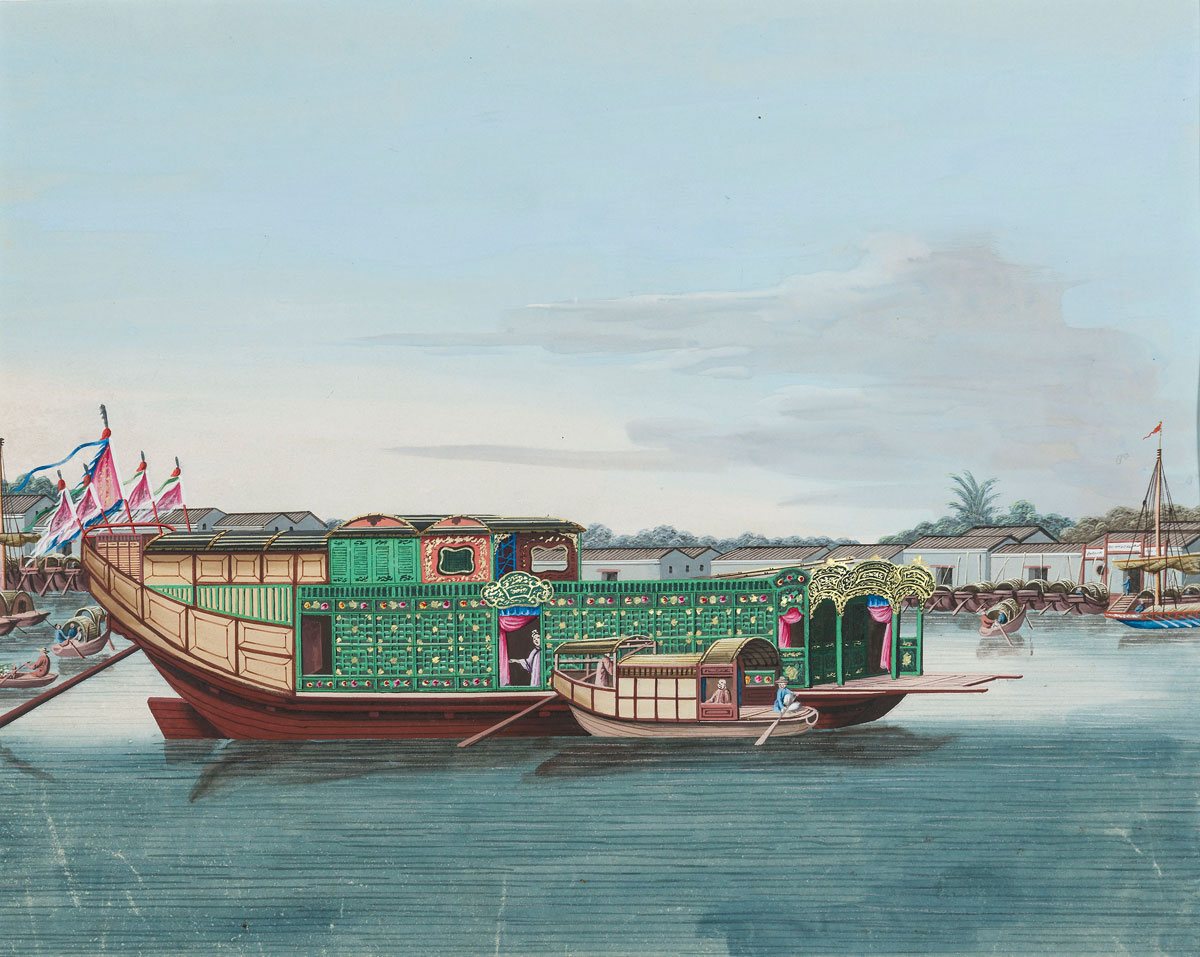
The hong merchants who controlled legal trade under the Canton System were among the wealthiest men of the early nineteenth century, and their personal river vessels reflected that standing. This painting by the Canton School artist Tingqua depicts a hong merchant's boat (with sampan in foreground), its cabin entirely sheathed in carved and gilded lacquerwork, silk curtains visible at the windows, pennants flying from the bow: a floating expression of the fortune that the China trade generated for those positioned at its center. For the Western merchants confined to their factory buildings on the shore, vessels like this one were a vivid reminder of where the real power in the Canton System resided.
Foreign Trading Vessels
The ships that carried the China trade were ocean vessels built for months at sea, crossing vast stretches of open water with holds packed with Spanish silver, Indian opium, and American ginseng on the outward passage, and returning deep-laden with tea, silk, and porcelain. The distances involved were staggering: a round voyage from London or Boston to Canton and back covered twenty thousand miles or more, and the merchants who financed these voyages were wagering fortunes on weather, winds, and the health of a crew for a year or longer at a stretch.
Barques and Brigs
The heavy square-rigged merchant vessels that dominated the early Canton trade were built for capacity and endurance rather than speed, capable of carrying hundreds of tons of tea, silk, and porcelain across the Indian Ocean and around the Cape of Good Hope. The largest of these, the East Indiamen operated by the British, Dutch, Swedish, and Danish companies, were formidable ships, heavily armed and crewed, more closely resembling warships than the merchant vessels that followed them. Smaller brigs and brigantines served the same routes at a reduced scale, particularly among the American merchants who began arriving at Whampoa after 1784 without the backing of a chartered company and needed vessels their smaller trading houses could afford to outfit.
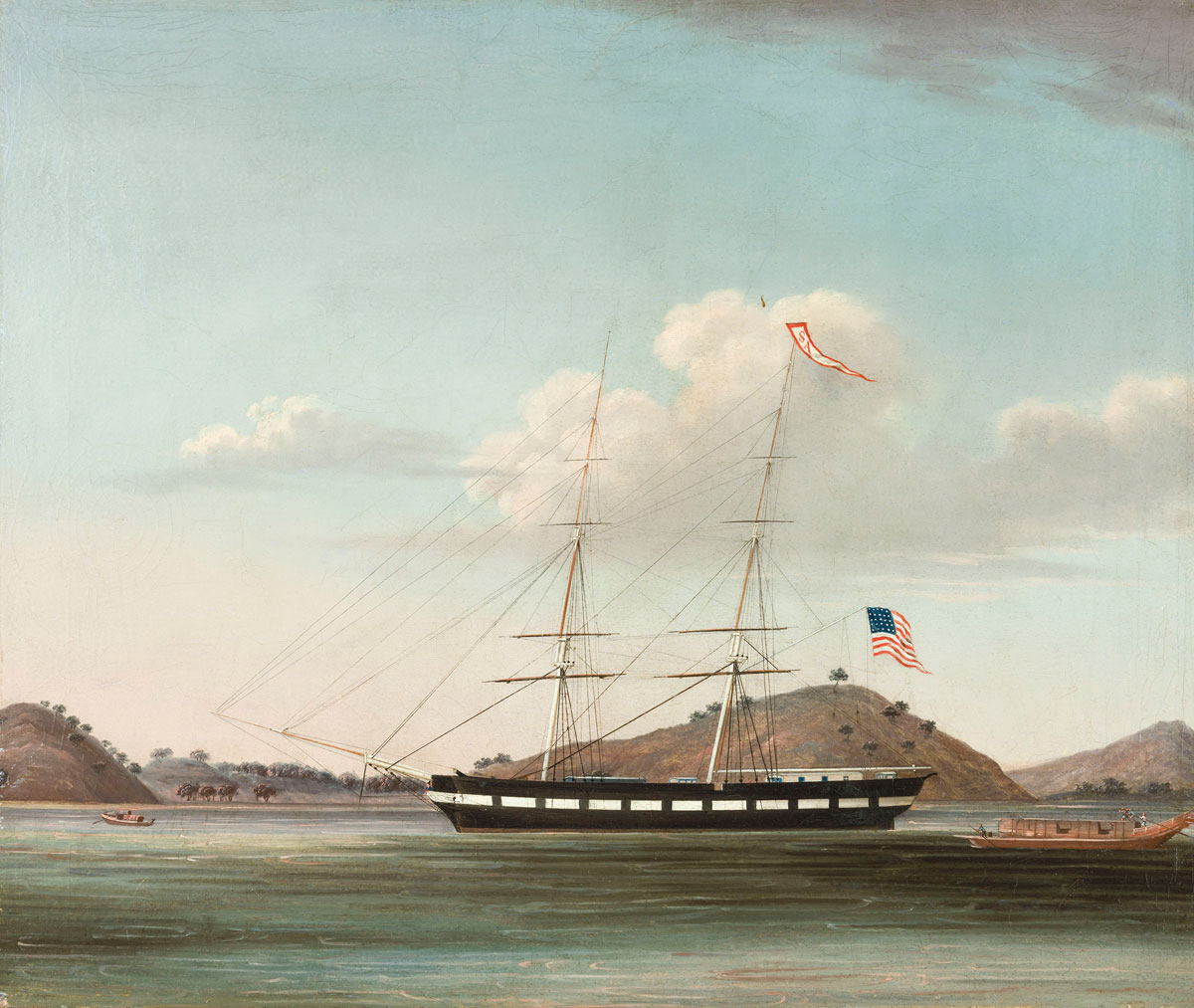
Built in East Boston in 1843 by Samuel Hall for Russell & Co., the Antelope was designed from the keel up for speed under the command of Philip Dumaresq, regarded as Boston's most capable shipmaster, and spent her entire career running opium from Bombay to Canton before being dismasted in a typhoon in 1848, rerigged as a bark, and wrecked on a reef near Wusong in 1852.
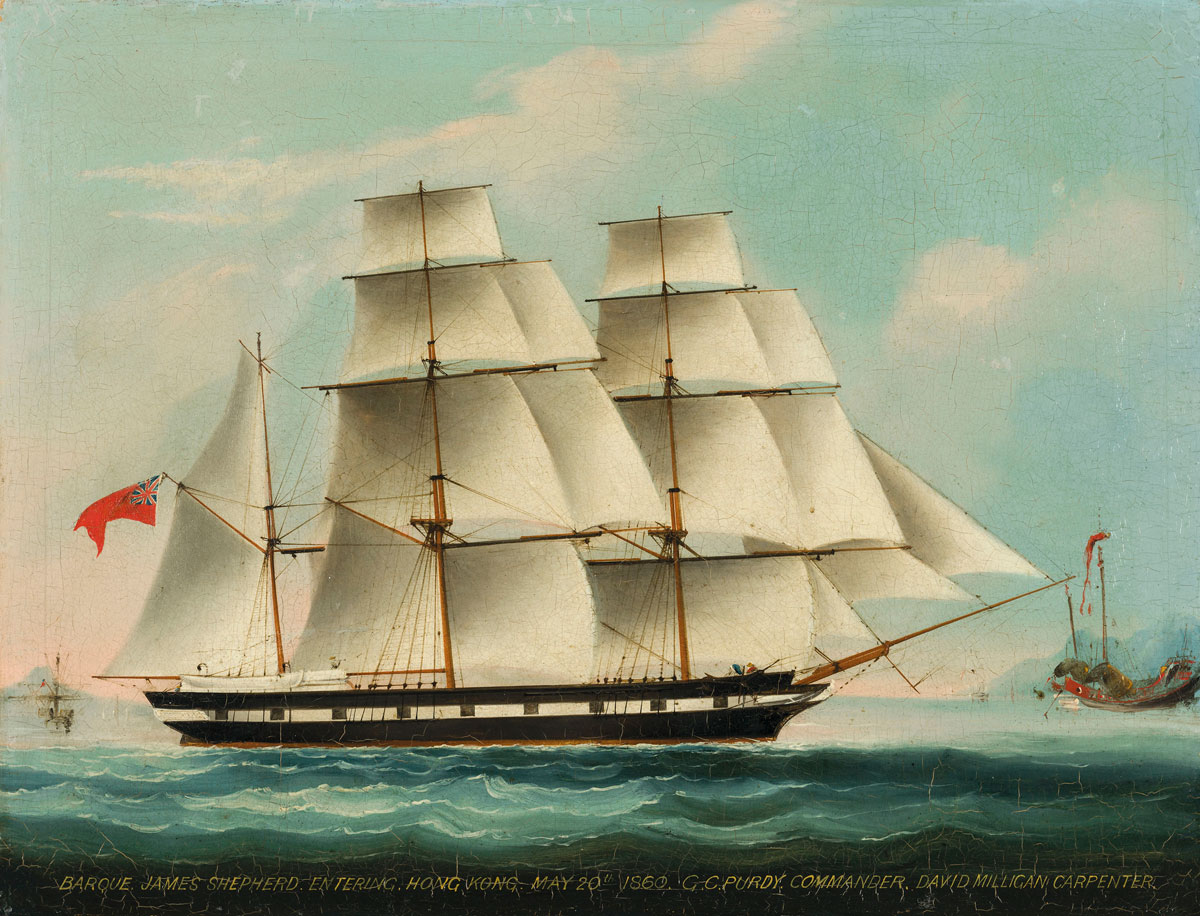
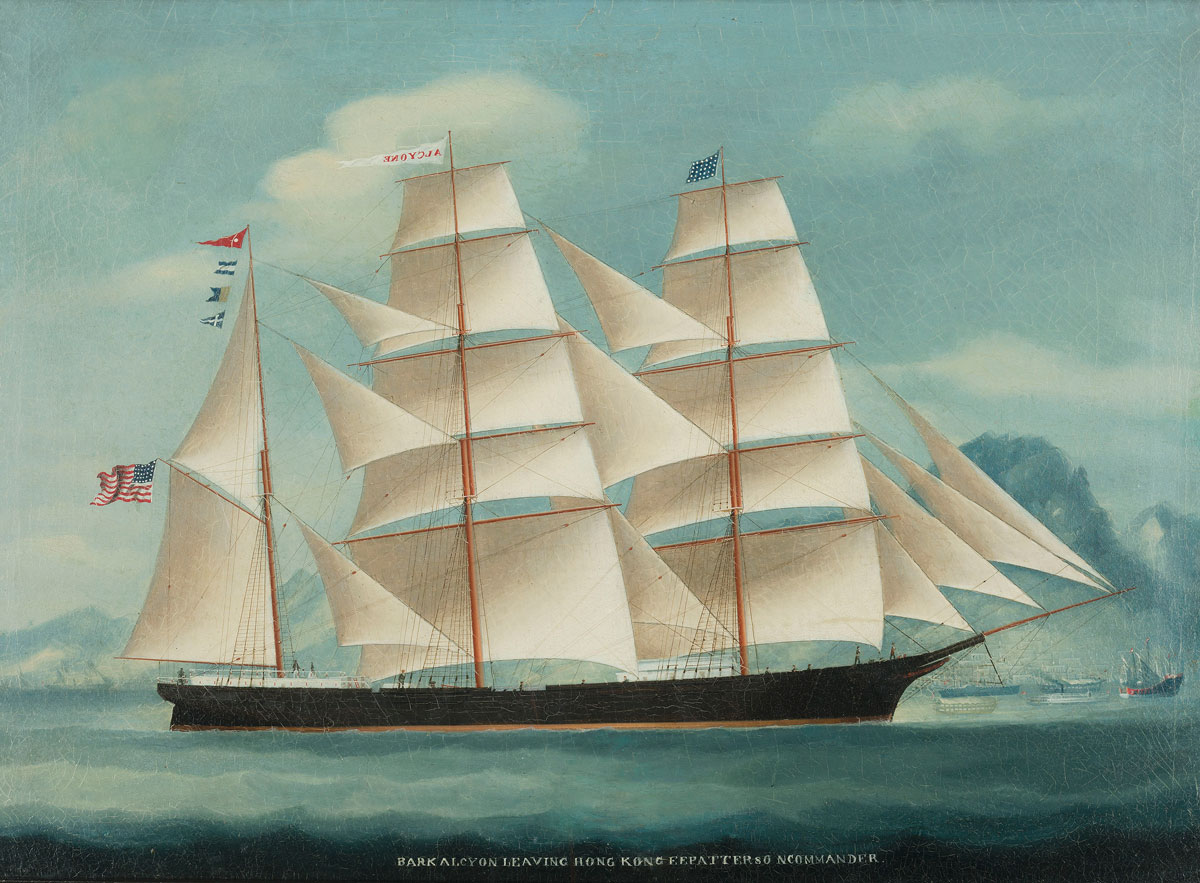
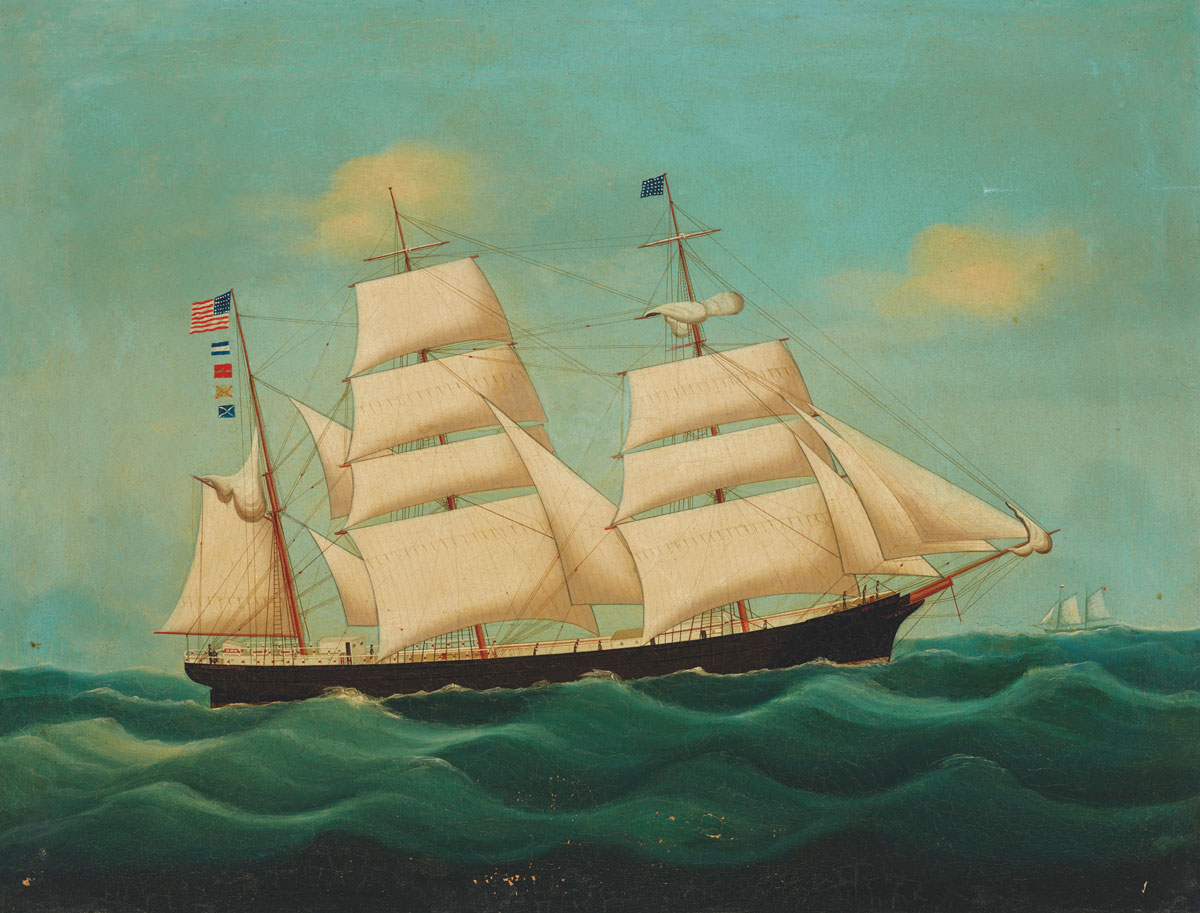
Built in 1876 at the George E. Currier shipyard on the Merrimack River in Newburyport, Massachusetts, the Obed Baxter was purpose-built for the cotton trade, part of the broader Atlantic commercial network that kept Western merchant capital circulating between continents and ultimately flowing east into the China trade.
Clipper Ships
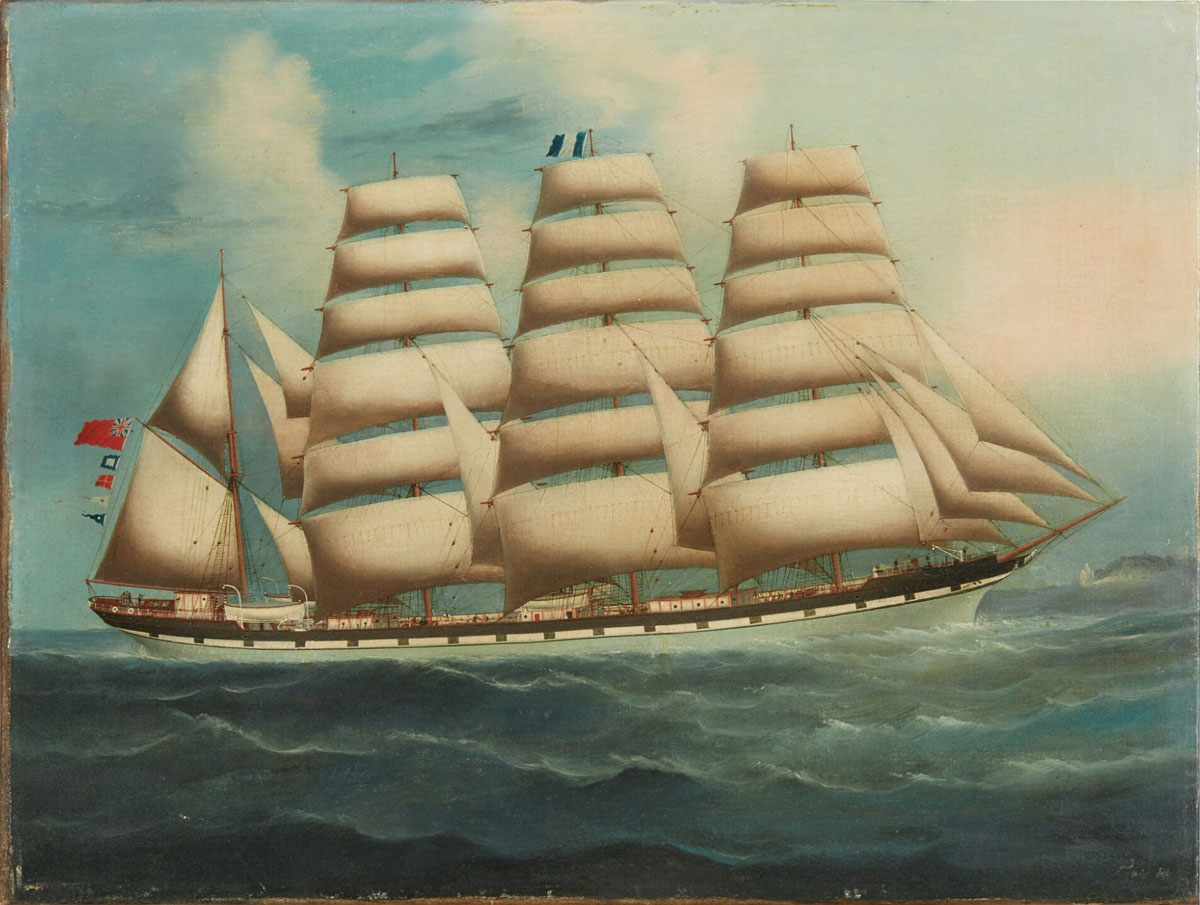
When the British East India Company lost its monopoly on the China trade in 1833, the era of the stately company ship gave way to something altogether faster and more competitive. The clippers that followed were a different proposition entirely: long, lean hulls and vast spreads of canvas designed to shave days off the passage from China to London, where the first cargo of the new season's tea commanded a substantial premium. The annual races from Foochow became the stuff of maritime legend, with ships carrying unique names such as "Cutty Sark" pushing their crews to the limit across twenty thousand miles of open ocean, with finish times sometimes separated by only minutes after weeks at sea.
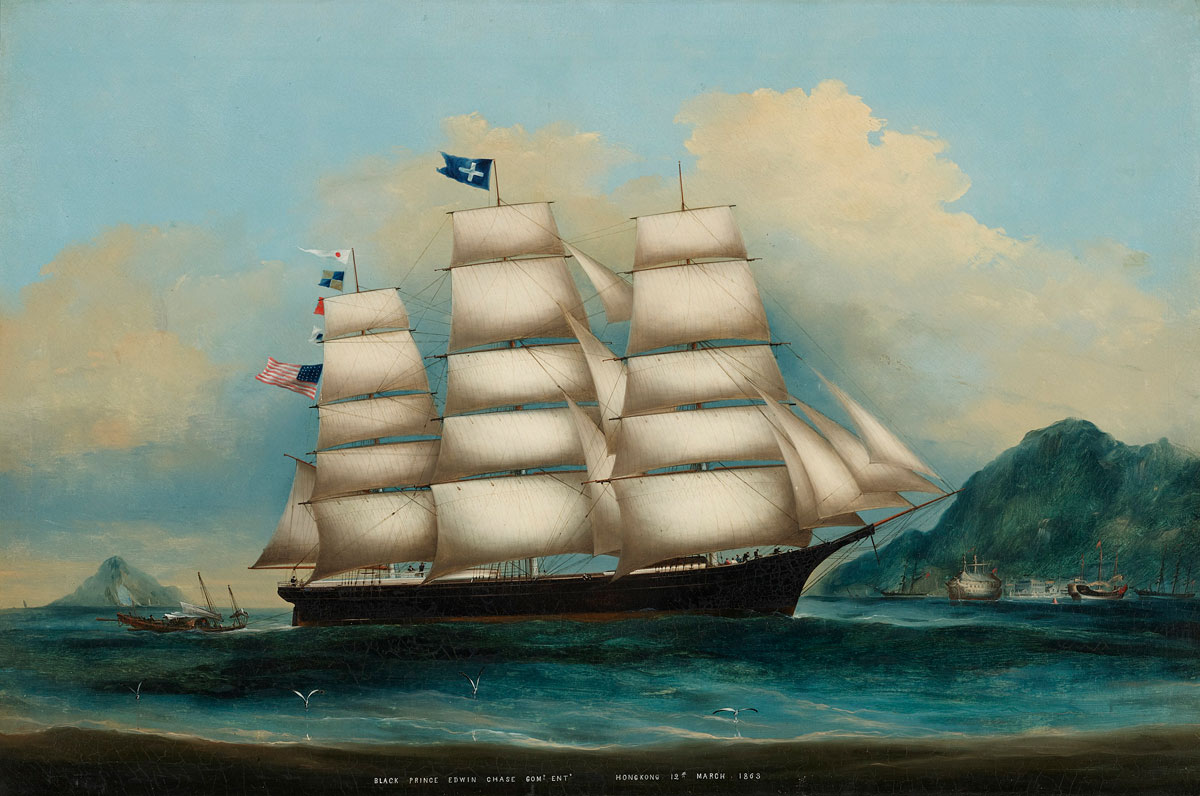
Launched at Newburyport, Massachusetts in 1856, the Black Prince sailed commercial routes between the East Coast, San Francisco, and onward to China before being presumed lost at sea in 1865.
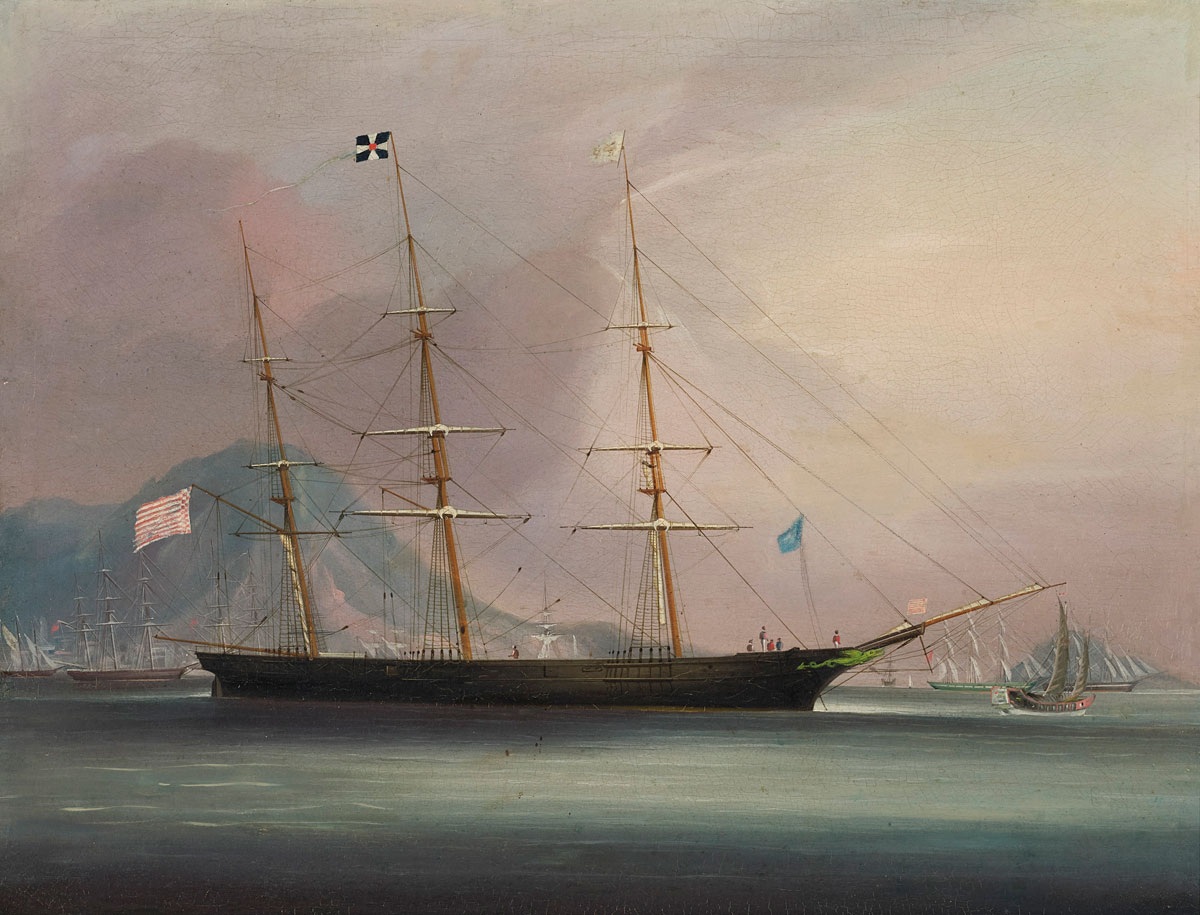
Constructed by Smith & Dimon at New York in 1846, the Sea Witch was chiefly engaged in the Oriental trade before being lost off the coast of Cuba in 1856.
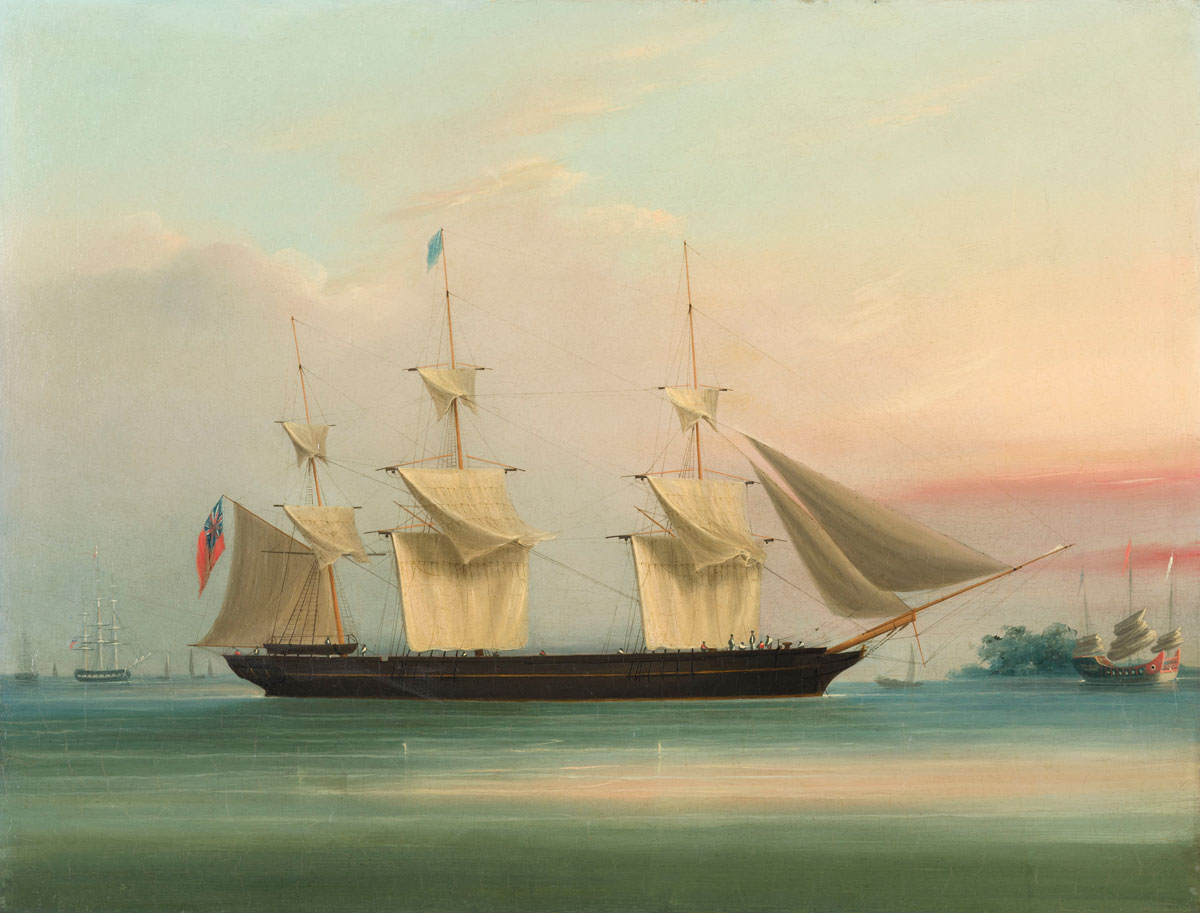
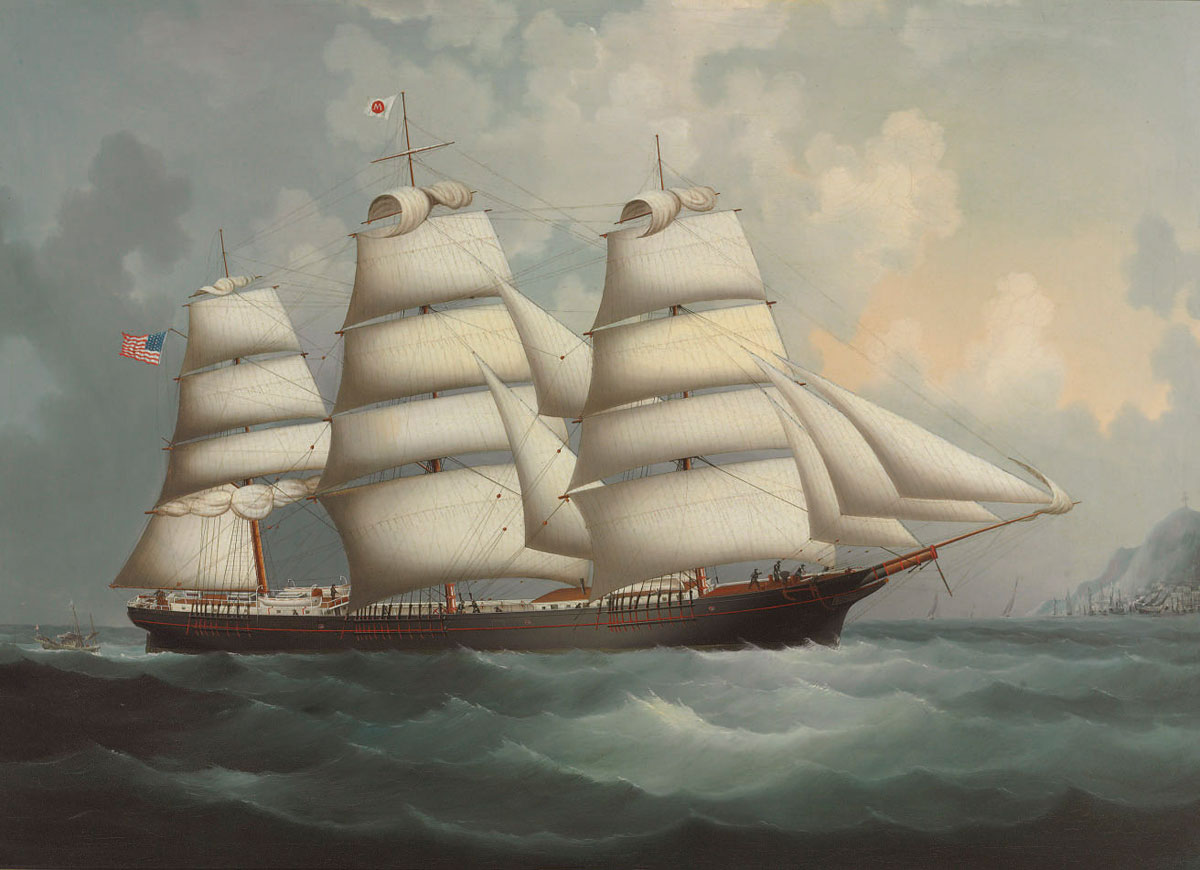
Designed by William H. Webb and constructed at his prolific New York yard in 1851, the 221-foot clipper Invincible was owned by J. W. Phillips and associates of New York. She sailed for several years under the command of Captain H. W. Johnson and, built expressly for speed, was ideally suited to the China trade. Invincible was lost to fire in New York Harbor in 1867.
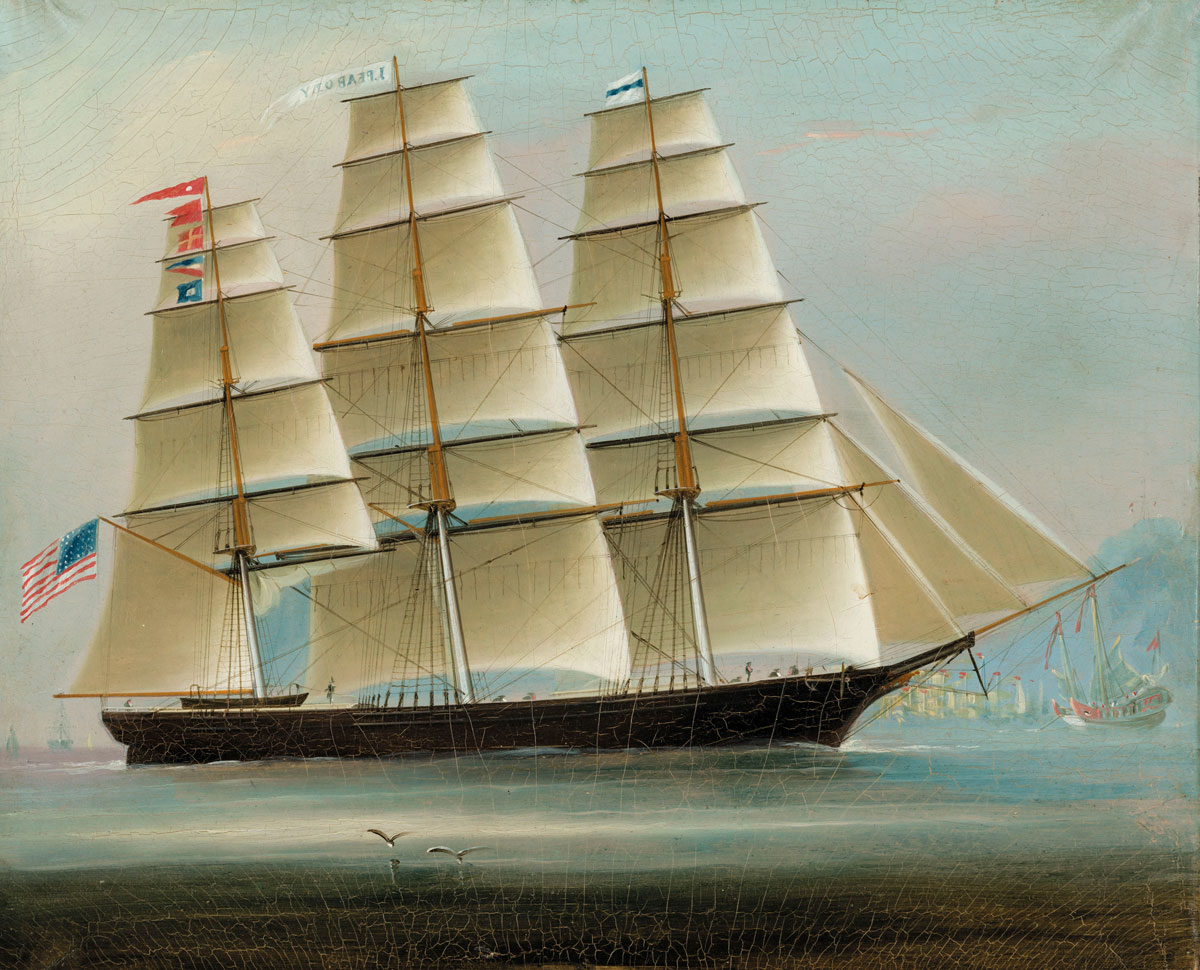
Built by E. & H. O. Briggs and launched at East Boston on 7 June 1856, the clipper took her name from a prominent Salem merchant and shipowner of the early 19th century. In this view off Hong Kong, she carries the Curtis & Peabody house flag at the foremast and a pennant bearing her name from the mainmast.
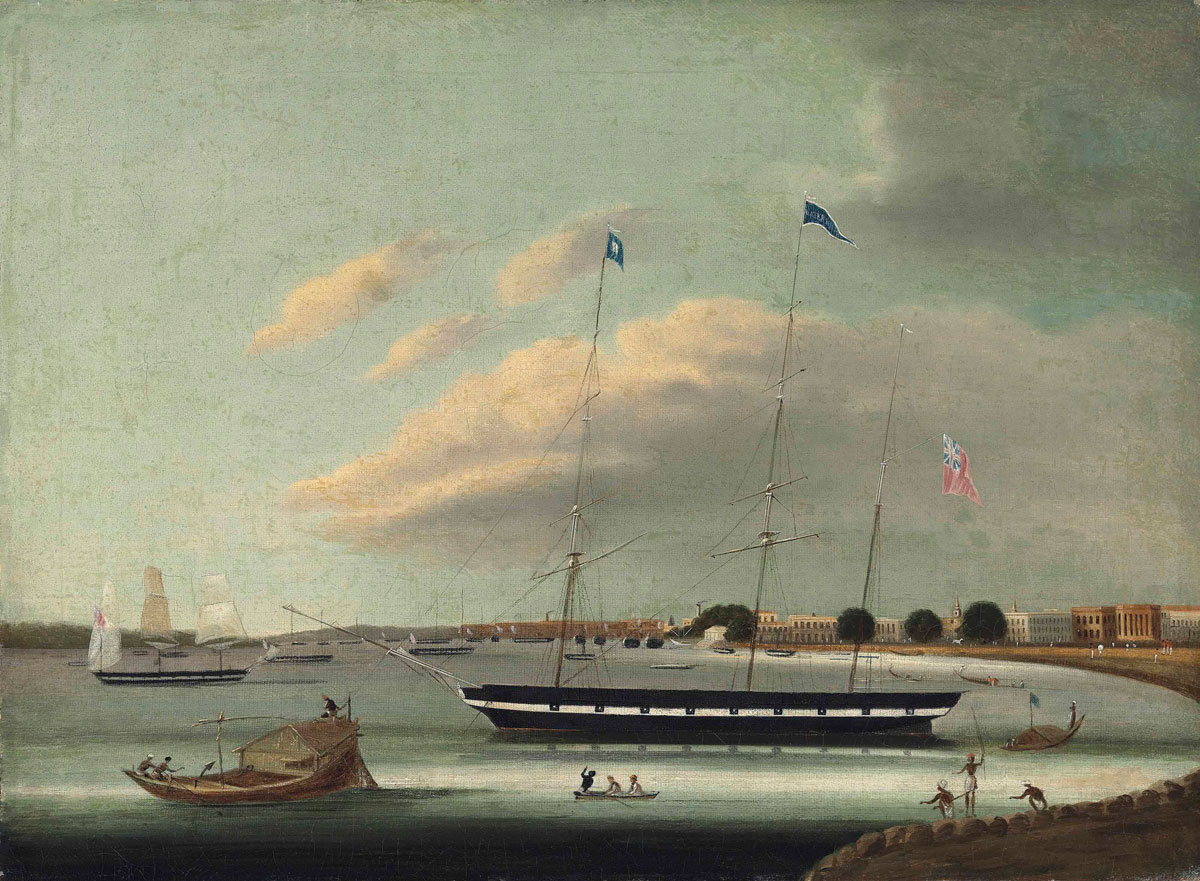
Shown at anchor in the Hooghly River, looking northeast toward Esplanade Row, the Waterwitch was a clipper engaged in the opium trade between India and the China coast. Built at Kidderpore in 1831, she was among the vessels capable of completing two voyages per year between India and China. In 1838, she made the return passage from the Capsingmun anchorage to Calcutta in 29 days, four days faster than the next fastest recorded passage.
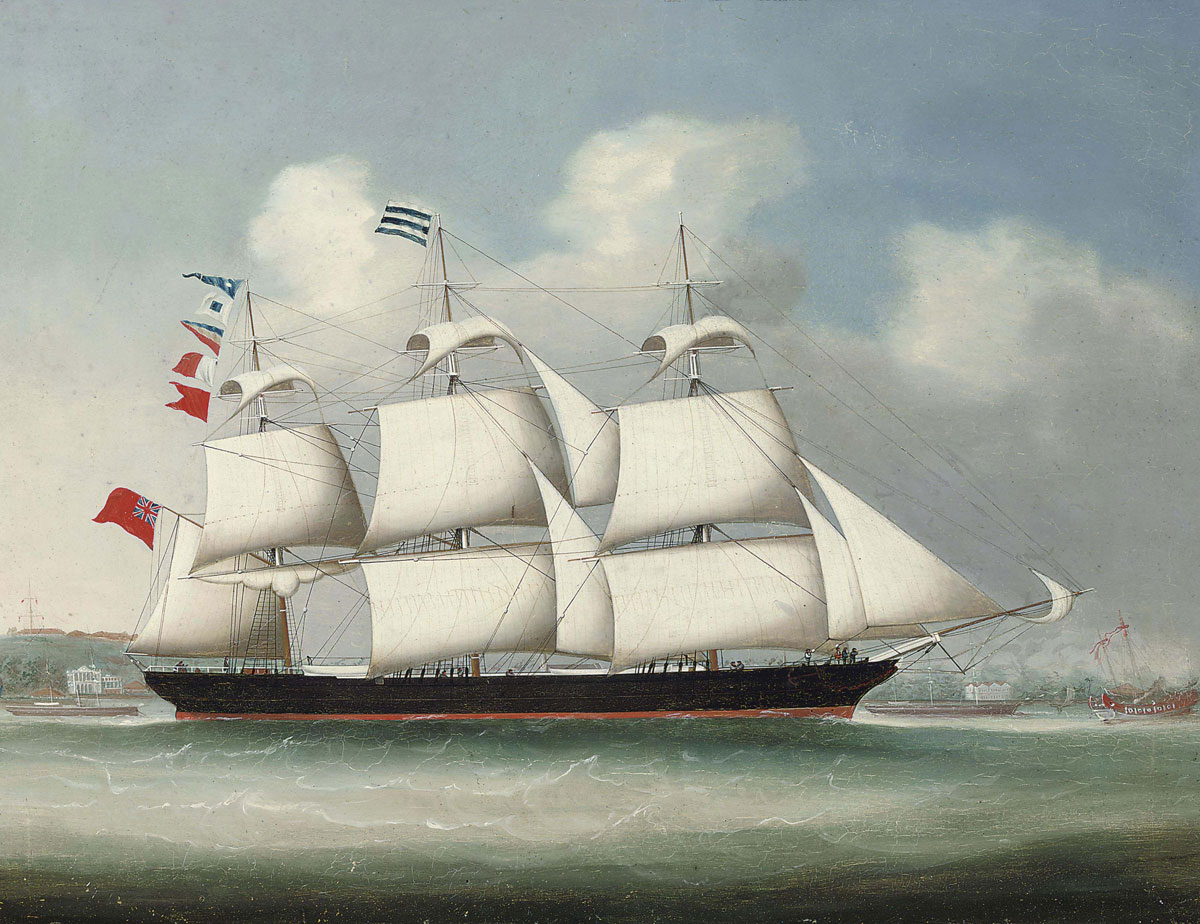
An iron full-rigged ship flying her Lloyd's signal number as she stands into the Whampoa anchorage, the Thomas Blythe captures a ritual repeated by every foreign vessel arriving on the Pearl River: the moment of identification that set in motion the machinery of the Canton trade, alerting agents, compradors, and customs officials ashore that another cargo had completed its long passage from the open sea.
Steamships
Early steamships that began appearing on the China coast in the 1840s were not meaningfully faster than the best clipper ships on a favorable run. A steamer could maintain a predictable schedule regardless of monsoon patterns or contrary winds, and for merchants planning around tea auction dates in London, a ship that arrived within a known window was often worth more than a faster ship whose arrival depended on the weather. The coal requirements of early steam engines were enormous, cutting into cargo capacity in ways that kept the clippers commercially competitive well into the 1860s. What finally settled the contest was the opening of the Suez Canal in 1869: the canal was impassable under sail, so clippers continued making the long passage around the southern tip of Africa while steamers took the far shorter route through the Mediterranean.
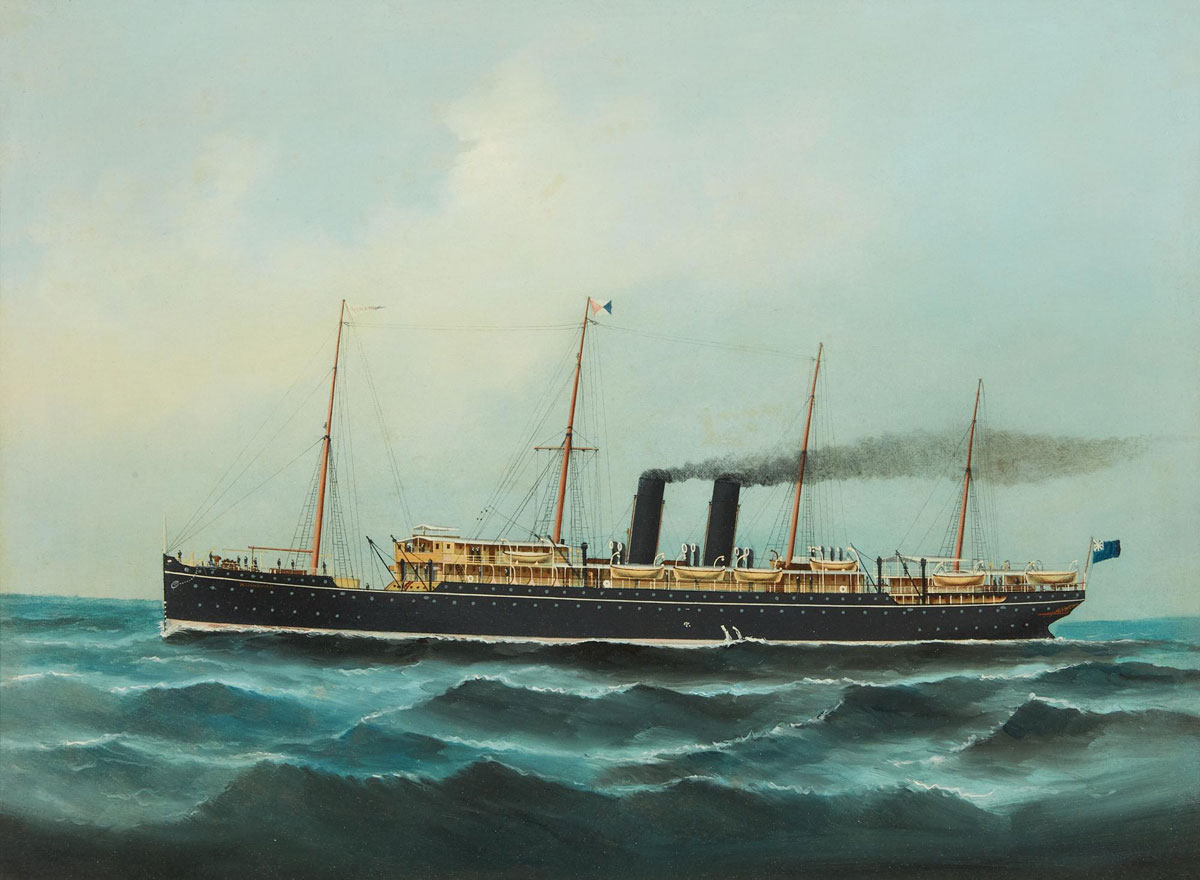
Built in 1853 for P&O's China and Orient service and the largest steamship in the world at her launch, the *Himalaya** represented the ambitions of Britain's premier Eastern shipping line to replace sail with reliable scheduled steam on the long run from London to Hong Kong.
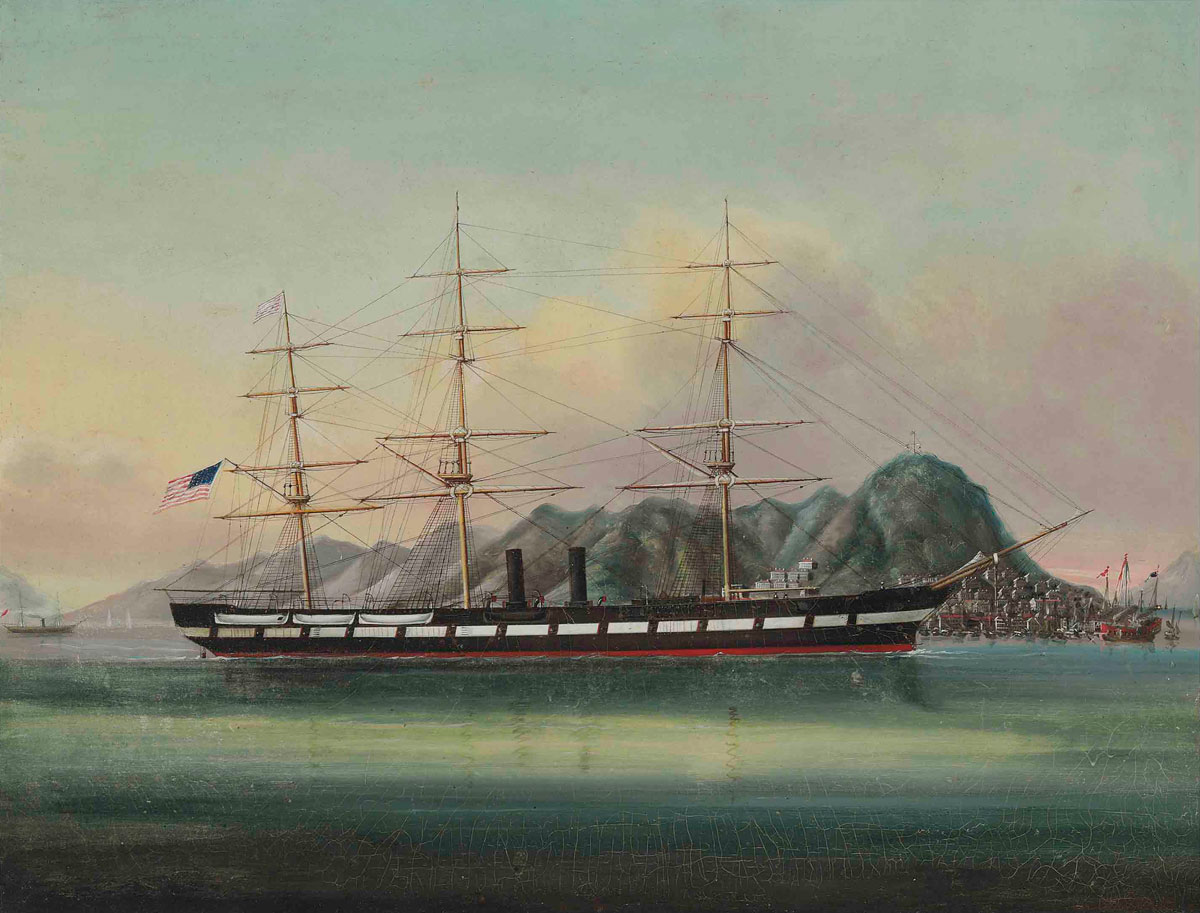
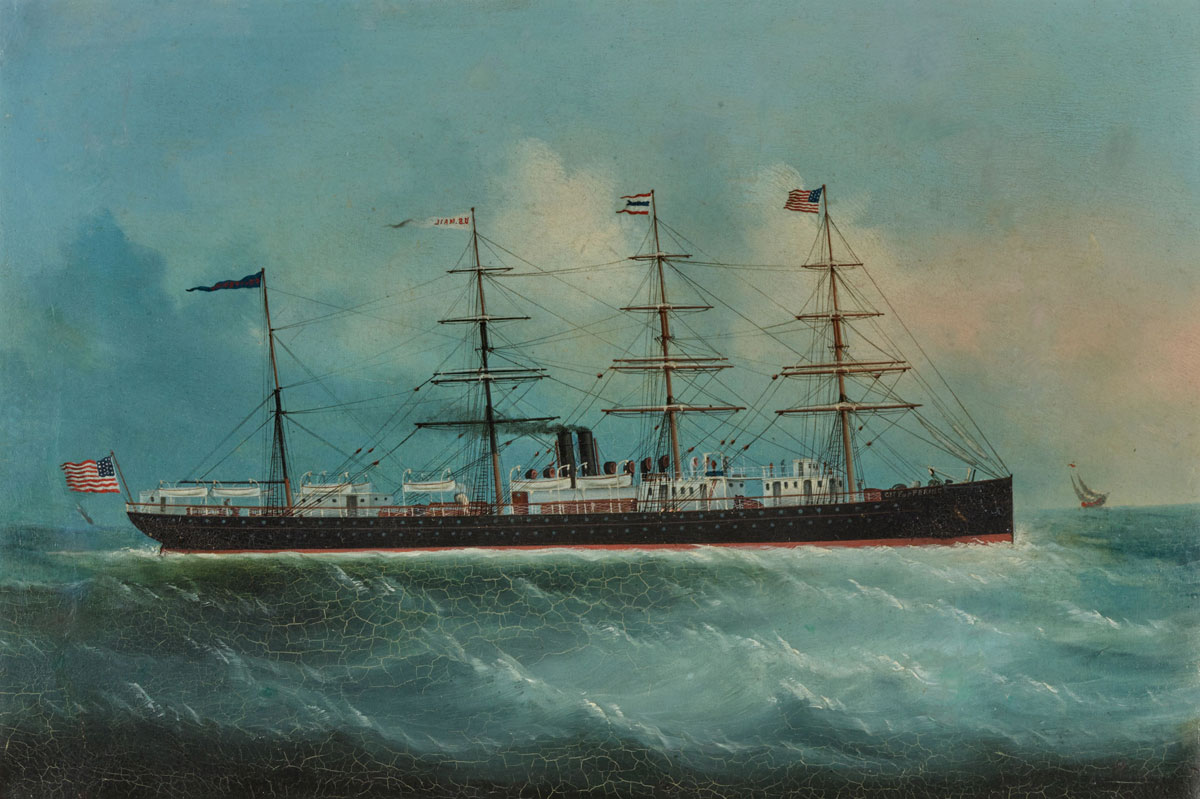
Built in 1874 at Chester, Pennsylvania, for the Pacific Mail Steamship Company's transpacific service between San Francisco, Yokohama, and Hong Kong, the City of Peking was at the time of her construction the largest vessel ever built in the United States, and her arrival in Chinese waters signaled the definitive shift in the Pacific trade from sail to steam.