Common Questions
Question: What do the chopmarks mean? Why was a specific word or symbol used?
We don't really have an answer to this question since no documentation has been found, but the general thinking is that a shroff would be known by his chop, it would act as a kind of brand or logo in today's terms. We have seen documentation that within a local region, a shroff was known by his chop. Local merchats handling a coin would recognize the chops and understand which shroffs had previously handled the coin.
Question: Why do we see both small chopmarks and large chopmarks? Why did chopmark styles change over the years?
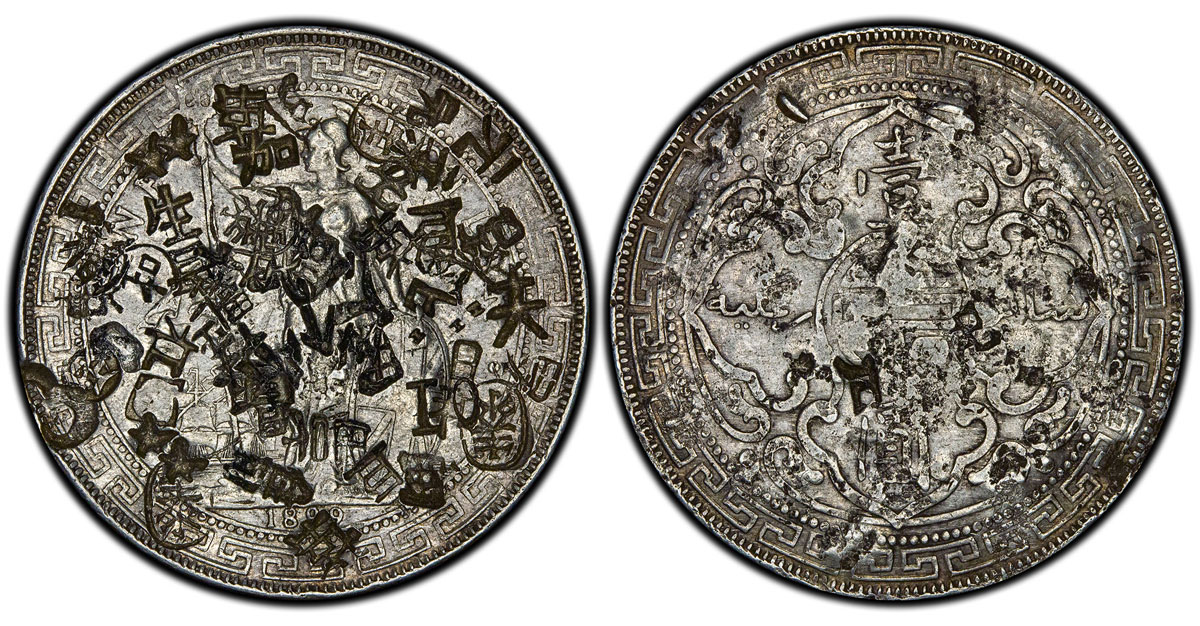
Another question we don't have a clear answer to. We can observe that over time, chopmarks were generally larger or smaller, for example pillar 8 Reales show many larger incuse chopmarks, then for about 30-40 years smaller chopmarks were used on portraits, then there was another transition back to larger chopmarks, but not incuse in style. We certainly pick up on trends, for example the practice of cutting or slicing the edge of a coin was popular with cobs and pillar 8 reales, but had mostly disappeared by the late 1700's. Maybe the need to cut the edge of a coin became unnecessary as more foreign silver entered China, the quality of coins made increased, and trust was built upon over decades. Keep in mind, all of these statements are generalizations, since we can't confirm that any chopmark or cut was placed around the date stamped on a coin.
This is speculation, but it's possible the move to smaller chopmarks around the mid-1700's was due to coins defaced with many large chopmarks being valued lower in the market. Smaller chopmarks caused less damage so perhaps this triggered the change in style. See information below about the value of a coin with and without chopmarks, for more details on this topic.
This is more speculation, but it's possible the move back towards larger chopmarks in the early 1800's was tied to the large influx of counterfeit portrait 8 Reales that occurred in the late 1700's. Larger chopmarks more easily break the skin of a coin to reveal base metal underneath, if present, so this could have been a countermeasure to help with detection of fakes.
Another theory, it's possible the newer/larger chopmarks seen in the early 1800's were the product of advances in technology. The newer, larger chopmarks seen beginning in the early 1800's are more refined, while the old large chopmarks found on pillar dollars are often crude, as are the smaller chopmarks seen in the late 1700's.
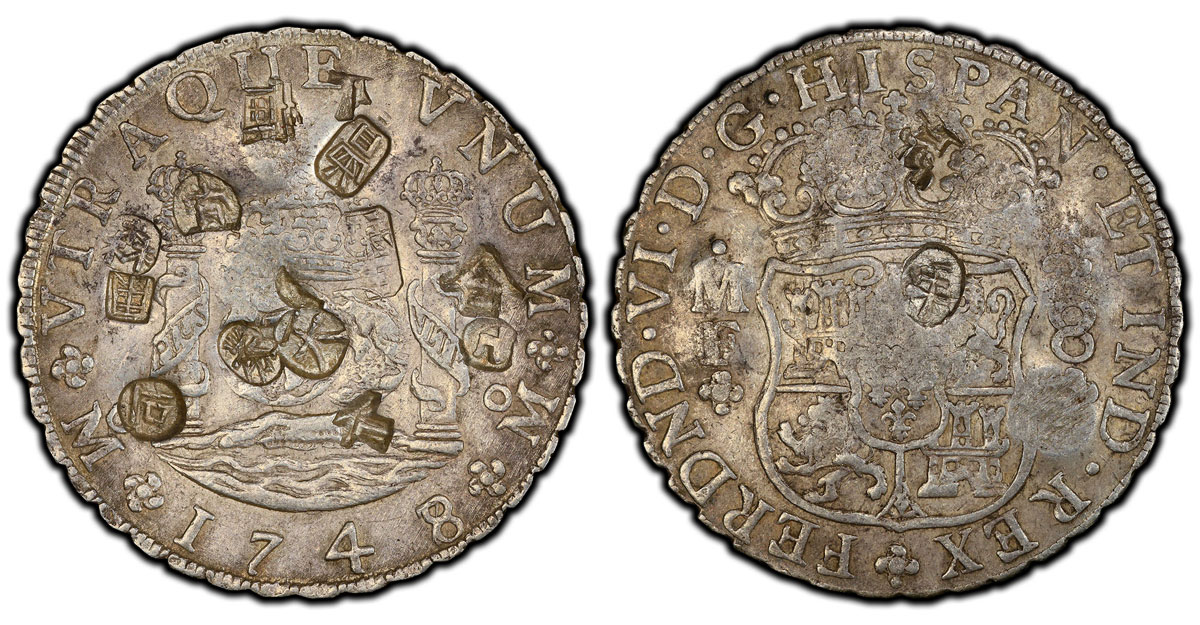
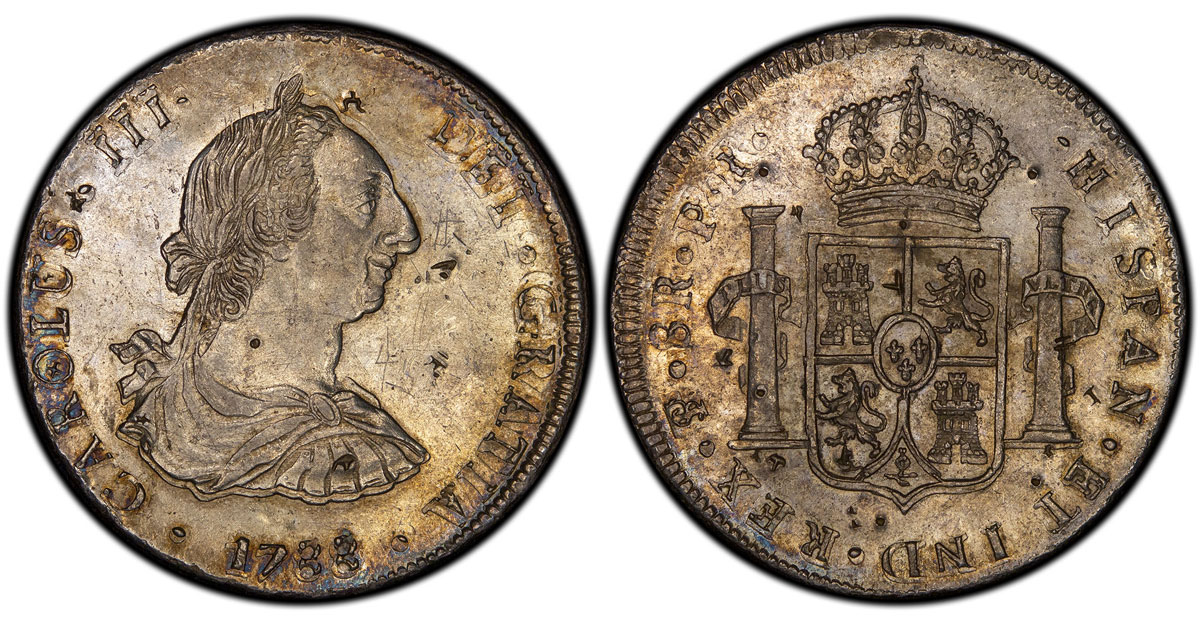
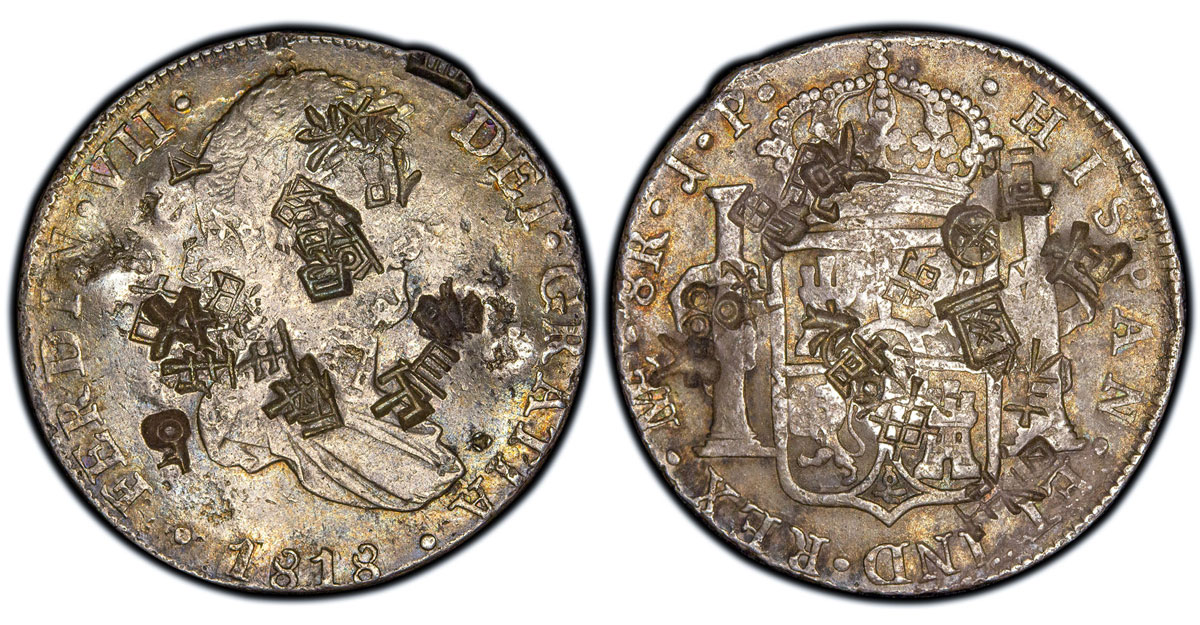
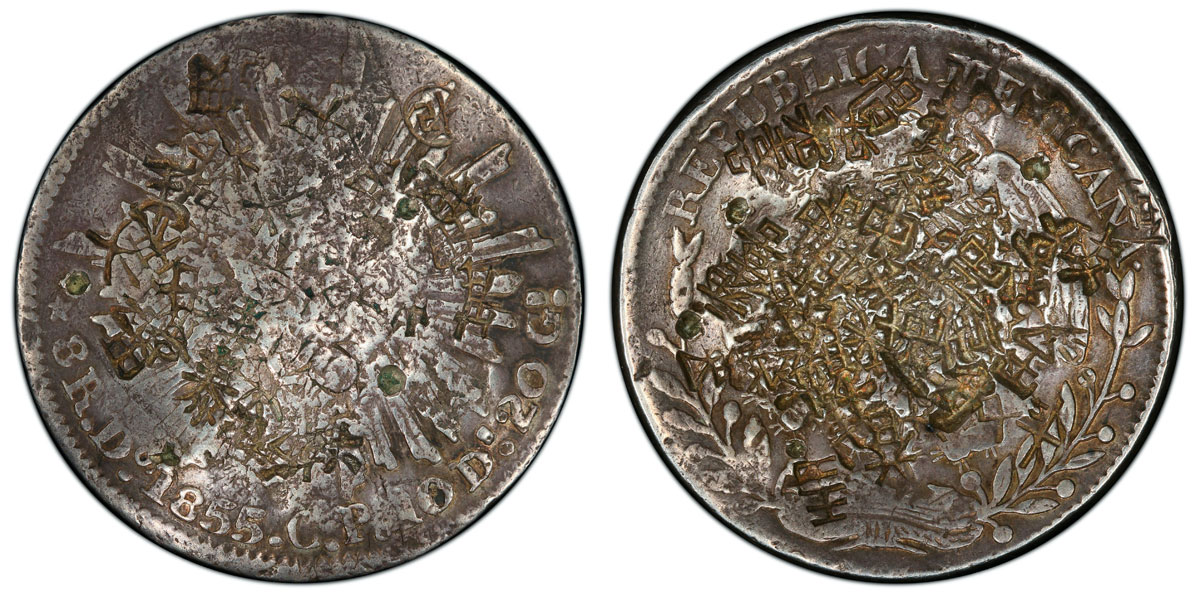
Question: Why do coins need more than one chopmark? Some are chopped to the point of deforming or breaking apart. Isn't one or two enough to say the silver is good?
We don't have a clear answer to this question, however the thinking is that each transaction between new parties would require a new chopmark. Because another shroff may have approved the silver in the past does not validate the silver for a subsequent transaction. If true, this means that coins with a single chopmark likely only circulated lightly, used for one transaction, whereas coins with many chopmarks were used for many transactions and traveled more broadly. This still does not address the question about why we see the same chopmark repeated on the same coin.
Question: How late did the practice of chopmarking continue?
The latest chopmarked foreign coins we know of are dated in the nine-teens, below are pictured a 1911 British Trade Dollar, a 1912 Japanese Yen, and a 1913 F.I.C. piastre. Anything after about 1908 is very scarce with chopmarks.
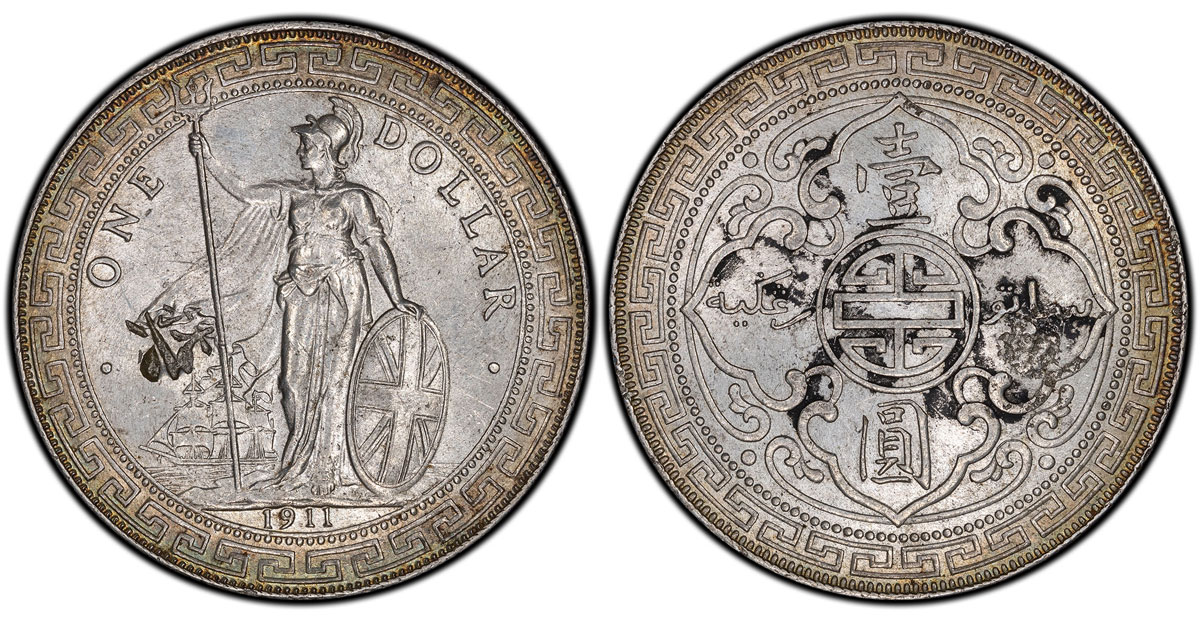
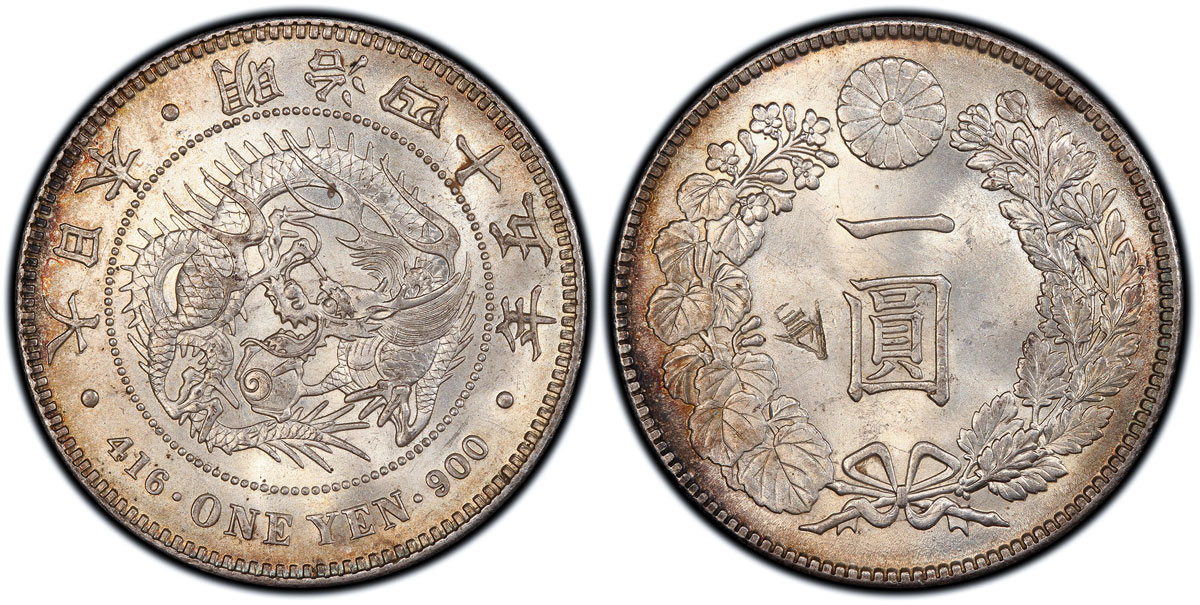
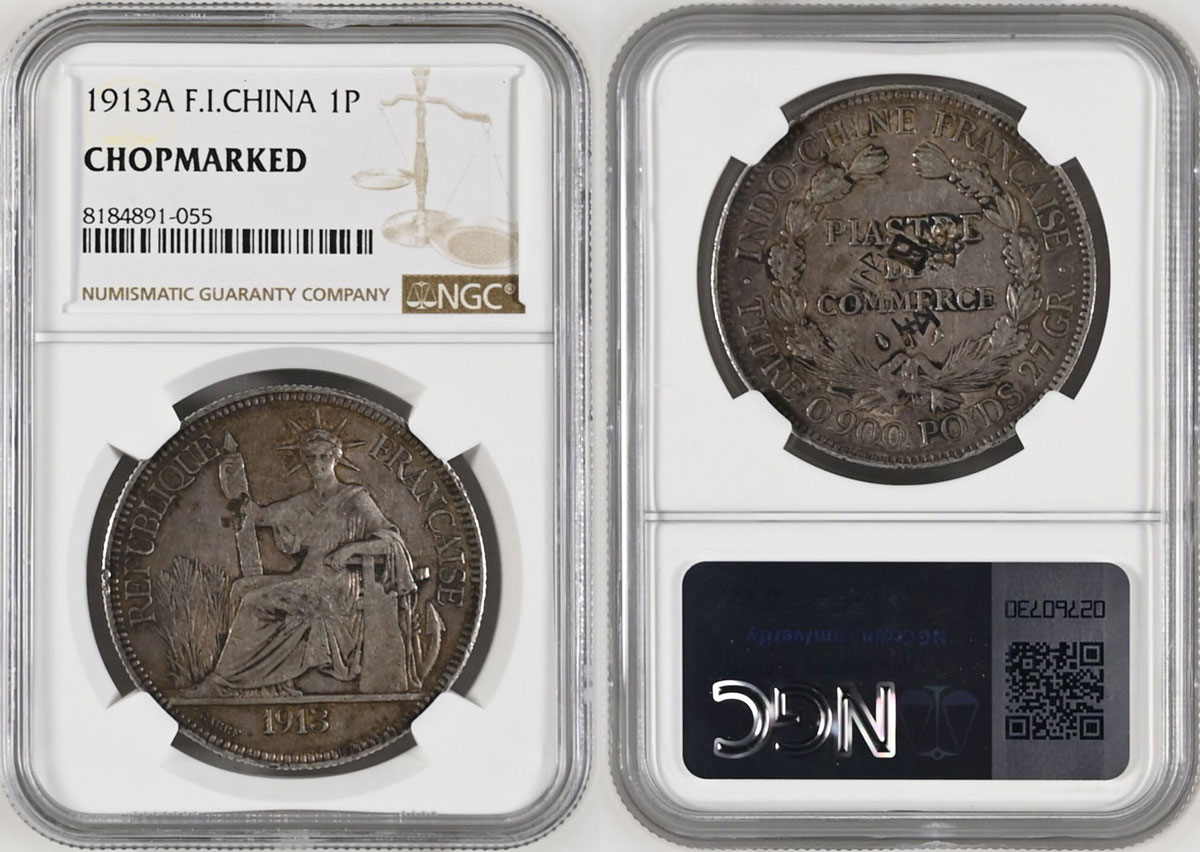
We even see Chinese coins dated into the 1920's with large chopmarks, and even a 1934 Republic "Junk Dollar" with a small mark thought to be a chopmark.
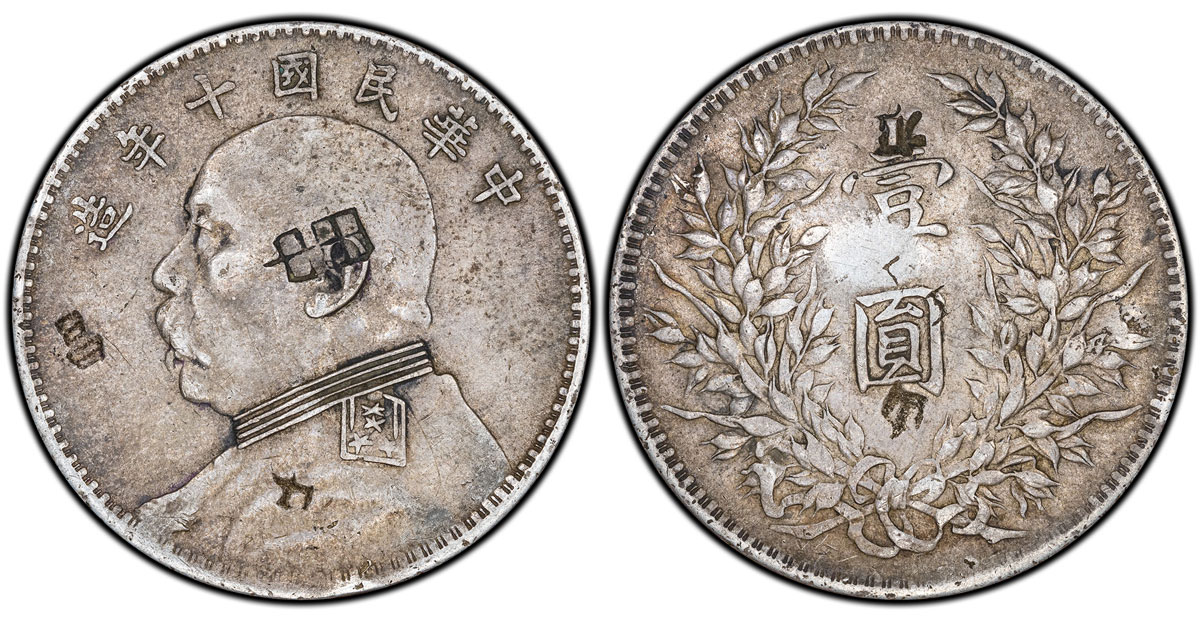
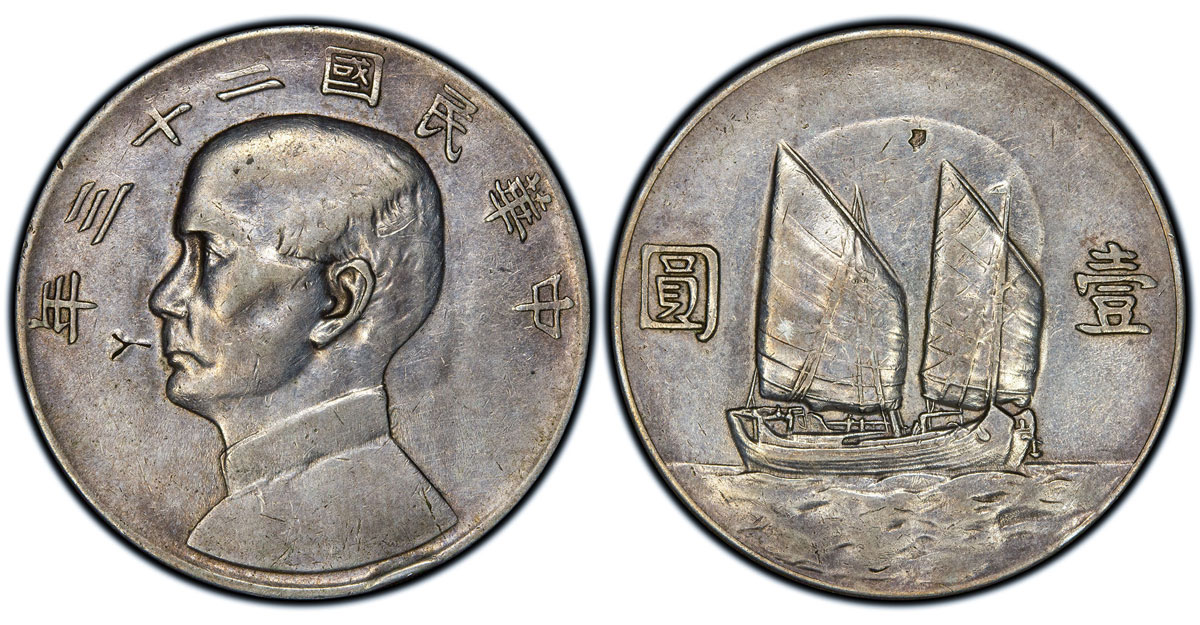
Question: Did chopmarks influence the value of a coin in trade?
Yes and no. In China, the coins were valued by their weight in silver. Outside of China, often chopmarked dollars were looked down upon and traded for lower value than non-chopmarked examples.
[add newspaper articles or documentation showing examples of this]
Question: How many foreign coin types are known with chopmarks?
Many hundreds of foreign coin types are known which chopmarks, from all over the world. China was truly the global hub for trade, and silver was the common medium to fuel that global trade. This is one of the most fascinating aspects of collecting world trade coins with chopmarks, every year we seem to discover new types with chopmarks that we previously didn't know about.
Question: Do any chopmark punch tools exist?
I don't know of any chopmark punch tools from the period when coins were chopmarked in China, and people have been searching for the for decades. We have seen modern versions of the chopmark tools. It seems crazy to me that zero chopmark tools would have survived, when we know there were many thousands of chopmarks (and thus tools) used over hundreds of years.
Feel free to submit additional questions here.