East Meets West Collection - 1871 and Later
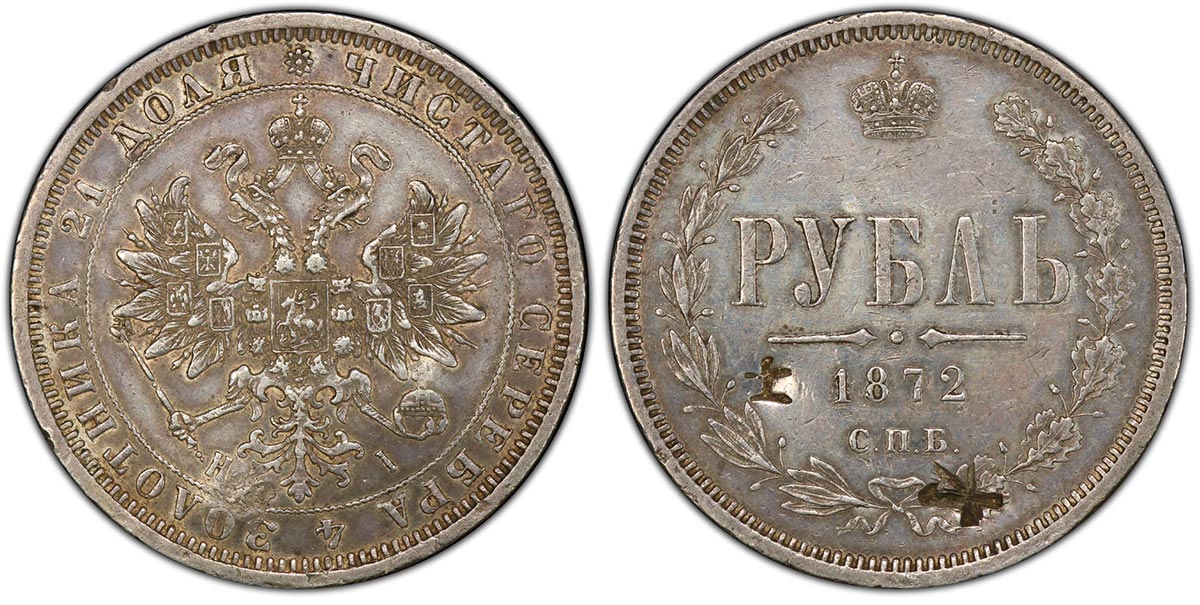
1872 Russia Alexander II Rouble
Specifications:
20.73 g, .868 fine silver, .5785 troy oz (actual silver weight), smooth edge with lettering
Recorded mintage: 978,000
Catalog reference: DAV 289, KM Y-25
Details:
The 1872 Russia Rouble was struck at the St. Petersburg Mint and belongs to a type minted from 1859 to 1885. The coin contains 20.73g, .868 fine silver, with a mintage of
978,000 pieces. The obverse features the Imperial Double-Headed Eagle, the traditional emblem of the Russian Empire, displaying the shields of the various provinces on its
wings and a central shield of St. George. The reverse is composed of a simple design featuring the denomination РУБЛЬ (Rubl—Rouble) and the date "1872" within a wreath of
laurel and oak branches, topped by the Imperial Crown. Below the date is the mintmark С.П.Б. (S.P.B.), representing St. Petersburg. The edge is inscribed with the fineness
and the assayer's initials, HФ (Nikolai Folendorf), in Cyrillic.
Produced during a period of sweeping internal reform, this issue reflects the efforts of Alexander II to modernize the Russian state following the Crimean War (1853–1856). While the Emancipation Reform (1861) defined his early reign, the 1870s were marked by further judicial and military restructuring intended to bring Russia closer to Western European models. Numismatically, the Rouble remained the central unit of the Empire, though its role was primarily domestic as Russia struggled with the fiscal costs of modernization and ongoing territorial expansion into Central Asia. The silver for this type was primarily sourced from the Imperial mines in the Altai and Ural Mountains, which had been the backbone of Russian precious metal production for over a century.
This type is extremely rare with chopmarks. While Russian tea firms utilized "Shansi men" (merchants from Shanxi province) to represent their interests in the Bohea tea districts of Fujian, it remains unclear how often Russian silver was used for payment versus international trade dollars or paper credits. Numismatic scholars like Rose have noted that while Russia was often a destination for silver rather than a source, some Roubles inevitably crossed into China. The low fineness of the Rouble - yielding only 0.5785 oz of pure silver - likely hindered its widespread acceptance, with many examples potentially being melted into sycee upon arrival. Given that major collectors like Rose identified only a handful of examples, a chopmarked Rouble represents a significant rarity in the field of trade coinage.
Gullberg estimates somewhere between 2-10 of these exist with chopmarks. It's exciting that these rare types are still showing up from time to time, especially for collectors such as myself who missed out on the Rose sale.
Notable chopmarks:
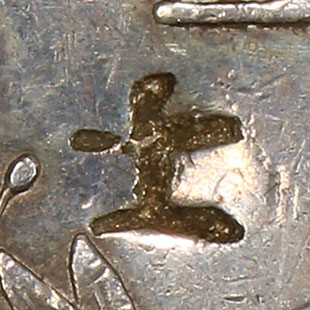 土 - tǔ - earth, soil, land, Japanese radical 32
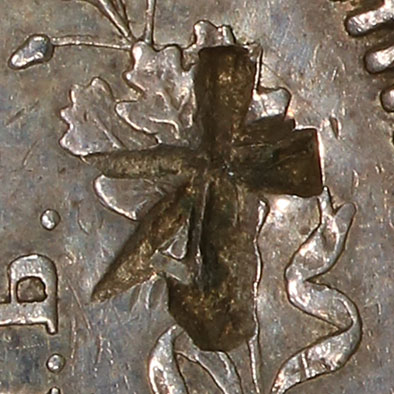 才 - cái - talent, ability, just
Provenance:
Purchased on eBay in June 2017 from a seller in California. The coin was offered in a normal style auction and brought $413, a large sum for a chopmarked coin at the time.
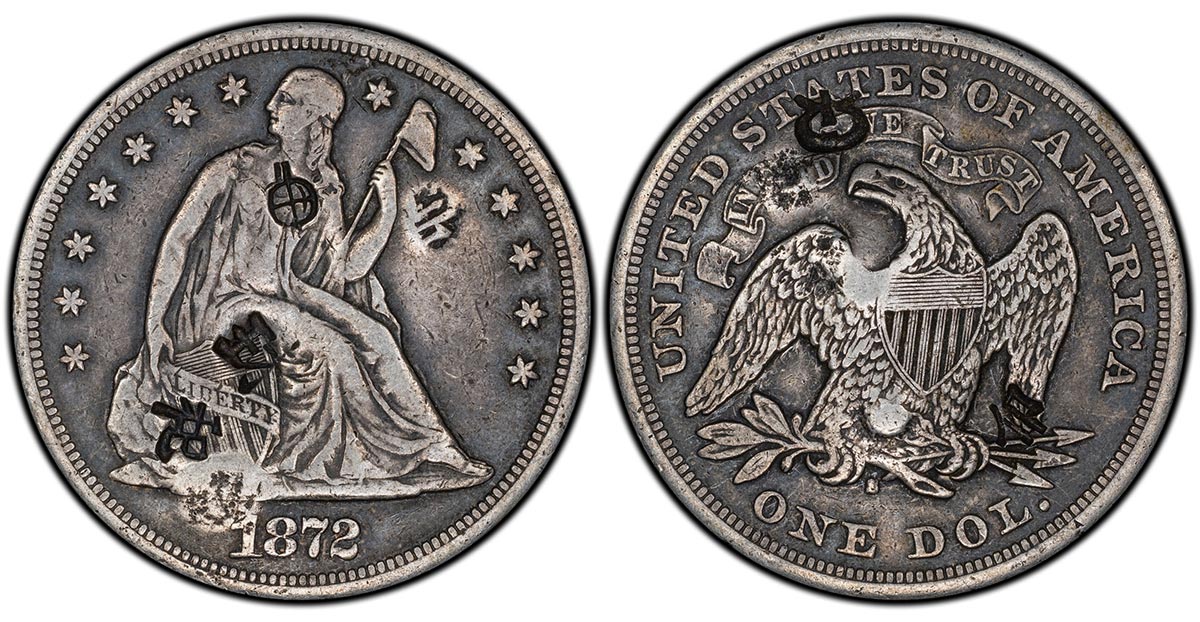
1872-S United States Seated Dollar, San Francisco, California Mint
Specifications:
26.73 g, 0.900 fine silver, 0.7734 troy oz (actual silver weight)
Recorded mintage: 9,000
Catalog reference: PCGS #6970
Details:
Struck at the San Francisco Mint with a remarkably low mintage of only 9,000 pieces, the 1872-S Seated Liberty Dollar marked the end of a thirteen-year production drought at
that facility dating back to 1859. This issue was produced in September of 1872, just months before the Coinage Act of 1873 (1873) demonetized silver and replaced the series
with the Trade Dollar.
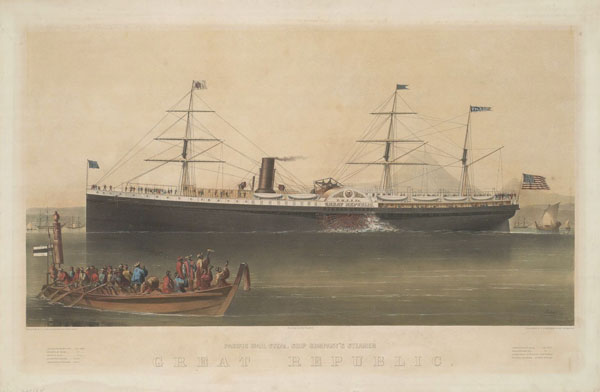
Contemporary records from the October 2nd, 1872, Alta California confirm that out of this tiny mintage, 1,000 pieces left San Francisco for China on October 1st aboard the steamship Great Republic. While the ship's manifest was dominated by silver and gold bars and Mexican silver dollars, these coins were specifically identified as United States silver dollars. To my knowledge, this is one of only three 72-S dollars known with chopmarks.
Notable chopmarks:
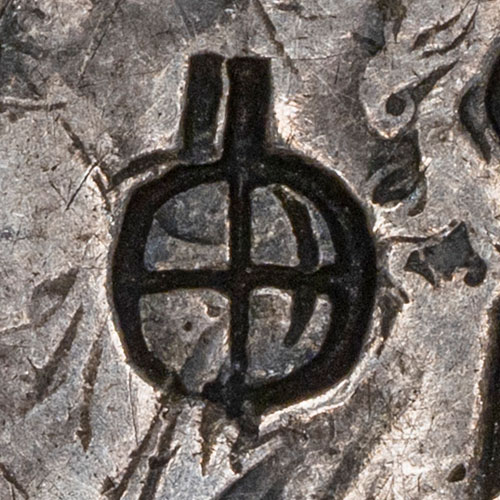
 - Liushutong script variant of 由 - yóu - from, reason, cause
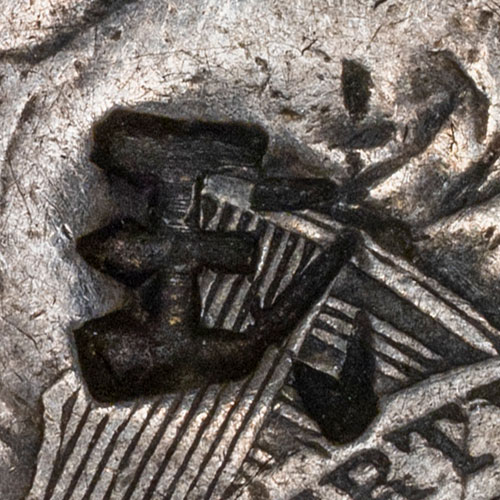 玞 - fū - inferior jade
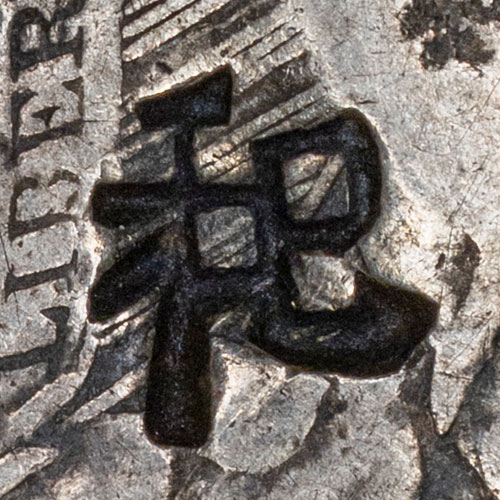 䄫 - qǐ - an ancient word with no known meaning
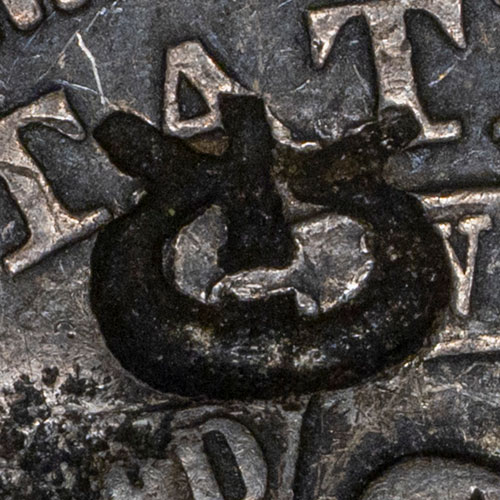 Most likely
  - Cursive (Caoshu) script variant of 勽 - bào - wrap
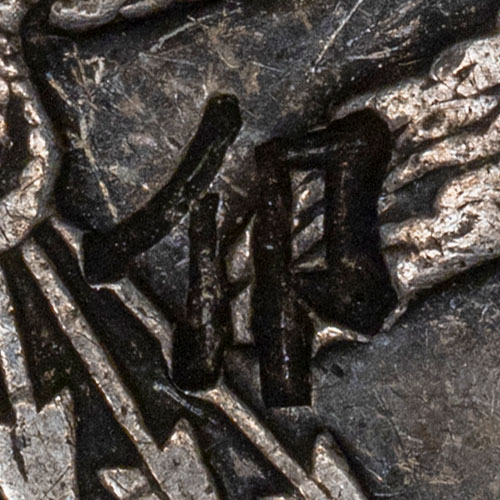 A combination of 亻and 卩, with unknown meaning
Provenance:
Purchased from Hong Kong dealer Mateo Zhao in April 2025. Mateo notes that this coin was found in Guang Zhou (Canton), China around 2018-2019.
1873 (Meiji 6) Japan 50 Sen
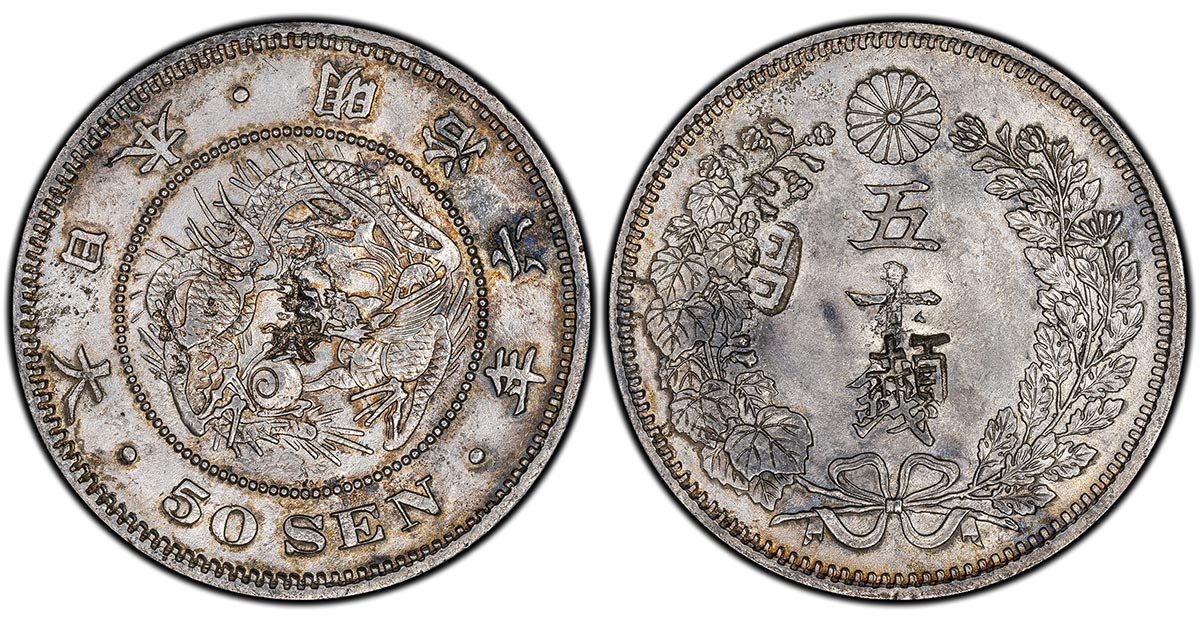
Specifications:
13.48 g, .800 fine silver, .3467 troy oz (actual silver weight)
Recorded mintage: 3,447,733
Catalog reference: KM Y-25
Details:
The 1873 (Meiji 6) Japan 50 sen belongs to Japan’s first generation of modern decimal coinage, introduced as the Meiji government replaced the Tokugawa monetary system with a
Western-style yen-based standard. Struck in silver and valued at half a yen, the coin features the early Meiji dragon design in a milled format modeled on international silver
issues, reflecting Japan’s effort to create currency that would be credible both at home and abroad. Although intended primarily for domestic circulation, the 50 sen was produced
at a time when silver still moved fluidly across markets, allowing even smaller denominations to drift into broader trade networks.
Chopmarks on a coin of this size are unusual but not inexplicable. While most chopmarked coins are large silver dollars intended for bulk trade, smaller silver denominations like the 50 sen occasionally entered the same commercial channels, especially in treaty-port environments and coastal trade, where they might be tested, discounted, or grouped with other silver for settlement.
Notable chopmarks:
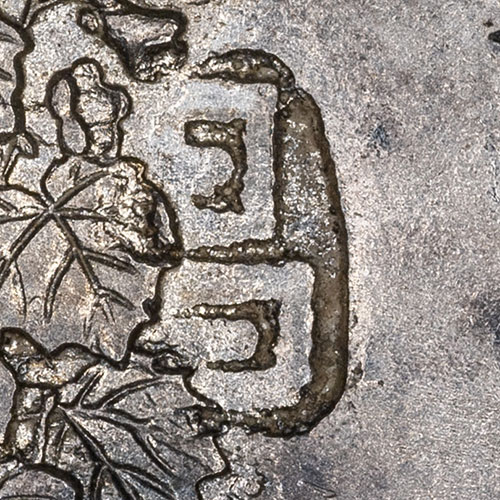 昌 - chāng - prosperous, flourishing
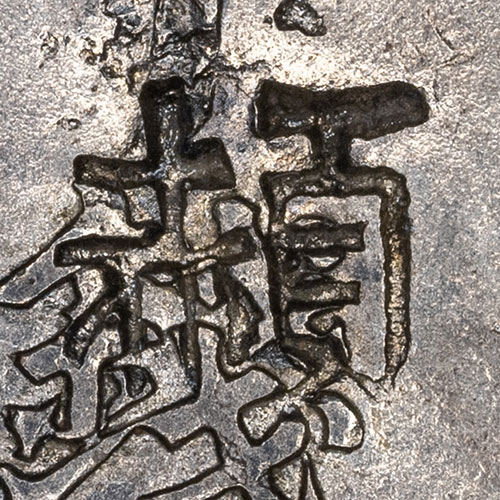 Unknown character
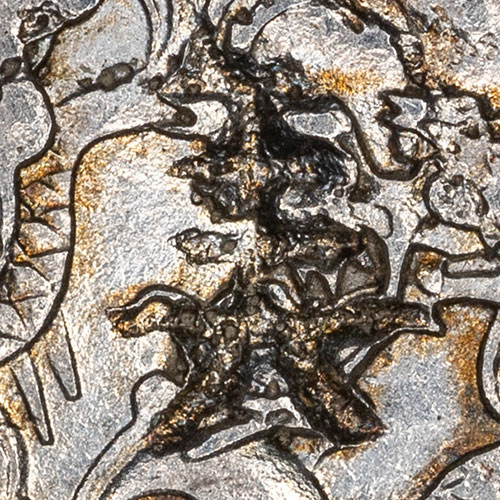 Unknown character
Provenance:
Purchased on eBay in September 2022 from a seller in Schwieberdingen, Germany.
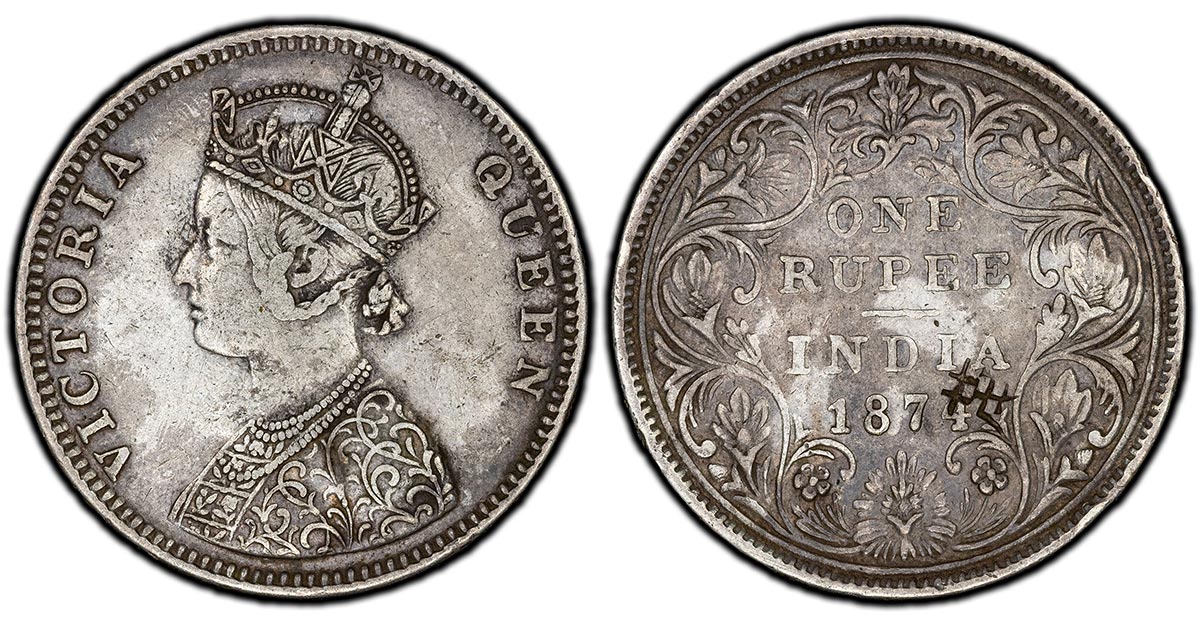
1874 British India Rupee (Ex. Bowman)
Specifications:
11.66 g, .917 fine silver, .3438 troy oz (actual silver weight)
Recorded mintage: 13,853,211 (for Bombay mint)
Catalog reference: KM 473.2
Details:
The 1874 British India Rupee was struck at the Bombay Mint and belongs to the Victoria "Queen" type issued between 1862 and 1876. The coin contains 11.66g, .917 fine silver, with
a mintage of 13,853,211 pieces for the Bombay Mint. The obverse features a crowned bust of Victoria surrounded by the legend VICTORIA QUEEN. The reverse displays the denomination
ONE RUPEE and the Persian inscription Ek Rupiya within a floral wreath. This 1874 issue represents a significant numismatic transition; while earlier Imperial rupees used a "fixed"
1862 date and a system of dots to bypass the "batta" system (a fee imposed by shroffs on older-dated coins), by 1874 the practice of continuous dating was resumed, suggesting the
predatory batta system had finally diminished.
Victoria ascended the throne in 1837 as a constitutional monarch with limited direct power, but her 63-year reign (1837–1901) saw a massive industrial and military expansion of the British Empire. Following the Indian Rebellion (1857–1858), administration was transferred from the East India Company to the British Crown, placing Indian coinage under direct Imperial authority. While Victoria would not adopt the title "Empress of India" on coinage until 1877, this 1874 issue circulated during the height of the "Victorian era," a period of strict morality and global British hegemony. The silver for these issues was a primary vehicle for the "triangular trade" between Britain, the Indian Raj, and the Qing Empire, where Indian opium and cotton were exchanged for Chinese tea and silk.
This type is fairly scarce with chopmarks, with specialists like Gullberg and Leverage assigning it high rarity ratings of R-5 and R-3, respectively. While larger dollar-sized coins were the standard for trade, these smaller rupees followed logical transport routes aboard British trade vessels from Bombay or Calcutta to treaty ports like Hong Kong and Guangzhou. Note should be taken that while legitimate chopmarked examples exist, they must be distinguished from common rectangular incuse marks of dubious origin. Given the Rupee's consistent .917 fineness, it was an acceptable, if less common, medium of exchange for Chinese shroffs accustomed to high-purity silver.
Notable chopmarks:
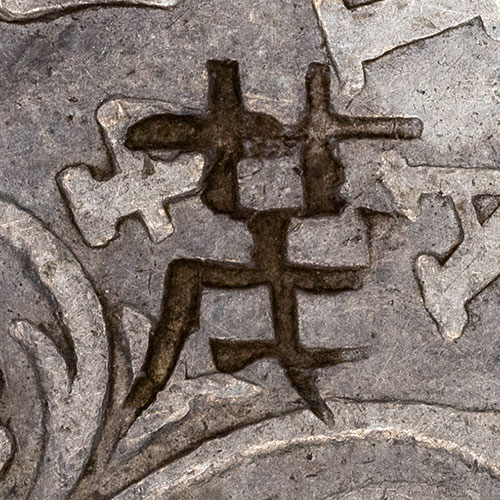 茂 - mào - luxuriant, dense
Provenance:
Purchased on eBay in January 2024 from a seller in Spring, Texas.
Ex J.D. Bowman, one of the original contributors to the Chopmark Collectors Club newsletters, who assembled one of the finest chopmark collections of all time. Bowman worked closely with Santa Barbara coin dealer Paul Brombal, in fact J.D. credits Paul with "most all of my chops he got for me in Singapore, Hong Kong & Manilla over the years."
1874-CC United States Trade Dollar
Specifications:
27.20 g, .900 fine silver, .787 troy oz (actual silver weight)
Recorded mintage: 1,373,200
Catalog reference: PCGS 7035
Details:
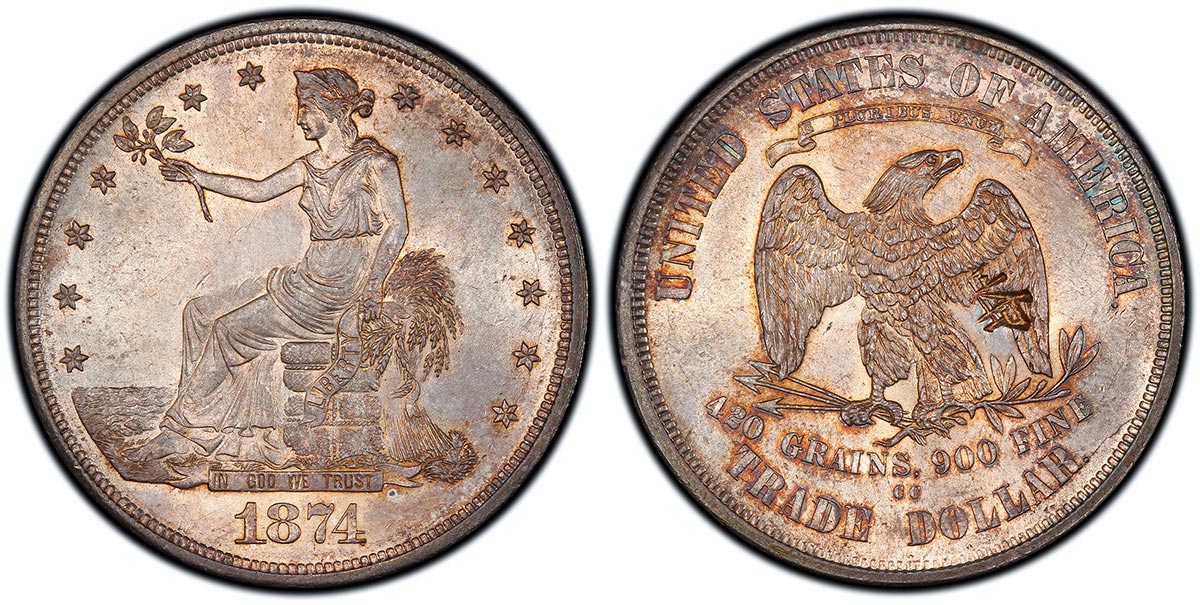
The 1874-CC United States Trade Dollar was struck at the Carson City Mint and belongs to a type minted from 1873 to 1878 for circulation, and until 1885 with proof only issues.
The coin contains 27.22g, .900 fine silver, with a mintage of 1,373,200 pieces. The obverse features Liberty seated on a bale of goods, extending an olive branch toward the sea,
with the legend LIBERTY on a ribbon and the motto IN GOD WE TRUST on the pedestal. The reverse displays a specialized heraldic eagle with the denomination 420 GRAINS, 900 FINE -
a deliberate design choice to outclass the Mexican Peso in Asian markets. This specific type was authorized by the Coinage Act of 1873 (1873) specifically for export to the
Orient.
Produced at the "Mint between the Mountains," this issue was struck using silver sourced from the nearby Comstock Lode, which was producing a massive surplus of bullion during the 1870s. The Carson City Mint played a crucial role in the American effort to divert this silver away from domestic circulation, where it threatened to cause inflation, and toward the Pacific trade. The political climate of the era was dominated by the "Crime of '73," which demonetized silver for domestic use but simultaneously created the Trade Dollar as a tool of economic imperialism to challenge the dominance of the Mexican Peso in the China trade.
This date from Carson City is one of the most common US Trade dollars with chopmarks, it was heavily utilized in the early years of the American trade push. However, it is exceptionally rare to find examples this well preserved, after making the round trip voyage to China. Most examples were treated as mere bullion and handled wihtout special care by merchants and shroffs. The presence of a lustrous, MS63-graded example with chopmarks suggests a coin that likely reached a Chinese port via San Francisco but was withdrawn from commerce shortly after being marked, preserving its original mint brilliance.
Notable chopmarks:
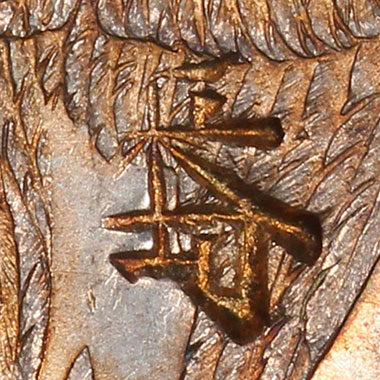 unknown character - need help
Provenance:
Purchased from fellow Trade Dollar collector and friend of mine Andy Geosits in August 2016.
1875-A France 5 Francs, Paris Mint (Ex. Rose / Kriz)
Specifications:
25.00 g, .900 fine silver, 0.7234 troy oz (actual silver weight)
Recorded mintage: 13,339,000
Catalog reference: KM 820.1
Details:
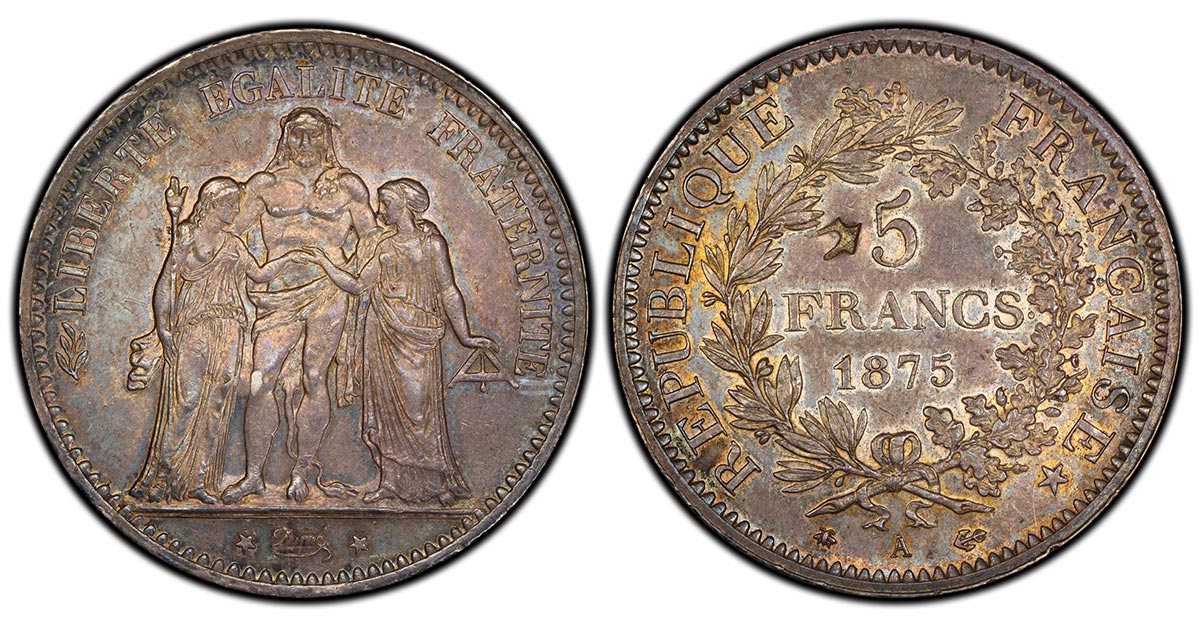
The 1875-A France 5 Francs was struck at the Paris Mint and belongs to the "Hercules" type, a design originally created by Augustin Dupré for the First Republic and later
revived for the Second and Third Republics (this specific run lasting from 1870 to 1889). The coin contains 25.00g, .900 fine silver, approximately 92.5% of the standard
Spanish 8 Reales, with a mintage of 13,339,000 pieces. The obverse depicts Hercules standing between allegorical figures of Liberty and Equality, surrounded by the legend
LIBERTÉ ÉGALITÉ FRATERNITÉ. The reverse displays the denomination and date within a laurel and oak wreath, encircled by the legend RÉPUBLIQUE FRANÇAISE. The "A" mintmark
denotes Paris, while the edge bears the raised inscription DIEU PROTEGE LA FRANCE (God Protect France).
This issue was produced during the formative years of the Third Republic, as France sought to stabilize its economy and national identity following defeat in the Franco-Prussian War (1870–1871). The revival of the Hercules motif was a deliberate political statement, reclaiming the republican imagery of the 1790s to signal a definitive break from the monarchical and imperial iconography of the previous decades. As a leading member of the Latin Monetary Union, France maintained the 5 Francs as its primary silver trade unit. The silver for these massive strikes was often sourced from global bullion markets and recycled older issues as France worked to pay off its war indemnity.
While the 5 Francs was a respected silver unit within the global trade network, this type is actually very scarce with chopmarks. French silver primarily flowed toward the burgeoning colonial administration in French Indochina, and while maritime trade routes connected Marseille to the treaty ports of Southern China, the 5 Francs did not see the same high-volume circulation in the Qing Empire as the Mexican Peso or the American Trade Dollar. Because the 5 Francs was significantly lighter than the standard Spanish 8 Reales, those few examples that did reach the Chinese coast may have been viewed with caution by shroffs. Most surviving chopmarked examples likely entered the region through French merchant vessels or commercial hubs in Southeast Asia before being marked and subsequently withdrawn from trade.
Notable chopmarks:
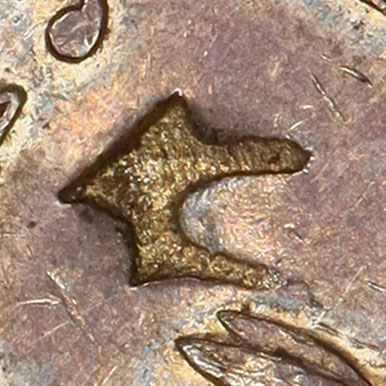 Possibly 仁 - rén - benevolence, humanity, kernel
Provenance:
From the Stack's Bowers April 2024 Hong Kong (SAR) Auction - Session 4 - Foreign Coins
Lot #43057
Auction Description:
FRANCE. 5 Francs, 1875-A. Paris Mint. PCGS Genuine--Chopmark, AU Details.
KM-820.1; Gad-745A. It is not often that one encounters a Third Republic French coin with a chopmark, but this example does just that, serving as evidence of its circulation in
the Orient. The noted chop is on the reverse, with otherwise brilliant luster and handsome toning covering the surfaces.
Estimate: $400 - $600.
From a New York Gentleman's Collection.
According to the Stack's Bowers auction listing, this coin is "From a New York Gentleman's Collection."
It is unclear who this "New York Gentleman" is, but through Stack's representatives we have learned that this collector has now passed away, and he had a very extensive collection. The collection looks to have been built primarily in the 1990's and previous. Some of the coins are from important chop mark collections such as Frank Rose and Hal Walls.
Also noted in Chopmark News, Vol 2 - Issue 1 January 1991 - as follows:
"France. 1875-A 5 Francs. Paris. D.92. AU. 1 med date side"

Previously from the JEAN (Journal of East Asian Numismatics) Mail Bid Sale #8, August 18, 1998, lot 6.
Auction Description:
France. 5F. (1875A. Y52) Ex. Kriz collection (6/8/70) Estimate 80-100
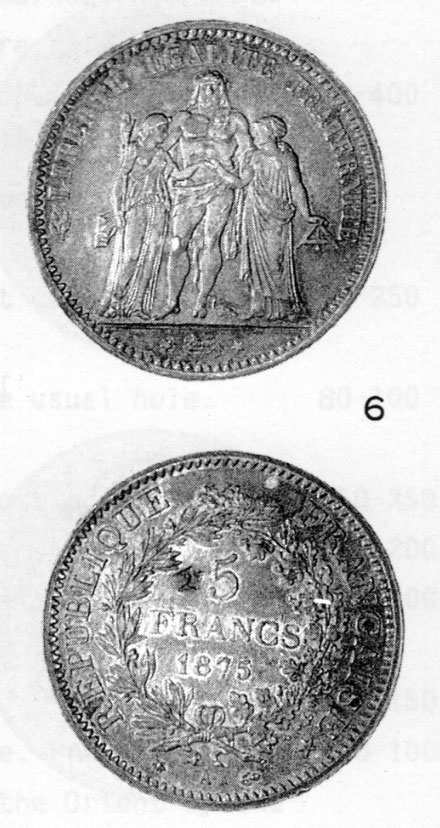
The above mail bid sale was one of the 4 JEAN mail bid sales to feature coins from the collection of Frank Rose.
Ex. Rose/Kriz. Frank Rose purchased this coin from Col. Robert F. Kriz on June 8, 1970.
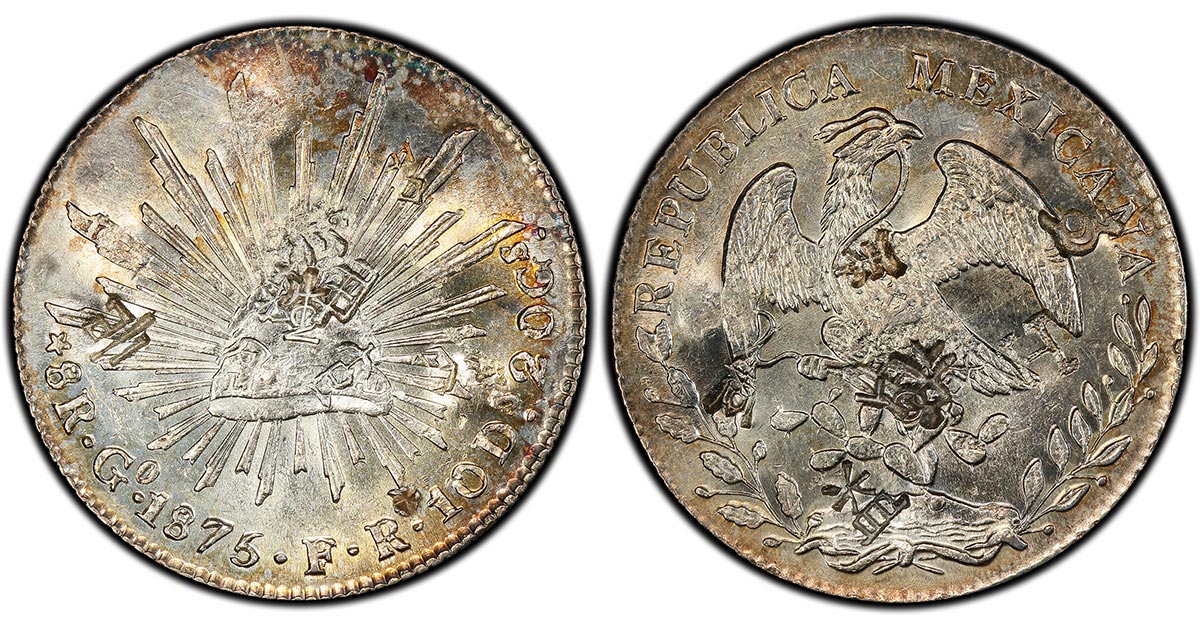
1875-Go FR Cap & Rays 8 Reales, Guanajuato, Mexico mint
Specifications:
27.07 g, .903 fine silver, .786 troy oz (actual silver weight)
Recorded mintage: 3,744,000
Catalog reference: KM 377.8
Details:
The 1875-Go FR Mexico 8 Reales was struck at the Guanajuato Mint and belongs to the iconic "Cap and Rays" type minted from 1823 to 1897. The obverse displays the Mexican
national arms featuring an eagle perched on a cactus devouring a snake, encircled by the legend "REPUBLICA MEXICANA." The reverse features a Phrygian Liberty cap, an
ancient symbol of a freed slave's liberty, inscribed with the word "LIBERTAD" and surrounded by a glory of radiating sunbeams. The legend includes the "8R" denomination,
the "Go" mintmark, the "1875" date, the "F.R." assayer mark (Francisco de P. Rubio and Rafael de P. Rubio), and the fineness "10 Ds. 20 Gs."
This issue was produced during a period of relative stabilization under the Restored Republic, just before the beginning of the Porfiriato (1876–1911). This era, led by General Porfirio Díaz, focused on "Order and Progress" through rapid industrialization and foreign investment, transforming Mexico's mining sector. The Guanajuato Mint was among the most prolific of the regional mints, fueled by the immense output of the Valenciana and Rayas mines. Despite the official move toward the decimal Peso system in 1869, the 8 Reales remained the preferred format for international trade, leading to its continued production for nearly three decades alongside the newer Peso. By the 1870s, these coins were the lifeblood of Mexican export, serving as the primary silver vehicle for balancing trade deficits with Europe and the Orient.
This type is extremely common with chopmarks, as the Guanajuato 8 Reales was one of the most widely recognized and trusted silver coins in the world. Its consistent weight and high silver purity made it the "gold standard" of silver trade coins in the Chinese treaty ports. These coins typically arrived in China via the Pacific trade routes from the port of San Blas or through intermediaries in San Francisco and London. Because the 1875-Go issues were produced in such large quantities, they frequently bear a high number of chopmarks.
Notable chopmarks:
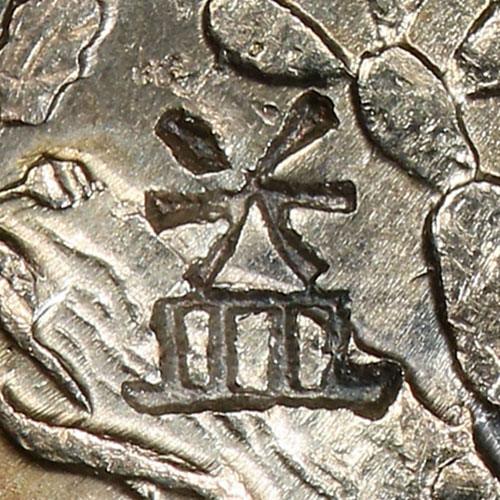 益 - yì - benefit, increase
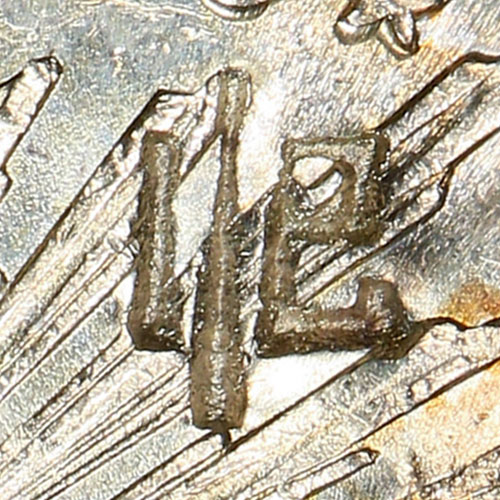 Similar to 忋 - gǎi - to rely on, look up to
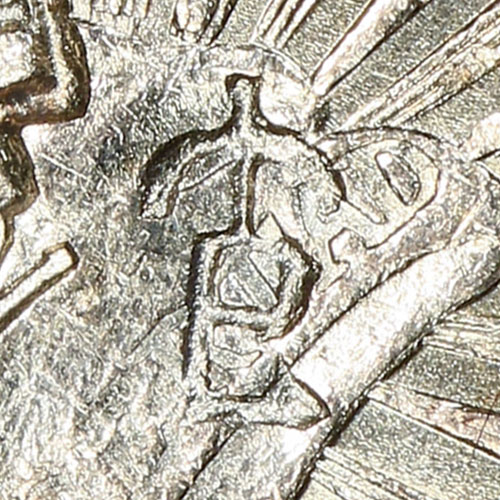 Similar to 它 - tā - it
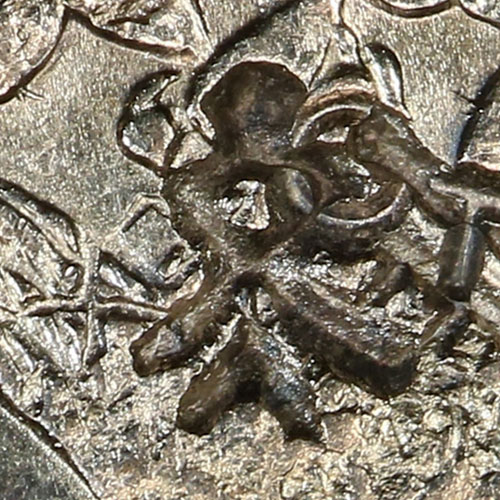 Possibly 齐 - qí - even, together
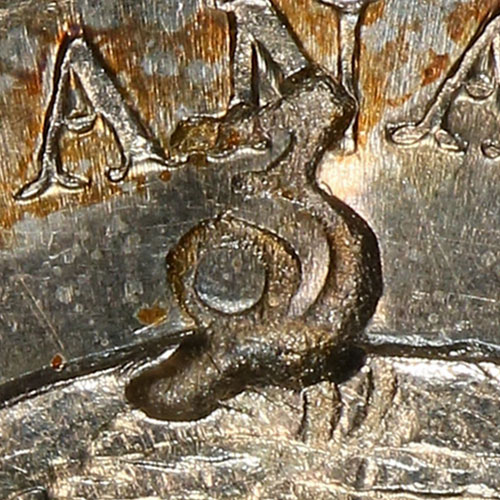
 - Cursive (Caoshu) script variant of 事 - shì - matter, thing, item, work, affair
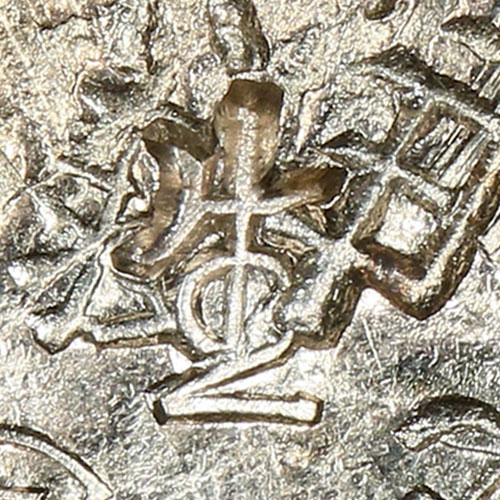
 - Cursive (Caoshu) script variant of 生 - shēng - life, birth, grow
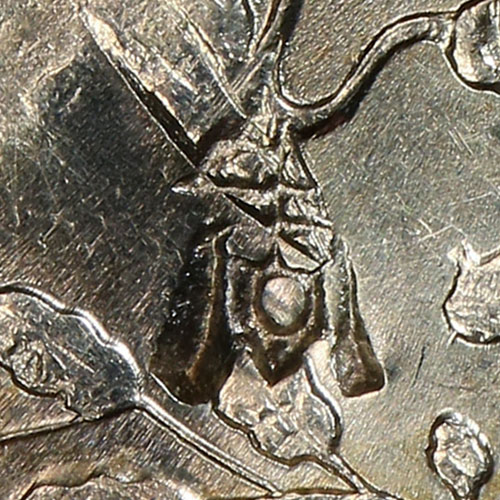 Unknown chopmark
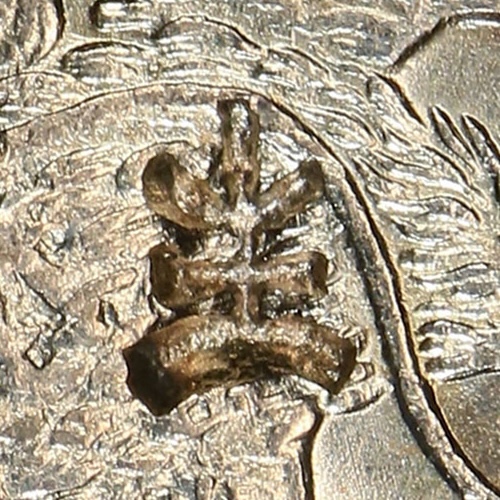
 - Liushutong script variant of 生 - shēng - life, birth, grow
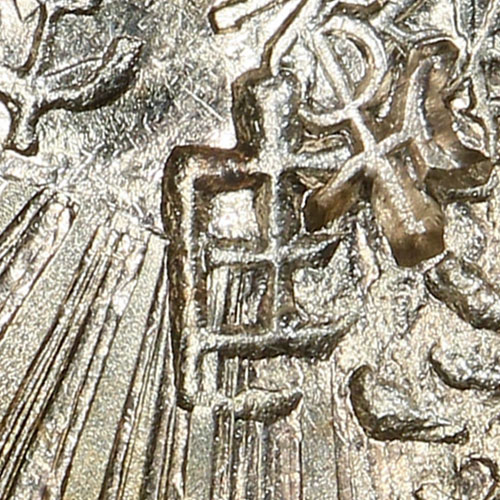 Unknown chopmark
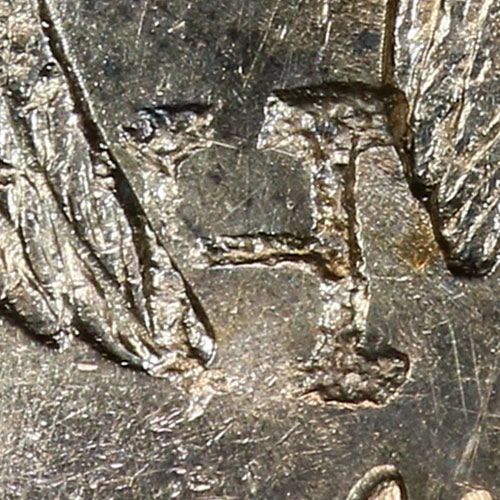 H - Latin-letter chopmark
Provenance:
Purchased on eBay in February 2015 from a seller in New Hampshire.
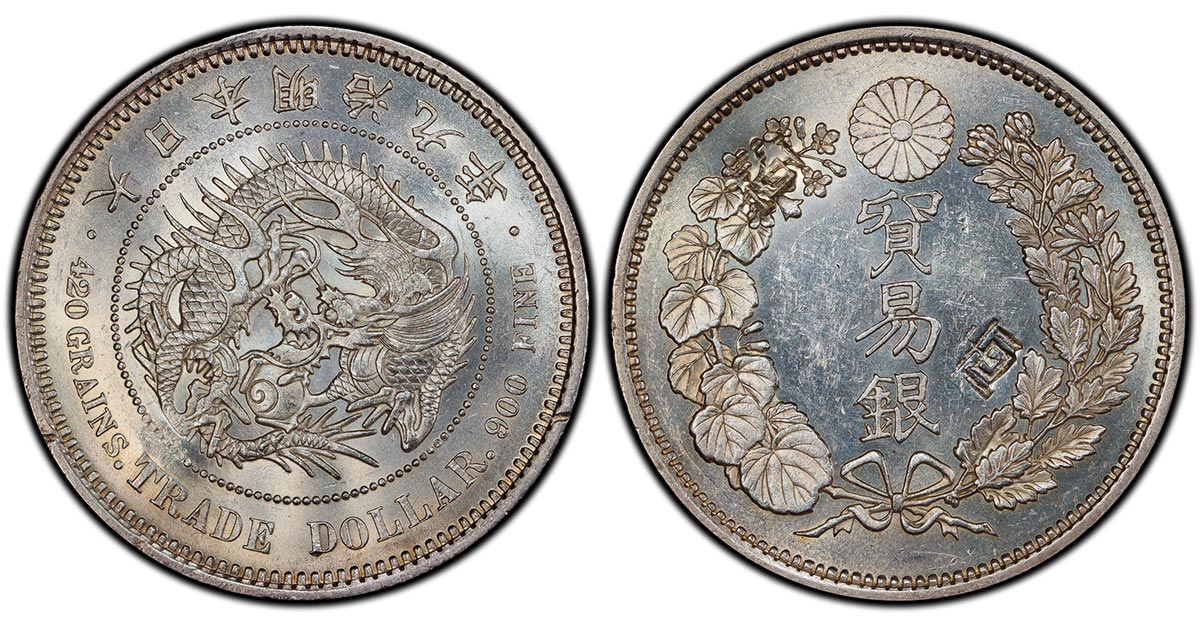
Year 9 (1876) Japan Trade Dollar (Ex. Leverage)
Specifications:
27.22 g, .900 fine silver, 0.7876 troy oz (actual silver weight)
Recorded mintage: 3,056,638 for 1875-1877
Catalog reference: KM Y14
Details:
The 1876 Japan Trade Dollar was struck at the Osaka Mint and belongs to a specialized, short-lived series produced between 1875 and 1877. The coin contains 27.22g, .900 fine
silver, specifically designed to match the weight and purity of the United States Trade Dollar, with an official mintage of 1,132,813 pieces for the Meiji Year 9 date. The
obverse features a coiled dragon surrounded by the legends "420 GRAINS. 900 FINE." and "TRADE DOLLAR" in English, with the Japanese characters for "Great Japan" and "Meiji
Year 9" above. The reverse displays the Imperial Seal of Japan (the chrysanthemum) flanked by branches of paulownia and oak, with the central characters "貿易銀" (Bōekigin),
which translates to "Trade Silver."
This issue represents Japan's strategic effort to integrate into the maritime trade economy of East Asia, which was then dominated by the Mexican 8 Reales. Following the 1871 New Currency Act, the Japanese government found that their standard 1-Yen silver coins (weighing 26.96g) were frequently discounted by Chinese merchants who preferred the heavier Mexican and American dollars. By increasing the silver weight to exactly 420 grains (27.22g), the Meiji government aimed to provide a "universal" trade coin that would be accepted at par in treaty ports like Shanghai and Hong Kong. This initiative took place during a period of global "Silver Wars," as Japan, the United States, and Mexico competed for economic influence in the Qing Empire.
This type is quite common with chopmarks, reflecting its successful, albeit brief, circulation on the Asian mainland. Chinese shroffs generally accepted the Japanese Trade Dollar because its specifications were identical to the trusted American version. However, the high cost of production and the continued preference for the Mexican "Cap and Rays" Peso made the venture economically unsustainable for Japan. The Trade Dollar was officially demonetized in 1878, and many remaining pieces were later recalled and c ountermarked with the character "Gin" (silver) for use outside of mainland Japan.
However common with chopmarks, this specific example is extremely rare at this level of preservation, especially since we know it entered circulation and picked up a chopmark. The remaining luster and mint frost is just gorgeous.
Notable chopmarks:
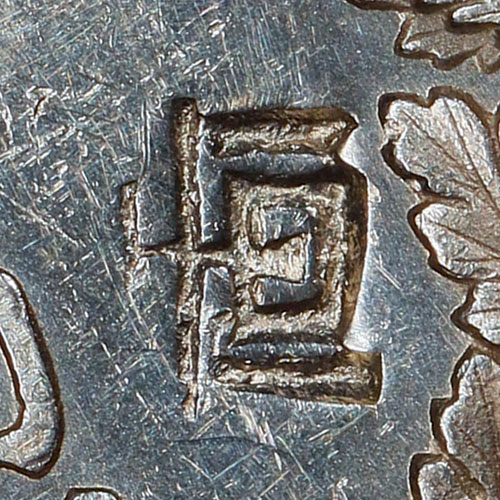 恒 - héng - constant, persistent
Provenance: Acquired in trade with author and fellow chopmark collector W. Taylor Leverage in August 2024.
Previously from the 2020 August 5-7, Dallas, Texas ANA Worlds' Fair of Money World Coins & Ancient Coins Platinum Night Auction Lot #31799
Auction Description:
Meiji Trade Dollar Year 9 (1876) UNC Details (Chopmarked) NGC, KM-Y14. A preeminent crown, this piece exudes allure with an abounding luster, and a reflectivity
on the reverse that is quite close to Prooflike. A quality piece and worthy of attention despite the noted chopmark.
Previously from The Canadian Numismatic Company October 2019 Torex Auction, Oct. 25-30, 2019 Lot #10
Auction Description:
JAPAN TRADE DOLLAR, 1876 NGC UNC DETAILS CHOP MARK. A difficult year in trade dollars with unc examples often selling in the 5 to 6 k range. Fully brilliant. Stamped
with 2 obverse Chinese trading company chop marks, indicative of the geography this coin traveled before getting repatriated to Japan. Rarely found with such strong
details.
Estimate: $4000-4500 (CAD)
Previously from the 2018 September 6-11 Long Beach Expo World Coins & Ancient Coins Signature Auction Lot #34622
Auction Description:
Meiji Trade Dollar Year 9 (1876) UNC Details (Chopmarked) NGC, KM-Y14. One of the preeminent crowns, this piece exudes allure with an abounding luster, and a reflectivity
on the reverse that is dangerously close to prooflike. A quality piece and worthy of attention despite the noted deficiencies.
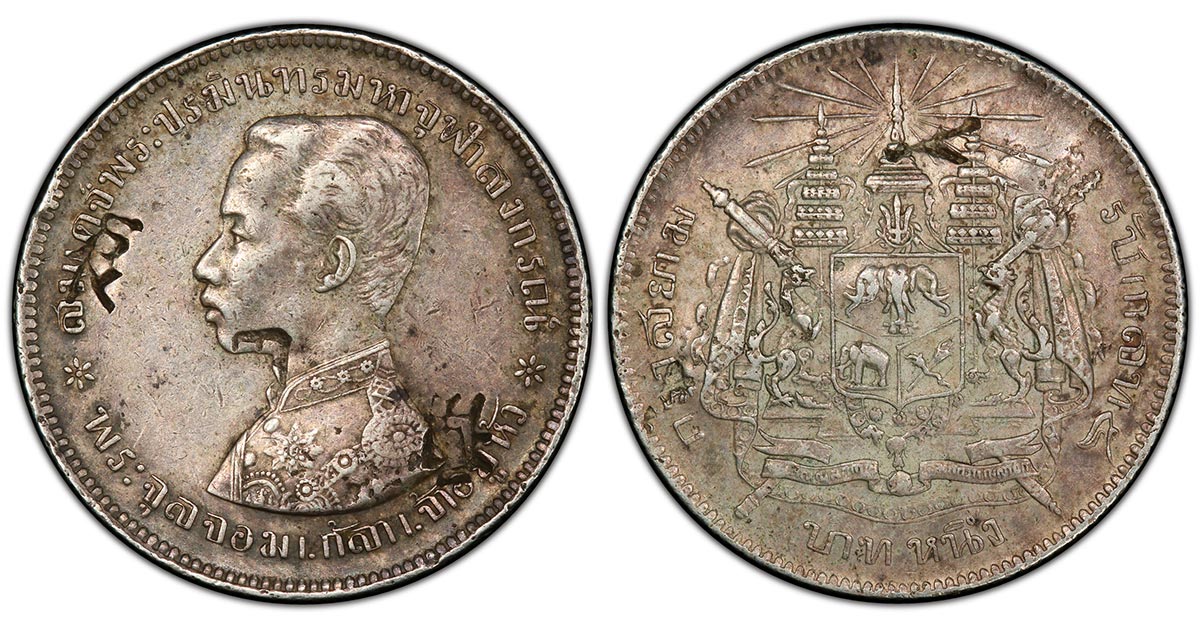
(1876-1900) Thailand Baht (Ex. Bowman)
Specifications:
15.04 g, 31mm diameter
Recorded mintage: unknown
Catalog reference: KM Y34
Details:
The Thailand 1 Baht was struck during the reign of King Rama V (Chulalongkorn) and is a centerpiece of the modernization of Siamese coinage. The coin contains 15.24g of
.800 fine silver, with an unknown total mintage as records from the Bangkok Mint during this period are often incomplete or aggregated. The obverse features a left-facing
portrait of a young King Rama V in traditional regal attire, surrounded by his titles in Thai script. The reverse displays the Great Seal of Siam, an elaborate coat of
arms featuring the three-headed elephant (Erawan) representing the kingdoms of the North, South, and Malaya, flanked by two seven-tiered umbrellas and the royal regalia.
This issue reflects the profound transformation of Thailand under Rama V, who sought to westernize Siamese institutions to preserve the nation's independence during the height of European colonial expansion in Southeast Asia. This specific 1-Baht type replaced the older, hand-hammered "Bullet Money" (Pod Duang) with machine-struck, flat coinage produced on European-made presses. The design itself was heavily influenced by British and French numismatic aesthetics, signaling Thailand's desire to be viewed as a modern, sovereign state on the global stage. Despite these western influences, the coin remained deeply rooted in Siamese tradition, maintaining the Baht weight standard that had existed for centuries.
Thai coins in general are not commonly found with chopmarks despite the close proximity to China, as the Thai Baht was primarily a domestic currency and did not circulate as a trade coin with the same frequency as the Mexican Peso or the Indian Rupee. While Thailand was a major exporter of rice and teak, trade was often settled in British Sovereigns, Indian Rupees, or Mexican Dollars, which were then exchanged for local currency at the ports. Chopmarked examples usually indicate a coin that left the Kingdom via maritime trade routes to Singapore or Southern China, likely as payment for imported goods or through the hands of the significant Chinese merchant communities in Bangkok.
Three obverse and one reverse chopmark are somewhat unique and don't necessarily look Chinese in origin, this coin may have been chopped somewhere outside of the main port in Canton.
Notable chopmarks:
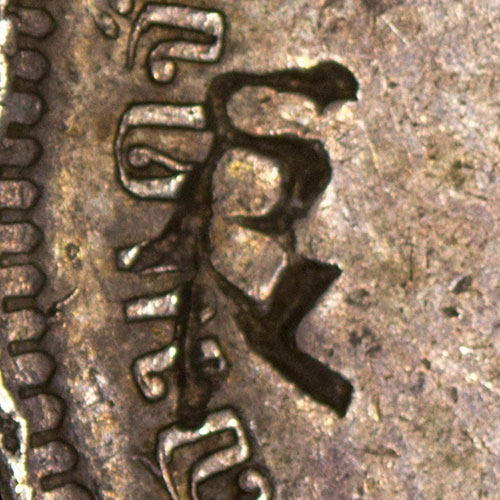 Similar to 辰 - chén - morning, 5th earthly branch
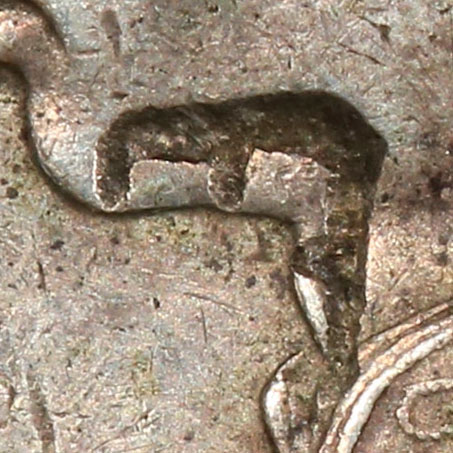 Unknown partial chopmark
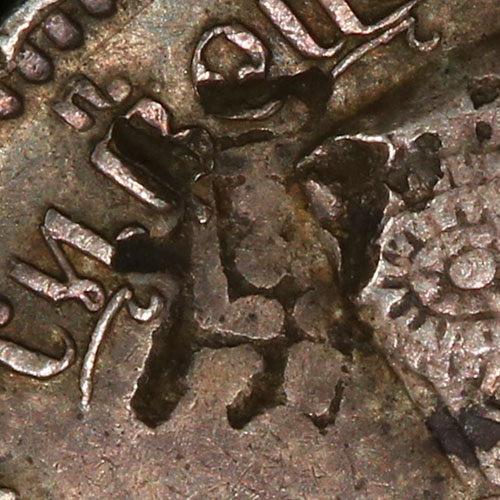 湧 - yǒng - surge, gush
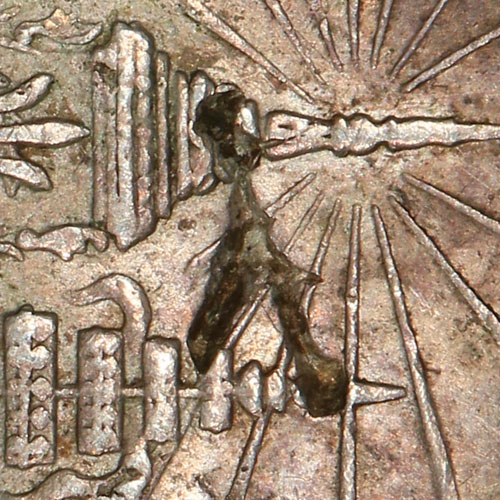 Unknown chopmark
Provenance:
Purchased from Paul Brombal in November 2016
Ex J.D. Bowman, as described in the Chopmarked Collectors Club newsletter, Volume 3, Issue 3, July 1993, page 3-52. Bowman was an original contributor to the Chopmark Collectors Club newsletters, and assembled one of the finest chopmark collections of all time. Bowman worked closely with Santa Barbara coin dealer Paul Brombal, in fact J.D. credits Paul with "most all of my chops he got for me in Singapore, Hong Kong & Manilla over the years."
1876 United States Trade Dollar
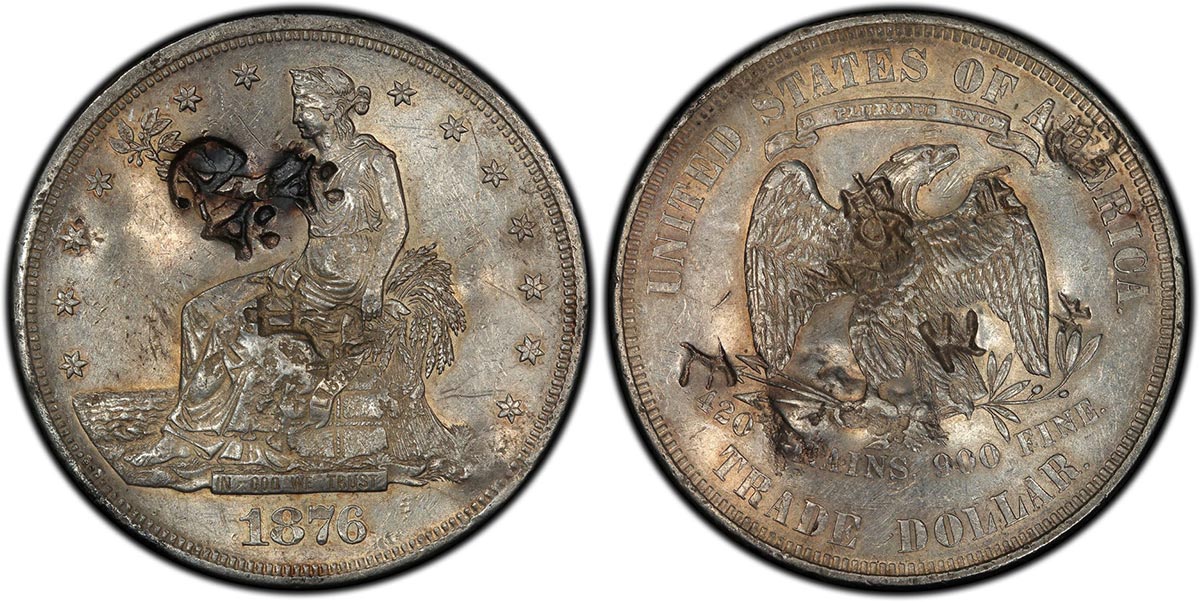
Specifications:
27.20 g, .900 fine silver, .787 troy oz (actual silver weight)
Recorded mintage: 455,000
Catalog reference: PCGS 7041
Details:
The 1876 Philadelphia Trade Dollar traveled a significantly longer and more costly path to the Asian mainland compared to its western counterparts, which largely accounts
for its relative scarcity with chopmarks. While the San Francisco and Carson City mints were positioned to strike coins from local silver and ship them directly across the
Pacific, Philadelphia issues had to be transported across the American continent by rail or shipped via Atlantic routes to London or Marseille before continuing to the Far
East. Because of the high domestic demand for silver in the Eastern United States for manufacturing and bullion reserves, and the added logistical expense of moving these
coins to Pacific ports, only a small fraction of the Philadelphia mintage, which totaled 455,900 for this year, was actually exported for trade. Consequently, most Philadelphia
Trade Dollars remained in domestic or European vaults, whereas the Western mints acted as direct conduits for the "China Trade," resulting in a much lower frequency of
Philadelphia strikes entering the hands of Chinese shroffs.
Notable chopmarks:
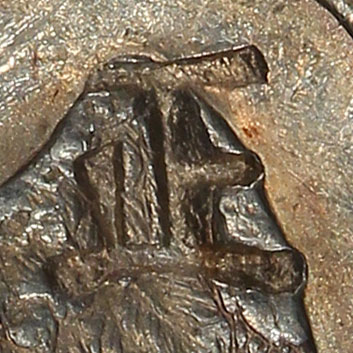 正 - zhèng - correct, straight, upright
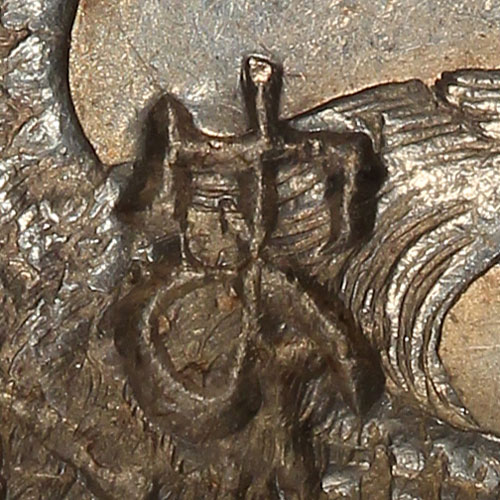 Similar to お - unknown chopmark
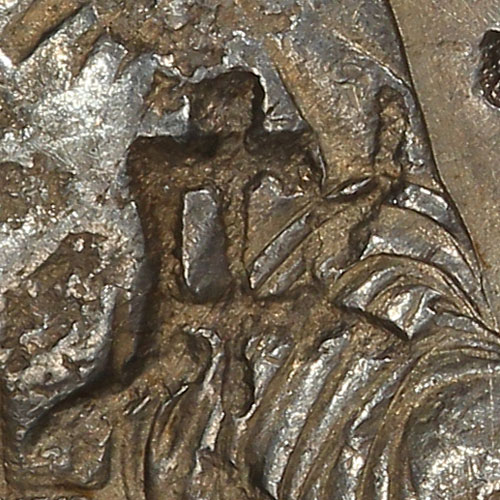 Unknown chopmark, possibly 戊 or 中
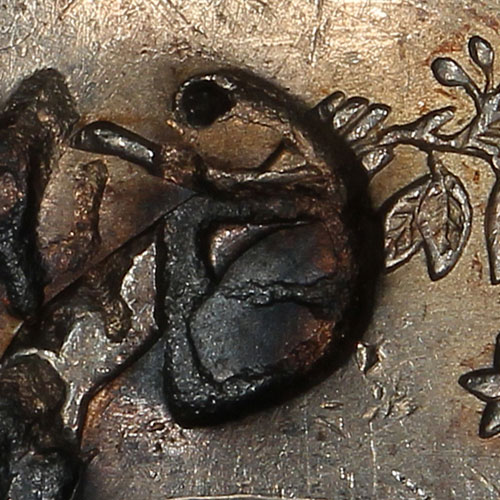
 - Seal script variant of 月 - yuè - moon, month
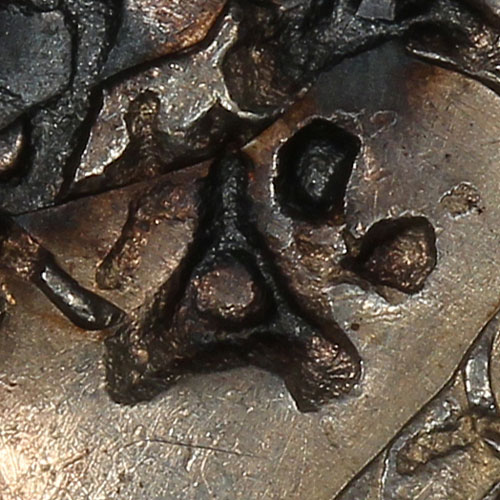 Unknown chopmark
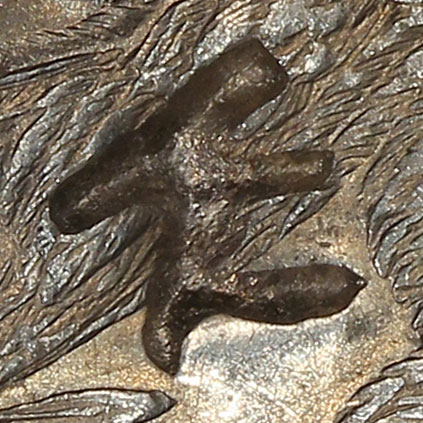 仁 - rén - benevolence, humanity, kernel
Provenance:
Purchased raw on eBay in June 2013 from a seller in Florida.
1878-CC United States Morgan Dollar (Ex. Leverage)
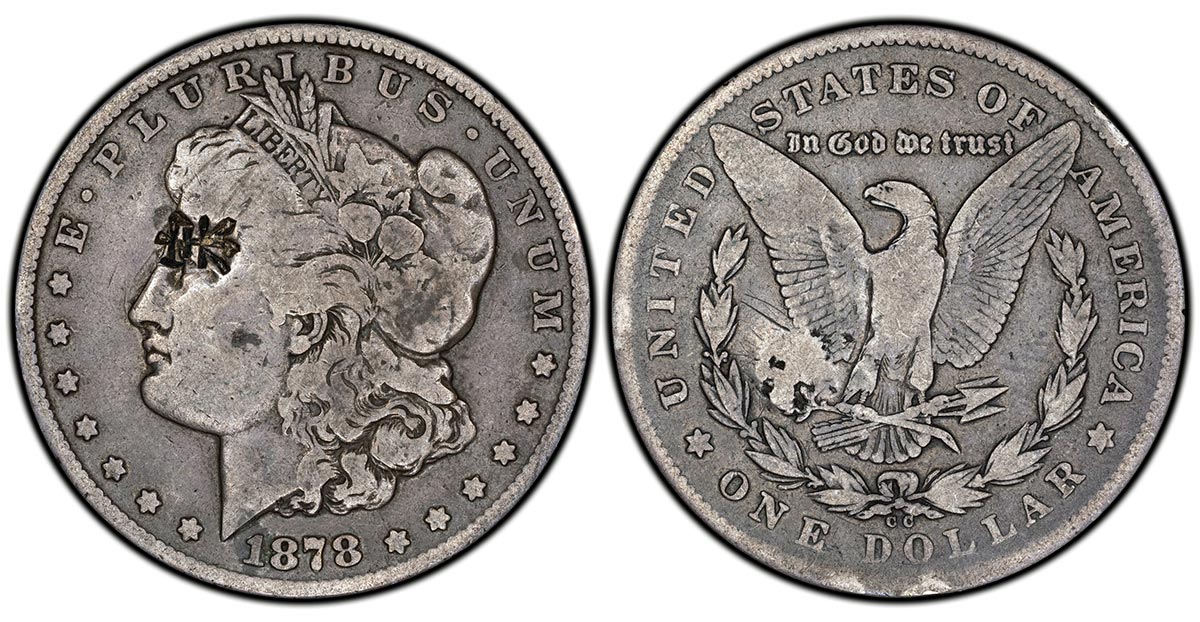
Specifications:
26.73 g, .900 fine silver, .773 troy oz (actual silver weight)
Recorded mintage: 2,212,000
Catalog reference: PCGS 7080
Details:
The 1878-CC Morgan Dollar represents the first year of the series and was struck at the Carson City Mint using silver from the Comstock Lode. The coin contains 26.73g of .900
fine silver, with a mintage of 2,212,000 pieces. The obverse features George T. Morgan’s portrait of Anna Willess Williams as Liberty, adorned with a cap, wheat, and cotton,
encircled by "E PLURIBUS UNUM" and the date. The reverse depicts an eagle with outstretched wings clutching an olive branch and arrows, with the "CC" mintmark positioned above
the "D" and "O" in "DOLLAR."
This issue was authorized under the Bland-Allison Act of 1878, which required the U.S. Treasury to purchase massive quantities of silver for coining into silver dollars to support the mining industry. Unlike the Trade Dollar, the Morgan Dollar was intended primarily for domestic circulation and to serve as a legal tender reserve. Most Carson City Morgan dollars remained in the Western United States or were held in Treasury vaults for decades, eventually being distributed through GSA sales in the 20th century.
Chopmarks on this type are fairly rare and represent an anomaly in the silver trade. While the U.S. Trade Dollar was the official tool for Asian commerce, a very small number of Morgan Dollars were carried to the Far East by merchants or travelers. Because there was no economic incentive to export the lighter Morgan Dollar when the heavier Trade Dollar was available, any 1878-CC Morgan dollar bearing authentic chopmarks is considered a significant rarity.
Notable chopmarks:
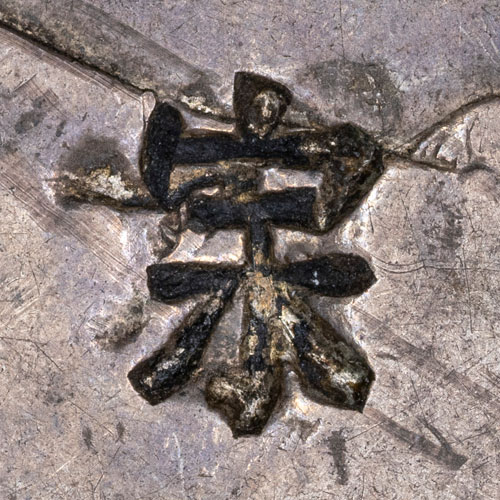 Very close to 宗 - zōng - ancestor, ancestral
Provenance:
Acquired by trade with fellow collector and author of a great chopmark book Taylor Leverage, in August 2025. Taylor bought the coin on eBay in May 2025.
1879-Ho JA Cap & Rays 8 Reales, Hermosillo, Mexico mint
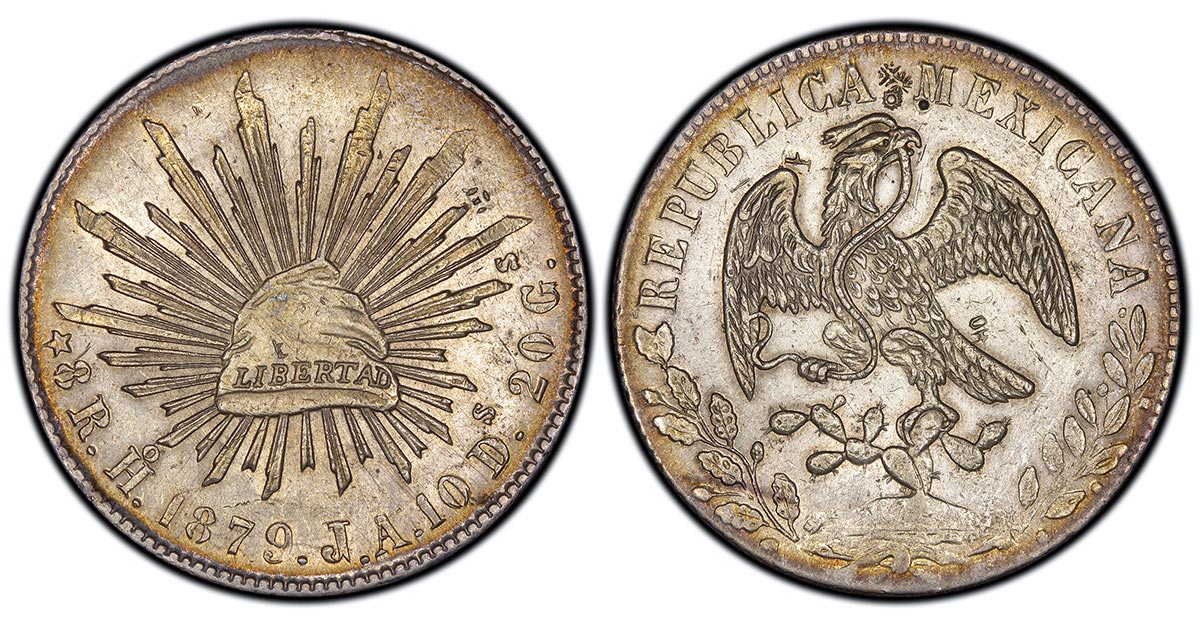
Specifications:
27.07 g, .903 fine silver, .786 troy oz (actual silver weight)
Recorded mintage: Unknown
Catalog reference: KM 377.9
Details:
This 1879-Ho JA Mexico 8 Reales was struck at the Hermosillo Mint in the state of Sonora, with one tiny obverse and a few small reverse chopmarks.
This issue was produced during the early Porfiriato, a period defined by General Porfirio Díaz’s efforts to centralize political power and modernize the Mexican economy. Despite these centralization goals, regional mints like Hermosillo continued to operate to process silver from local mines. Because of its location in Northwestern Mexico, the Hermosillo Mint primarily served the regional economy of Sonora and facilitated trade with the American Southwest or maritime commerce through the Pacific port of Guaymas.
Chopmarks on the Hermosillo mint 8 Reales are less frequently encountered than the more commonly exported mints, such as Mexico City, Zacatecas or Guanajuato. While the Mexican 8 Reales was the primary silver currency used in Chinese treaty ports, the vast majority of that supply originated from high-volume central or coastal mints.
Notable chopmarks:
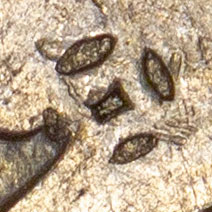 Cash coin (銅錢)The cash coin (銅錢, tóngqián), whose round body over a square hole embodies the cosmology of 天圓地方 (tiānyuán dìfāng, 'round heaven, square earth'). A long-standing emblem of wealth and prosperity, it is hung or carried to attract fortune and ward off evil; the 外圓內方 (wàiyuán nèifāng, 'round without, square within') form also reads as a moral ideal of flexibility around firm principle.
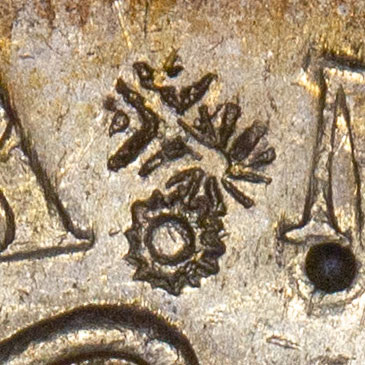 Group of 3 small symbol chopmarks
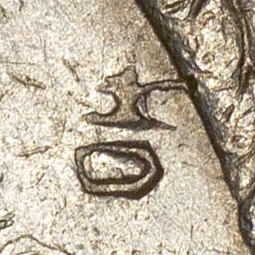 吉 - jí - auspicious, lucky
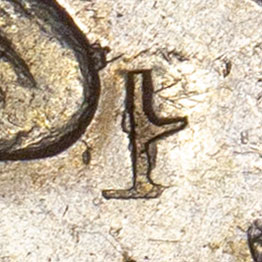 上 - shàng - above, up, top
Provenance:
Purchased on eBay in March 2018 from a seller in Singapore.
1881-S United States Morgan Dollar (Ex. Bowman)
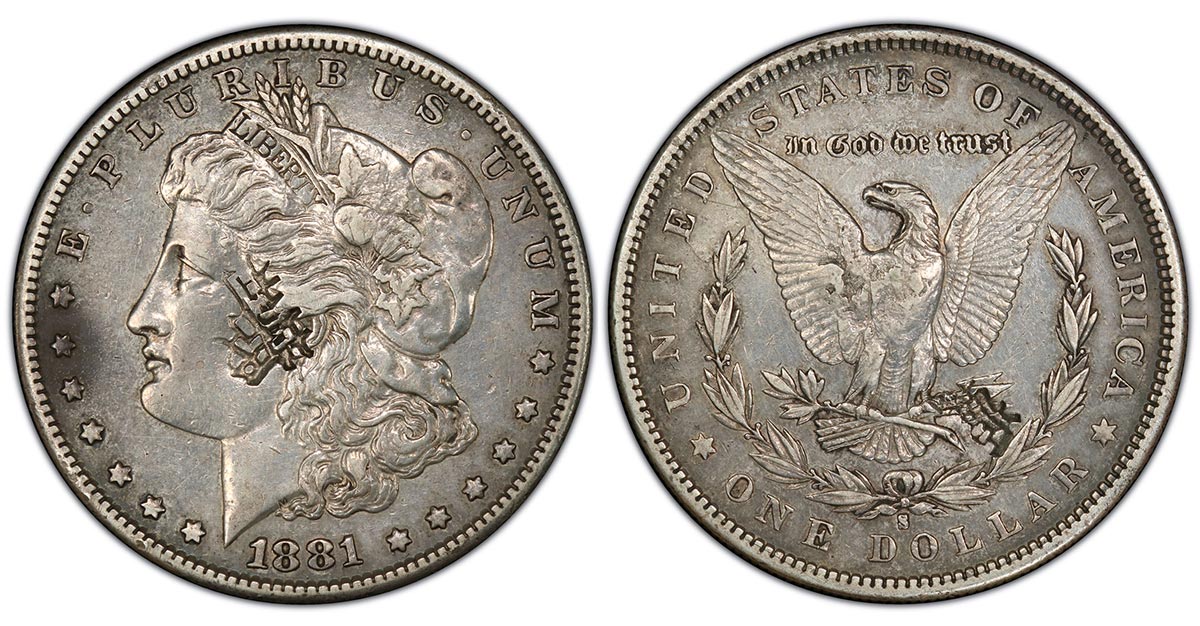
Specifications:
26.73 g, .900 fine silver, .773 troy oz (actual silver weight)
Recorded mintage: 12,760,000
Catalog reference: PCGS 7130
Details:
The 1881-S United States Morgan Dollar was struck at the San Francisco mint with a weight of 26.73g and a fineness of .900. This is one of the higher mintage issues at
12,760,000 coins made. The obverse features a left-facing profile of Liberty wearing a Phrygian cap adorned with wheat and cotton, symbolizing the agricultural
reconciliation of the American North and South. The cap is inscribed with "LIBERTY" and surrounded by the legend "E PLURIBUS UNUM" (Out of many, one). On the reverse, a bald
eagle with outstretched wings clutches an olive branch and three arrows, partially encircled by a laurel wreath. The legend "UNITED STATES OF AMERICA" and the denomination
"ONE DOLLAR" surround the imagery. The "S" mint mark is located on the reverse, centered below the wreath. The Morgan Dollar type was minted from 1878 to 1904, and again in
1921.
Production of the Morgan Dollar was mandated by the Bland-Allison Act (1878), which required the U.S. Treasury to purchase and coin millions of dollars' worth of silver monthly. This legislation followed the "Crime of 1873", a period of political turmoil that had effectively ended the silver dollar's production for several years. The silver for these coins was largely sourced from the Comstock Lode in Nevada and transported to the San Francisco mint. During this period, the San Francisco facility was renowned for its high technical standards, resulting in the consistently sharp strikes and brilliant luster characteristic of this year's output.
This type is rare with chopmarks. Although the Morgan Dollar circulated widely within the United States, it was not an official export coin for the China trade. Small quantities reached the Chinese mainland via Pacific merchant vessels and private trade, and it was far less utilized than the heavier Spanish 8 Reales or the U.S. Trade Dollar.
Notable chopmarks:
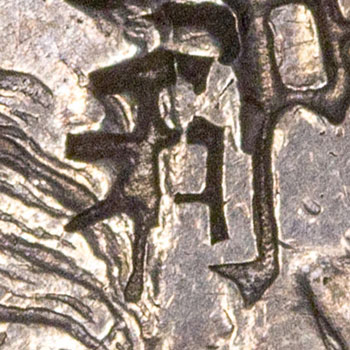 利 - lì - profit, benefit, advantage
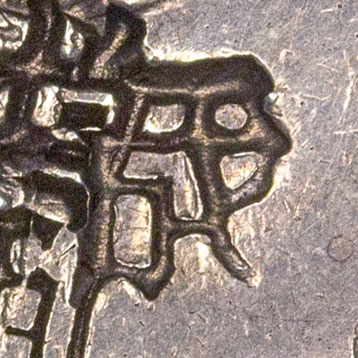 成 - chéng - accomplish, become, complete
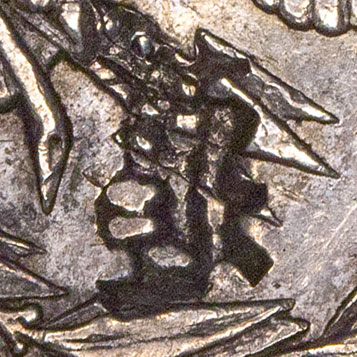 乾 - (traditional variant of 干) qián - dried, heaven, male
Provenance:
From the Stack's Bowers Collector's Choice Auction April, 5 2017 Lot #91296
Auction Description:
1881-S Morgan Silver Dollar. EF Details--Chopmark (PCGS).
Ex J.D. Bowman, as listed in the Chopmarked Collectors Club newsletter, Volume 2, Issue 2, July 1991, page 2-52, where he describes an 1881-S Morgan dollar with 3 large chopmarks (obverse) and 1 large chopmark (reverse). Bowman was an original contributor to the Chopmark Collectors Club newsletters, and assembled one of the finest chopmark collections of all time. Bowman worked closely with Santa Barbara coin dealer Paul Brombal, in fact J.D. credits Paul with "most all of my chops he got for me in Singapore, Hong Kong & Manilla over the years."
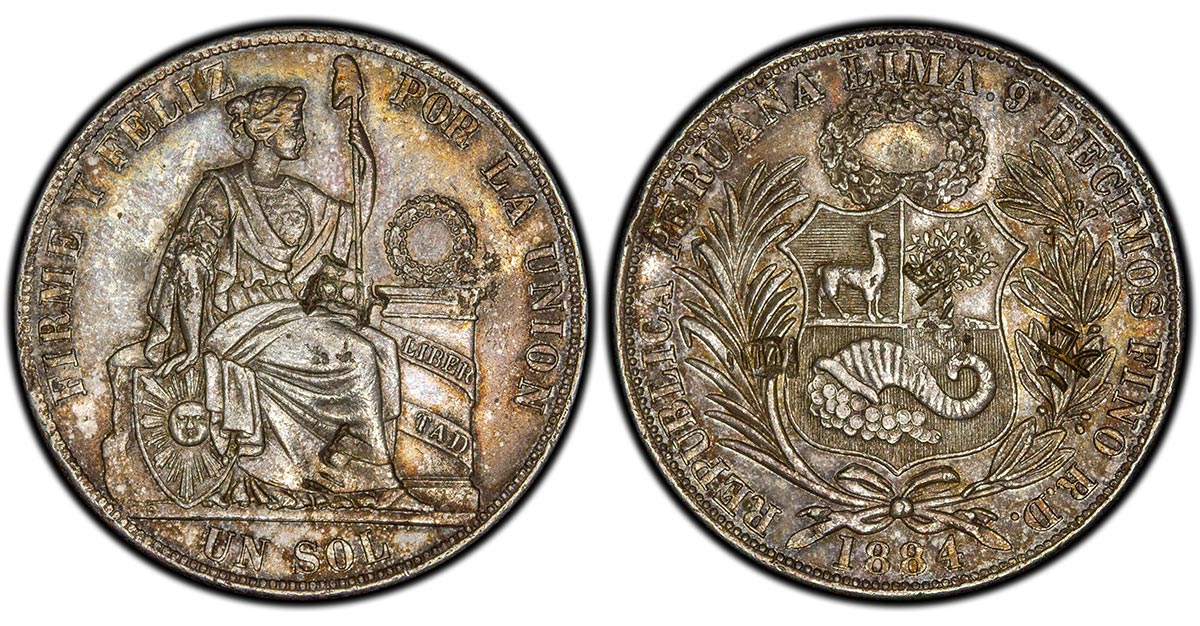
1884 Peru Un Sol (Raised Libertad)
Specifications:
25.000 g, .900 fine silver, .7234 troy oz (actual silver weight)
Recorded mintage: Unknown
Catalog reference: KM 196.2
Details:
The 1884 Peru Un Sol was struck at the Lima mint with a weight of 25.00g and a fineness of .900, representing a silver content around 92.4% of the standard Spanish 8 Reales.
The obverse depicts a seated figure of Liberty holding a shield and a staff topped with a Phrygian cap, representing freedom and republican virtue, flanked by a column draped
with a wreath. The legend "FIRME Y FELIZ POR LA UNION" (Steadfast and Happy for the Union) encircles the figure. The reverse features the Peruvian national coat of arms,
consisting of a shield with a vicuña, a cinchona tree, and a cornucopia, representing the animal, vegetable, and mineral wealth of the nation. This design was used for the Un
Sol denomination from 1863 to 1935. The assayer mark "B.F." (Bernardo Fanning) appears on the reverse. The edge is incused with the lettering "SOMOS LIBRES SEAMOLO SIEMPRE"
(We are free, let us be so forever).
Production of the 1884 Un Sol occurred immediately following the Treaty of Ancón (1883), which ended the War of the Pacific (1879–1884). This period was defined by a difficult economic reconstruction as Peru sought to stabilize its currency after the loss of the nitrate-rich Tarapacá province and the collapse of its paper money system. The silver for these coins was largely sourced from the Cerro de Pasco mines, which remained the center of Peruvian mineral production during the post-war recovery. The issuance of high-purity silver coinage was a political necessity to restore international credit and replace the depreciated "Inca" paper notes and provisional base-metal issues.
This type is common with chopmarks. Peruvian silver found a consistent market in China as a secondary trade type, arriving via merchant vessels departing from the port of Callao for Hong Kong and the southern treaty ports. Chinese merchants distinguished the different Peruvian types with specific vernacular names; the seated Liberty design of 1884 was famously known as "Seat-wagon silver" [坐車銀] or "driving a wagon silver," as Taiwanese shroffs interpreted Liberty and her column as a figure on a vehicle. While they were lighter than the Mexican 8 Reales, their reliable fineness ensured they were accepted at a weight-based discount by Chinese shroffs.
Notable chopmarks:
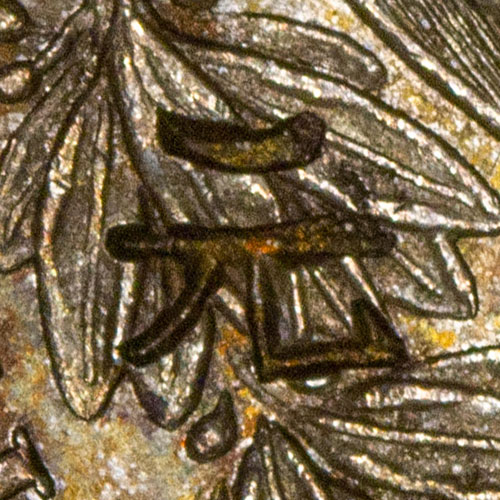 元 - yuán - dollar, unit of currency, basic, primary
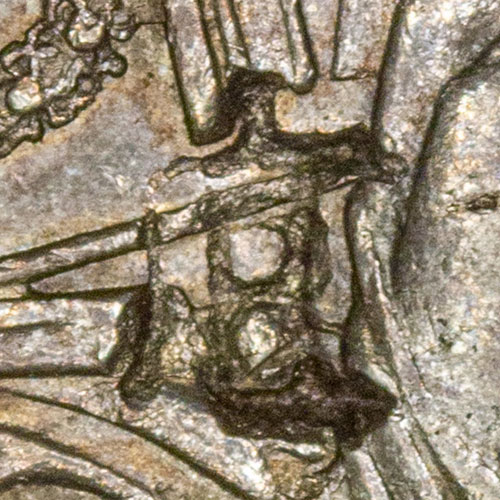 Possibly 庀 - pǐ - to prepare, to manage
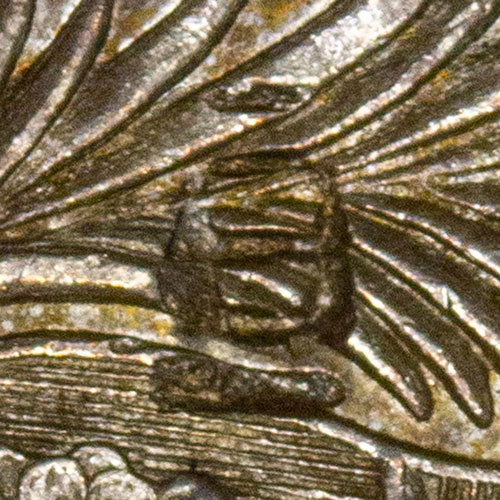 亘 - gèn - extend, span
Provenance:
From fellow collector Ed Murphy, who compiled one of the broadest and most complete chopmark collections of all time, March 2020.
1885 Chile Peso
Specifications:
25.00 g, .900 fine silver, .7234 troy oz (actual silver weight)
Recorded mintage: 528,000
Catalog reference: KM 142.1
Details:
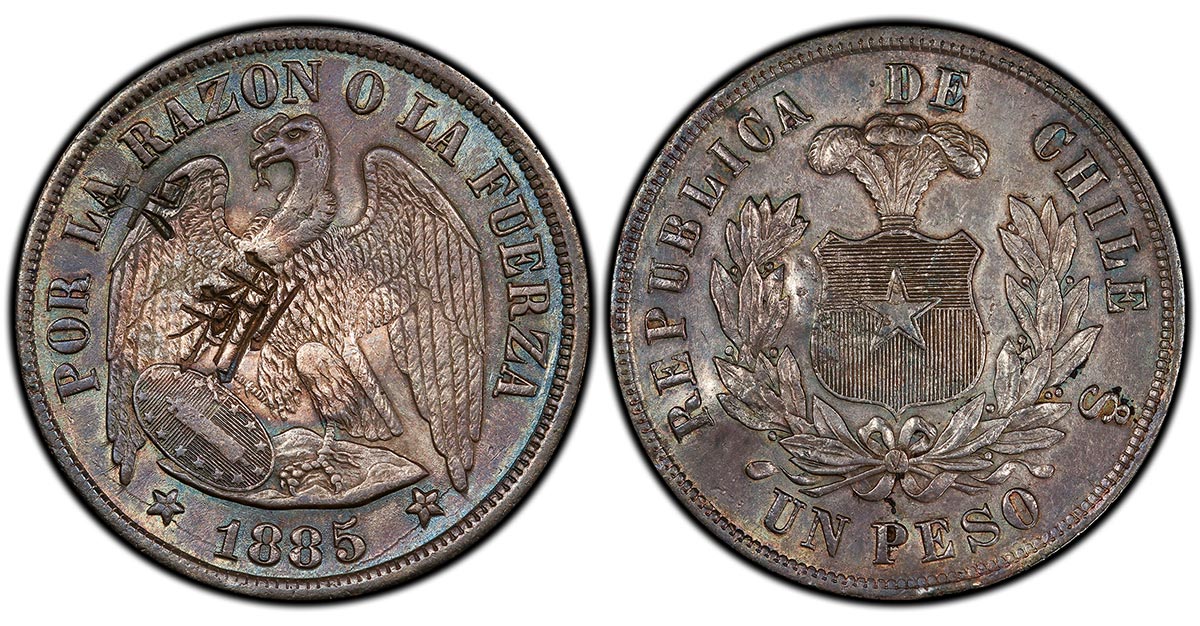
The 1885 Chile Peso was struck at the Santiago mint with a weight of 25.00g and a fineness of .900, representing a silver content around 92.4% of the standard Spanish
8 Reales and conflicting reports of a mintage between 464,000 and 528,000. The obverse features a condor with its wings spread, perched on a rock and clutching a broken
chain, symbolizing Chile’s sovereignty and independence. The legend "REPUBLICA DE CHILE" encircles the imagery. On the reverse, the type displays a five-pointed star
within a shield, surmounted by a plumed crest consisting of three feathers. The shield is framed by a wreath containing laurel and palm branches. The legend "POR LA
RAZON O LA FUERZA" (By Reason or By Force) reflects the national motto established during the early republican era. This design was minted between 1867 and 1891.
Production of the 1885 Peso occurred during the presidency of Domingo Santa María, shortly after Chile's victory in the War of the Pacific (1879–1884). This period was characterized by significant national wealth and territorial expansion following the annexation of mineral-rich northern provinces. The silver for these issues was primarily extracted from the mines of Chañarcillo and other northern districts, which provided the backbone for Chile’s monetary stability since the 1830s. The political climate was defined by significant secular reforms and the republic’s growing international prestige, with the coinage serving as a primary symbol of its economic sovereignty.
This type is semi-scarce with chopmarks, but can be found with a little patience. Chilean silver reached the Chinese mainland as a secondary medium of exchange, typically arriving via merchant vessels departing from the port of Valparaíso to treaty ports like Canton or Shanghai. While most commonly described by its "feathered" plumes, specific shroff handbooks identify this type as “chicken” silver [雞鷹銀]. It's a popular type, so when they do show up with chopmarks they get scooped up quickly, especially at the quality level of the coin shown here.
Notable chopmarks:
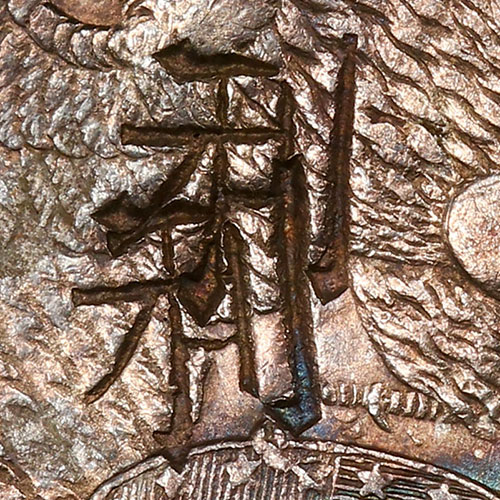 利 - lì - profit, benefit, advantage
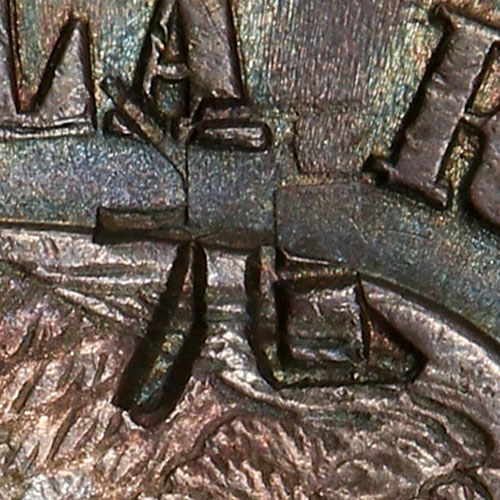 Partial chopmark, possibly
汜 - sì - tributary, stream
or
范 - fàn - model, pattern
Provenance:
Purchased on eBay in February, 2024 from a seller in Frederick, Maryland.
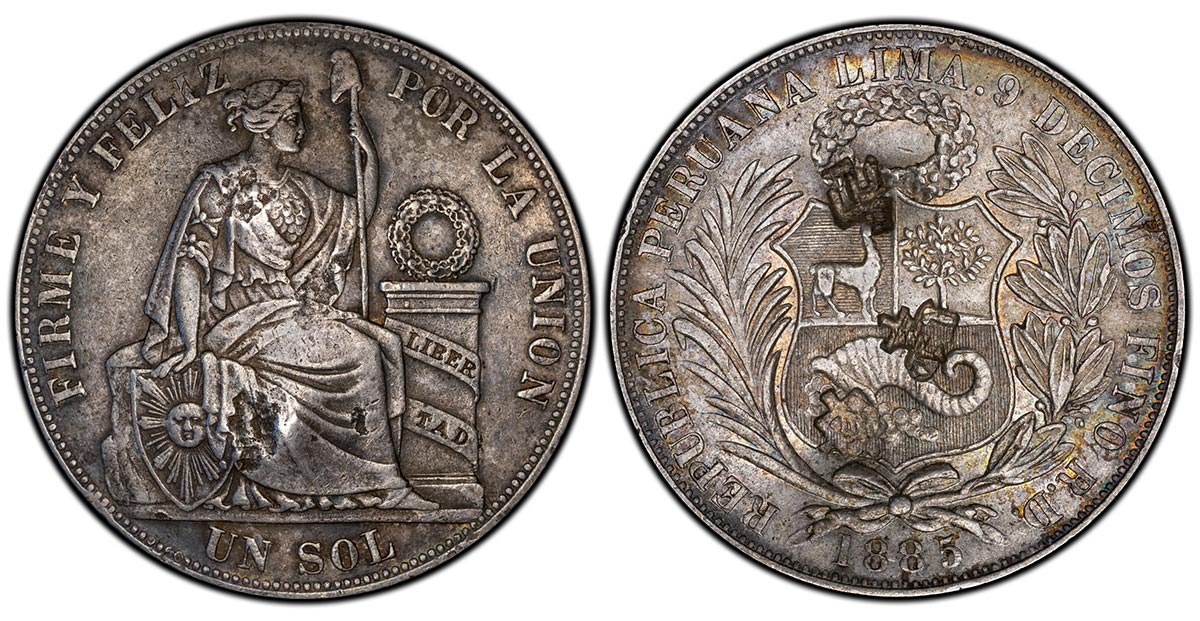
1885 Peru Un Sol (Incuse Libertad)
Specifications:
25.000 g, .900 fine silver, .7234 troy oz (actual silver weight)
Recorded mintage: Unknown
Catalog reference: KM 196.22
Details:
The 1885 Peru Un Sol was struck at the Lima mint with a weight of 25.00g and a fineness of .900, representing a silver content around 92.4% of the standard Spanish 8 Reales and
featuring the distinctive "Incuse Libertad" design variety. This variety is identified by the word "LIBERTAD" being sunken (incuse) into the ribbon wrapped around the column to
the right of the seated figure, rather than being raised in relief. The existence of this variety is a subject of ongoing numismatic debate, with several theories centering on
the chaotic state of the Lima mint following the War of the Pacific (1879–1884) and the Monetary Reform of 1884. The primary technical theory suggests that during the
Reconstruction period (1884–1895), the mint suffered from damaged or looted machinery and a lack of new master hubs; consequently, engravers likely resorted to hand-punching
letters directly into existing, partially worn dies to bypass the high-pressure hubbing process required for relief lettering. A secondary theory proposes an intentional
administrative shift, suggesting the incuse style was a deliberate, low-cost "emergency" design choice to facilitate the rapid mass production of silver coinage needed to
stabilize the economy after the collapse of the paper "Inca" currency. A third possibility points to a transition in craftsmanship, where a new generation of engravers, working
with salvaged colonial-era tools, adopted the incuse method as a more forgiving technique while the mint struggled to restore its pre-war quality standards.
Notable chopmarks:
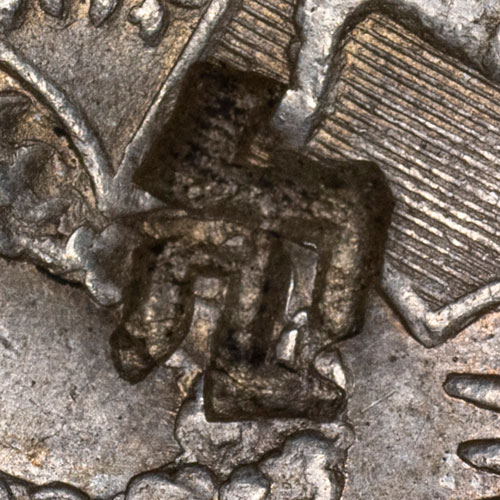
 - Liushutong script variant of 正 - zhèng - correct, straight, upright
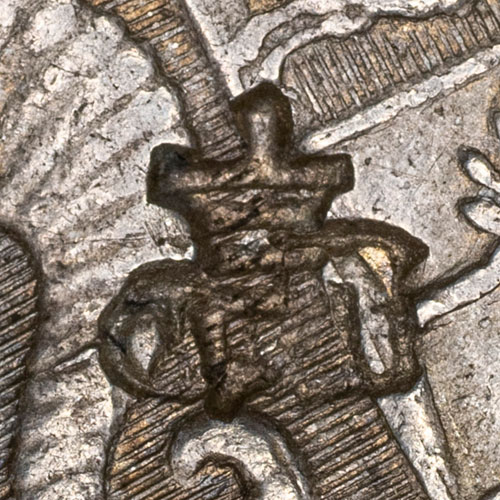 Unknown chopmark overlapping with 言 - yán - to say, speak, discuss, comment
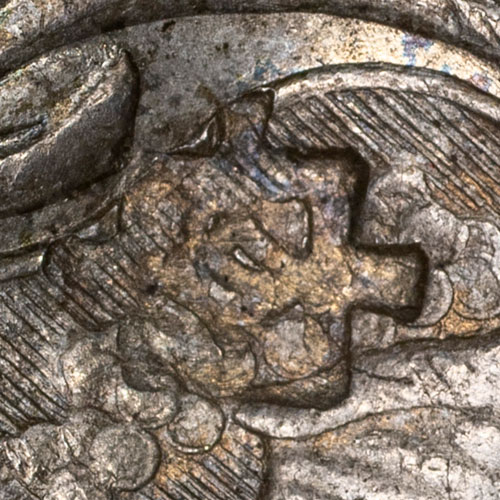 Similar to 由 - yóu - from, reason, cause
Provenance:
From dealer Jonathan Baffi, August 2025
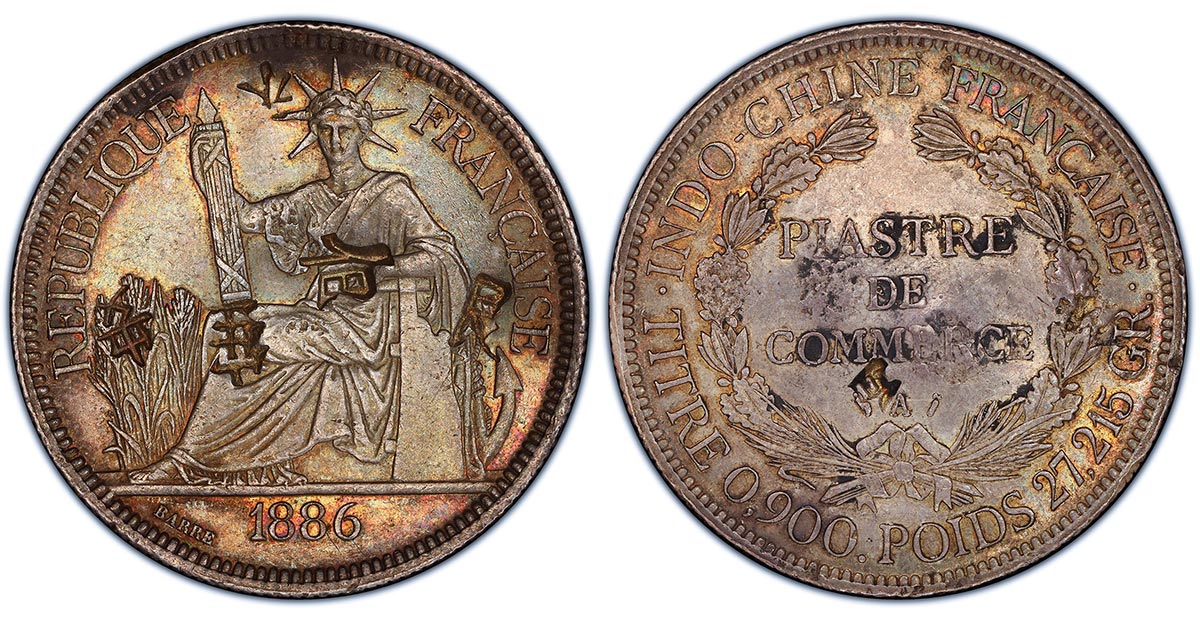
1886-A France Indo-China Piastre de commerce (27.215 GR.)
Specifications:
27.215 g, .900 silver, .787 troy oz (actual silver weight)
Recorded mintage: 3,216,000
Catalog reference: KM 5
Details:
1886 French Indo-China Piastre de commerce, struck at the Paris mint, with a total mintage of 3,216,000. The obverse features the seated figure of the Republic ("Marianne") holding a fasces, representing collective power, with
an anchor and rice stalks in the background symbolizing maritime commerce and agriculture. The legend "REPUBLIQUE FRANÇAISE" encircles the figure, with the date 1886 and the
engraver's name "BARRE" (Jean-Auguste Barre) in the exergue. The reverse displays the denomination "PIASTRE DE COMMERCE" within a wreath of laurel and oak leaves, surrounded
by the legend "INDO-CHINE FRANÇAISE" and the specifications "TITRE 0,900. POIDS 27.215 GR." (Fineness .900. Weight 27.215 Gr.). The "A" mint mark for Paris appears at the
bottom. This "heavy" issue (1885–1895) was struck to a weight standard of 27.215g, which was slightly heavier than the 27.07g standard of the Mexican 8 Reales it was designed
to replace.
The French colonial administration consolidated its hold on Southeast Asia following the Sino-French War (1884–1885), creating a need for a stable silver currency to facilitate local trade and eliminate reliance on the Mexican 8 Reales. The "heavy" Piastre was introduced in 1885 as a direct competitor, minted with a slightly higher silver content to encourage regional acceptance during the Reconstruction period (1884–1895). However, because its silver content was higher than its competitors, the coins were frequently hoarded or exported for bullion value rather than remaining in circulation. This economic imbalance eventually forced the French authorities to reduce the coin's weight to 27.00g in 1895 to better align with the Mexican 8 Reales.
The French Indo-China Piastre is a very common type to find with chopmarks. These coins typically entered the Chinese market through colonial trade hubs and were utilized in regional provinces like Yunnan. Although commonly found with chopmarks, most are in rough condition, making this example with good detail preservation and attractive toning a special and unique example.
Notable chopmarks:
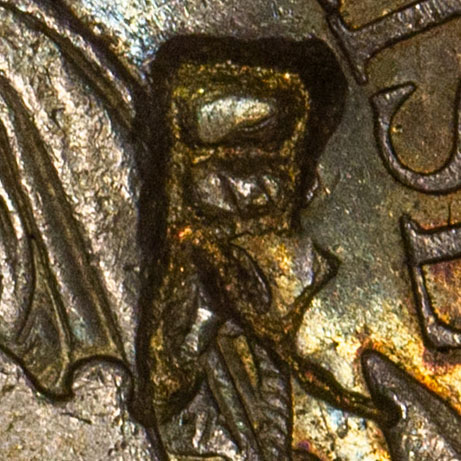 艮 - gèn - mountain, stopping
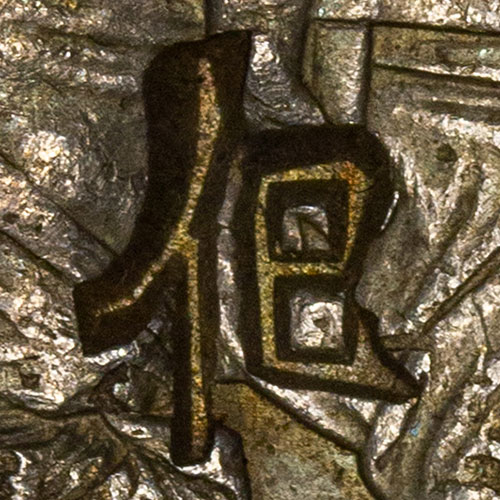 㐶 - (variant of 化) huà - to change, to transform, to become, to turn into
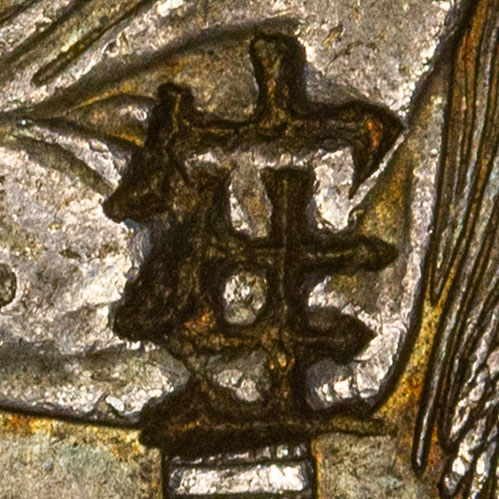 Unknown - appears to be a combination of 宀 + 生
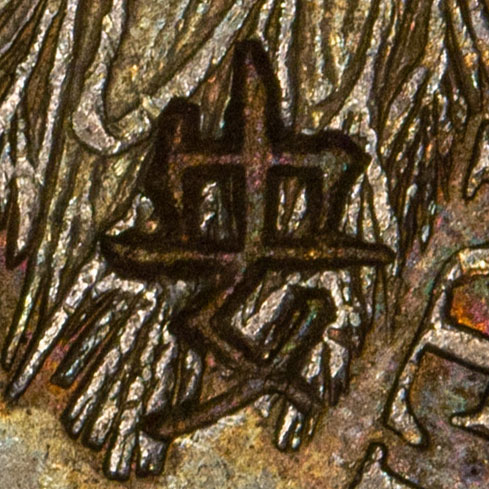 安 - ān - peace, safe, calm
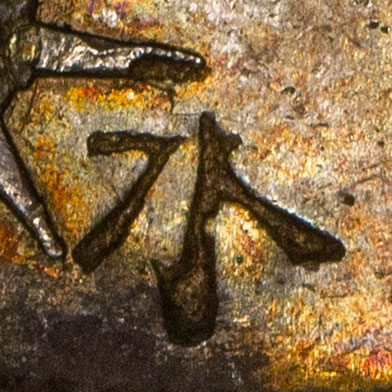 氷 - bīng - ice
Provenance:
From collector Kelvin Chee Hong of Punggol, Singapore. Purchased via private sale in November 2021.
1889 Mauritius 20c
Specifications:
2.33 g, .800 fine silver, .060 troy oz (actual silver weight)
Recorded mintage: 125,000
Catalog reference: KM 11.1
Details:
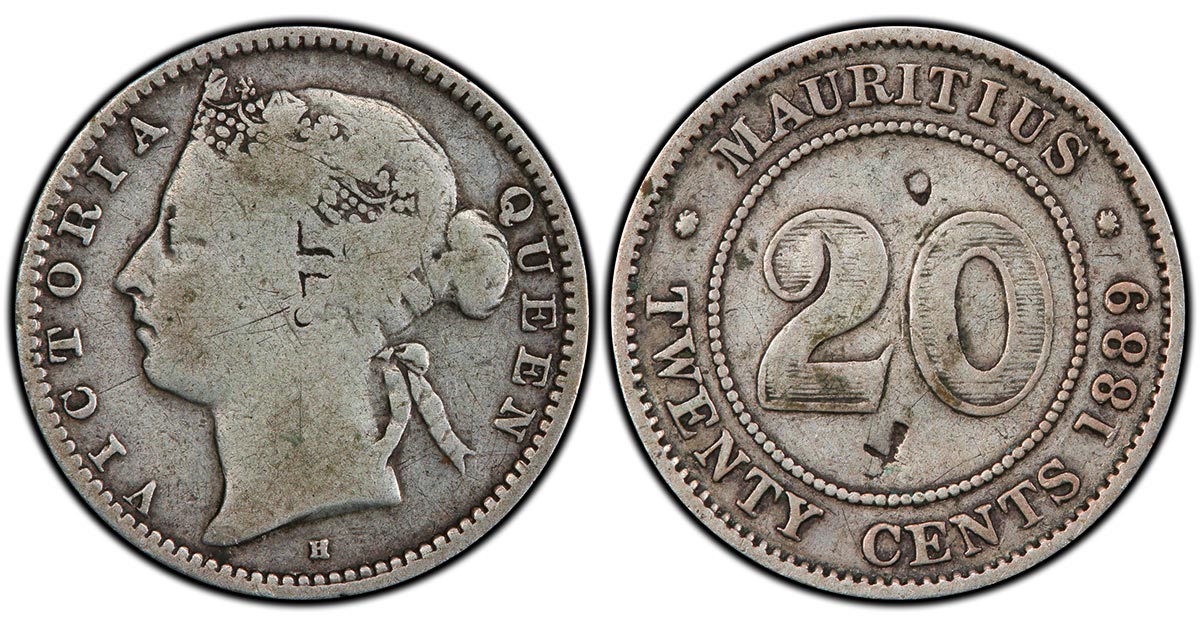
The 1889 Mauritius 20 Cents, London (Royal Mint) mint, was struck with a weight of 2.33g and a fineness of .800, with a mintage of 125,000. The obverse features the "Jubilee Head"
portrait of Queen Victoria (1887–1893) facing left, with the legend "VICTORIA QUEEN". The reverse displays the denomination "TWENTY CENTS" within a circular border, flanked by
stylized ornaments, with the legends "MAURITIUS" and the date "1889" at the periphery. This type was part of a decimalized rupee system introduced in 1877 to stabilize the currency
of the colony, replacing a chaotic circulation of Indian Rupees and British Sterling.
Mauritius served as a strategic maritime station for the British Empire following the opening of the Suez Canal (1869), acting as a link between European markets and the Indian Ocean. The island's economy during the late 19th century was heavily dependent on the export of sugar, and the colonial administration issued these fractional silver pieces to facilitate local transactions and plantation wage payments. The choice of .800 silver standard for these lower denominations was a deliberate move to prevent the mass exportation of small change, ensuring a steady supply of currency for the local population during the 1880s economic expansion.
While primarily intended for domestic use, this type is documented by Gullberg as a "very rarely chopmarked" coin that occasionally entered the China trade. Its presence in the East was likely the result of maritime movement along the trade routes between the Indian Ocean and the Pacific treaty ports. Unlike the standard trade dollars, these small 20-cent pieces were not a staple of the silver flow into China.
Notable chopmarks:
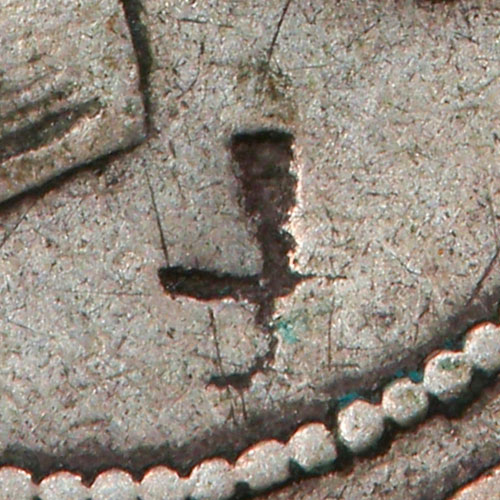 士 - shì - scholar, gentleman, soldier
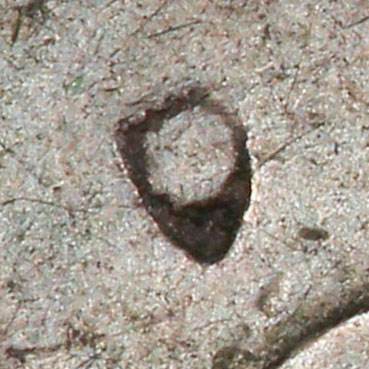 Small partial chopmark
Provenance:
Purchased on eBay in October, 2019 from a seller in Santa Maria, Philippines.
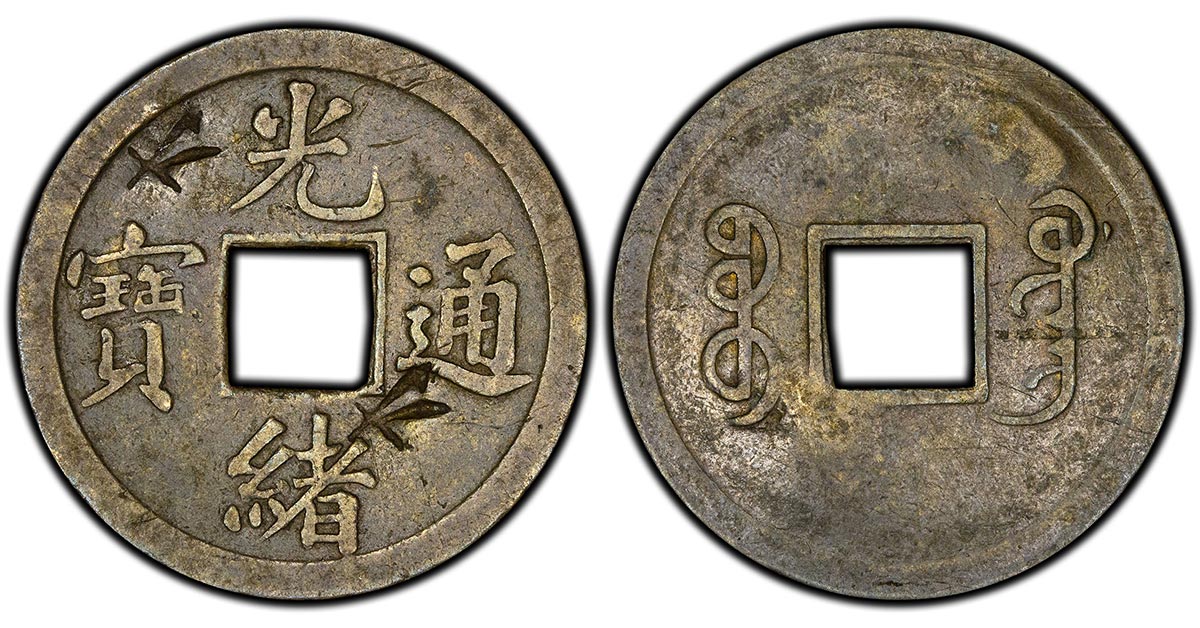
(1890-1908) KwangTung (Canton) Province, China - Bronze One Cash
Specifications:
2.700 g, bronze metal
Recorded mintage: 1,059,253,000
Catalog reference: KM Y190
Details:
The (1890–1908) Kwangtung Province Bronze One Cash, Canton mint, was struck as a machine-milled bronze issue weighing approximately 2.8g with a composition of approximately 95%
copper and 5% tin and zinc, and while official mintage figures for this ubiquitous issue are unrecorded, they reached into the hundreds of millions. The obverse displays the
four-character legend “光緒通寶” (Kwang Hsü Tung Pao), which translates to "Circulating Treasure of the Kwang Hsü Emperor," centered around a square imitation of the traditional
"hole" found in cast coinage. The reverse features the Manchu characters for the Canton mint, "Boo-Guang," positioned to the left and right of the central square. This type
represented the first successful effort to modernize Chinese base-metal currency, transitioning from the ancient method of sand-casting to Western-style "milled" production.
The design was maintained throughout the latter half of the Kwang Hsü reign (1875–1908) as part of a broader provincial effort to standardize the value of the cash coin against
the silver dollar.
The establishment of the Canton mint and the production of machine-struck cash were centerpieces of the Self-Strengthening Movement (1861–1895), an era of institutional and technological reform aimed at defending China against foreign economic encroachment. Under the direction of Viceroy Chang Chih-tung, the province imported state-of-the-art steam-powered coining presses from Heaton's Mint in Birmingham, England, to produce a uniform currency that could not be easily debased. The political climate of the late Qing Dynasty (1644–1911) was defined by a chronic shortage of quality copper and the proliferation of lightweight, privately cast "ghost" coins. By striking these bronze pieces with precise mechanical edges, the provincial government attempted to assert centralized control over the money supply and provide a reliable medium for the small-scale daily transactions of the peasantry and urban laborers.
Regarding the origin of the marks found on this type, numismatic evidence and contemporary accounts from the Canton trade suggest they are almost certainly "Money Shop Marks" (Qian-zhao) rather than trade-based shroff chopmarks. Unlike silver trade dollars, which were chopped by professional shroffs to verify silver purity, bronze cash had low intrinsic value and did not require such testing. Definitive references, including David Hartill’s Cast Coins of China, indicate that these character stamps were applied by private "money-houses" (Chien-chuang) or local merchant guilds to "privatize" the currency. Their primary purpose was to guarantee the redemption of the coin at a specific shop or to distinguish genuine machine-struck bronze from the crude, illicitly cast imitations that flooded the market during the Boxer Rebellion (1899–1901) and subsequent periods of instability. In the Canton region, these stamps were also frequently associated with the "Hua Hui" (Flower Meeting) lotteries, where coins were marked to serve as unique betting tokens.
Although not technically Chinese merchant / shroff chopmarks, we include this coin here because the stamps are often mistaken as chopmarks, and because they're closely related, although different from the main focus of this collection.
Notable chopmarks:
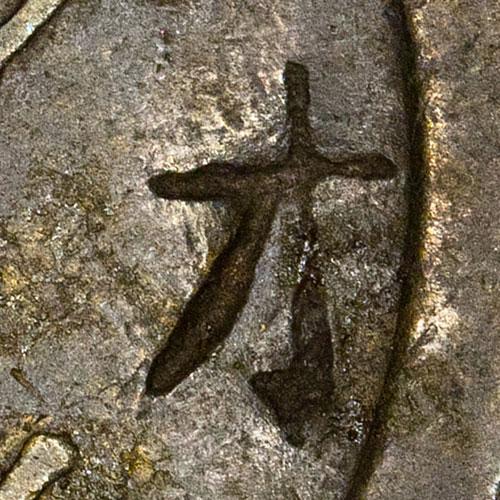 才 - cái - talent, ability, just
Provenance:
From fellow collector Ed Murphy, who compiled one of the broadest and most complete chopmark collections of all time, March 2020.
(1890-1908) KwangTung (Guangdong) Province, China - "Heaton Dies" Variety (Ex. Waddell)
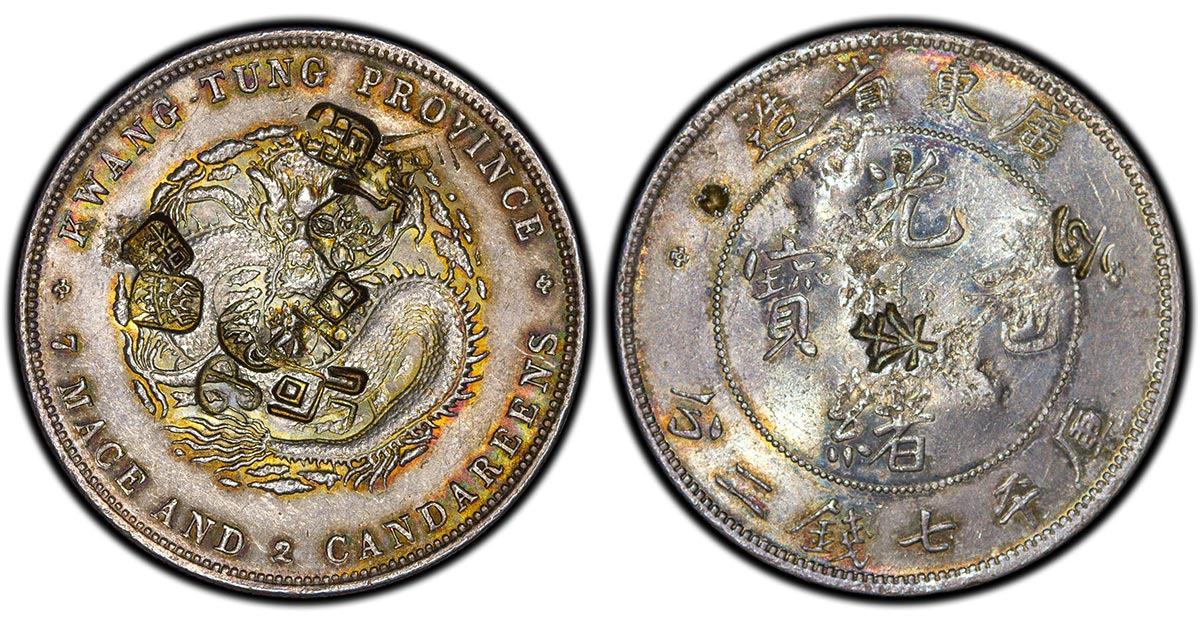
Specifications:
27 g, .900 fine silver, .781 troy oz (actual silver weight)
Recorded mintage: unknown
Catalog reference: KM Y203
Details:
The Kwangtung (Guangdong) silver dollars, minted from 1890 through 1908, were the earliest and most influential of China’s provincial machine-struck silver coinages, emerging
from Guangdong’s unique position as the epicenter of China’s foreign trade. Produced at the Canton (Guangzhou) Mint, the empire’s earliest modern mint, these dollars were
deliberately modeled on the Mexican eight reales and struck to the 7 mace 2 candareens standard, with a fineness generally around .900 silver, making them among the closest-
adhering provincial issues to stated weight and purity specs. Early reliance on imported machinery and foreign-engraved dies from Birminghang, England resulted in comparatively
consistent planchets and strikes, especially when contrasted with later-established inland mints that struggled with equipment, funding, or skilled labor. In comparison to
provinces such as Chekiang or Anhwei, where weight drift, uneven striking, and short production runs are more common, Kwangtung dollars show a notably higher level of metallurgical
reliability, rivaled mainly by Hupeh and, later, Kiangnan issues.
Their circulation in the intensely commercial Pearl River Delta, Hong Kong, and southern treaty-port networks exposed them to constant scrutiny by merchants and shroffs; consequently, Kwangtung dollars are among the most frequently encountered Chinese provincial dollars with chopmarks. In contrast to inland-minted issues, which sometimes saw more limited local circulation, Kwangtung dollars often traveled widely across southern China and Southeast Asia, making chopmarked examples not only common but historically representative of their role as a trusted, workhorse trade coin of the late Qing silver economy.
The “Heaton Dies” variety of the Kwangtung dollar refers to a subset of early Guangdong silver dollars struck using dies prepared by the Heaton Mint (Ralph Heaton & Sons) of Birmingham, England, a private firm that supplied coinage equipment and dies worldwide in the late 19th century. This variety is closely tied to the very first phase of China’s modern coinage experiments, around 1890–1891, when the Canton Mint was still developing technical expertise and relied heavily on foreign suppliers. “Heaton Dies” Kwangtung dollars are distinguished not by an explicit mintmark, but by stylistic and technical traits, including a more European-style dragon, with sharper engraving, proportionally longer body, and less of the sinuous, calligraphic flow seen on later locally engraved dies. The rosettes on the coins are different and feature a hollow center. The Chinese characters "Ku" (of the Ku-Ping weight system) and "Kuang" are also different - the center stroke does not connect to the top of the character as it does on the generic dies. This variety has long been known and is very popular among Chinese coin collectors.
A beautiful coin with attractive toning. The chopmarks are also more complex and intricate than average.
Notable chopmarks:
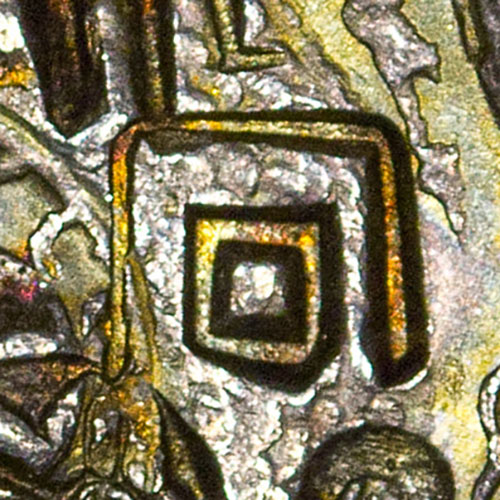
 - Seal script variant of 冋 - jiōng - wilderness
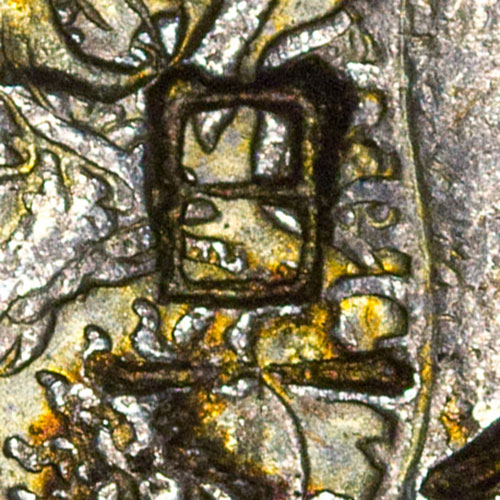 旦 - dàn - dawn, morning
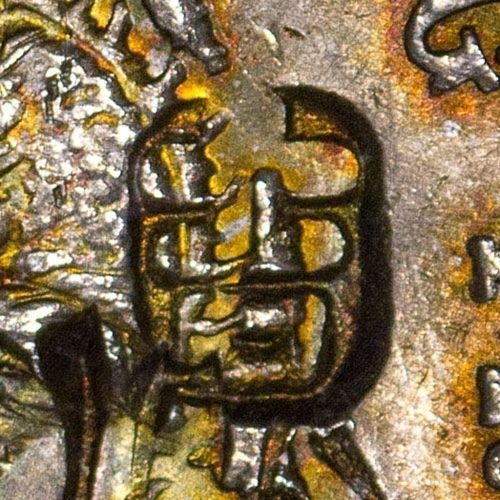
 - Seal script variant of 臼 - jiù - mortar
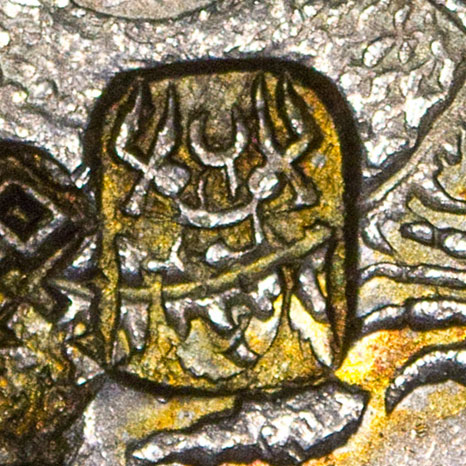 Unknown seal script chopmark
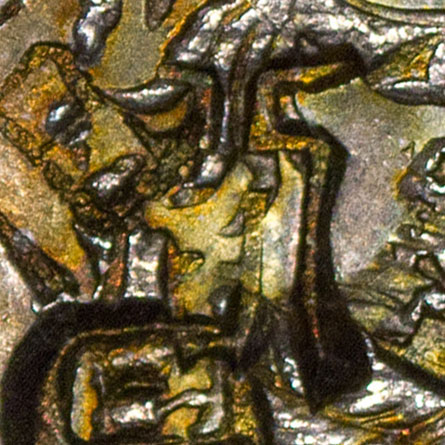
 - Liushutong script variant of 公 - gōng - public, fair, duke
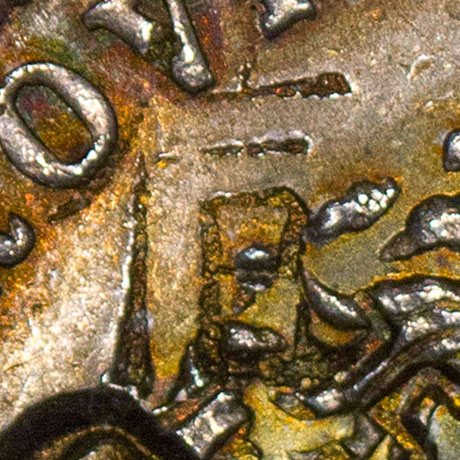 Similar to 佗 - tuó - he, she, other
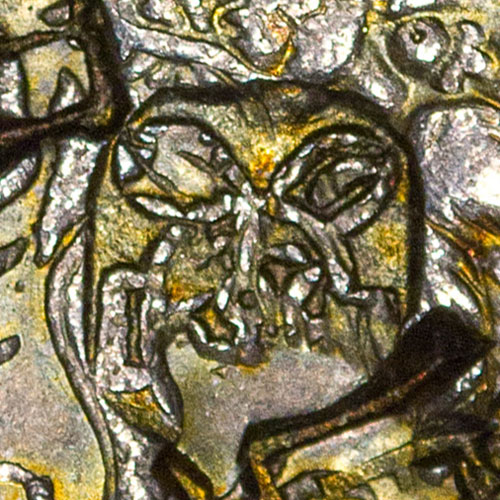 Another seal script chopmark that needs further study
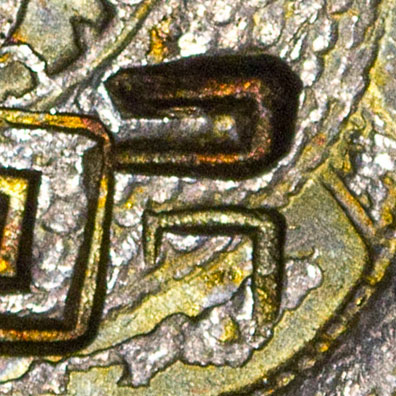
 - Liushutong script variant of 尺 - chǐ - ruler, foot measure
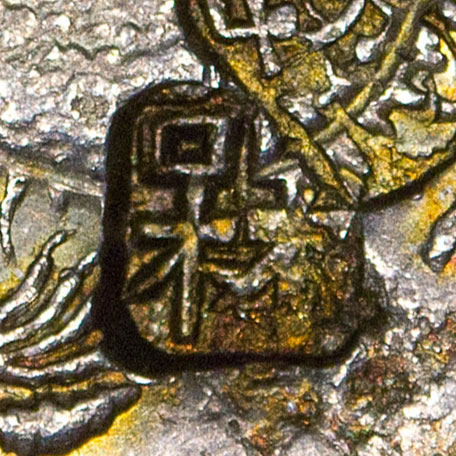 槑 - (old variant of 梅) méi - plum, Japanese apricot (Prunus mume), stupid
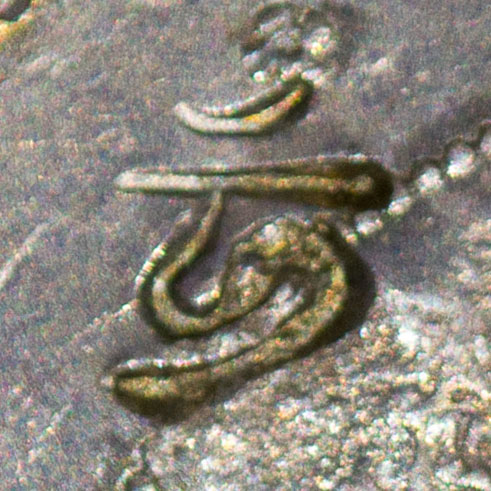
 - Seal script variant of 于 - yú - at, in, to
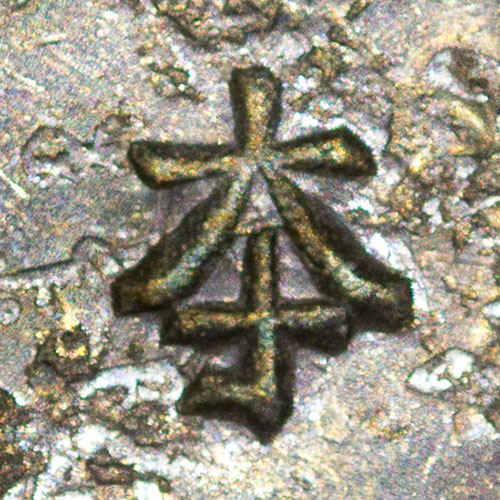 夲 - tāo - advance quickly
![[Styled chopmark, possibly 尸]](/coins/main3/1890ChinaKwangtung7m2c/chops/1890dollarchopletterp.jpg) Styled chopmark, possibly 尸
Styled chopmark, possibly 尸
Provenance:
From the Ron Waddell Collection
Purchased from Ron via private sale in September 2016
Previously purchased from Blackburn & Blackburn.
1890 Honduras Peso
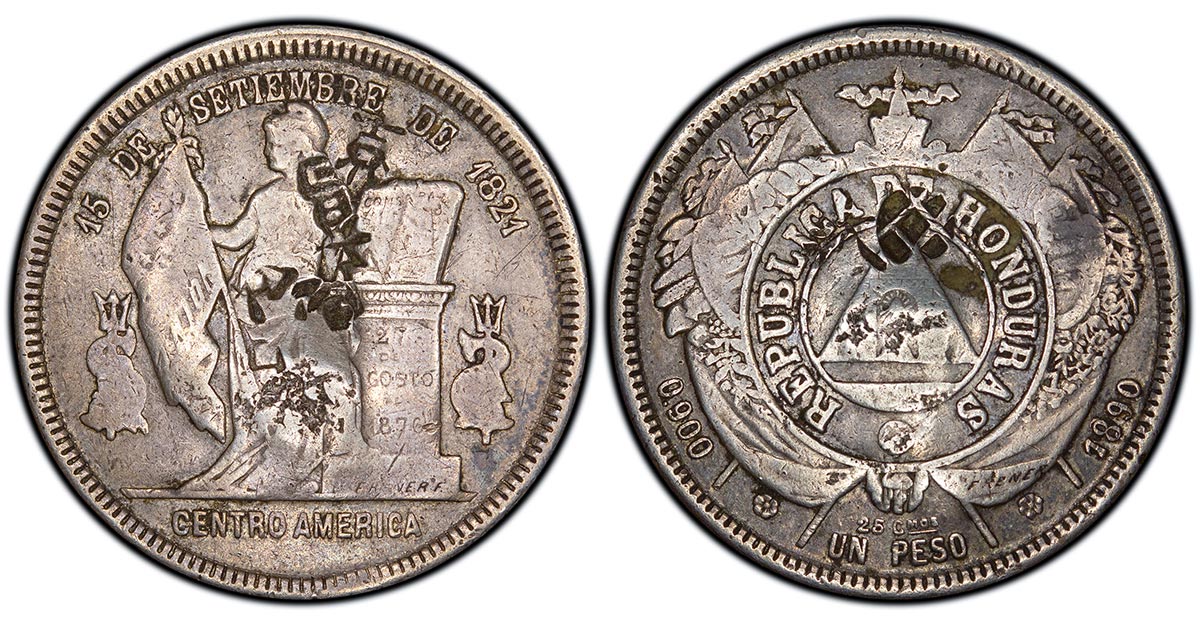
Specifications:
25.0 g, .900 fine silver, .723 troy oz (actual silver weight), reeded edge
Recorded mintage: unknown
Catalog reference: KM 52
Details:
The 1890 Honduras Peso, made at the Tegucigalpa mint, was struck at 25.00g, .900 fine, representing approximately 92.4% of the standard Spanish 8 Reales.
The date side features the national arms consisting of a central pyramid and castle structure containing a radiating sunburst, centered within two concentric circles
and flanked by a pair of cornucopias overflowing with grain and agricultural products. This central device is supported by a trophy of draped flags, with the legend
“REPUBLICA DE HONDURAS” above and the specifications “.900 UN PESO 1890” at the base. The opposing side depicts a standing figure of Liberty holding a flag inscribed
“UNION” featuring five stars, representing the provinces of the Central American federation, while leaning her left hand on a volume of the “CONSTITUCIÓN” placed atop a
pedestal. The pedestal is inscribed with the date “27 DE AGOSTO DE 1876,” commemorating the inauguration of Marco Aurelio Soto and the beginning of the Liberal Reform,
with the signature “FRENER E.” (Jean-Baptiste Frener, Engraver) at the base. The design is framed by the legends “15 DE SETIEMBRE DE 1821” (the date Central America
declared independence from Spain) and “CENTRO AMERICA”, flanked by two dolphins entwined with tridents and the letters “P” and “A,” symbolizing the Pacific and Atlantic
Oceans.
This issue was struck during the administration of President Luis Bográn (1883–1891), a period characterized by the modernization of the Honduran state and the rapid expansion of the silver mining industry. The primary source of silver for this series was the El Rosario mine in San Juancito (1880–1954), which benefited from significant American capital investment and provided the bullion necessary to sustain a domestic decimalized currency. The political climate of the late 1880s and early 1890s focused on using this mineral wealth to anchor the Peso against the economic instability common in neighboring republics. This specific date aligns with the global Panic of 1890, a financial crisis that disrupted international silver markets and trade liquidity across the Americas. The resulting fiscal constraints at the Tegucigalpa mint led to a reliance on aging machinery and a reduction in striking pressure, which produced the uneven strike quality frequently seen on the high-relief central devices of this issue, and seen on the example shown here.
The Honduras Peso is a fairly rare type to encounter with chopmarks. While the vast majority of these coins were absorbed by the internal economies of Central America or regional trade, small amounts apparently traveled via the Pacific port of Amapala to the East Asian trade ports. These pieces were probably included as secondary bullion in larger shipments dominated by more established trade coins like the Mexican 8 Reales or Peruvian Sol. This theory is backed up by surviving examples with chopmarks, most of which seem to be well circulated before, or possibly after receiving chopmarks.
Notable chopmarks:
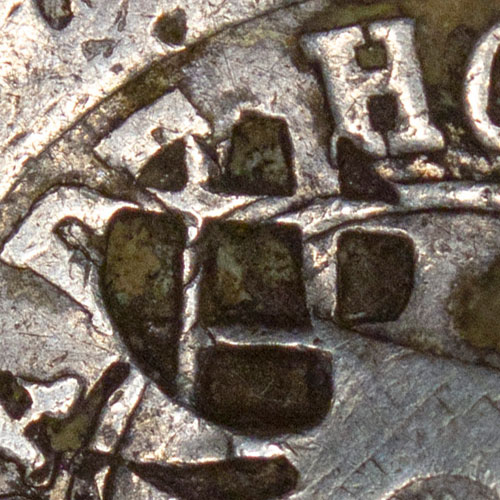
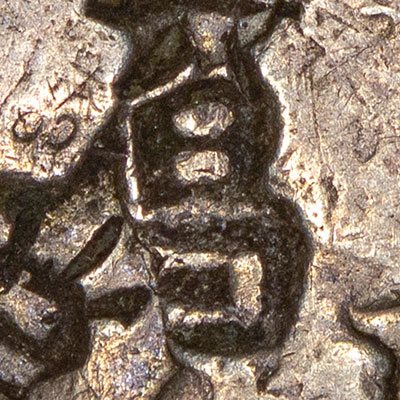 昌 - chāng - prosperous, flourishing
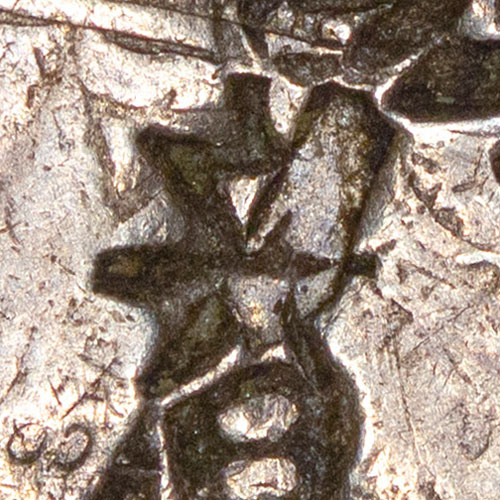 Unknown chopmark
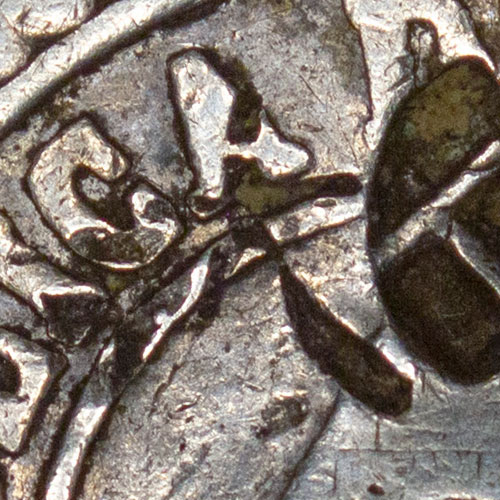 Probably 大 - dà - big, great, large
 Probably 井 - jǐng - well, mine
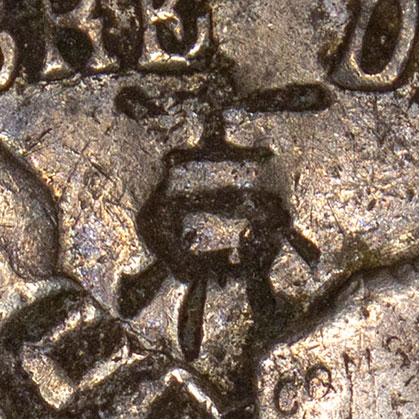 東 - (traditional form of 东) dōng - east
Provenance:
Purchased from dealer Andy Lustig (Nyack, NY) in January 2019.
Andy purchased the coin from Steve Mansdorf (another NY coin dealer) who found the coin in an obscure eBay UK auction.
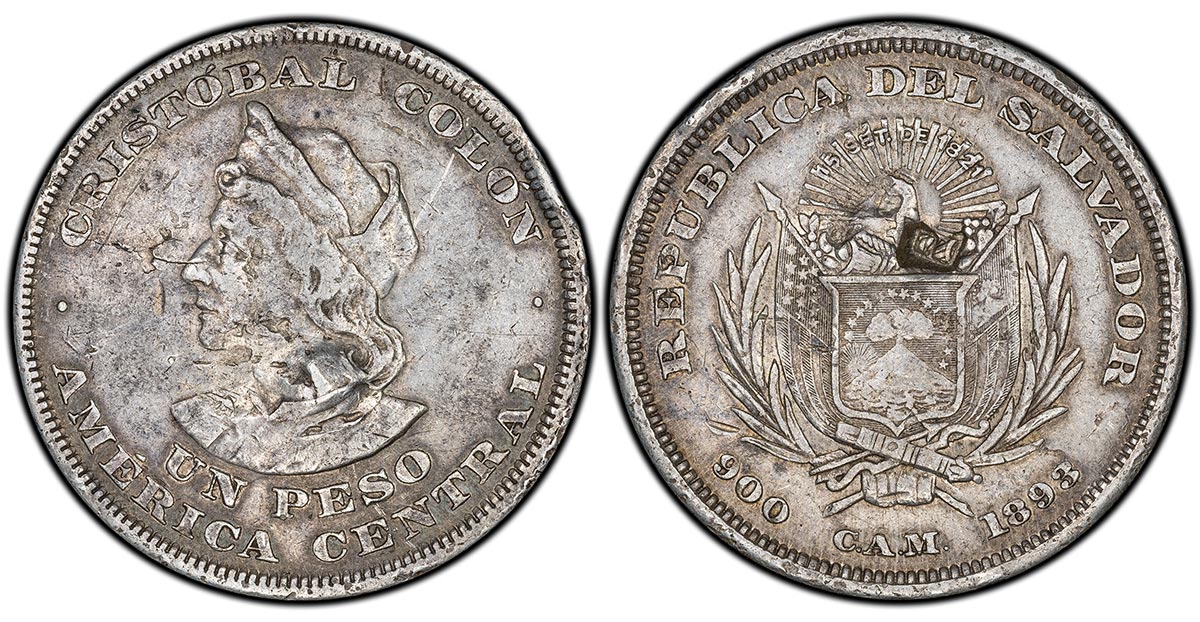
1893 El Salvador Peso
Specifications:
25.000 g, .900 fine silver, .7234 troy oz (actual silver weight)
Recorded mintage: 354,500
Catalog reference: KM 115.1
Details:
The 1893 El Salvador Peso (KM# 115.1), San Salvador mint, was struck with a weight of 25.00g and a fineness of .900, representing approximately 92.4% of the weight of a
standard Spanish 8 Reales. The obverse features a portrait of Christopher Columbus (Cristóbal Colón) facing left, with the legend “CRISTOBAL COLON” at the top and “UN
PESO. AMERICA CENTRAL” at the bottom. The reverse displays a smoking volcano within a central shield, topped by a Phrygian cap radiating light; within these rays is the
inscription “15 DE SET DE 1821,” commemorating the date of Central American independence from Spain. Flanking the shield are two distinct national flags, one representing
the civil sovereignty and the other the military defense of the Republic; both utilize the 19th-century "Stars and Stripes" design where horizontal stripes symbolize the
nine original departments and the stars represent administrative growth. Positioned directly underneath the radiant cap/shield assembly are two cornucopias overflowing with
fruits and grain, symbolizing agricultural abundance. The legend “REPUBLICA DEL SALVADOR” appears at the top periphery, while the base contains the specification “900 CAM"
and the date.
This issue was struck during the administration of President Carlos Ezeta (1890–1894), a period characterized by aggressive modernization and a push for international prestige through the "Colón" currency reform. The establishment of the San Salvador mint in 1892 was a strategic move to exert sovereign control over the money supply, effectively replacing the worn colonial "macuquinas" (cobs) that had long hindered commerce. By adopting the 25-gram Latin Monetary Union (LMU) standard, El Salvador sought to align its financial identity with Europe, specifically the French Franc, to streamline the surging coffee export trade that formed the backbone of the national economy. The political climate was one of "Progress and Liberty," where the inclusion of the 1821 independence date and the "Discovery" motifs of Columbus served to bridge the nation’s history with its aspirations as a modern Pacific power.
The 1893 El Salvador Peso is pretty rare with chopmarks. These coins likely reached East Asian treaty ports only as incidental "travelers" carried by merchants or sailors along the Pacific trade routes originating from the port of La Libertad.
Notable chopmarks:
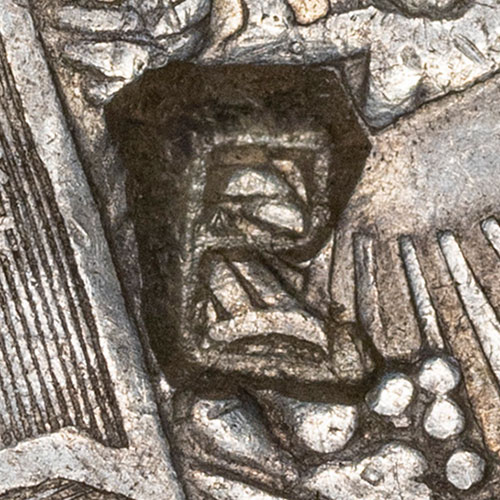 巳 - sì - 6th earthly branch, snake
Provenance:
Purchased from IG dealer Joe Walker (panda_numismatics) in May 2023. Joe works with dealers directly in China to save chopmarked coins from the melting pot.
1893-As ML Cap & Rays 8 Reales, Alamo, Mexico mint
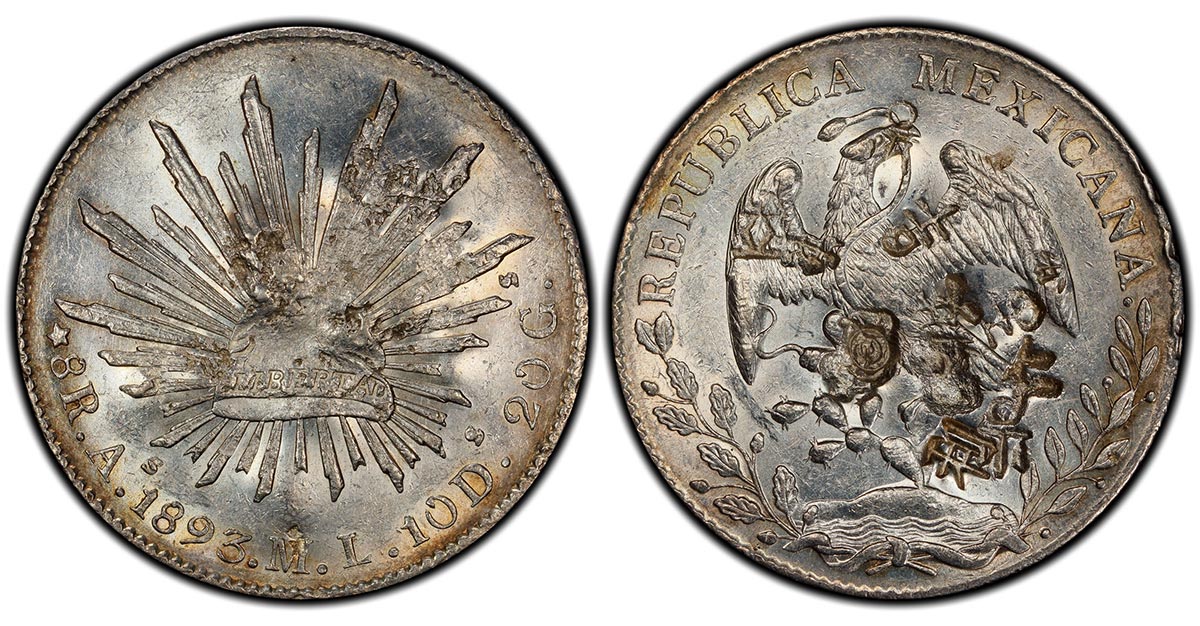
Specifications:
27.07 g, .903 fine silver, .786 troy oz (actual silver weight)
Recorded mintage: 734,000
Catalog reference: KM 377
Details:
This issue was produced during the final years of the Alamos mint's operation (which closed in 1895) under the lengthy presidency of Porfirio Díaz. The 1890's
were a period of transition and the Mexican government began shifting toward more modern coining technology. Even with this shift, the "Resplandores"
(Cap and Rays) 8 Reales remained the dominant silver export. The Alamos mint, located in the silver-rich state of Sonora, operated under a private lease system
for much of its history. By 1893, political stability under the Porfiriato (the era of Díaz's rule, 1876–1911) allowed for consistent production, though the mint
remained one of the more remote facilities, often resulting in distinct, slightly coarser striking characteristics compared to the central Mexico City mint.
Alamos is one of the less common Mexican mints to find chopmarked, although not rare. A really attractive coin.
Notable chopmarks:
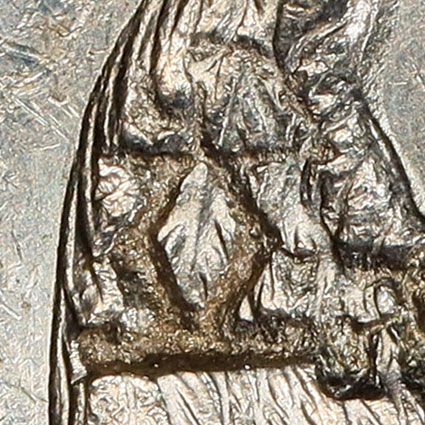 Unknown symbol chopmark
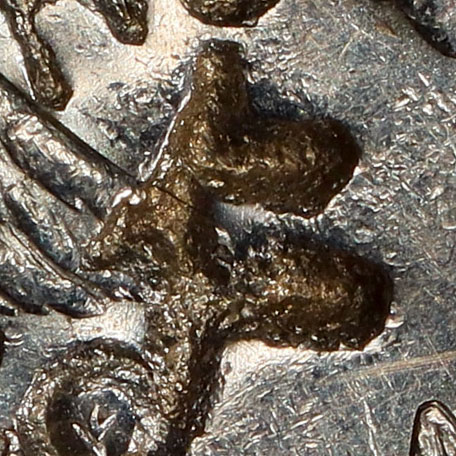 仁 - rén - benevolence, humanity, kernel
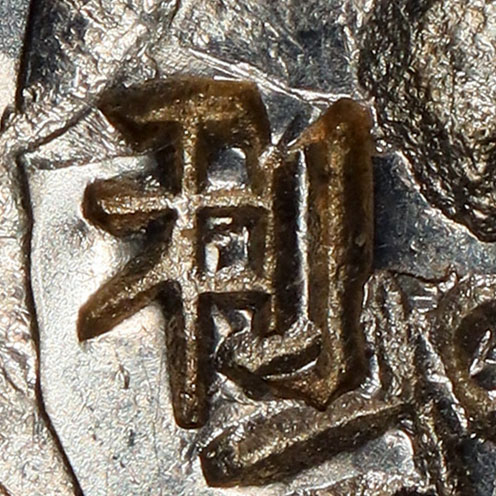 利 - lì - profit, benefit, advantage
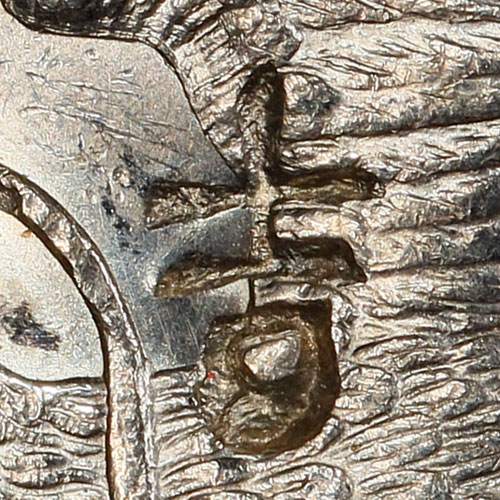 吉 - jí - auspicious, lucky
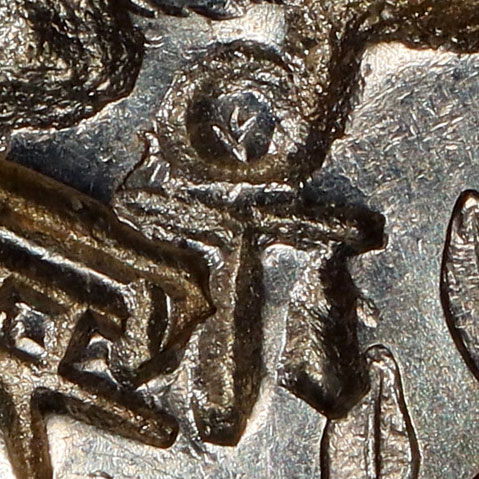 吊 - diào - condole, hang
Provenance:
Purchased from a fellow collector out of Southern California.
1893 Columbian Exposition US Half Dollar (Ex. Rose)
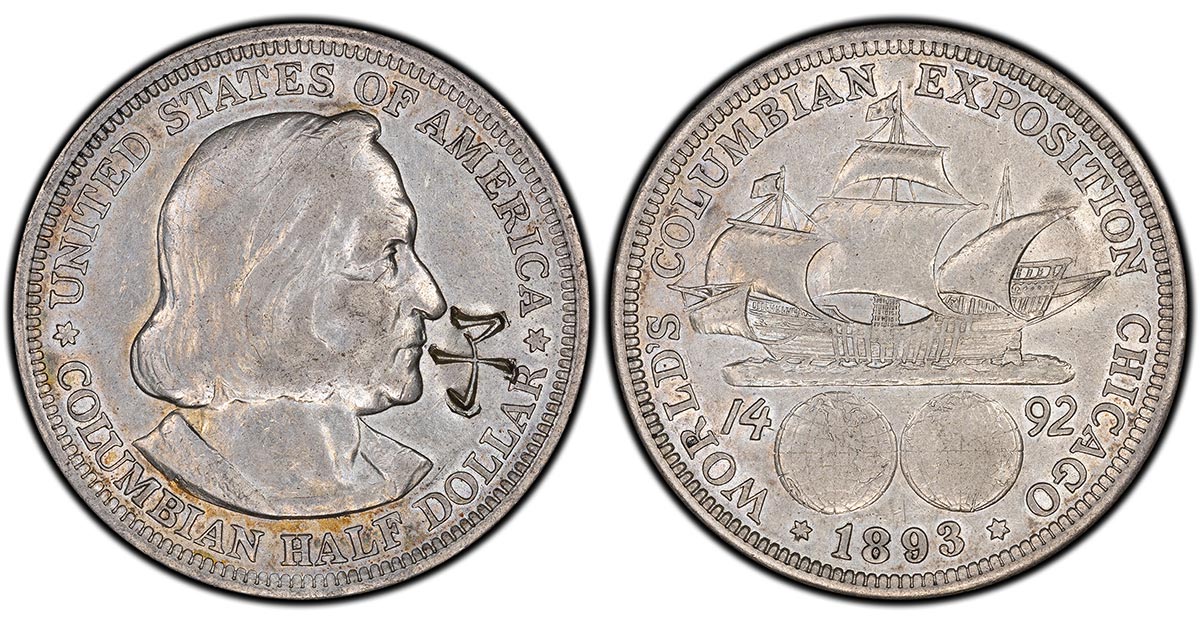
Specifications:
12.50 g, .900 fine silver, .3617 troy oz (actual silver weight)
Recorded mintage: 1,550,405
Catalog reference: PCGS# 9297
Details:
A Rose coin with a fake chopmark. This is a great example of how the internet has helped modern collectors combat fake things. Rose didn't have nearly the resources
we have today.
Notable chopmarks:
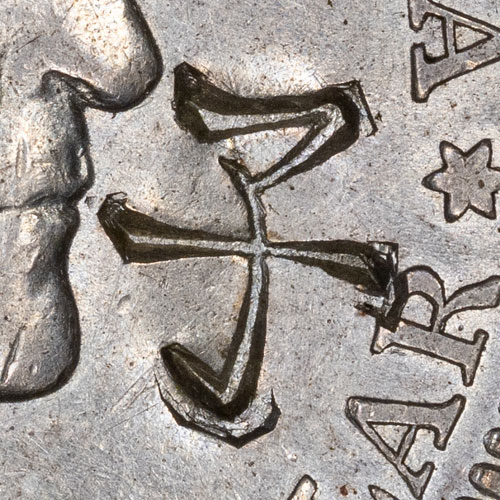 子 - zǐ - child, son
Provenance:
From fellow collector Ed Murphy, who compiled one of the broadest and most complete chopmark collections of all time, September 2025.
Ex. Frank Rose Collection (acquired date and place unknown)
Featured as the plate coin in Rose's Chopmarks, p.26, figure 98
Ex. Fu Chin International (1994) when Michael Chou acquired the collection in whole from the Rose estate
The coin was sold on eBay in September 2004 by New York dealer Ha Ping Yuen (Ben) for $495, then acquired around 2008 by Ed Murphy
(1894) Guatemala Peso countermark on 1889 Peru Sol host (Ex. Murphy)
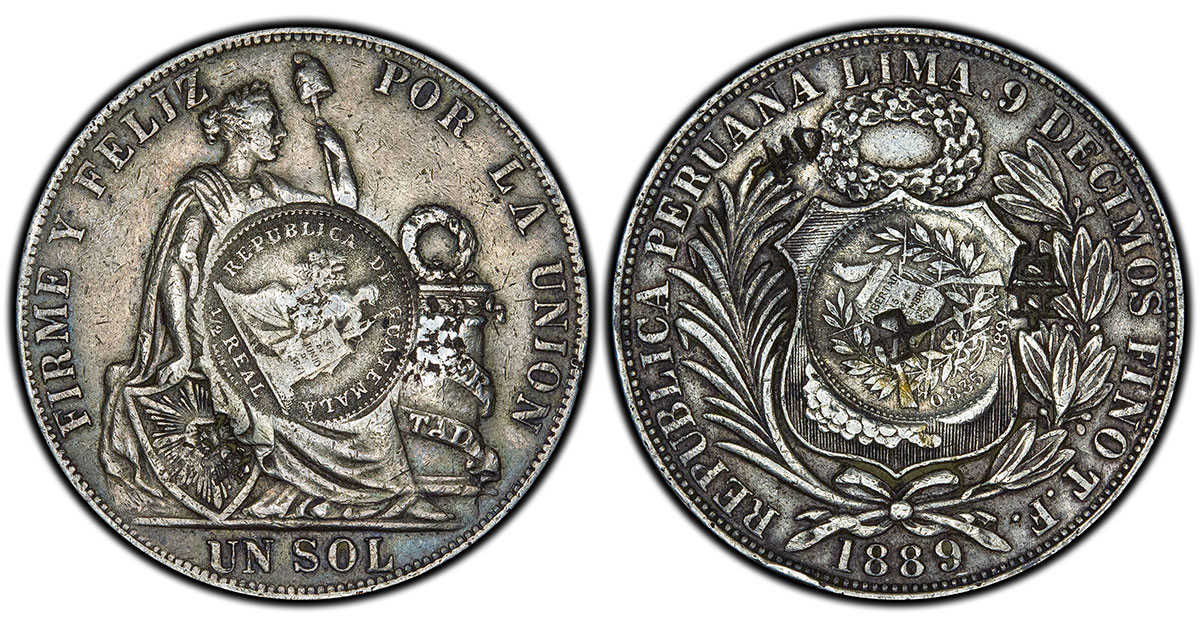
Specifications:
25.000 g, .900 fine silver, .7234 troy oz (actual silver weight)
Recorded mintage: Unknown
Catalog reference: KM 224
Details:
By 1894, Guatemala had undertaken a broader monetary reform, contracting the British firm The Mint, Birmingham, Limited to strike new domestic coinage and addressing
the long-standing problem of foreign silver of varying fineness saturating the local market. A decree issued in July 1894 authorized the countermarking of foreign
crown-sized silver at the Guatemalan mint, with the program beginning August 10 and running into early 1895. Coins meeting the required silver standard were brought
in, tested, and struck with the obverse and reverse dies of the newly issued 1894 half real, applied within a peso collar that fixed the denomination. The result was a
coin that carried Guatemalan imagery on both faces while preserving the host coin's design beneath.
The countermark itself uses the dies of the 1894 half real: the Guatemalan coat of arms on one side, and on the other the seated figure of Justice with the legend of the Republic, all within the larger peso collar that distinguished these pieces from the smaller denomination they referenced. The host coin here, an 1889 Lima sol, is one of the more common foreign silver types that circulated in Guatemala during this period, the Peruvian sol having tracked closely enough to Spanish colonial weight standards to remain trusted in Central American trade through the latter half of the nineteenth century.
Notable chopmarks:
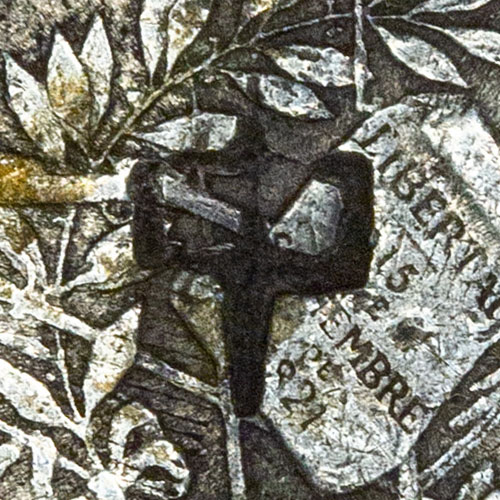 中 - zhōng - center, middle, China
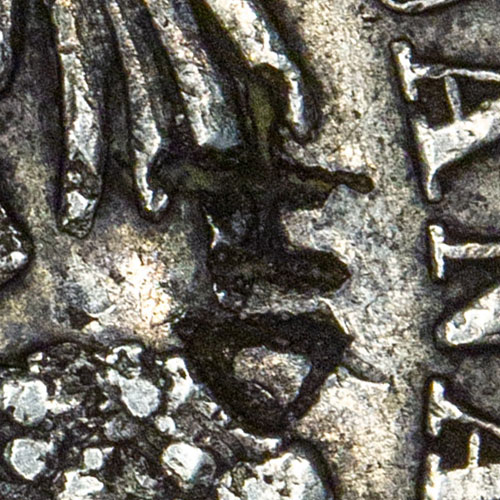 吉 - jí - auspicious, lucky
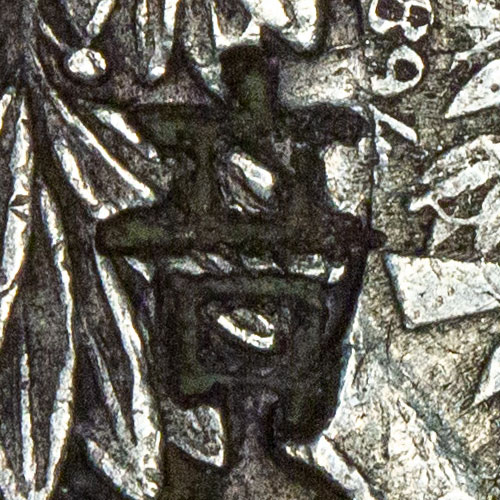 咅 - tòu - A sound used to indicate refusal, to curse at, to scold
Provenance:
Purchased from the Stack's Bowers April 2026 Hong Kong Showcase Auction
Lot #49668
Auction Description:
GUATEMALA. Guatemala - Peru. Peso, 1894. Guatemala City Mint. PCGS Genuine--Chopmark, EF Details.
KM-224; Jovel-Type VIII; Murphy-Fig. 212 (Plate Coin); Leverage-Fig. 100. Issued by decree of July 1894, commencing 10 August 1894 until early 1895. Countermark: 1/2 Real currency dies with Peso collar. Applied to an 1889-LIMA TF Peru Republic Sol (KM-196.24). Several medium size Chinese and pseudo-Chinese chops on both sides, "中" (Zhong), "音" (meaning unknown), "◁⊢⊢" (meaning unknown) as well as a couple that are obscured. This handsome example displays light attractive gray tone with areas of richer coloration amongst the devices. A pleasing example of the type offering good eye appeal.
Provenance: From the Edgar Murphy Collection.
1894 Guatemala Peso (Ex. Rose / Gullberg)
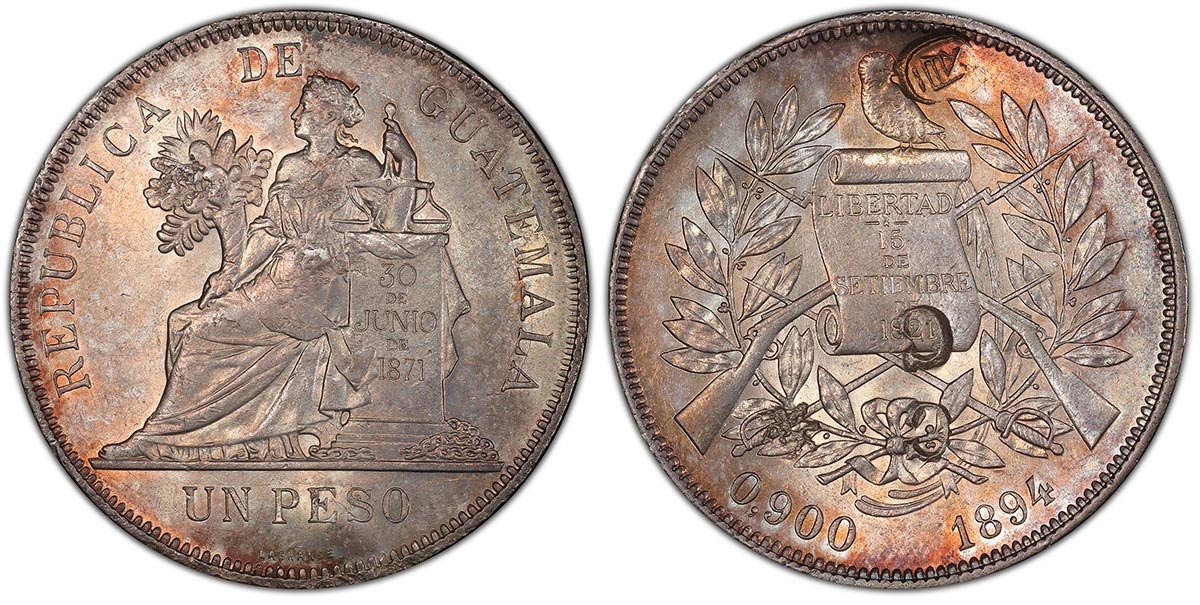
Specifications:
25 g, .900 fine silver, .723 troy oz (actual silver weight)
Recorded mintage: 1,696,000
Catalog reference: KM 210
Details:
The 1894 Guatemala Peso (KM# 210) was struck with a weight of 25.00g and a fineness of .900, representing approximately 92.4% of the weight of a standard Spanish
8 Reales. The date side features the national coat of arms: a central scroll inscribed “LIBERTAD 15 DE SETIEMBRE DE 1821” (the independence date) topped by a Quetzal
bird, the ultimate symbol of liberty. This is backed by two crossed Remington Rolling Block rifles and two crossed swords, representing the defense of the Republic,
all encircled by a laurel wreath. The opposing side features a Seated Liberty facing left; her right arm rests on a pedestal inscribed “30 DE JUNIO DE 1871,”
commemorating the Liberal Revolution that established the political foundation of the modern state. Beside her sits a cornucopia overflowing with fruits, signaling
that the nation’s agricultural wealth is the result of a stable, liberal government. The legend “REPUBLICA DE GUATEMALA” surrounds the top periphery, with the
denomination “UN PESO” at the base.
This issue was produced during the presidency of José María Reina Barrios (1892–1898). The coin serves as a dual-anniversary piece: the obverse honors the 1821 independence from Spain, while the reverse honors the 1871 Liberal Revolution that brought Reina Barrios's political lineage to power. By maintaining the 25-gram LMU standard, Guatemala intended for its currency to be viewed as an international peer to European silver, facilitating the coffee exports that funded the "Parisian" modernization of the capital. The political climate was one of intense nationalism, using the Remington rifles and the 1871 date to remind the populace that the Republic was won and maintained through military strength and liberal law.
The 1894 Guatemala Peso is fairly rare with chopmarks. These coins primarily entered the China trade as incidental bullion via Pacific shipping routes from the port of San José.
Featured as the plate coin in Gullberg's Chopmarked Coins - A History, p.79, figure 71.
Featured as the plate coin in Rose's Chopmarks, p.16, figure 48, where he used this coin to illustrate English letter chopmarks.
Notable chopmarks:
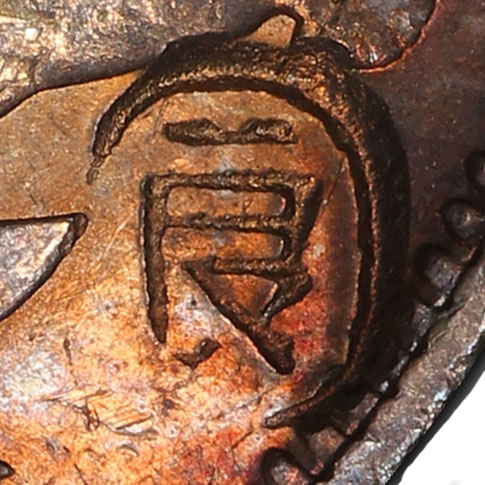 良 - liáng - good, fine
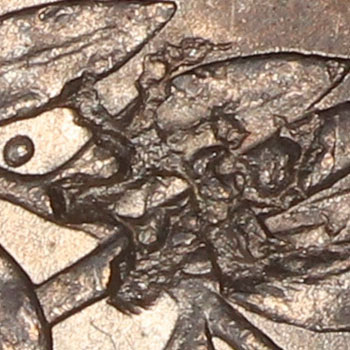 Rough, undecipherable chopmark
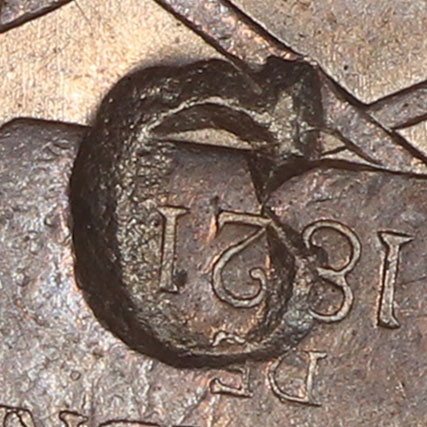 C - Latin-letter chopmark
Provenance:
From the Colin Gullberg Collection
Purchased from Colin via private sale in October 2017
Colin acquired this coin in November 2008
Ex. Fu Chin International (1994) when Michael Chou acquired the collection in whole from the Rose estate
Ex. Frank Rose Collection (acquired date and place unknown)
1894 Peru Un Sol (later series)
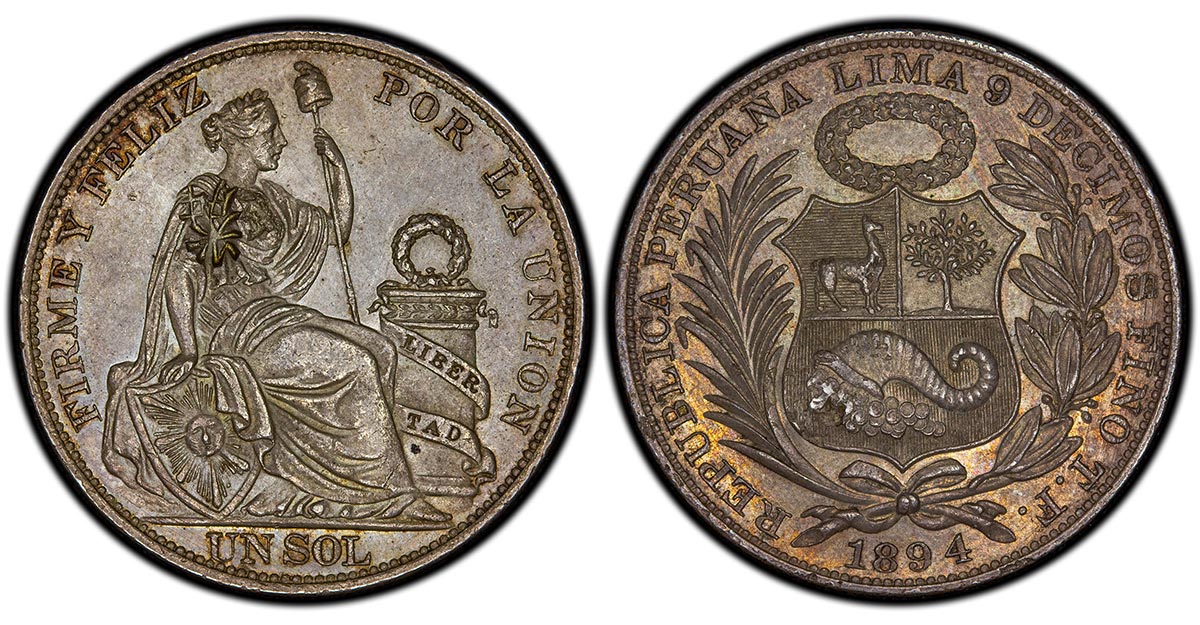
Specifications:
25.000 g, .900 fine silver, .7234 troy oz (actual silver weight)
Recorded mintage: 4,358,000
Catalog reference: KM 196.26
Details:
The 1894 Peru Un Sol was struck with a weight of 25.00g and a fineness of .900, representing approximately 92.4% of the weight of a standard Spanish 8 Reales. The
date side features the national coat of arms: a shield containing a vicuña, a cinchona tree, and a cornucopia spilling coins. The shield is topped by a Civic Crown
of oak and flanked by a palm and a laurel branch. The legend “REPUBLICA PERUANA” surrounds the shield, while the mint mark (LIMA), fineness (9 DECIMOS FINO), date
(1894), and assayer initials T.F. (Torrico and Flores) are at the base. The opposing side features a Seated Liberty facing right, holding a staff topped with a
Phrygian cap next to a column draped with a ribbon inscribed “LIBERTAD” and topped with a circular wreath. The legend “FIRME Y FELIZ POR LA UNION” is at the top,
with “UN SOL” at the base.
This issue was produced during the political crisis of 1894, as the administration of Andrés Avelino Cáceres faced a growing revolution. The imagery of the radiant sun on the shield is a powerful vestige of Incan solar worship integrated into Republican heraldry. The column represents the strength of the law, and the circular wreath atop it symbolizes the eternal nature of the victory achieved through independence.
This Peru Sol series is common with chopmarks. Peru was one of the few South American nations whose silver coinage achieved a significant and steady presence in the China trade. They were often referred to in shroff handbooks by the name "Sitting Man" or "Potted Plant Money" (a common shroff misinterpretation of the Liberty figure and the draped column with its circular wreath). Peruvian Sols were frequently shipped in bulk from the port of Callao to Hong Kong.
Notable chopmarks:
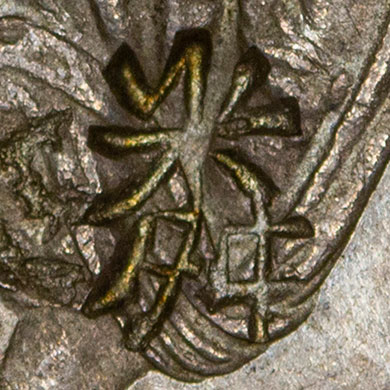 粦 - (variant of 磷) lín - A few meanings, some say it's the chemistry term phosphorus, others monkey and I've also been told this is an art or poetry term primarily used in Hong Kong for ghost fire or litterally fire at graves.
Provenance:
From the Stephen Album May 2019 Auction 34 sale Lot #2068
Auction Description:
CHINESE CHOPMARKS: PERU: Republic, AR sol, 1894, KM-196.26, assayer TF, large Chinese merchant chopmark, AU
1895-1907 China Hu-Peh (Hubei) Province 7 Mace and 2 Candareens
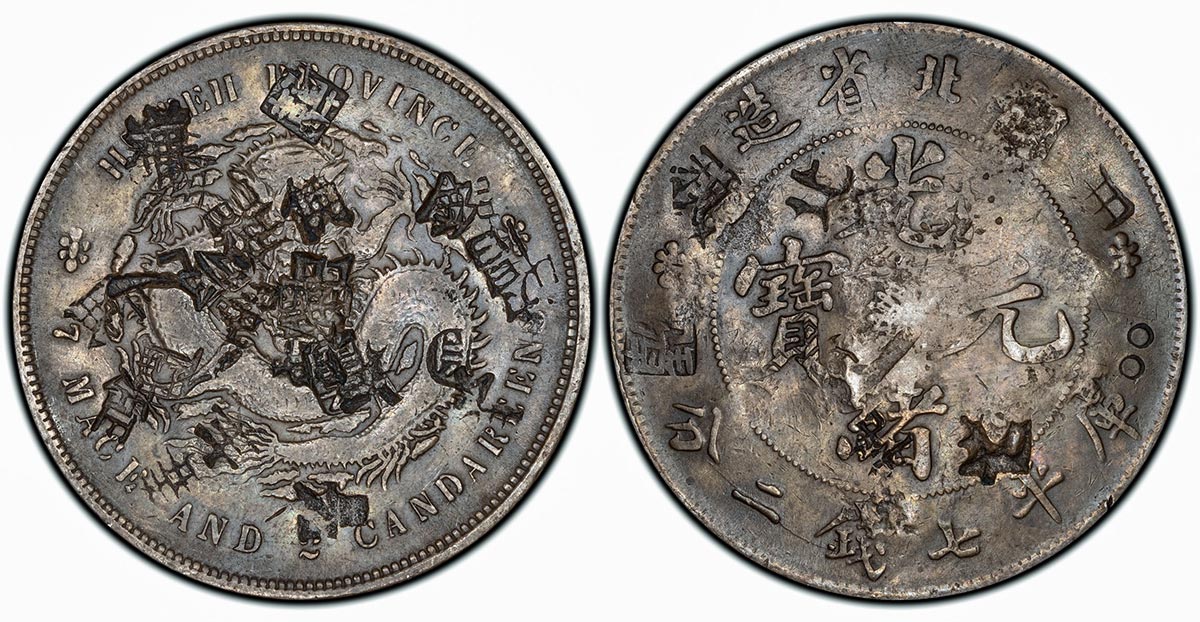
Specifications:
26.700 g, .900 fine silver, .7726 troy oz (actual silver weight)
Recorded mintage: 19,935,000
Catalog reference: Y# 127.1
Details:
The Hu-Peh 7 Mace 2 Candareens was struck at the Wuchang mint with a weight of 26.70g and a fineness of .900, representing approximately 98.6% of the weight of a
standard Spanish 8 Reales. The obverse features four Manchu characters in the center, surrounded by the Chinese characters “HU-PEH SHENG TSAO” (湖北省造 - Made in
Hu-Peh Province) at the top and the denomination “KU-PING CHI CHIEN ERH FEN” (庫平七錢二分 - Treasury Weight 7 Mace 2 Candareens) at the bottom. The reverse features
a coiled Dragon (the "Flying Dragon") surrounded by flames, chasing a central pearl of wisdom. The English legend “HU-PEH PROVINCE” appears at the top, with the
denomination “7 MACE AND 2 CANDAREENS” at the base. These two legends are separated by two six-petaled rosettes.
The Wuchang Mint was a cornerstone of the late Qing "Self-Strengthening Movement," established by Viceroy Zhang Zhidong as one of the most technologically advanced facilities in China. Unlike many regional mints that struggled with quality control, Wuchang was outfitted with state-of-the-art German Schuler presses and utilized dies often prepared with European expertise. This resulted in a high production standard characterized by sharp, deep strikes and a consistent mirror-like finish on the fields that rivaled Western minting. The mint’s efficiency allowed it to produce massive quantities of silver coinage, making the Hu-Peh Dragon Dollar one of the most uniform and technically superior issues in the empire. This reliability was crucial in Zhang Zhidong's effort to demonstrate that Chinese domestic mints could produce a sovereign currency as technically perfect as the foreign silver that had dominated the market for centuries.
The Hu-Peh 7 Mace 2 Candareens is common with chopmarks. Unlike some other provincial issues that were often hoarded or stayed within local borders, the Hupeh dollar’s reliability and its flow along the Yangtze trade routes meant it was frequently handled by shroffs and merchant houses in major financial hubs like Shanghai. Because they were viewed as high-quality bullion comparable to the Mexican 8 Reales, they were heavily circulated and vetted. Many surviving specimens are heavily marked, often featuring dozens of chopmarks on each side. This heavy marking serves as a historical testament to the high level of trust and high volume of use these coins enjoyed in the broader Chinese marketplace.
Later in 1909-1911 ruler Hsüan-t'ung minted nearly identical coins from Hupeh Province, with the only design change being the ruler identified on the reverse.
Notable chopmarks:
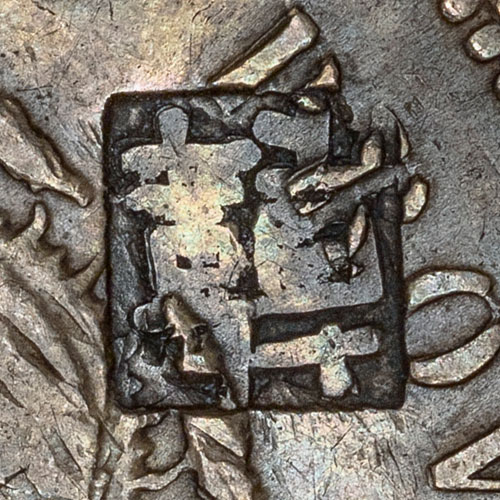 Unknown complex chopmark
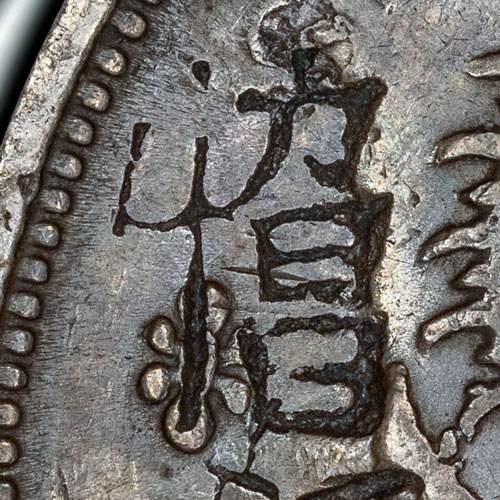 Large, complex chopmark, combination of 忄力 and 昌
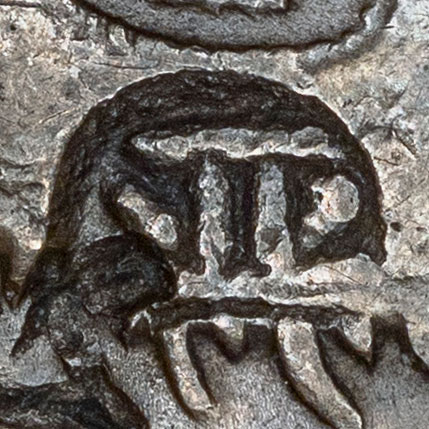 亚 - yà - Asia, second
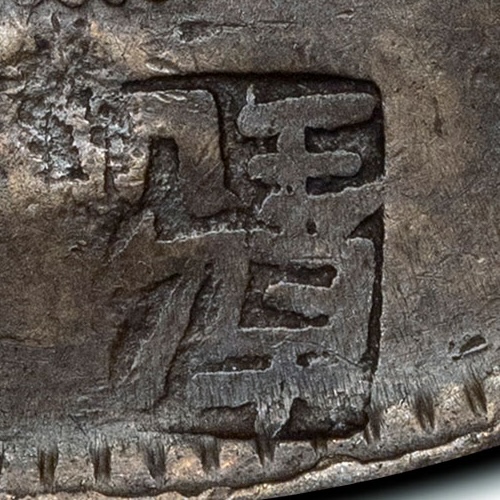 Complex chopmark
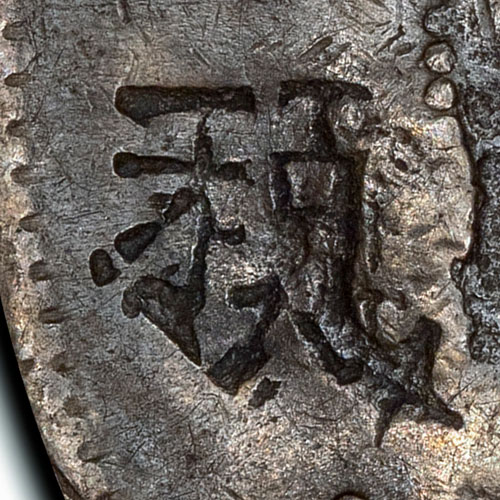 Similar to 䅡 - xǔ - a kind of grass
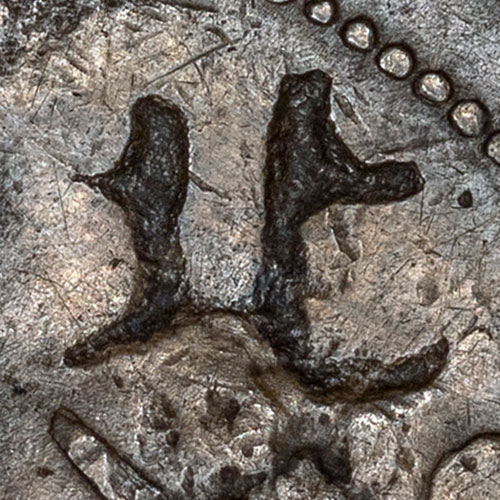 北 - běi - north
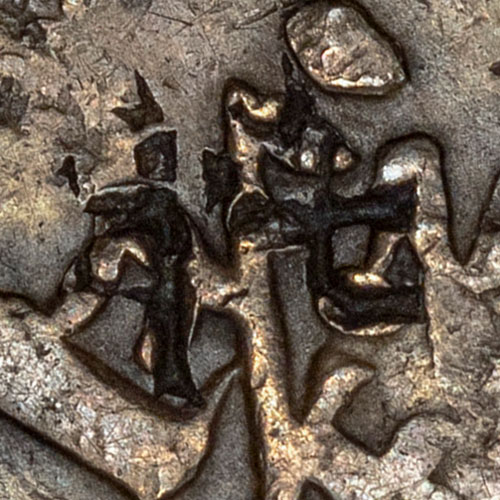 Maybe 㲺 - jí - to discharge, to sprinkle
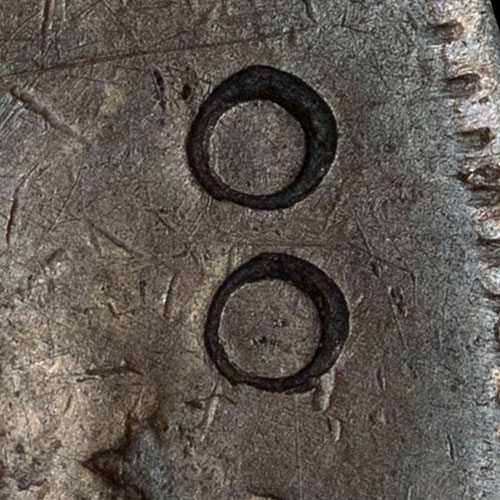 Possibly
  - Liushutong script variant of 邻 - lín - neighbor; neighborhood
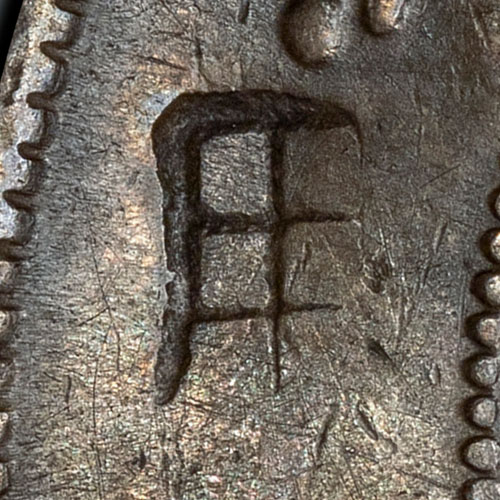 Partial 用 - yòng - use, employ
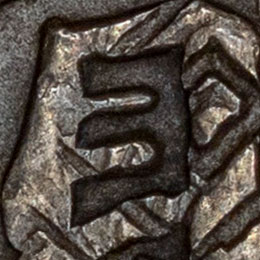 Unknown chopmark
Provenance:
Purchased from a dealer in China who likes to rescue coins like this from the melting pot.
Year 23 (1897) Chihli (Zhili) Yuan (Dollar), Tientsin (Pei Yang Arsenal) Mint, China
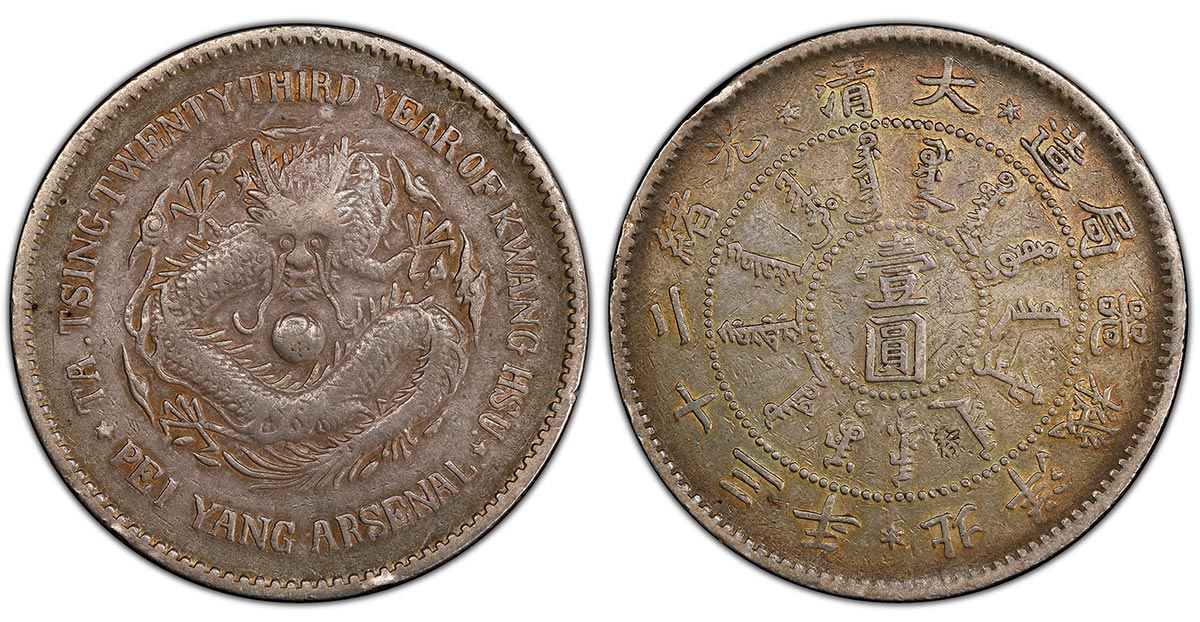
Specifications:
26.70 g, 0.900 fine silver, 0.7727 oz (actual silver weight)
Recorded mintage: 1,120,000
Catalog reference: KM Y65.1
Details:
Chihli (or Zhihli) was a province originally incorporating the present-day capital city of Beijing. The word 'Zhihli' translates to 'centrally ruled', in other words,
the region was under the direct administration of the Emperor rather than functioning as a normal province. Chihli had several mints, the earliest beginning operations
in 1645 AD. While coins had been produced in the Chihli Province of China for thousands of years, it was not until 1896 that a mint was setup in the East Arsenal of
Tientsin which produced both struck silver and copper coins for circulation.
In Guangxu Year 23 (1897), the Chihli (Zhili) “Pei Yang Arsenal” dollar was struck at Tientsin (Tianjin)’s East Arsenal/Pei Yang Arsenal as part of an early northern experiment in modern, machine-made coinage and face-value denomination. The broader Pei Yang series is notable for using the Yuan (圓) / Jiao (角) structure (and on many denominations you literally see the “角” and “圓” on the coin) while much of China still operated day-to-day on weight-based silver accounting, ie. 7 mace 2 candareens for dollars. This mismatch in denomination may have helped drive poor initial acceptance and later melting/re-minting into weight-denominated issues. Another difference, the coins are visually unique - featuring 3 languages, English legends on the reverse, and Chinese & Manchu on the obverse.
Technically, these dollars were intended to be fully competitive with the leading provincial dollars: the type is commonly listed at about 26.7g and .900 silver (squarely in the late-Qing dollar standard, reflecting a serious attempt at a credible, standardized product from a well-equipped arsenal mint. Compared with Kwangtung, which was trade-driven, high-volume, and constantly stress-tested in the southern treaty-port ecosystem, Pei Yang/Zhili dollars were more strategic in nature, struck near the political center and tied to an arsenal-industrial base.
Because Chihli was not a primary southern trade hub, these dollars circulated mainly in northern and central China, which helps explain why chopmarked examples are distinctly scarcer than Kwangtung or other southern provincial issues. The coin pictured here is a good example of a single, small, light chopmark atypical to what you'd see on a coin traveling through a trade port like Canton.
Variety: Long horns, beady eyes, most common variant of the 1897 Pei Yang Arsenal dragon.
Notable chopmarks:
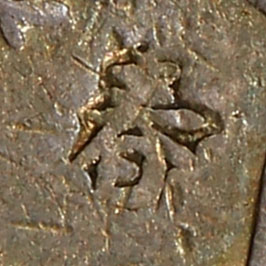 春 - chūn - spring
Provenance:
Purchased from coin dealer Greg Krill of North Bay Rare Coins in Napa, California in July, 2023.
1897-Zs FZ Cap & Rays 8 Reales, Zacatecas, Mexico mint
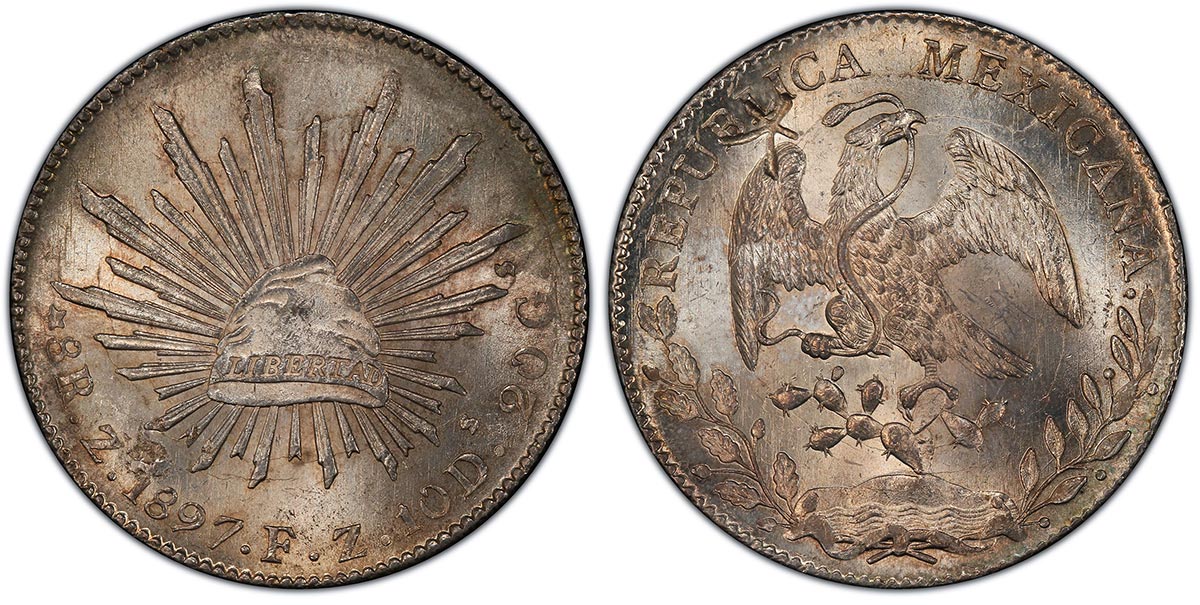
Specifications:
27.07 g, .903 fine silver, .786 troy oz (actual silver weight)
Recorded mintage: 4,877,0000
Catalog reference: KM 377.13
Details:
By 1897, the Zacatecas mint had solidified its position as the most prolific and technically significant silver producer in Mexico, often out-striking the central
mint in Mexico City to meet the insatiable global demand for dollars mex. Operating in the heart of the world's most productive silver district, the mint underwent
several modernizations during the late 19th-century Porfiriato era to transition from antiquated screw presses to advanced steam and electric-powered machinery. This
high-volume output was specifically tailored for the China trade, where Zacatecas quality, recognized for its sharp details and consistent silver purity, was a
preferred medium of exchange. Even as the world moved toward the gold standard and modern decimal coinage, Zacatecas continued to churn out these traditional 8 Reales
"trade dollars".
Notable chopmarks:
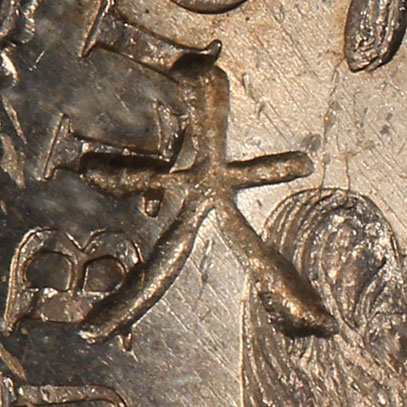 大 - dà - big, great, large
Provenance:
From the Stack's Bowers April 2018 Hong Kong Sale of Chinese and Asian Coins and Paper Money Lot #53863
Auction Description:
MEXICO. 8 Reales, 1897-Zs FZ. PCGS Genuine--Chopmark, Unc Details Secure Holder.
KM-377.13, DP-Zs83. A bold, flashy specimen which is uncirculated without excuses. Chopmark on the eagle side has created a minor flat spot on the cap side by the mintmark.
1897-SG V Philippines Peso
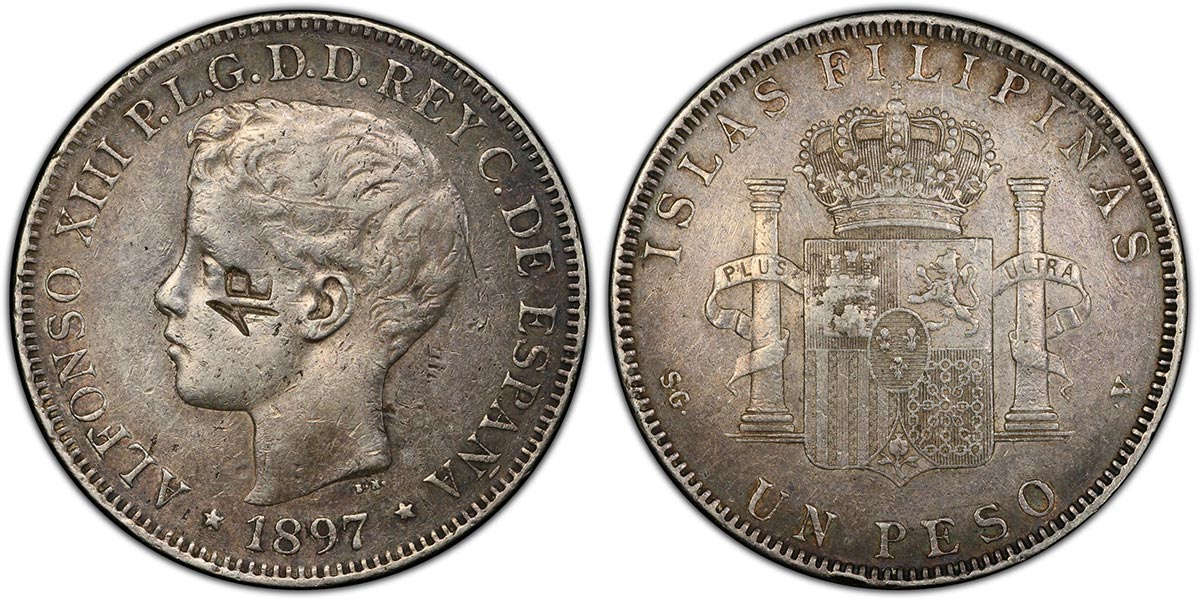
Specifications:
25.00 g, .900 fine silver, .72339 troy oz (actual silver weight)
Recorded mintage: 6,000,000
Catalog reference: KM 154
Details:
The 1897 Philippines Un Peso was struck with a weight of 25.00g and a fineness of .900, representing approximately 92.4% of the weight of a standard Spanish 8 Reales. The
obverse features the "Boy King" portrait of Alfonso XIII facing left, with the legend “ALFONSO XIII P. L. G. D. D. REY C. DE ESPAÑA” and the date 1897 below. The reverse
displays the Spanish royal arms, a crowned shield featuring the castles of Castile, the lions of Leon, the stripes of Aragon, and the chains of Navarre, with the fleur-de-lis
of the House of Bourbon at the center. The shield is flanked by the Pillars of Hercules draped with scrolls reading “PLUS ULTRA.” The legend “ISLAS FILIPINAS” appears at the
top, with the denomination “UN PESO” at the base. Positioned at the bottom are the mint officials' initials SG V (Arturo Sandoval, Joaquin Garcia Moros, and Remigio Vega).
This coin occupies a unique place in numismatic history as a one-year type and the only silver Peso ever struck specifically for the Philippines under the Spanish Crown. While Spain had minted smaller fractional denominations for the islands for decades, the 1897 Peso was a belated attempt to provide a sovereign "large silver" alternative to the Mexican Pesos that had circulated in the archipelago since the days of the Manila Galleons. The outbreak of the Spanish-American War in 1898 and the subsequent Treaty of Paris abruptly terminated Spanish colonial minting. Because the entire mintage was struck at the Madrid Mint and then shipped across the globe, it represents the final gasp of the Spanish Empire’s monetary influence in Asia, standing as a high-quality but ill-fated successor to the centuries-old "Pieces of Eight."
The 1897 Philippines Peso is scarce with chopmarks. The short run of this series, less than a year of active circulation before the American occupation, severely limited its opportunity to enter the broader China trade. Most examples remained within the Philippines to pay troops or facilitate local commerce during the revolution. In the Chinese vernacular, Taiwanese shroffs referred to this coin as "barbarian child money" [番兒錢] due to the profile of the young King Alfonso XIII.
Notable chopmarks:
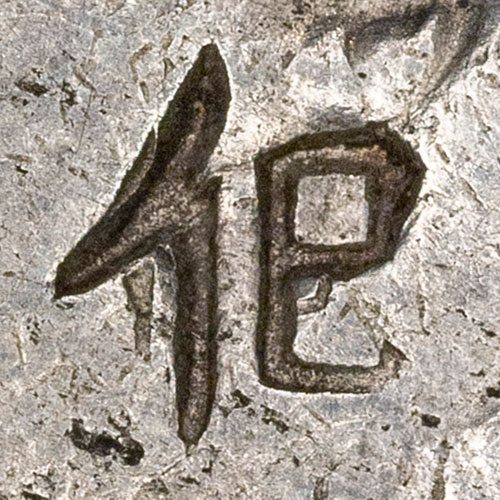 㐶 - (variant of 化) huà - to change, to transform, to become, to turn into
Provenance:
From Ben Dalgleish, a collector who finds chopmarked coins in the coin markets of Hong Kong, April 2023.
(1898-99) Cheh-kiang (Chekiang) Province, China 7 Mace 2 Candareens (Dollar)
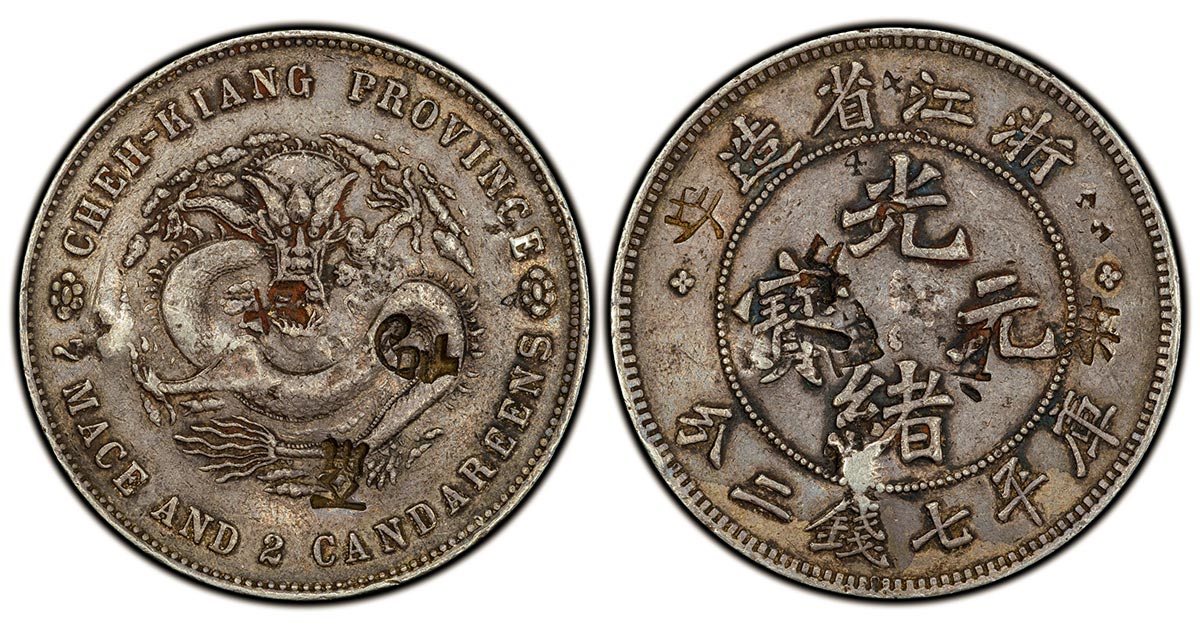
Specifications:
27.50 g, 0.900 fine silver, 0.7957 oz (actual silver weight)
Recorded mintage: unknown
Catalog reference: K# Y55, L&M-282, Kann-119
Details:
Chekiang (or Zhejiang) is a densely populated, coastal province immediately south of Shanghai. The first Chekiang mint was located in the capital Hangchow (Hangzhou).
The 1898–1899 Chekiang 7 Mace 2 Candareens "dollar” is tied to the province’s short-lived, late-Qing push to modernize coinage at the Hangchow Mint. The mint that was
approved in 1897, equipped with machinery imported from Germany, and then quickly swept up in central efforts to rein in provincial silver output. For years, collectors
and auction catalogers connected Chekiang dragon dollars to 1902 because Chekiang later commissioned a separate set of Birmingham-made 1902 patterns (often noted by the
province spelling CHE-KIANG rather than CHEHKIANG/CHEH-KIANG used on the Hangchow coin). Later study of foreign manufacturing showed that the Hangchow “Wei-bei / 尔寶”
circulating type belongs to 1898–1899 (Guangxu 24–25), while 1902 properly belongs to the later Birmingham pattern set and not the Hangchow issue.
Hangchow Mint operation is unusually well documented in modern write-ups. Records note machinery by Schuler and dies engraved by Otto Beh, with dies delivered in 1898, and delays due to mismatched date inscriptions that required re-engraving. Striking began in early 1899 and the mint was then ordered shut and the was equipment shipped to Beijing. The dollar itself is the standard large dragon-dollar format, but unlike big producers such as Kwangtung/Hupeh/Kiangnan which struck coins for many years, Chekiang’s run was brief, contributing to both extreme rarity and the “experimental” aura around the issue.
As for chopmarks, maybe half of the very few known examples are chopped. Chopmarks historically make sense for this coin, as public confidence was weak at time of issue, causing frequent testing and chopping of these coins. In general rarity terms, this is widely treated as a major Chinese dragon dollar rarity, prized in any condition.
Deeper dive:
In Bruce W. Smith’s Chekiang study in JEAN-08, he effectively separates the “Chekiang dragon dollar” material into three distinct groupings, one dated pattern group, and two separate undated “sets” distinguished by how the province name is written on the Chinese side.
-
Dated Kwang-hsü 23 (1897) patterns
Smith treats the 1897-dated Chekiang dollars (and related denominations) as patterns, including a dated dollar and half dollar that he notes are not listed in Kann’s catalog for those denominations. They sit in the context of Chekiang’s stop-start late-Qing minting experiments and prototype work associated with outside suppliers, rather than as a normal, circulating provincial dollar issue. Smith explicitly ties “poor quality” to the “22nd Year” coins, stating that the 22nd Year pieces with errors in the English legends “must be” the poor-quality coins rejected by the Provincial Treasurer in 1897, and he argues they were probably made at Hangchow by inexperienced staff, not at Wuchang (which he characterizes as a high-quality mint where such English blunders would be unlikely). -
Undated set with “CHEH-KIANG” in Wei-style script
Smith’s first undated set spells the province CHEH-KIANG and uses what he calls Wei-style characters. A key diagnostic he highlights is the “p’ing” character written incorrectly, in the same manner seen on some Kwangtung and Szechuan dragon dollars, useful because it’s an objective calligraphic marker that helps separate this set from the other undated group. -
Undated set with “CHE-KIANG” in K’ai-style (regular-script) characters
Smith’s second undated set is the one he focuses on in detail under the “Heaton Mint Chekiang K’ai Style Dragon Dollar of 1902” heading. This is the regular-script (k’ai-shu) look that collectors often call “regular script.” Within this K’ai-style group, Smith also documents different strikings/materials (notably silver, silver-plated, and copper patterns), which is why people sometimes talk about “multiple versions” even within the same design family.
The coin pictured here, and basically any coin available today with or without chopmarks, would come from group #2.
Notable chopmarks:
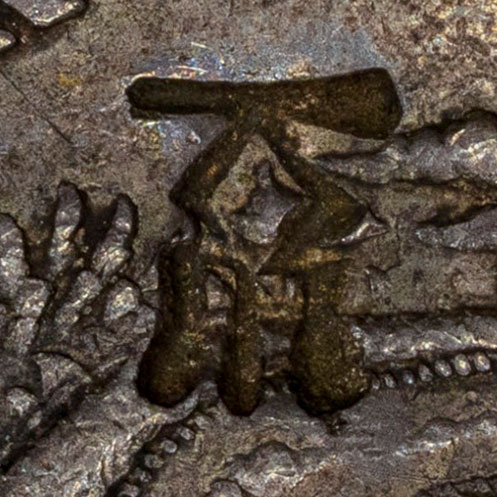 Probably a styled version of 京 - jīng - capital, Beijing, a surname
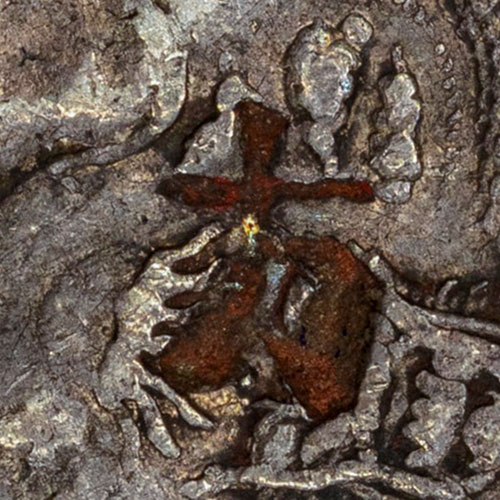 方 - fāng - square, direction, side
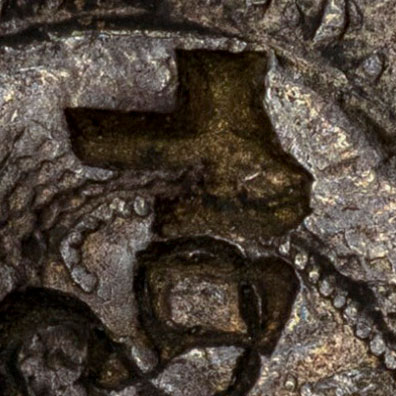 吉 - jí - auspicious, lucky
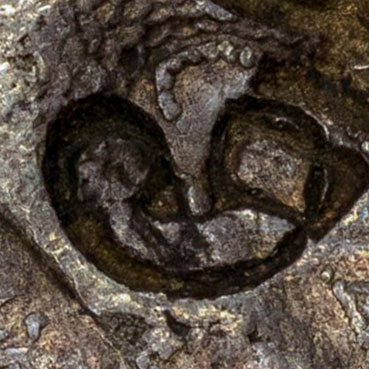 Unknown chopmark, possibly mongolian
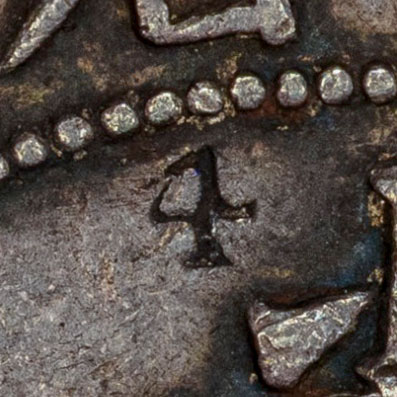 Unknown chopmark, similar shape to number 4
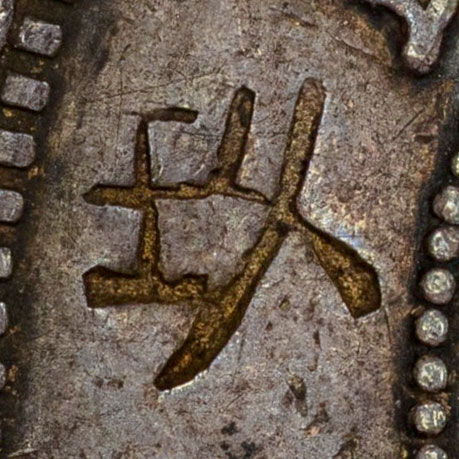 Combination of 王乆, an archaic variant of 玖 - jiǔ - nine, black jade
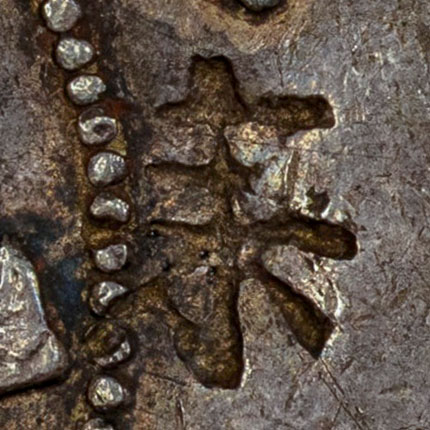 耒 - lěi - plow, plow handle
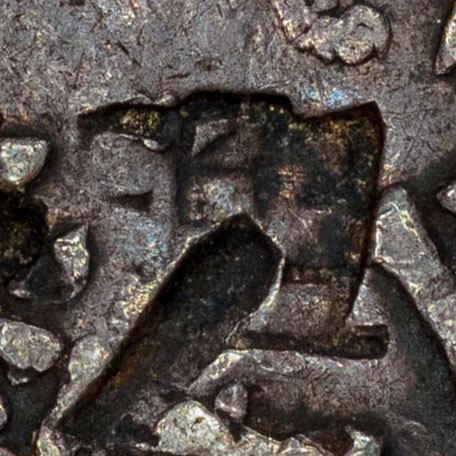 Possibly 興 - xīng - rise, prosper
Provenance:
From the Stack's Bowers December 2025 Hong Kong (SAR) Collectors Choice Online Auction - Session 1 – Chinese Coins Part 1
Lot #50108
Auction Description:
CHINA. Chekiang. 7 Mace 2 Candareens (Dollar), ND (1898-99). Hangchow Mint. Kuang-hsu (Guangxu). PCGS Genuine--Chopmark, EF Details.
L&M-282; K-119; KM-Y-55; WS-1019. Ranking among the top RARITIES of Chinese numismatics, the Chekiang "Dragon Dollar" is always a highlight when it crosses the auction block.
The present example displays with some of the common issues of chop marks but not nearly as chopped as some of the other provincial issues. There is little doubt that this
survivor of the "battle scars of commerce." will catch much deserved attention.
Estimate: $20,000 - $40,000.
1898 Fung-tien (Fengtien) Province 7 Mace 2 Candareens (Dollar)

Specifications:
26.4000 g, 0.8500 fine silver, 0.7215 troy oz (actual silver weight)
Recorded mintage: unknown
Catalog reference: L&M-471, K-244, KM-Y-87
Details:
Obverse
Two Chinese ideograms surrounded by English words, all surrounded by Manchu words.
Scripts: Chinese, Latin, Mongolian / Manchu
Lettering: ᡩᠠᡳᠴᡳᠩ ᡤᡠᡵᡠᠨ ᡳ᠋ ᠪᠠᡩᠠᡵᠠᠩᡤᠠ ᡩᠣᡵᠣ ᡳ᠋ ᠣᡵᡳᠨ ᡩᡠᡳᠴᡳ ᠠᠨᡳᠶᠠ ᠠᠪᡴᠠᡳ ᡳᠮᡳᠶᠠᠩᡤᠠ ᡨᡝᡨᡠᠨ ᡧᡠᡵᡩᡝᡵᡝ ᡴᡡᠸᠠᡵᠠᠨ ᠸᡝᡳᡵᡝᡥᡝ FUNG-TIEN PROVINCE 一 圓
Translation: Great Qing / Made in Year 24 of Guangxu by the equipment transferred to the Fengtian Arsenal 1 Yuan
Reverse Dragon with pearl at centre surrounded by English legend.
Script: Chinese
Lettering: 清大 造局器械天奉年四十二緒光
Translation: Great Qing Made in Fengtian Arsenal / Year 24 of Guangxu
Notable chopmarks:
 汜 - sì - tributary, stream
Provenance:
From the Noonan's Mayfair June 10, 2026 Live Online Auction of Coins and Historical Medals
Lot #713
Auction Description:
China, Fengtien, in the name of Guangxu, Dollar, yr 24 (1898), Fengtien mint (L&M 471; KM 87; Kann 244). Toned, fine, chop mark on reverse £100-£120
Year 24 (1898) Kiangnan (Jiangnan) Province, China 7 Mace 2 Candareens (Dollar)
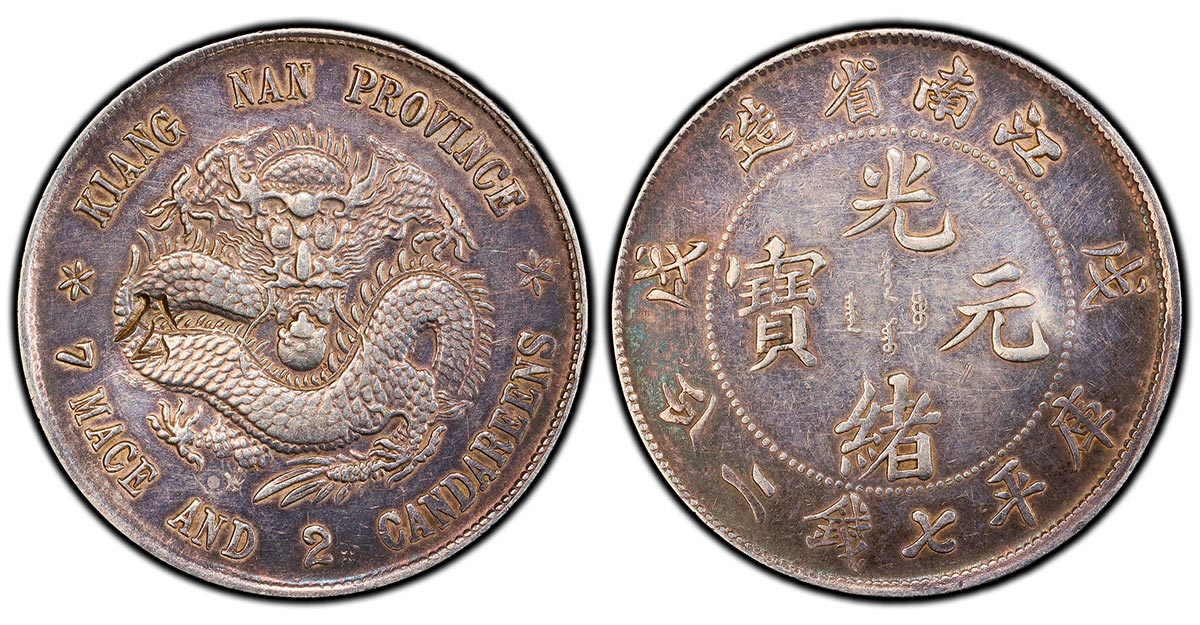
Specifications:
27.000 g, 0.900 fine silver, 0.7813 oz (actual silver weight)
Recorded mintage: unknown
Catalog reference: Y# 145a.2, LM-217
Details:
Kiangnan dollars came from the late-Qing push to modernize silver coinage in one of China’s richest commercial regions along the lower Yangtze. Production centered at the
Nanking mint in Jiangning (modern Nanjing), a major modern facility that began striking these provincial dollars in 1897, as the government tried to create a machine-struck
silver coin that could circulate reliably alongside (and against) the foreign trade dollars already entrenched in commerce. From 1899 on, the Nanking mint was one of the
most prolific mints in China and coins from the later years are more common.
Technically, Kiangnan dollars were intended to meet the same “standard dollar” specs at .900 fine with a weight around 26.7g (varies slightly by subtype/variety), putting them in the top tier for consistent, specification-driven production compared with many smaller or more weakly equipped provincial mints. Kiangnan is often grouped with the more reliable producers (like Kwangtung & Hupeh) rather than provinces known for shorter runs or greater manufacturing variability.
It's not difficult to find Kiangnan dollars with chopmarks, and many examples show heavy circulation. Chopmarks are typically smaller than those found on trade port coins such as Kwantung issues. The single large chopmark on the example pictured here is not typical for Kiangnan types.
Notable chopmarks:
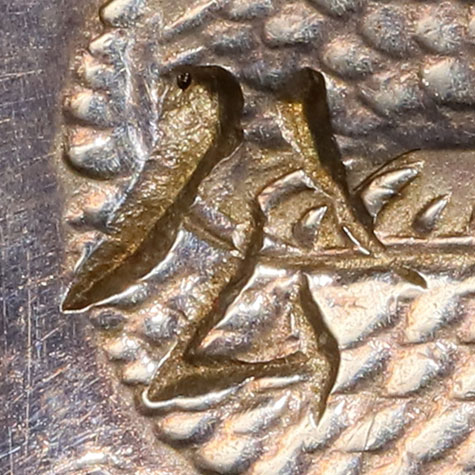 公 - gōng - public, fair, duke
Provenance:
Purchased from coin dealer Greg Krill of North Bay Rare Coins in Napa, California in July, 2023.
1898-A France Indo-China Piastre de commerce (27 GR.) (Ex. Waddell)
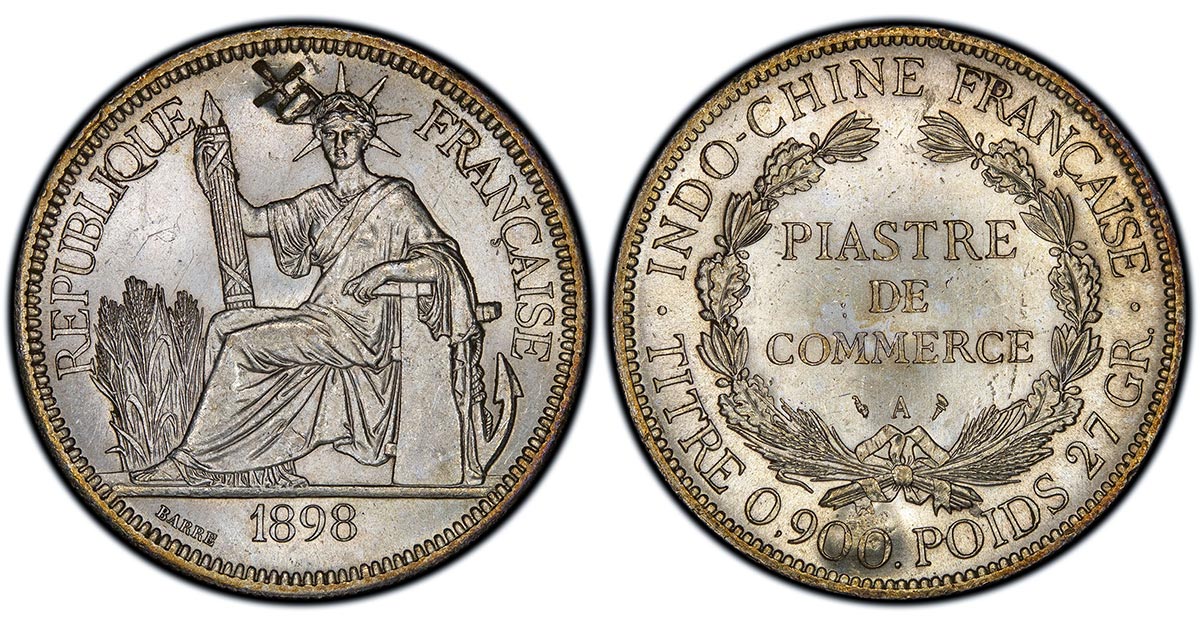
Specifications:
27.000 g, 0.900 fine silver, 0.7812 troy oz (actual silver weight)
Recorded mintage: 4,000,000
Catalog reference: KM 5a.1
Details:
The 1898 French Indochina Piastre de Commerce was struck at the Paris mint with a mintage of 4,000,000. It adheres to the lighter standard of 27.00g (reduced from 27.215g
in 1895), with a fineness of .900, containing approximately 96.5% of the silver found in the standard Spanish 8 Reales. The design features a seated figure of Liberty on
the obverse, wearing a crown of rays and holding a fasces, symbolizing Republican authority and unity, surrounded by the legend "RÉPUBLIQUE FRANÇAISE". The reverse displays
the denomination "PIASTRE DE COMMERCE" within a laurel wreath, flanked by the reduced weight specification "GR. 27.000" and the legend "INDO-CHINE FRANÇAISE". The "A" mint
mark designates the Monnaie de Paris, while the cornucopia and fasces privy marks represent the Mint Master and Chief Engraver (Jean-Jacques Barre).
This coin was issued during the governorship of Paul Doumer (1897–1902), whose fiscal reforms centralized the colonial economy and established the Piastre as the singular tax-payment currency. The reduction in weight to 27.00g was a strategic adjustment to align the Piastre with the standard of the Mexican peso, ensuring it circulated effectively in commerce rather than being hoarded for its bullion value. Silver for these issues was purchased on the open market, heavily relying on global bullion flows rather than local mines, as Indochina's own silver output was negligible.
This type is very common with chopmarks, they circulated extensively in Southern China, particularly in Yunnan and Guangxi provinces. Records indicate that between 1895 and 1903, over 55 million pieces were struck, and despite the lower silver content, they were widely adopted in trade, eventually superseding the Mexican dollar as the sole legal tender in the colony (F.I.C.) by 1905.
Notable chopmarks:
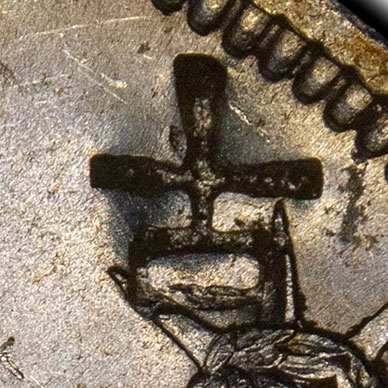 古 - gǔ - ancient, old
Provenance:
From the Ron Waddell Collection
Purchased from Ron via private sale in September 2016
Previously purchased from San Diego Coin & Bullion.
Year 25 (1899) Chihli (Zhili) Pei Yang, China 7 Mace 2 Candareens (Dollar) (Ex. Kendall)
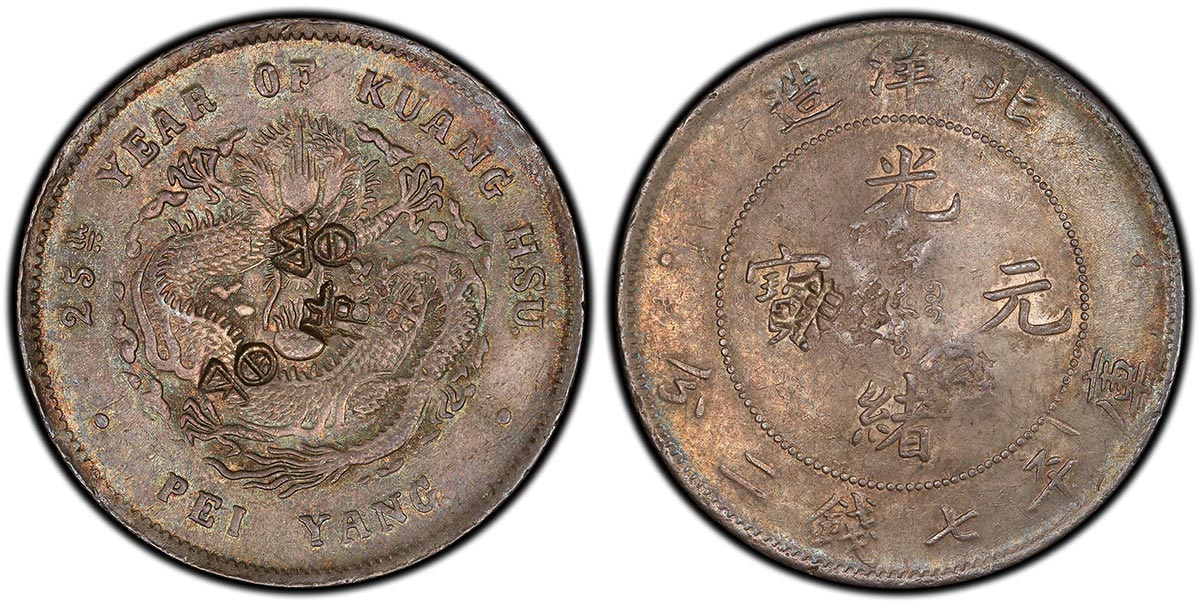
Specifications:
26.70 g, 0.900 fine silver, 0.7727 oz (actual silver weight)
Recorded mintage: 1,566,000
Catalog reference: KM Y73
Details:
The Year 25 (1899) Chihli “Pei Yang” dollar is the final year Pei-Yang/Tientsin dragon-dollar type, struck to the standard late-Qing dollar specs commonly listed around
.900 silver, ~26.7g, ~39mm, and explicitly labeled in the Chinese ring legend as Kuping 7 mace 2 candareens (庫平七錢二分). The reverse English reads “25th Year of Kuang
Hsu” and the mint identifier has been shortened to “PEI YANG”. It differs from the earlier 1897 (Guangxu Year 23) “Pei Yang Arsenal” 1 Yuan issue, which belongs to the
decimal/face-value experiment and literally names “PEI YANG ARSENAL” in the English legend while showing “壹圓” (1 Yuan) on the obverse. By 1899 the design language shifted
toward the standardized provincial “Guangxu Yuanbao” framework, still a “dollar” in function, but emphasizing the traditional weight standard on the coin and presenting the
issuer more as the Pei Yang/Beiyang brand than spelling out “arsenal.”
The later year Pei Yang issues appear to be a little more available with large chopmarks than the earlier years, but still not common in general. This example is particularly nice for the type, especially given the chopmarks.
Notable chopmarks:
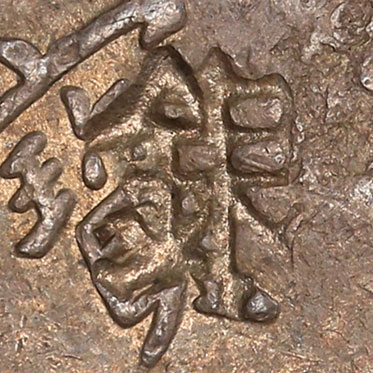 銀 - (traditional version of 银) yín - silver, silver-colored, relating to money or currency
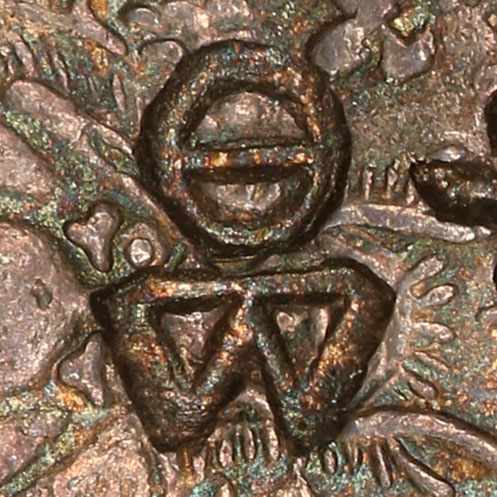 Stylized version of 显 - (simplified form of 顯) xiǎn - prominent, conspicuous, apparent, manifest
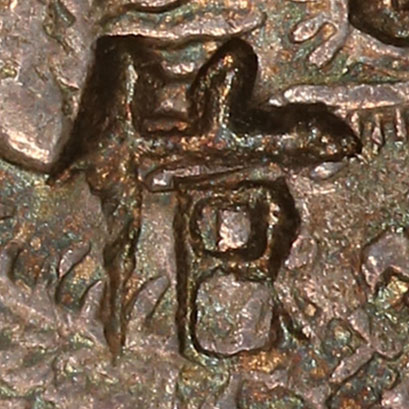 佗 - tuó - he, she, other
Provenance:
From the Henry P. Kendall Foundation Collection.
Stack's Bowers March 2015 Baltimore Lot #2628
Previously purchased from A.H Baldwin & Sons, October 28, 1965.
Auction Description:
Chopmarked Year 25 Chihli Dollar
China. Chihli (Pei Yang). Year 25 (1899) 7 Mace 2 Candareens (Dollar). L&M-454, K-196, Y-73, WS-0624. AU Details--Chopmark (PCGS). Secure Holder.
Provincial dragon style coinage which was struck in China from the late 1880's until the end of the Qing Dynasty in 1911. The machine struck silver dragon coinage was begun by the Qing government as an attempt to drive out foreign silver dollars (primarily Spanish 8 reales) which had been the standard in trade throughout China. These efforts, however, were not as effective as was hoped for, as various provinces were allowed to establish mints and begin striking coinage. However, the weight and fineness of the coinage each mint produced was not regulated, and issues from each mint were viewed with suspicion outside of the respective mint's immediate vicinity. This system of provincial mints would continue to plague the Chinese financial system well into the Republic of China era, encouraging the chopmarking of even these domestically produced coins. Well struck with good definition to the dragon's scales. Three chopmarks on center of obverse, one on the reverse. Attractive old envelope toning with maroon and teal hues among the more protected areas. Underlying luster throughout.
Provenance: From the Henry P. Kendall Foundation Collection. Purchased from A.H Baldwin & Sons, October 28, 1965.
1901-C British Trade Dollar, Calcutta Mint
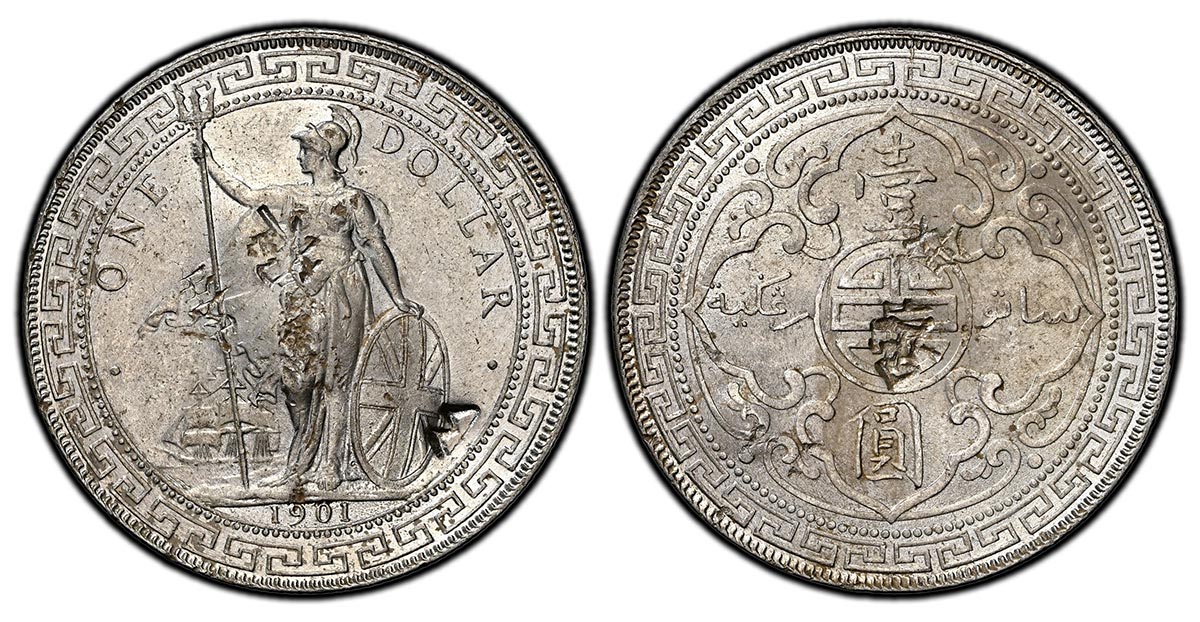
Specifications:
26.96 g, 0.900 fine silver, 0.780 troy oz (actual silver weight)
Recorded mintage: 1,514,000
Catalog reference: KM T5
Details:
The 1901-C British Trade Dollar was struck at the Calcutta mint, weighing 26.95g at .900 fine with a mintage of 1,514,000; approximately 99.6% of the standard Spanish
8 Reales. The obverse features a standing figure of Britannia holding a trident and a shield with the Union Jack, with a merchant ship in the background, symbolizing
Britain's maritime dominance. The reverse displays an arabesque design with the Chinese character shou [壽] (longevity) in the center and the denomination "ONE DOLLAR"
in English and "SATU RINGGIT" in Malay, surrounded by the Chinese legend "壹圓" (One Dollar). This type was introduced in 1895 to facilitate British commerce in the Far
East and compete with the Mexican 8 Reales. The mint mark "C" is located in the ground between Britannia's left foot and the base of the shield.
Production of this coin occurred during the final year of Queen Victoria's reign (though minted after her death in January 1901, Edward VII's portrait did not appear on these trade coins). The coin was intended for use in Britain's eastern colonies, primarily Hong Kong and the Straits Settlements, to provide a consistent silver trade coin that could rival the Mexican dollar. The silver for these issues was often sourced from global markets and struck in India to reduce shipping costs and ensure a steady supply for the Asian trade.
This type is very common with chopmarks, as they circulated extensively alongside Mexican and Japanese dollars in Chinese treaty ports. While the Bombay mint produced the vast majority of British Trade Dollars (over 25 million in 1901 alone), the Calcutta mint's output was significantly smaller, making this "C" mintmark variety much scarcer, especially with verifiable chopmarks. This example was likely sourced recently from China, and shows evidence of dirt, possibly a ground find. Despite this, the details and luster are still quite exceptional.
Notable chopmarks:
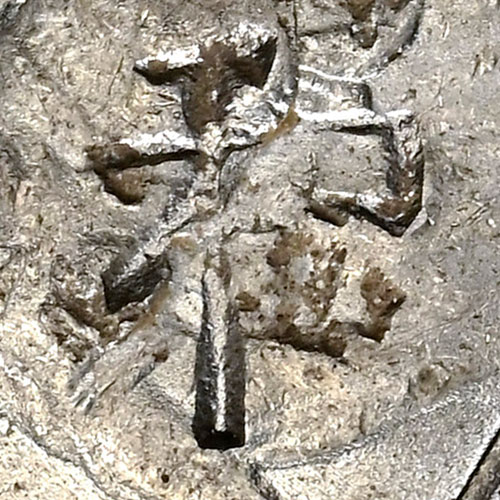 和 - hé - harmony, peace, and
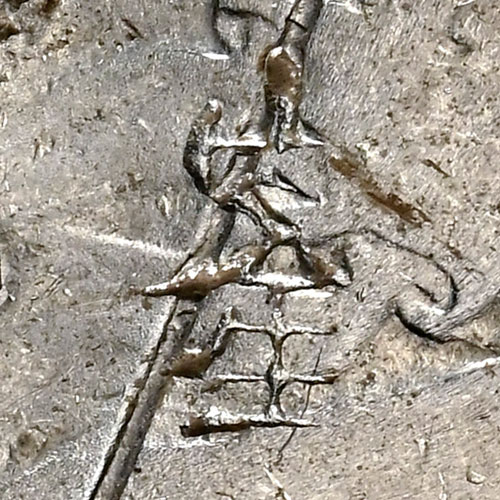 Similar to 㝫 - lóng - shape of the sky
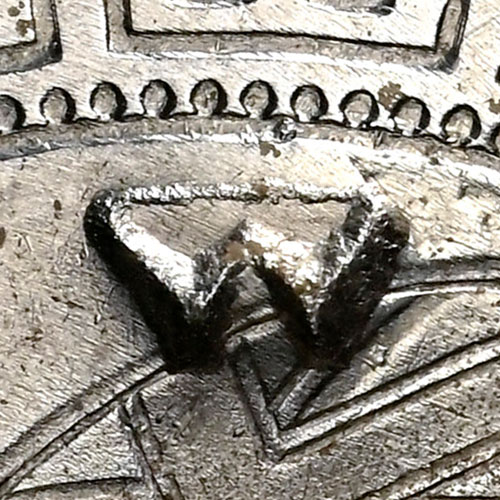 Unknown chopmark
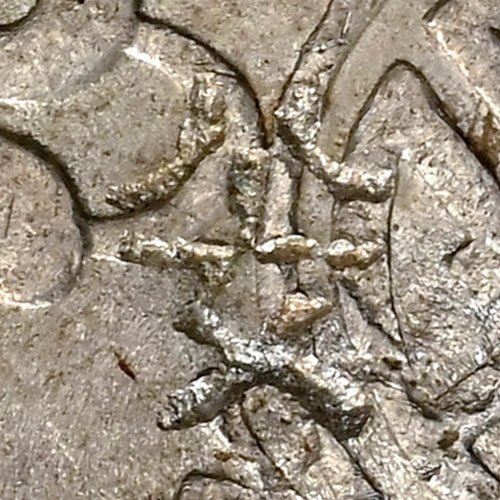 Combination of 女 and 八, with unknown meaning
Provenance:
From the Stack's Bowers December 2024 Hong Kong (SAR) Collectors Choice Online Auction - Session 2
Lot #43053
Auction Description:
GREAT BRITAIN. Trade Dollar, 1901-C. Calcutta Mint. Victoria. NGC Chopmarked.
KM-T5; Mars-BTD1; Prid-12.
Estimate: $60 - $100.
(1901-1908) Szechuan (Sichuan) Province, China 7 Mace 2 Candareens (Dollar)
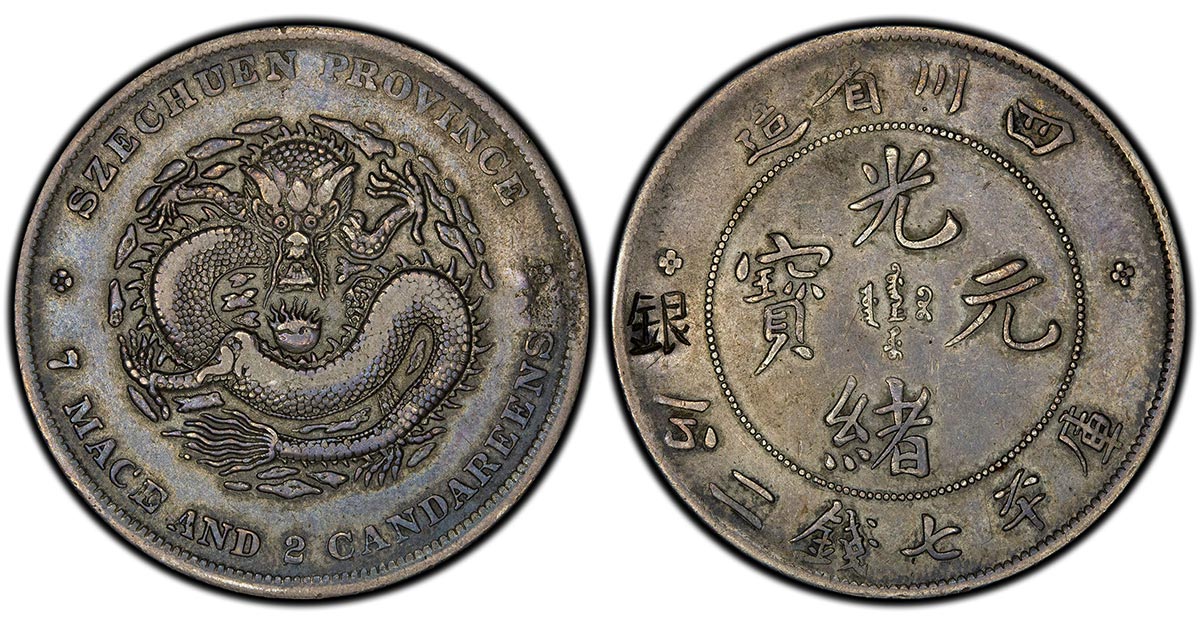
Specifications:
26.80 g, 0.900 fine silver, 0.7755 oz (actual silver weight)
Recorded mintage: 6,487,000
Catalog reference: KM-Y238
Details:
Szechuan (Sichuan) Province is in the south central part of China, and is an important economic power in the country. The capital is Chengdu. In the early 20th Century
it, along with Tibet, was made a special administrative district, acknowledging the dominance of non-Han Chinese people in the region. The Szechuan mint with modern
equipment opened in 1898 with machinery brought from New Jersey, USA. Another mint was opened in Chungking in 1905.
The (1901–1908) Szechuan Province 7 Mace 2 Candareens “dragon dollar” is another example of the late-Qing wave of provincial machine-struck silver. The Szechuan issue more specifically was meant to help standardize commerce in a region that was geographically far inland in China’s southwest. This issue is believed to have run from 1901–08 and is associated with the Chengdu Mint; references also note an earlier related emission in 1898, with no recorded minting in 1899–1900, an example of the “stop-start” nature of the series.
Szechuan dollars are not common in general, so it's more difficult to say if they are more often found with chopmarks or not. When we do see them with chops, it is often with just one or two chops rather than many.
Notable chopmarks:
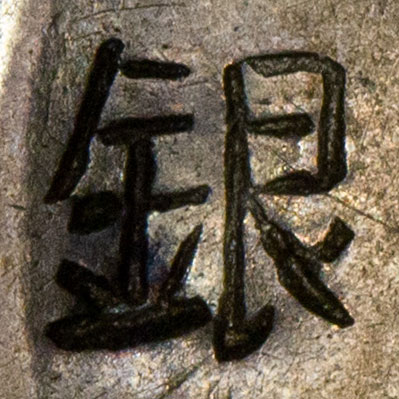 銀 - (traditional version of 银) yín - silver, silver-colored, relating to money or currency
Provenance:
From the German WAG Online November 2021 Auktion 124 Lot #294
Auction Description:
China Provinz Szechuan.
Dollar o.J. (1901-1908). Chop Mark. K.M. 238.
1903-B Straits Settlements One Dollar
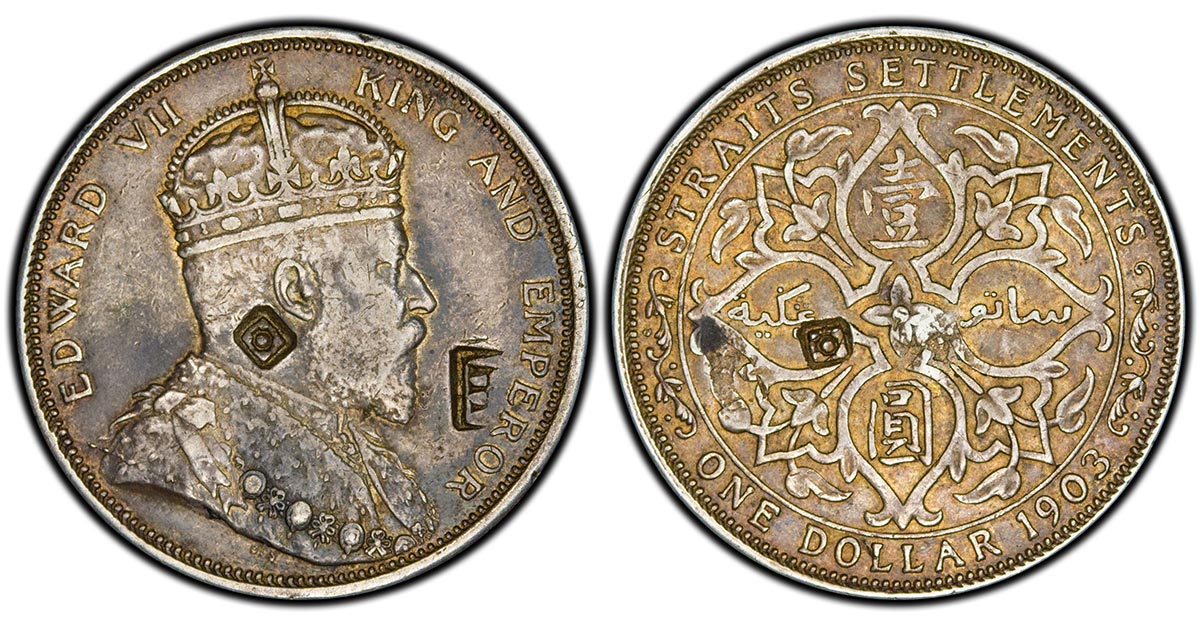
Specifications:
26.95 g, .900 fine silver, .780 troy oz (actual silver weight), 37 mm diameter
Recorded mintage: 4,799,000
Catalog reference: KM 25
Details:
1903-B Straits Settlements One Dollar, struck at the Bombay mint in silver of 26.95 g weight and .900 fineness, with a reported Bombay mintage of approximately
4,799,000 pieces. The obverse shows a crowned bust of King Edward VII facing right, wearing imperial robes, with the legend EDWARD VII KING AND EMPEROR; and the
engraver’s initials below the truncation. The reverse features an ornate cruciform arabesque design divided into four panels, with the Chinese denomination
壹圓 (One Dollar) in two opposing quadrants and the value rendered in Malay written in Jawi (Arabic-derived) script in the remaining panels. Around the outer ring,
STRAITS SETTLEMENTS appears above and ONE DOLLAR below, with the date at the bottom.
Introduced at the beginning of Edward VII’s reign, the Straits Settlements Dollar was issued from 1903 to 1907 as part of the colony’s standard silver currency. The multilingual reverse reflects administrative intent to produce a coin readily accepted across Singapore, Penang, and Malacca, where Chinese, Malay, and European commercial communities operated side by side. The issue continued British practice of maintaining a consistent silver dollar standard during a period of adjustment following late-19th-century changes in global silver pricing.
This type is relatively common with chopmarks, although high quality examples are scrace, suggesting these coins often saw extensive circulation. Straits Settlements dollars circulated widely through Singapore and other regional ports and reached southern China via established maritime routes connecting the Straits with Canton and Fujian, where they circulated alongside other crown-sized foreign silver types.
Notable chopmarks:
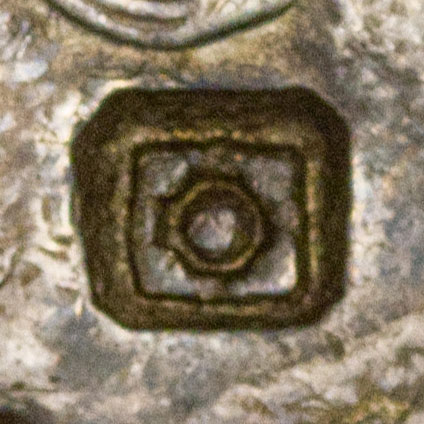
 - Liushutong script variant of 回 - huí - return, reply, turn
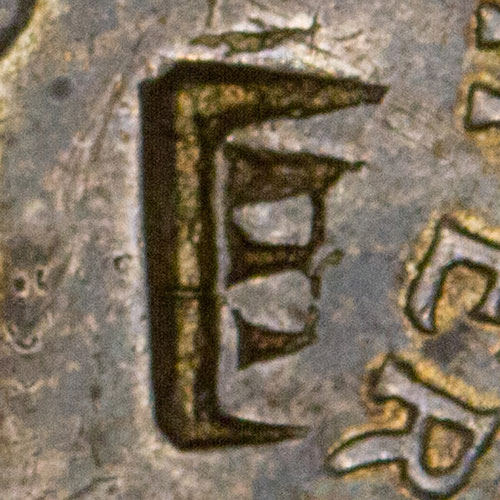 匡 - kuāng - correct, rectify, assist
Provenance:
Purchased on eBay in April 2021 from a dealer in Vienna, Austria.
1903 Fung-tien (Fengtien) Province 7 Mace 2 Candareens (Dollar) "Fung Boo" variety
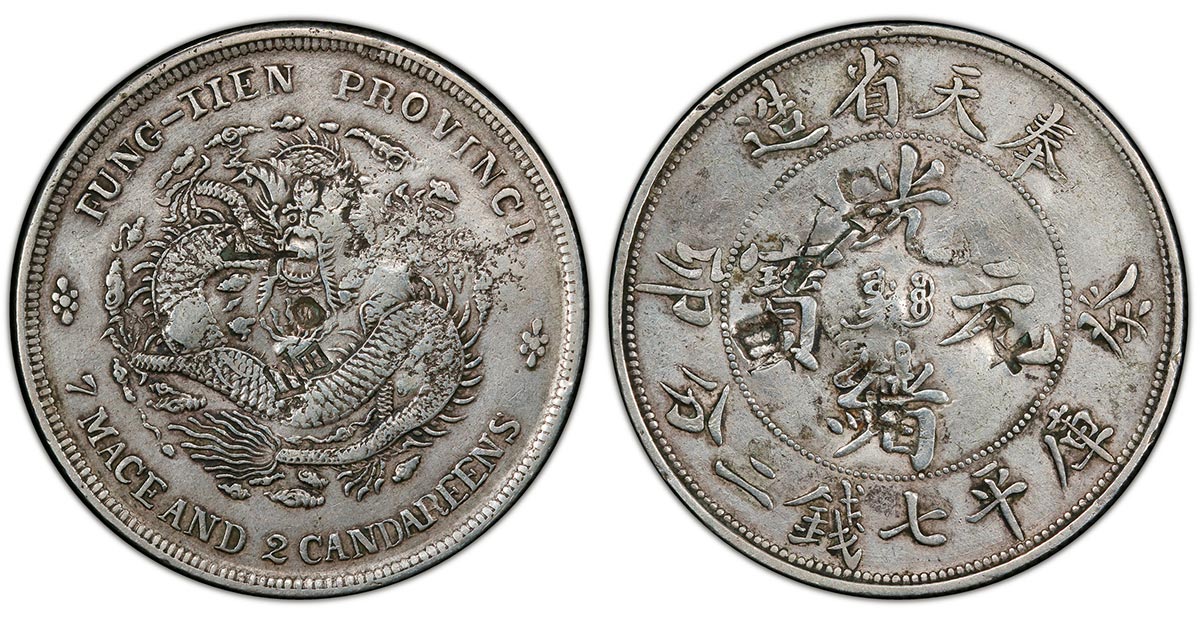
Specifications:
26.4000 g, 0.8500 fine silver, 0.7215 troy oz (actual silver weight)
Recorded mintage: 262,000
Catalog reference: L&M-483; K-251B; KM-Y-92; WS-0598
Details:
Fung-tien (Fengtien) province was renamed Liaoning Province in 1929, named after the Liao River that runs through it. This coastal province sits in the northeast region of
China formerly called Manchuria and is bounded by North Korea to the east and the Yellow Sea to the south. The province issued its 7 mace 2 candareens “dragon dollars” from
the Mukden (Shenyang) mint, a modern facility established with imported machinery in 1897.
Technically, Fengtien dollars are distinctive because the "standard" they followed is commonly given as 26.40g at .850 fine silver, rather than the more typical ~26.7g / .900 seen on many other Chinese provincial dollars. Collectors often talk about Fengtien in terms of varieties and strike/die characteristics (e.g., dragon mouth style, character shapes). This is the “Fung Boo” variety, with the central Manchu characters “Boo Fung” reversed, although this variety seems to be more common than that with the correct orientation.
The provincial mint operated from 1897-1931. Dollars of this mint are generally scarce, and sometimes found with chopmarks as this example shows, although not nearly as often as coins made in the coastal trading heavy regions.
Notable chopmarks:
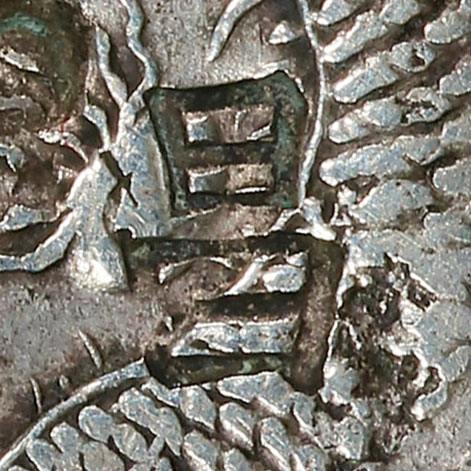 昌 - chāng - prosperous, flourishing
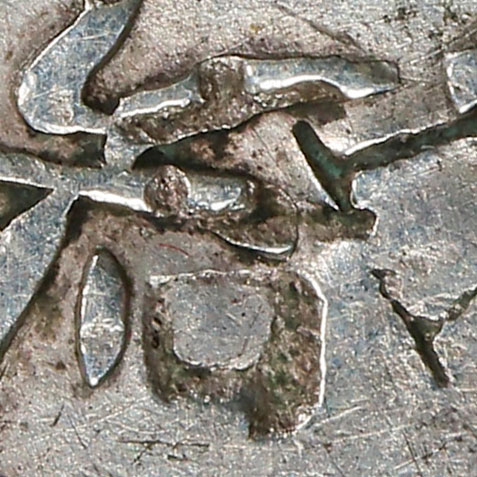 吉 - jí - auspicious, lucky
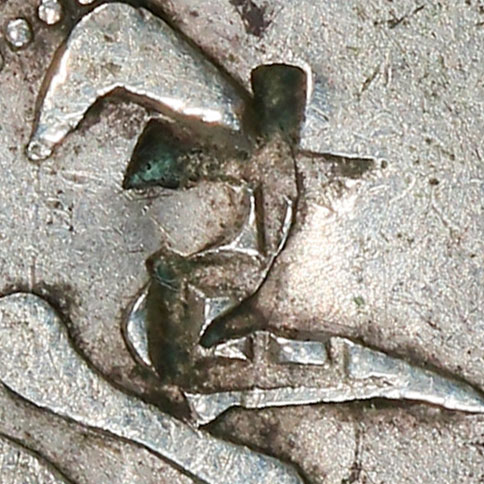 Unknown chopmark
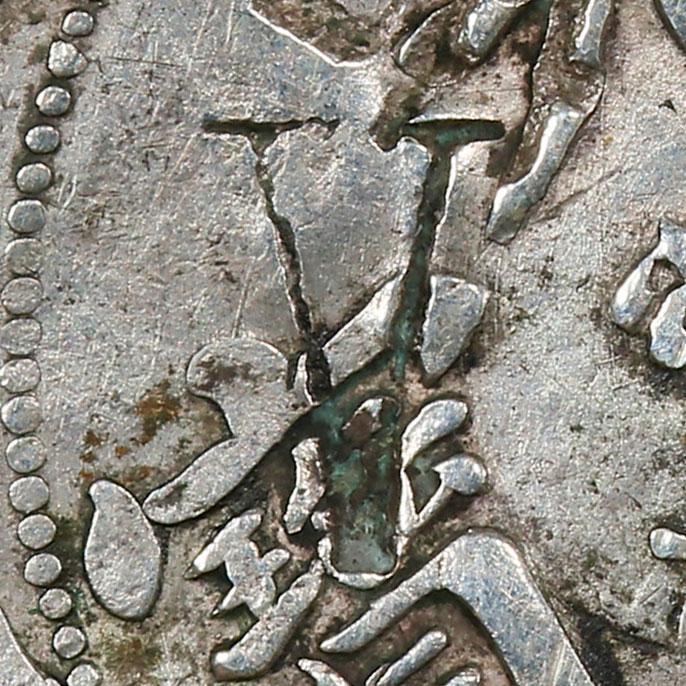 V - Latin-letter chopmark
Provenance:
From the Stack's Bowers April 2024 Hong Kong (SAR) Auction - Session 2 - Chinese Mainland Provincial & SAR Coins
Lot #41066
Auction Description:
CHINA. Fengtien. 7 Mace 2 Candareens (Dollar), CD (1903). Fengtien Mint. Kuang-hsu (Guangxu). PCGS Genuine--Chopmark, EF Details.
L&M-483; K-251B; KM-Y-92; WS-0598. Variety with Manchu script reversed as "Fung-Boo". While unfortunately chopmarked, this Dollar displays a slate gray color, with strong
details and charming allure. A most impressive example for those specialists in elusive Dragon Dollars.
Estimate: $3,000 - $5,000.
1903 Kirin (Jilin) Province 7 Mace 2 Candareens (Dollar)
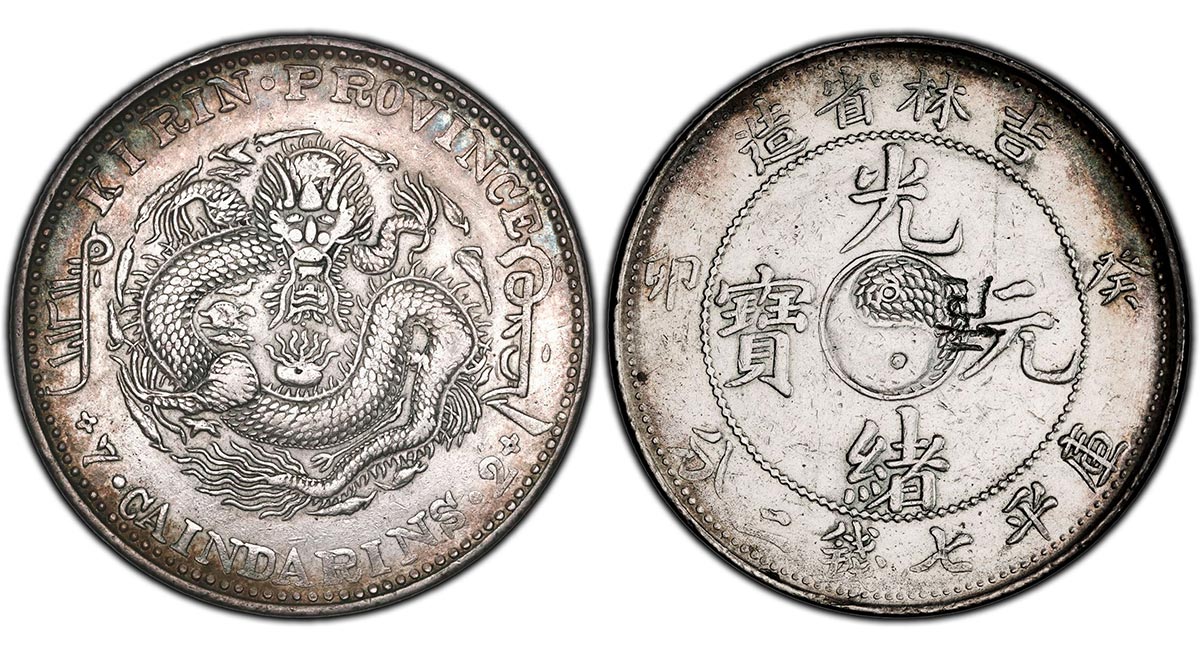
Specifications:
26.10 g, silver
Recorded mintage: Unknown
Catalog reference: L&M-547; Kann-468; KM-Y-183a.2
Details:
The province of Kirin (Jilin) sits between Heilongjiang (to the north) and Liaoning (to the south), with Inner Mongolia to the west and Russia & North Korea on its eastern
border. The mint opened in 1881 and for many years struck only trial pieces. Silver milled coins were produced from 1895 onward. Many were dated using the sexagenary cycle.
The mint burnt down in 1911. Kirin dollars are unique due to their low weight standard, published by major references as ~26.1g, suggesting the mint was aiming at a slightly
lighter dollar than the more common 26.7g / .900 standard you see listed for most provincial issues.
Chopmarked Kirin dollars are definitely available, although the pieces in general are getting expensive, especially the scarcer varieties.
Notable chopmarks:
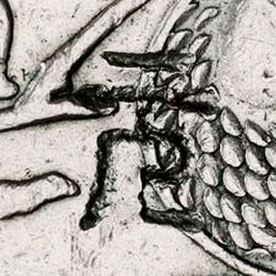
 - Liushutong script variant of 元 - yuán - dollar, unit of currency, basic, primary
Provenance:
From the Sedwick November 2024 Treasure, World, U.S. Coin & Paper Money Auction 36 Lot #890
Auction Description:
CHINA, Kirin, Kirin mint, 7 mace 2 candareens (dollar), Kuang-hsü, (1903), dragon's left claw not touching cloud variety, 吉林癸卯七钱二分。, PCGS XF details / chop mark.
L&M-547; Kann-468; KM-Y183A.2; WS-0465. Desirable type with the dragon's claw not touching the cloud, single bold chopmark in the center of the obverse, quite lustrous
with patches of blue toning about the rims.
状态不俗,龙鳞、龙爪细节清晰,币正面中央有一明显刀痕(戳记),整体光泽十足,边缘有蓝色包浆。
1903-Cn JQ Peso, Culiacan, Mexico mint
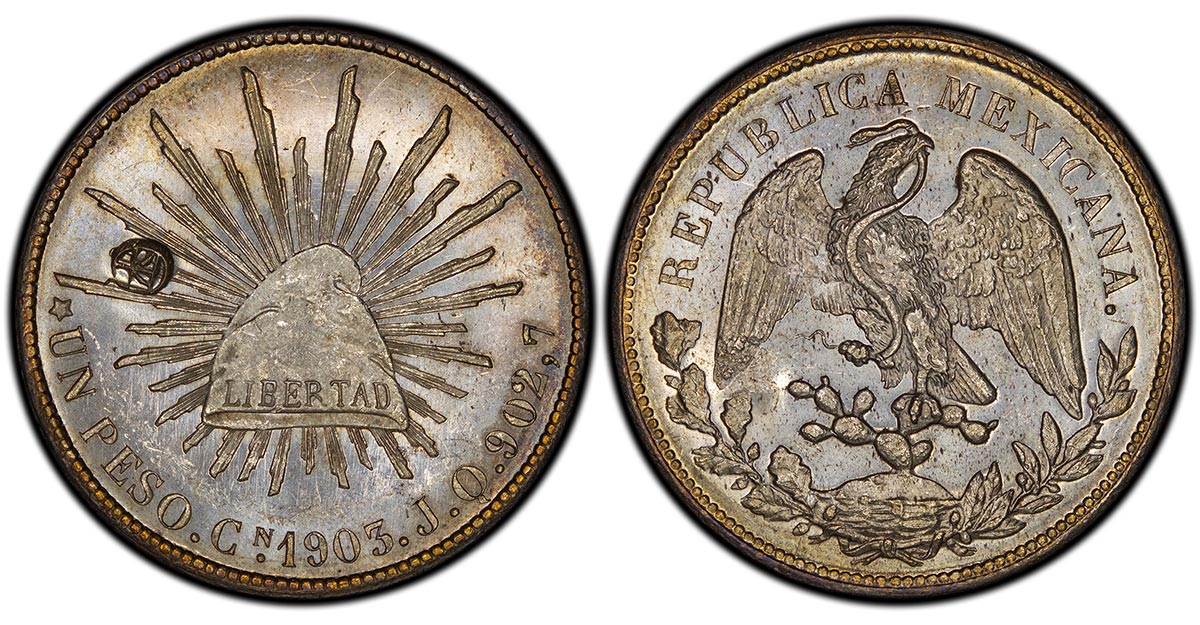
Specifications:
27.07 g, .903 fine silver, .786 troy oz (actual silver weight)
Recorded mintage: 1,514,000
Catalog reference: KM 409
Details:
1903 Mexico Peso, Culiacán mint, assayer JQ (Jesús Q. Guerrero), struck in silver of 27.07 g weight and .903 fineness, with a recorded mintage of 1,514,000
pieces for this mint. At the beginning of the 20th century, the Culiacán mint functioned as a secondary Pacific-slope facility serving the silver-producing districts
of Sinaloa and neighboring regions, operating on a markedly smaller scale than the central mint in Mexico City. Its output reflected regional mining conditions and
local monetary demand, yet its proximity to Pacific ports, particularly Mazatlán, placed Culiacán pesos within established coastal shipping networks. During this period,
silver coin struck in western Mexico moved readily through regional trade channels linking mining districts, port cities, and overseas commerce, allowing Culiacán issues
to circulate beyond local regions despite comparatively modest mintages.
What a gorgeous, prooflike coin that briefly served it's trade purpose in Asia.
Notable chopmarks:
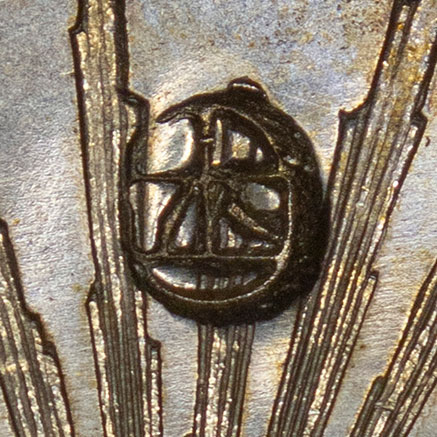 木 - mù - tree, wood, Japanese Kanji radical 75
Provenance:
Purchased at the February 2017 Long Beach show in an NGC Unc Details holder.
1903-Zs FZ Peso, Zacatecas, Mexico mint
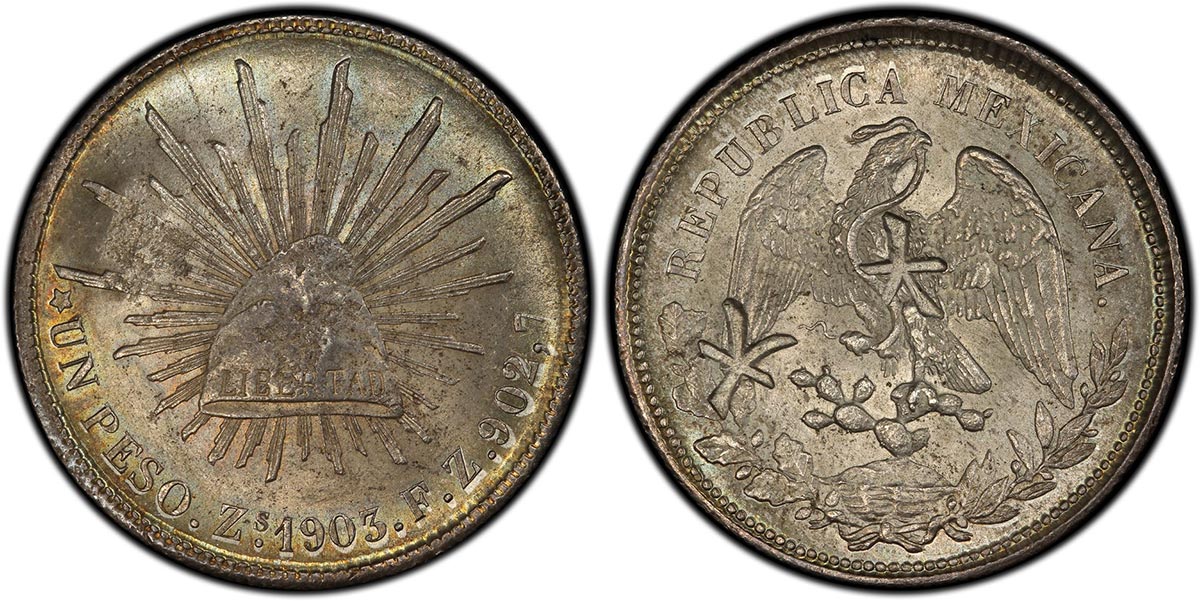
Specifications:
27.07 g, .903 fine silver, .786 troy oz (actual silver weight)
Recorded mintage: 3,080,000
Catalog reference: KM 409.3
Details:
The Zacatecas mint stood at the heart of one of Mexico’s oldest and most productive silver regions, with mining activity dating back to the mid-16th century and continuing
uninterrupted into the early twentieth century. By 1903, silver output from Zacatecas reflected a mature mining economy supported by established workings, modern machinery,
and dependable rail transport linking the central plateau to the Pacific coast. Coinage struck at the mint moved readily beyond the region, following rail lines westward to
ports such as Mazatlán and Manzanillo, where Mexican pesos entered Pacific shipping routes. Through these channels, Zacatecas coinage became part of the broader flow of
Mexican silver reaching East Asia, including southern China, where pesos of this type circulated alongside other crown-sized foreign dollars in regional commerce.
The unusually large “da” chopmarks seen on this coin are also documented on other coins of the same period in combination with standard Chinese marks, giving us confidence in the authenticity of these marks.
Notable chopmarks:
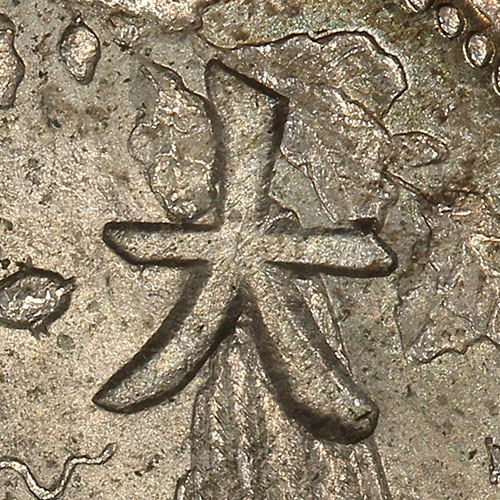 大 - dà - big, great, large
Provenance:
Purchased on eBay in February 2014 from a seller in Maryland.
1903-S Philippines Peso (Under U.S. Sovereignty)
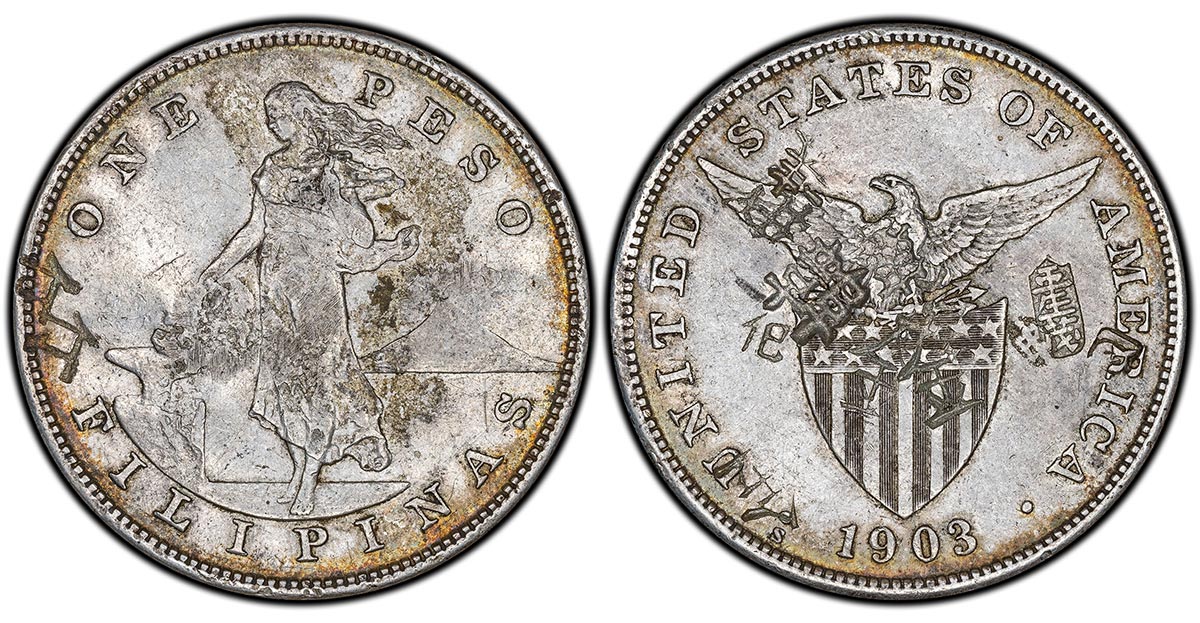
Specifications:
26.9500 g, .900 fine silver, .7800 troy oz (actual silver weight)
Recorded mintage: 11,361,000
Catalog reference: KM 168
Obverse & Reverse Designers: Melicio Figueroa and Charles Barber
Details:
1903-S Philippines Peso, struck at the San Francisco mint in silver of 26.956 g weight and .900 fineness, with a recorded mintage of 11,361,000 pieces for this mint.
The obverse depicts a standing female figure holding a hammer beside an anvil, with a smoking Mount Mayon in the background and the legend UNITED STATES OF AMERICA
prominently above; the date appears below. The reverse bears the arms of the Insular Government of the Philippine Islands, consisting of an American eagle displayed
above a shield charged with the U.S. flag, with FILIPINAS above and UN PESO below.
Following the transfer of sovereignty from Spain to the United States under the Treaty of Paris (1898), the Philippines became a U.S. territory administered through an Insular Government until independence on July 4, 1946. The silver peso formed part of a new territorial coinage system produced entirely at United States mints at Philadelphia and San Francisco. This design was struck to the original silver standard from 1903 through 1906; although the same basic imagery continued afterward, the peso was reduced in weight and fineness beginning in 1907. After the end of regular silver peso production in 1912, no further circulating silver pesos were issued until the commemorative coinage of 1936.
This type is common with chopmarks. Philippine pesos circulated widely in the western Pacific and entered China through established routes linking Manila with Hong Kong and the southern treaty ports, where they were accepted alongside Mexican and other crown-sized foreign silver.
Notable chopmarks:
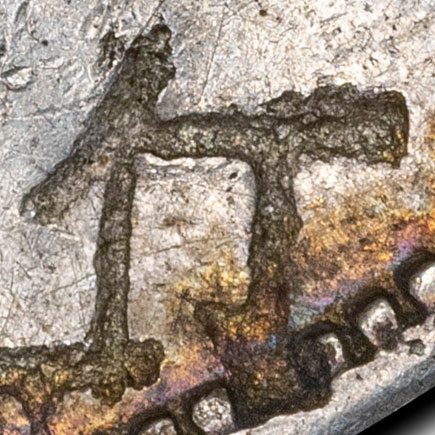 仃 - dīng - lonely, alone
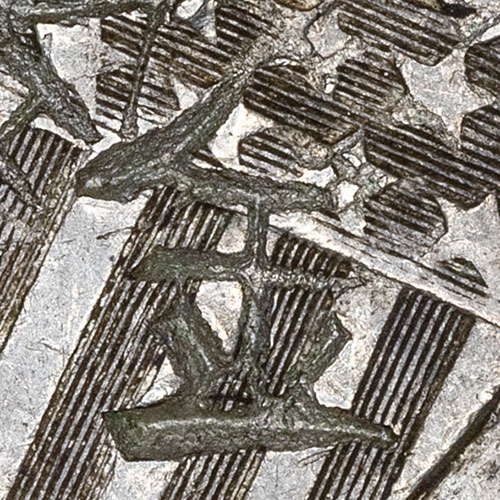 金 - jīn - gold, metal, money
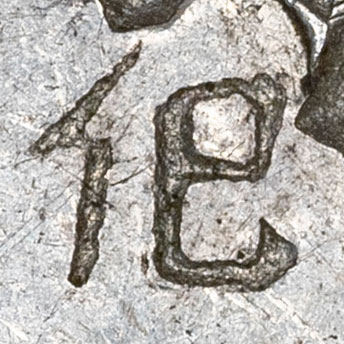 㐶 - (variant of 化) huà - to change, to transform, to become, to turn into
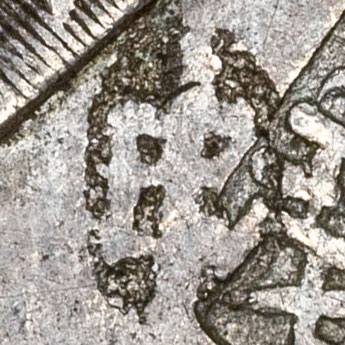 申 - shēn - extend, 9th earthly branch
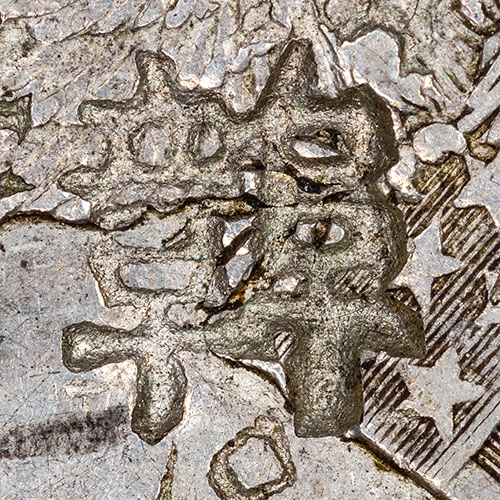 章韋 - a combination of zhāng - chapter, section, clause, movement (of symphony), seal, badge, regulation, order, surname Zhang and wéi - soft leather, surname Wei
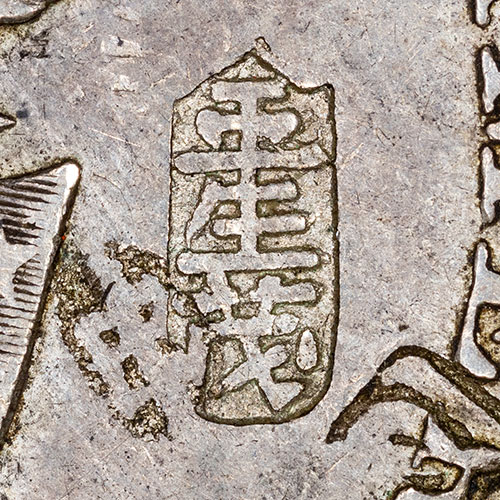 王生茂 - wáng shēng mào - Wang Shengmao (a merchant or silver-shop name) - A three-character merchant or money-shop house mark: the surname 王 (Wáng) followed by a shop or given name in which 茂 ('luxuriant, flourishing') is a common auspicious business character. Marks like this were struck by the shroff or silver shop that tested the coin's silver and accepted it as genuine. Philippine pesos reached Chinese hands through Manila, Hong Kong, and the southern treaty ports, where they were chopped alongside Mexican and other foreign crown-sized silver.
Provenance:
Purchased from IG dealer Joe Walker (panda_numismatics) in July 2023. Joe works with dealers directly in China to save chopmarked coins from the melting pot.
(1908) China "Tai-Ching-Ti-Kuo" Dollar, Tientsin Mint
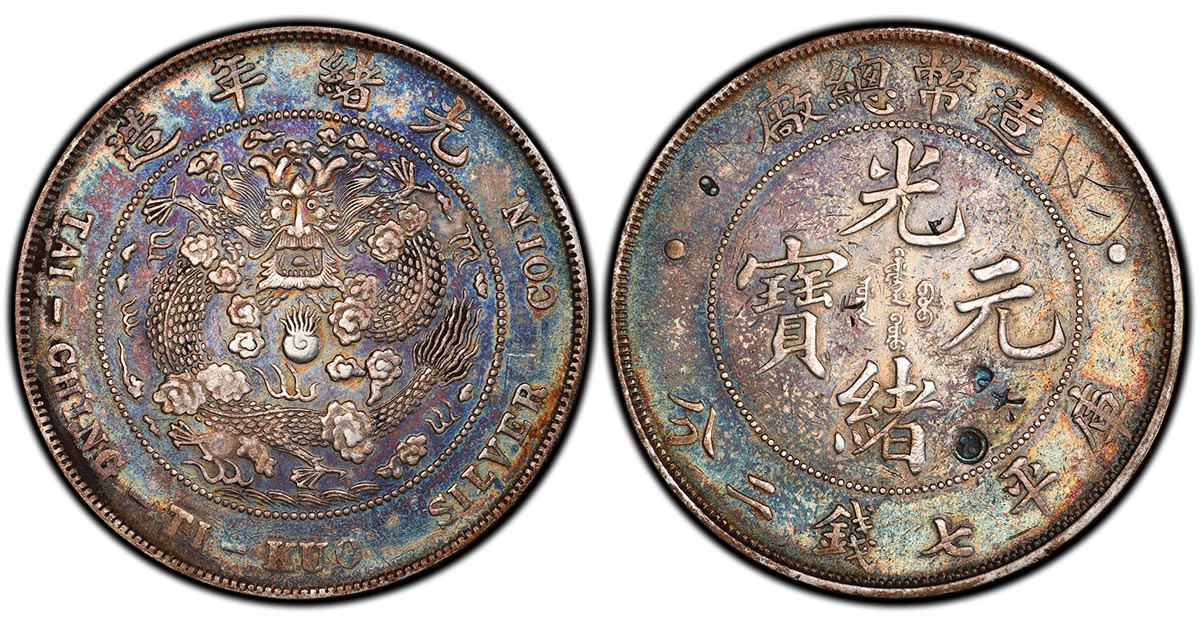
Specifications:
26.90 g, 0.900 fine silver, 0.7784 troy oz (actual silver weight)
Recorded mintage: unknown
Catalog reference: Y-14 LM-11 K-216
Details:
A stellar example of this 1 year type. It is incredibly difficult to find attractive, chopmarked examples of this type. The smaller sized chopmarks found here are quite
interesting, along with what appears to be a Chinese character 东 (dōng, meaning "East") scratched into the reverse around 2 o'clock.
Perhaps the best-known Dragon Dollar from Kuang-hsü's reign, this short-lived issue, produced for only a single year, relates to a perennial problem of the late Empire: how to reconcile the issue of diverse provincial coinage into a single, unified national standard. Indeed, the problem would continue to plague the nation's rulers from Hsüan-t'ung (Pu Yi) to Yuan Shih-kai. Following the reestablishment of the Tientsin mint in 1906, after its destruction during the Boxer Rebellion in 1900, the Qing government attempted to introduce a new standard to replace the then-standard monetary system of Mace-Candareens, tied to the inherently western Dollars-Cents, with a Tael system, striking a series of 4 coins including the Tael, 5 Mace, 2 Mace, and Mace (the so-called "Chung" Tael standard). Ultimately, due to provincial dissent, these issues were revoked, only to be replaced by another series of 4 coins--this time the Dollar, 50 Cents, 20 Cents, and 10 Cents--which were similarly failed due to the death of the Emperor in 1908. This series, however, left its mark with its instantly recognizable Tai-Ching-Ti-Kuo ("The Great Qing Empire") design, which proliferated on late Imperial copper coinage. (source: Heritage Auctions)
“Tai-Ching-Ti-Kuo” (大清帝國) literally means “Great Qing Empire.” Coins bearing this legend were imperial issues, not provincial. The Tientsen mint was likely chosen for this issue because Tientsin was close to Beijing, it was politically reliable, it was already industrialized and it was equipped with modern Western mint machinery. The specs for this coin were tightly controlled, unlike many provincial issues. This issue was intended to replace provincial dragon dollars and compete directly with Mexican, British and Japanese trade coins circulating at the time. You can think of this issue as the first serious attempt at a unified national silver dollar in China, a shift from provincial autonomy to an Imperial standard. In many ways, it is the prototype of modern Chinese national coinage.
Chopmarks on this issue are generally somewhat common, but almost always tiny or nondescript. To understand why, remember this issue was an imperial issue with official backing (not provincial), and were distributed through banks and treasuries. The coin specs were tightly controlled, thus the trust put in this coin was inherently high to begin with. The coins were circulated mainly in North China, away from trading ports where chopmarking was more common. When chopmarks are present, the chops are usually small, light, or simply little pecks, possibly test marks. Heavy chopmarked examples or large chopmarks are atypical and could raise questions.
Notable chopmarks:
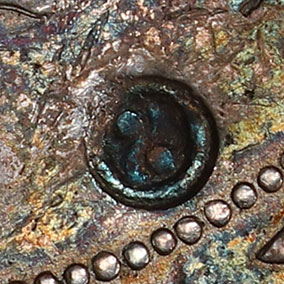 Yin-yang (太極圖)Yin and yang (陰陽), the Daoist emblem of complementary opposites held in dynamic balance such as dark and light, earth and heaven, each carrying the seed of the other and together forming the 太極 (tàijí, 'supreme ultimate'). A widely used auspicious and protective motif.
 Two dots symbol chopmark
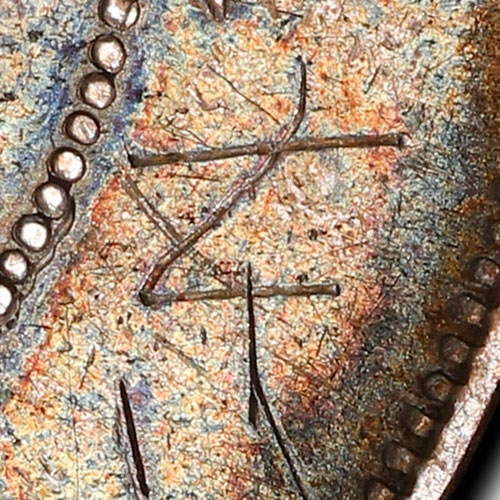 Scratched 车 - chē - vehicle, cart
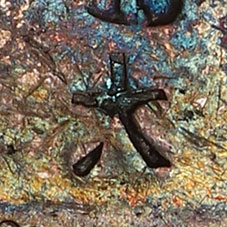 大 - dà - big, great, large
Provenance:
From the Stack's Bowers March 2019 Hong Kong auction Lot #63398
Auction Description:
CHINA. 7 Mace 2 Candareens (Dollar), ND (1908). Tientsin Mint. PCGS Genuine--Graffiti, EF Details Gold Shield.
L&M-11; K-216; Y-14; WS-0029. Evenly worn with darkly toned fields and some small chopmarks on the reverse, along with some light graffiti in the outer reverse field.
Estimate: $300 - $400.
1910 Mexico "Caballito" Peso (Ex. Murphy)
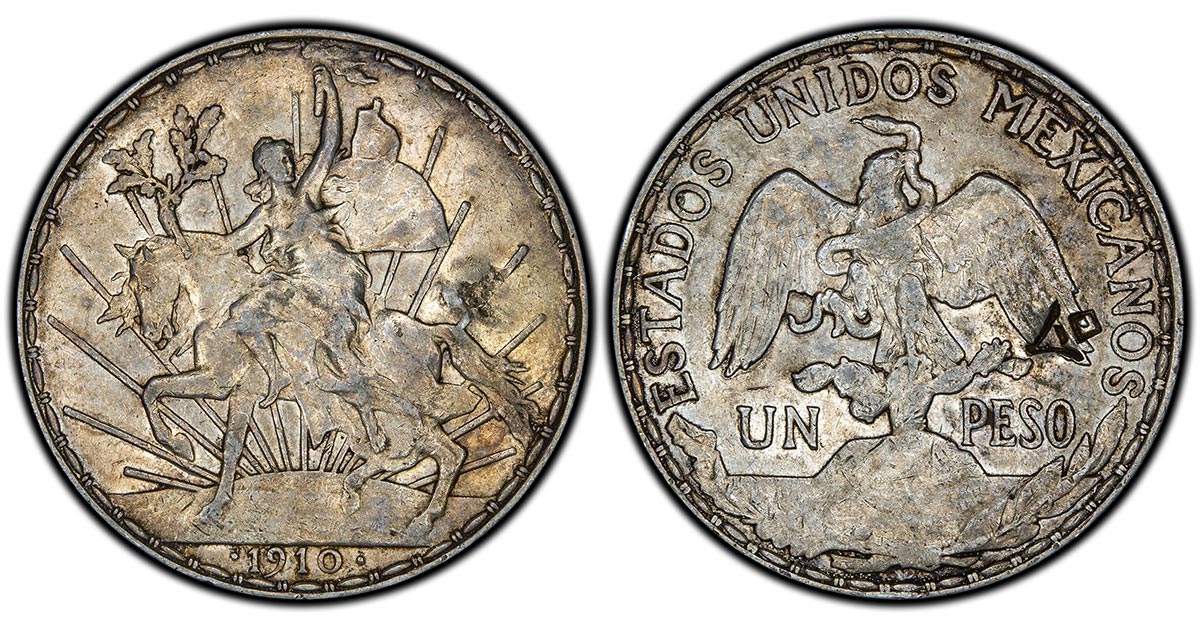
Specifications:
27.07 g, 0.903 fine silver, 0.786 troy oz (actual silver weight)
Recorded mintage: 3,814,000
Catalog reference: KM 453
Details:
The 1910 “Caballito” peso of Mexico was struck at the Mexico City mint and represents the final major artistic redesign of Mexico’s silver peso prior to the upheavals of the
Mexican Revolution. The issue was struck to the traditional Mexican peso spec 27.07 / .903 fine, conforming closely to the long-established crown standard that had defined
Mexican trade silver for centuries. Clearly a modernized Art Nouveau–influenced design, one side depicts a symbolic Liberty, holding a torch and olive branch sitting aside a
horse, while the opposite side displays the Mexican national eagle with snake, together with legend “ESTADOS UNIDOS MEXICANOS” (United Mexican States), and denomination “UN PESO”.
The year 1910 was a transitional time both within Mexico and across the globe. In Mexico, the long presidency of Porfirio Díaz was reaching its breaking point, with political repression, economic inequality, and social unrest converging to ignite the Mexican Revolution later that year. Internationally, the early twentieth century was characterized by accelerating industrialization, imperial competition, and growing strain within traditional political systems. While many Western nations had consolidated gold-based monetary regimes and modern banking institutions, large parts of Asia, including China, continued to operate within silver-based economies that relied heavily on physical bullion rather than abstract credit. This divergence created a world in which older monetary practices and newer political realities coexisted uneasily. Against this backdrop, long-established trade relationships and material standards often proved more durable than the governments that oversaw them, allowing silver coinage to function as a connective medium even as empires, constitutions, and regimes entered periods of rapid transformation.
The Caballito peso was issued at a symbolic moment marking the centennial of Mexican independence, shortly before the outbreak of revolutionary conflict that would disrupt mint operations and silver production. By 1910, Mexican pesos had already spent more than a century as the dominant silver coin in global trade, particularly in East Asia, where their consistency and familiarity had entrenched them as the preferred reference standard. Although the international monetary environment was increasingly shaped by gold standards and modern banking systems, silver remained essential in large parts of China and Southeast Asia. Mexico’s decision to preserve the traditional peso standard, even while updating its iconography, reflects the continued importance of bullion credibility over aesthetic or ideological considerations in international silver circulation. Despite all of this, chopmarking coins in China had generally fallen out of normal practice by this time, so Caballito pesos with chopmarks are fairly rare.
Notable chopmarks:
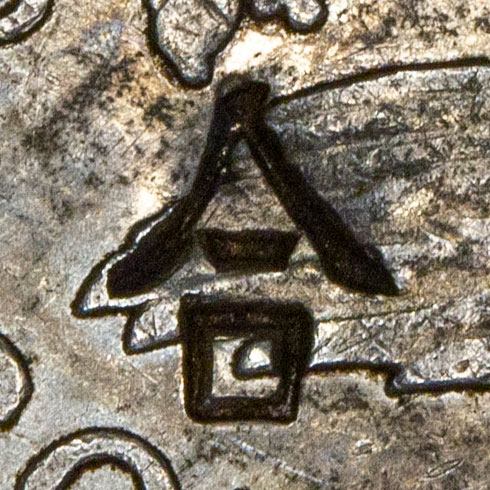 合 - hé - combine, join, close, suit
Provenance:
From fellow collector Ed Murphy, who compiled one of the broadest and most complete chopmark collections of all time, September 2025.
1911-B British Trade Dollar, Bombay Mint (Ex. Burd)
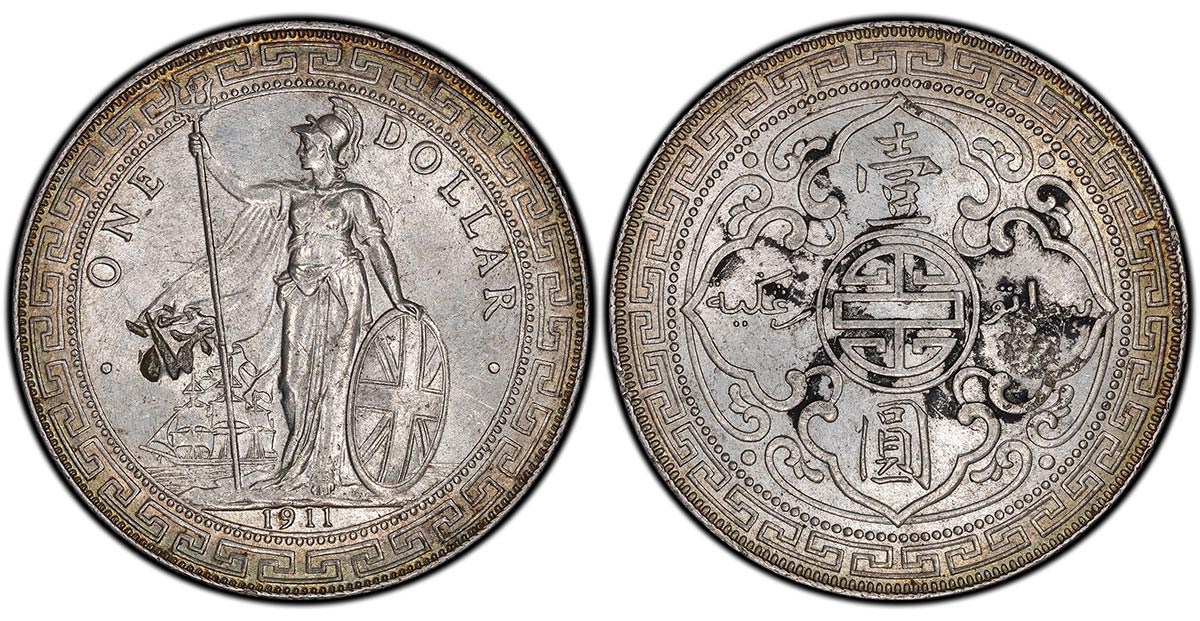
Specifications:
26.96 g, 0.900 fine silver, 0.780 troy oz (actual silver weight)
Recorded mintage: 37,471,000
Catalog reference: KM T5
Details:
The 1911 British Trade Dollar, struck at the Bombay mint in silver of 26.95 g weight and .900 fineness, had a gigantic mintage run of 37,471,000 pieces. This type type was
introduced in 1895 and remained in use through 1935, with only minor adjustments over its long production run.
By 1911, the British Trade Dollar was a mature and well-established silver type, struck specifically to meet the demands of Asian commerce. Bombay had become a principal mint for large-volume production, reflecting both the scale of British India’s minting capacity and the continued reliance on silver-based exchange across much of Asia despite the broader global shift toward gold-backed systems. The exceptionally large output for this year underscores the sustained demand for a standardized trade dollar capable of competing directly with Mexican 8 Reales and other widely accepted silver dollars.
This type is very common with chopmarks. British Trade Dollars entered China through long-standing maritime routes linking India with Hong Kong and the southern treaty ports, where they circulated alongside other crown-sized foreign silver and were frequently verified by local merchants through chopping practices.
This is a gorgeous, uncirculated example of this very common type. One clear chopmark in the obverse field and faded remnants of an ink chop show on the reverse.
Notable chopmarks:
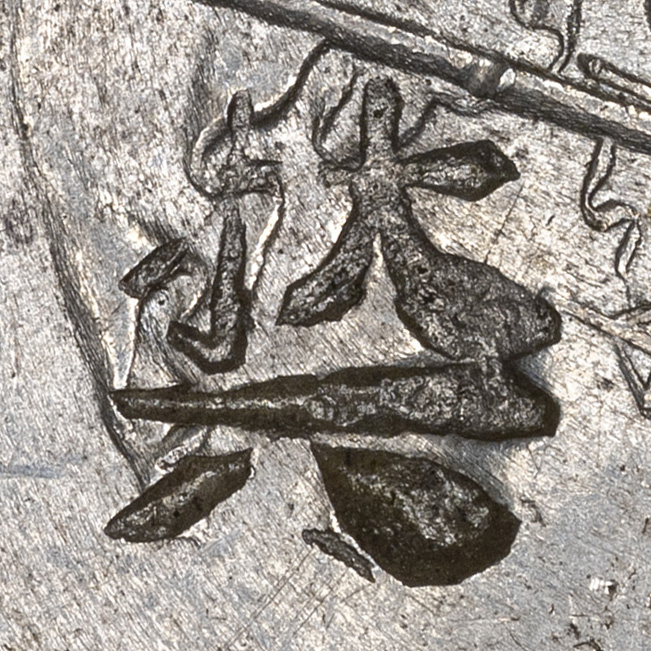 Unknown character, still investigating
Provenance:
Purchased through Andy Lustig from Bill Burd of Chicago Coin at the 2023 Central States Coin Show in Shaumburg, IL. The coin came from Bill's personal chopmark collection.
Year 3 (1911) Chinese One Dollar
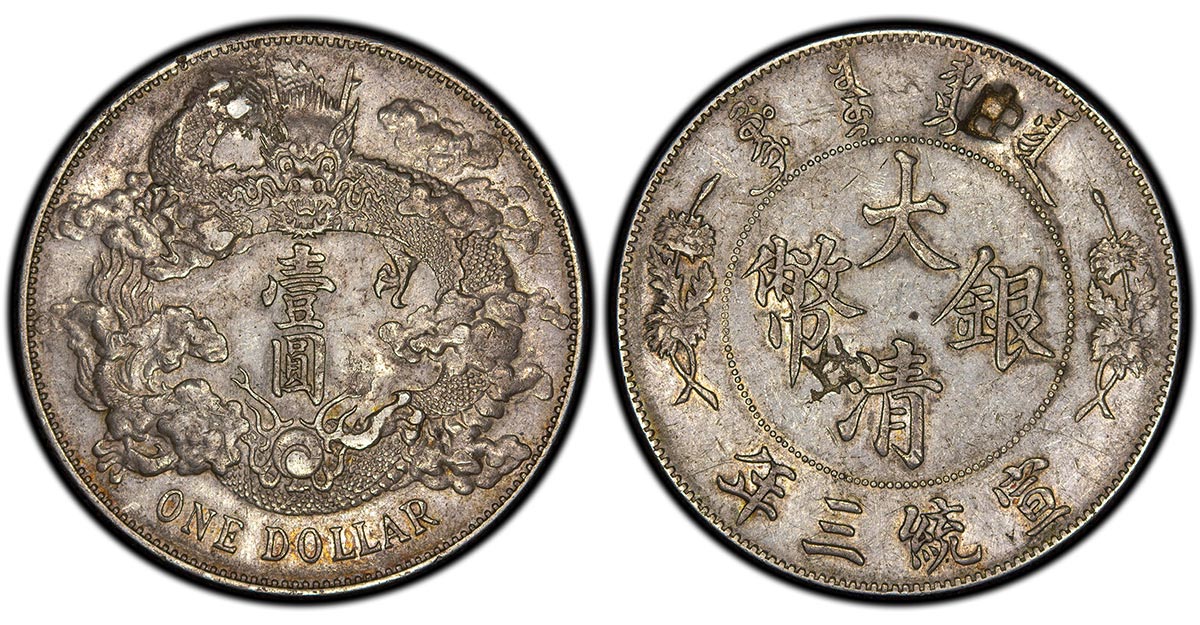
Specifications:
26.9 g, 0.900 fine silver, 0.778 troy oz (actual silver weight)
Recorded mintage: 77,153,000
Catalog reference: KM Y31, LM-37
Details:
The 1911 silver dragon dollar, officially named "Great Qing Silver Coin (大清銀幣)" is a product of the Central Tientsin (Tianjin) Mint. They were struck during 1911 - a year
of great political significance for China, as it was the year of the start of the Xinhai Revolution which resulted in the eventual downfall of the Qing Dynasty (1644-1912)
and Imperial China. Its popularity among collectors is perhaps linked to this turning point in Chinese history, and the coin itself also bears an undoubtedly attractive and
intricate design. This type was the last dollar to be produced under Imperial Chinese rule.
For some context, the 1908 Tai-Ching-Ti-Kuo dollar was the first serious national attempt at a standard silver dollar, but it lacked a regnal date on the coin and a fully standardized, repeatable design. By 1910–1911, the court wanted clear dating, a cleaner imperial identity (less “trade-dollar” ambiguity) and uniformity across mints (in practice, Tientsin dominated). The result was this Xuantong Year 3 issue, which was more explicit, more formal, and more modern.
The reverse face features a highly detailed dragon, set amidst a fire and smoke motif. On coins in good condition, the individual scales on the dragon are remarkably identifiable. Forming a ring, the body of the dragon surrounds inscription translating as, "one dollar". Outside the bounds of the dragon's body is the inscription in English, "ONE DOLLAR". This coin is unique among Imperial Chinese coinage, in that it is the only type to bear the DOLLAR denomination. Other late Qing Dynasty coins have their denomination expressed as a weight in mace and candareens, or as "Treasury Yuan".
The obverse face features a central block of four characters which vertically refer to the Qing Dynasty; and horizontally, which when read right to left translate as, "silver coin". Beneath these characters is an inscription which translate as, "Xuantong Year Three". This refers to the year of striking of the coin, the third year of the reign of Emperor Xuantong (reigned December 1908 - February 1912).
This particular example shows two larger sized reverse chopmarks, abnormal for the issue, normally showing only a few very small sized chopmarks.
Notable chopmarks:
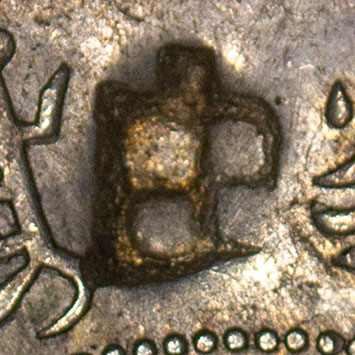 由 - yóu - from, reason, cause
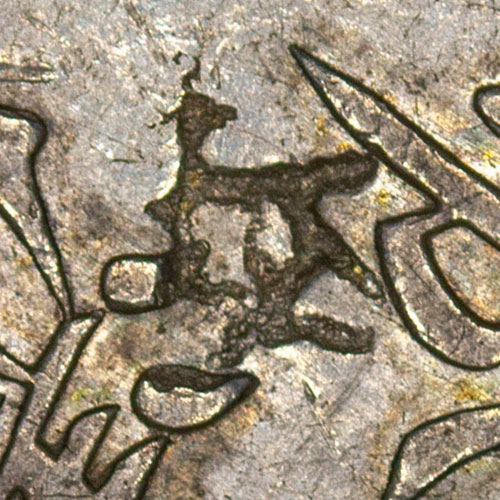 Unknown chopmark
Provenance:
Purchased from Sincona AG Auction 47, 15-16 May 2018, Lot #1267 in Zurich, Switzerland.
Auction Description:
CHINA. Republik. Dollar Jahr 3 (1911), Tientsin. Mit zwei Chopmarks. 26.72 g. L./M. 37. Dav. 216. Kleine Kratzer / Small scratches. Sehr schön-vorzüglich / Very fine-extremely fine.
(1912) China Republic Dollar (Ex. Murphy)
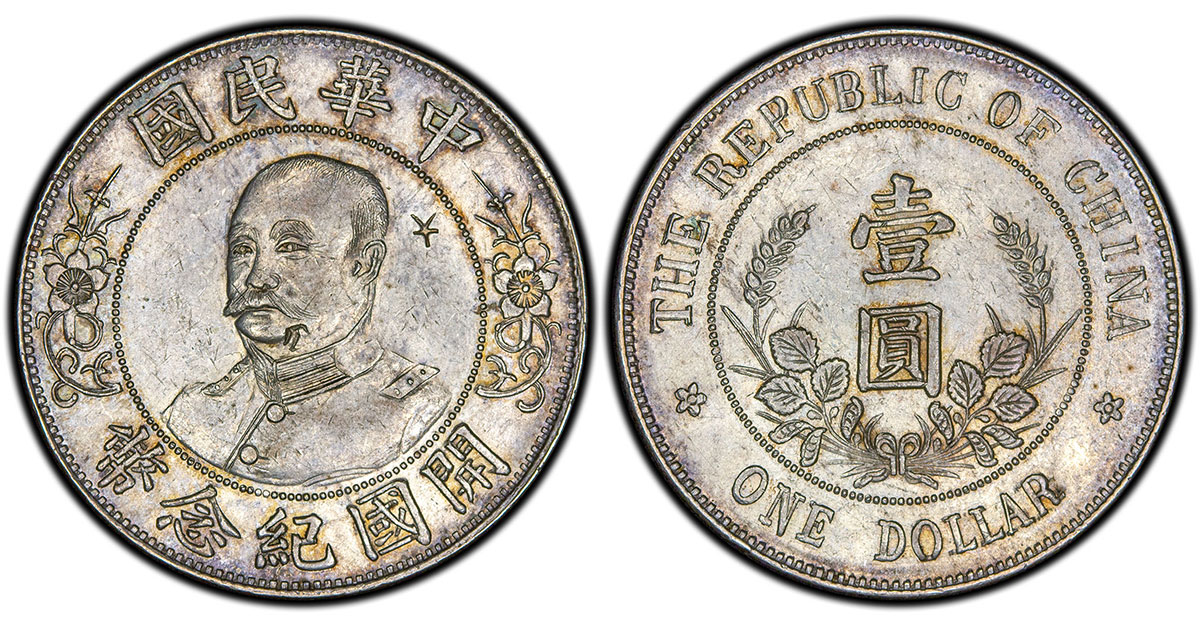
Specifications:
26.5 g, .900 fine silver, .767 troy oz (actual silver weight)
Recorded mintage: unknown
Catalog reference: KM Y320, L&M 43
Details:
The 1912 Republic dollar bearing the portrait of Li Yuanhong was struck at the Wuchang Mint in Hubei province, a deliberate choice given that Wuchang was where Li had
become a revolutionary figure, however unwillingly. When the Xinhai Revolution broke out in October 1911, the mutineers needed a high-ranking officer to serve as their
public face, and Li, a respected military commander who reportedly had to be dragged from hiding under his wife's bed at gunpoint before agreeing, was pressed into
leading the Wuchang Uprising. Despite the inauspicious beginning, the uprising succeeded, the Qing dynasty collapsed within months, and Li was made provisional vice
president of the new republic as part of a compromise between competing factions. The coin shows him bareheaded in three-quarter portrait, a design catalogued as the
"without hat" type to distinguish it from the companion issue (Y# 320, L&M# 43) showing him in military cap. Both were produced in 1912 at Wuchang at .900 fine silver,
26.5 grams.
The obverse frames Li Yuanhong's portrait with floral sprays on either side and Chinese text arcing above and below, identifying the coin as a founding commemorative of the Republic of China. The reverse is relatively spare: the two-character denomination 壹圓 sits within an open wreath, encircled by the English legend "THE REPUBLIC OF CHINA ONE DOLLAR." That bilingual reverse was a conscious design choice, projecting the new republic's legitimacy outward to foreign observers as much as inward to Chinese commerce, at a moment when international recognition mattered enormously to the fledgling government.
Neither the Li Yuanhong dollar nor the companion Sun Yat-sen memento dollar saw meaningful circulation; that role continued to be filled by dragon dollars and provincial silver already in the market. The central mint in Tianjin had been damaged during the revolution and was not back in full operation until late 1914, when the Yuan Shikai dollar effectively became the standard silver coin of the early republic. Unlike the Sun Yat-sen memento, which was revived in 1927 when the Nationalist government needed a stopgap design, the Li Yuanhong type was never restruck, making the 1912 Wuchang issue the only production run. Li himself went on to serve two separate terms as president, in 1916-17 and again in 1922-23, navigating a period of warlord politics and constitutional crises that made his reluctant entry into the revolution look straightforward by comparison.
Notable chopmarks:
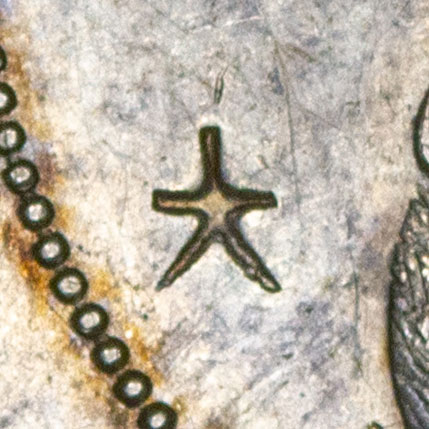 大 - dà - big, great, large
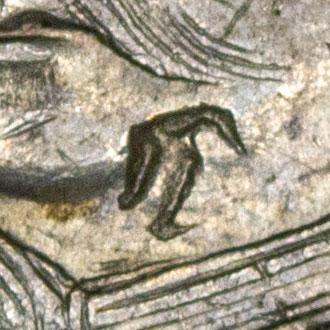 Unknown, partial chopmark
Provenance:
Purchased from the Stack's Bowers April 2026 Hong Kong Showcase Auction
Lot #49628
Auction Description:
CHINA. Dollar, ND (1912). Wuchang Mint. PCGS Genuine--Chopmark, AU Details.
L&M-45; K-639; KM-Y-321; WS-0090; Murphy-Fig. 165 (Plate Coin). Li Yuan Hung without hat type. A single small size chop on the obverse, "大" (Da). This nicely preserved example displays light attractive gray tone hints of sunset hues amongst the devices and plenty remaining luster. The chop is evenly applied and easily identified. Overall a lovely gently circulated example with a pleasing appearance.
Provenance: From the Edgar Murphy Collection.
Meiji 45 (1912) Japan One Yen
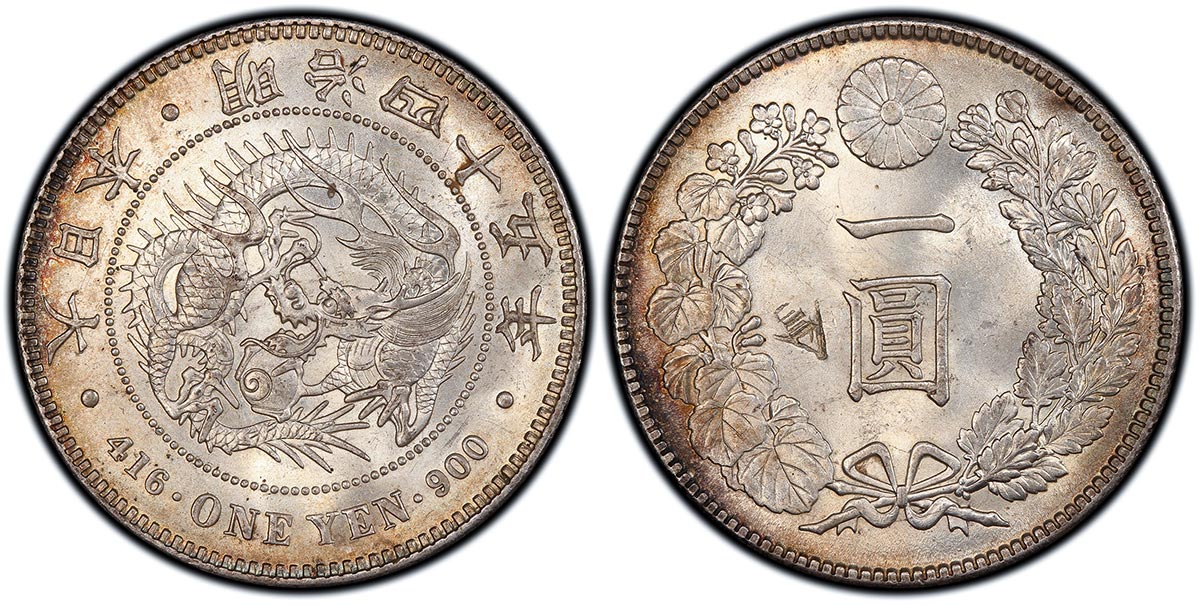
Specifications:
26.96 g, .900 fine silver, .780 troy oz (actual silver weight)
Recorded mintage: 5,000,000
Catalog reference: KM YA25
Details:
The Meiji 45 (1912) Japan One Yen, Osaka mint, struck in silver of 26.96 g weight and .900 fineness, had a recorded Osaka mintage of 5,000,000 pieces for this final year
of the Meiji era. The obverse features a coiled dragon facing left, surrounded by 大日本 (Great Japan) above, the denomination, grains and fineness below, with the date
rendered in era form as 明治四十五年 (Meiji 45). The reverse displays the denomination 圓 (One Yen) at center, below the imperial chrysanthemum crest, and enclosed
within a wreath combining paulownia and chrysanthemum branches tied with a ribbon at the base.
Struck in the closing year of the Meiji era, this silver yen represents the culmination of Japan’s transition from early modern reform coinage to a fully standardized national monetary system following the Meiji Restoration (1868). By 1912, Japan had formally adopted the gold standard, yet silver yen production continued to support foreign trade, where dollar-sized silver remained entrenched. The Osaka mint served as the primary facility for large-scale silver coinage during this period, supplying both domestic needs and coinage traveling overseas for circulation and trade.
This type is relatively common with chopmarks, although coinage in this late date range are more scarce with chopmarks because the practice had mostly wound down. In general, Japanese silver yen circulated widely beyond Japan through established maritime routes linking ports such as Yokohama and Nagasaki with the China coast, where they were accepted alongside Mexican, British, and other crown-sized silver coins and often picked up chopmarks along the way.
This example is fully brilliant, with just a single reverse chopmark.
Notable chopmarks:
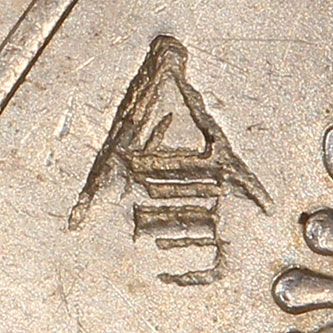 合 - hé - combine, join, close, suit
Provenance:
From the Stephen Album Rare Coins January 14-16 2016 Auction Lot #2098
Auction Description:
JAPAN: AR yen, Meiji 45 (1912). Y-A25.3. One Chinese chopmark in the reverse field, Unc.
Estimated Value $100 - 120
"Year 3" (1914) China Yuan Shih-kai Dollar with large chopmarks
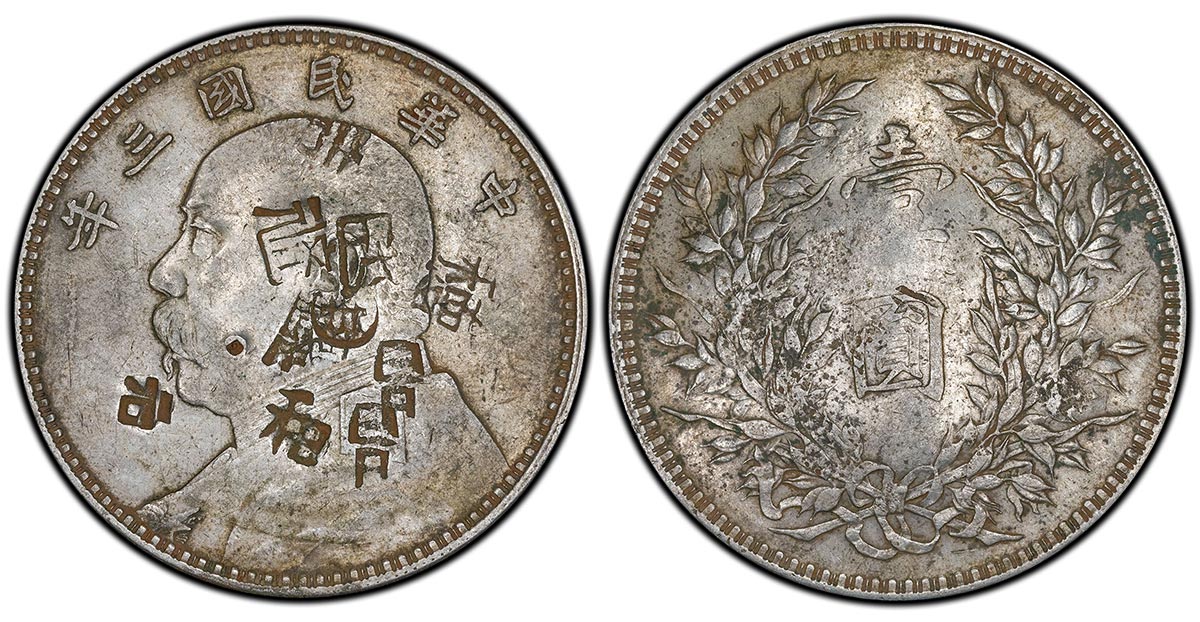
Specifications:
26.4 g, .890 fine silver, .755 troy oz (actual silver weight)
Recorded mintage: unknown
Catalog reference: KM Y329
Details:
This type was issued dated 1914, 1919, 1920 and 1921 (and may have been struck into the thirties judging from the number of survivors). As Yuan Shih-Kai died in 1916 and was not
generally regarded as a hero, it is a mystery why this design was selected for reissue.
The Year 3 (1914) Yuan Shih-kai dollar was struck during the early years of the Republic of China, at a moment when the new government sought monetary continuity after the fall of the Qing dynasty. Featuring the uniformed bust of Yuan Shih-kai, then president of the Republic, the coin deliberately followed the familiar weight and fineness of earlier trade dollars to ensure acceptance in commerce. These dollars were produced in very large quantities across multiple mints, making them one of the most common and widely encountered Chinese silver coins of the early republican era. Their success lay not in innovation, but in stability: the design projected authority, while the standard itself reassured merchants who were wary of political change but dependent on reliable silver currency.
What makes an example with large chopmarks particularly noteworthy is that chopmarking was already in steep decline by 1914. When chops are seen on this type, they are usually small, discreet marks, often applied cautiously or late in the tradition of chopmarking. Large or bold chops suggest either continued use in conservative regional markets or circulation into areas where older silver-testing practices lingered longer than elsewhere.
Joe says "Curved ribbons mean it's from Wuchang mint"
Notable chopmarks:
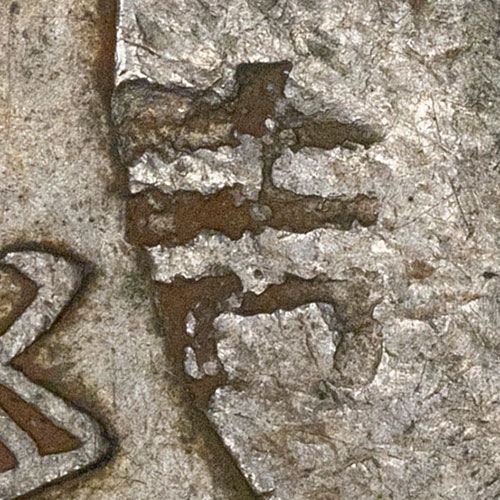 吉 - jí - auspicious, lucky
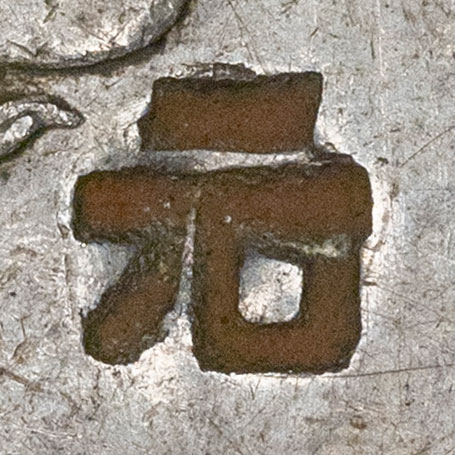 元 - yuán - dollar, unit of currency, basic, primary
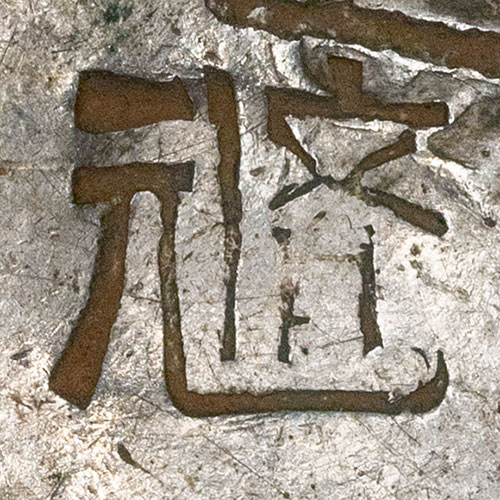 元㑪 - chái yuán - likely a merchant or shroff house mark (reading uncertain); 元 ('first, principal, origin') is a stock auspicious shop-name character, paired with the rare 㑪 - Horizontal marks of this period were read right-to-left, so although the chops are shown here as written (元㑪), the mark reads 㑪 (chái) then 元 (yuán). 元 ('first, primary, origin, chief'; also the word for a dollar) is one of the most common auspicious characters in Chinese firm and shop names (商號), so it is the recognizable element of the pair. 㑪 is a rare non-classical form of 儕 (chái, 'peers, people of the same class or kind', as in 同儕 'colleagues'); it is uncommon in names, and on this worn stamp its identification is best-effort, so the full sense of the mark is uncertain. The pairing does not form a standard term in either reading order, so this is most plausibly a merchant or money-shop house mark built on the 元 character rather than a fixed phrase. Marks like this were struck by the merchant or shroff who tested a coin's silver and accepted it as genuine, and often served as a private recognition code among merchants, which is part of why a rare character like 㑪 is hard to tie to a known name. This dollar was reportedly sourced from the Shenzhen area of Guangdong, the region with its own distinct style of shroff chopping (in Cantonese 元 = jyun4, 㑪 = caai4).
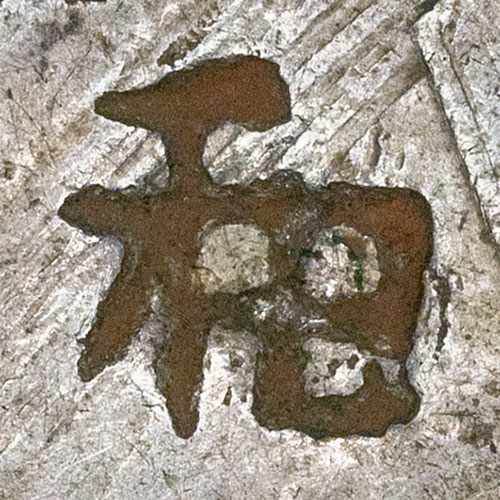 Possibly 䄫 - qǐ - an ancient word with no known meaning
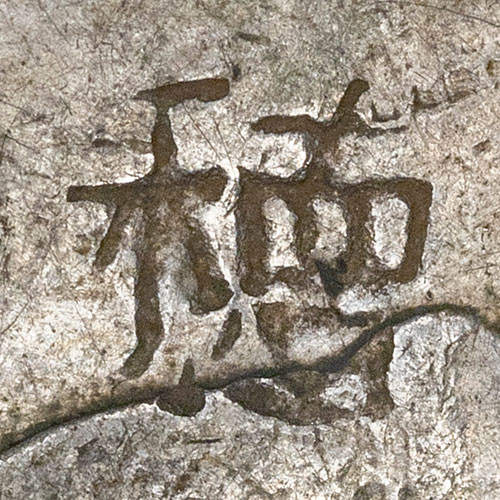 Similar to 㯖 - dé - a tree, hammer, to beat with a hammer
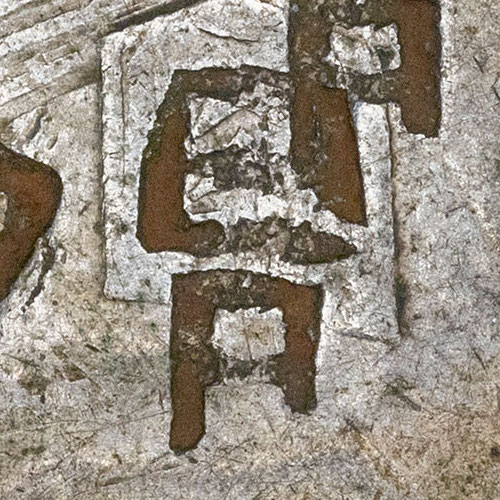 Unknown chopmark
Provenance:
Purchased from IG dealer Joe Walker (panda_numismatics) in April 2023. Joe works with dealers directly in China to save chopmarked coins from the melting pot. This coin was found
in the Shenzen area.
"Year 3" (1914) China Yuan Shih-kai Dollar with "silver shop" chopmark
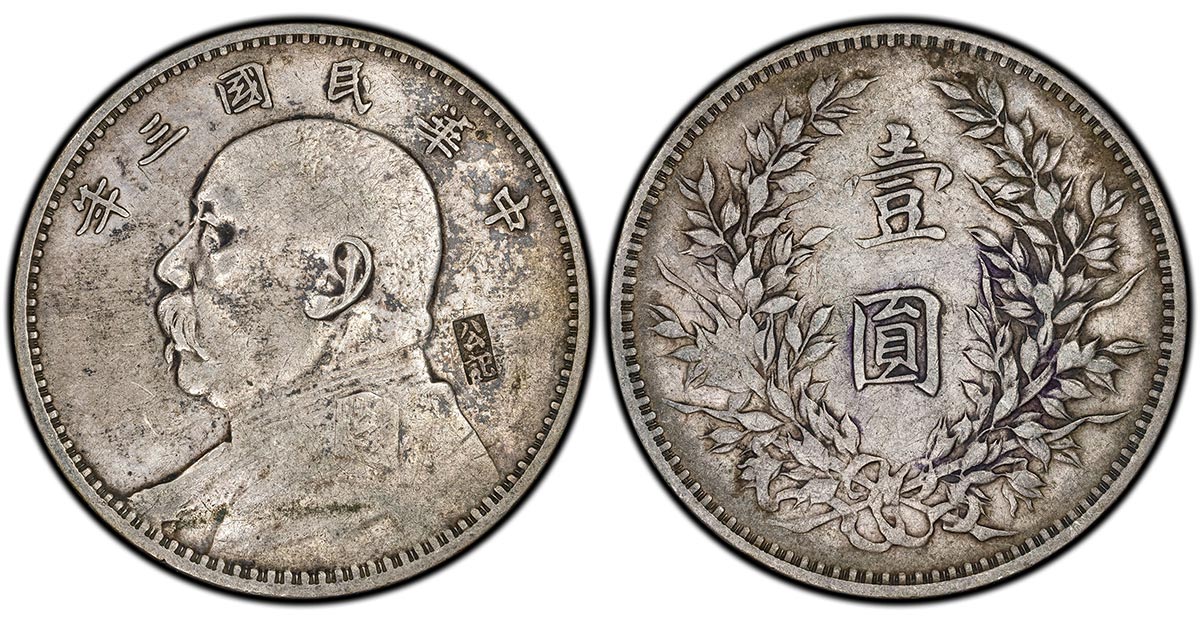
Specifications:
26.4 g, .890 fine silver, .755 troy oz (actual silver weight)
Recorded mintage: unknown
Catalog reference: KM Y329
Details:
Although this mark resembles what is often described as an assay chopmark, conversations with collectors and researchers in China suggest it may have served a different
purpose. A few sources have described the mark as relating to a “public silver shop,” roughly comparable to what we might think of today as a pawn or licensed silver
exchange. One noted that this type of chopmark tends to appear most often in coastal treaty-port areas, where counterfeit silver was a recurring problem. The mark
itself also has a slightly more modern appearance, which may suggest it was applied some time after the coin was struck. While the exact meaning is probably no longer
recoverable, the general view is that it reflects post-inspection acceptance of the coin as genuine silver rather than a formal assay or accounting mark.
Notable chopmarks:
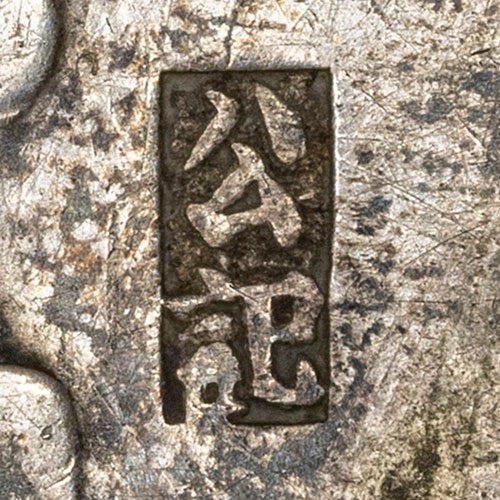 公記 - gōng jì - public mark; company mark - 記 (jì) is a standard Chinese firm-name suffix denoting a particular business or money-shop, so 公記 reads as a house mark rather than a personal name. The prevailing view is that marks of this kind were applied by a treaty-port 'public silver shop' (a licensed silver exchange) as a post-inspection acceptance stamp confirming the coin as genuine silver, rather than a formal assay or accounting mark; they appear most often in the coastal treaty ports, where counterfeit silver was a recurring problem.
Provenance:
From the Noble Auctions 132 sale 27 March 2023 in Sydney Australia Lot #3425
Auction Description:
WORLD COINS, Far East Asia, chopmarked issues, China, Yuan Shih Kai dollar, Yr 3 (1914); Hong Kong, Queen Victoria, silver dollar 1867; Japan, gin countermaked yen yr 24;
USA trade dollar 1874. The second heavily chopped, otherwise fine or better. (4)
"Year 8" (1919) China Yuan Shih-kai Dollar
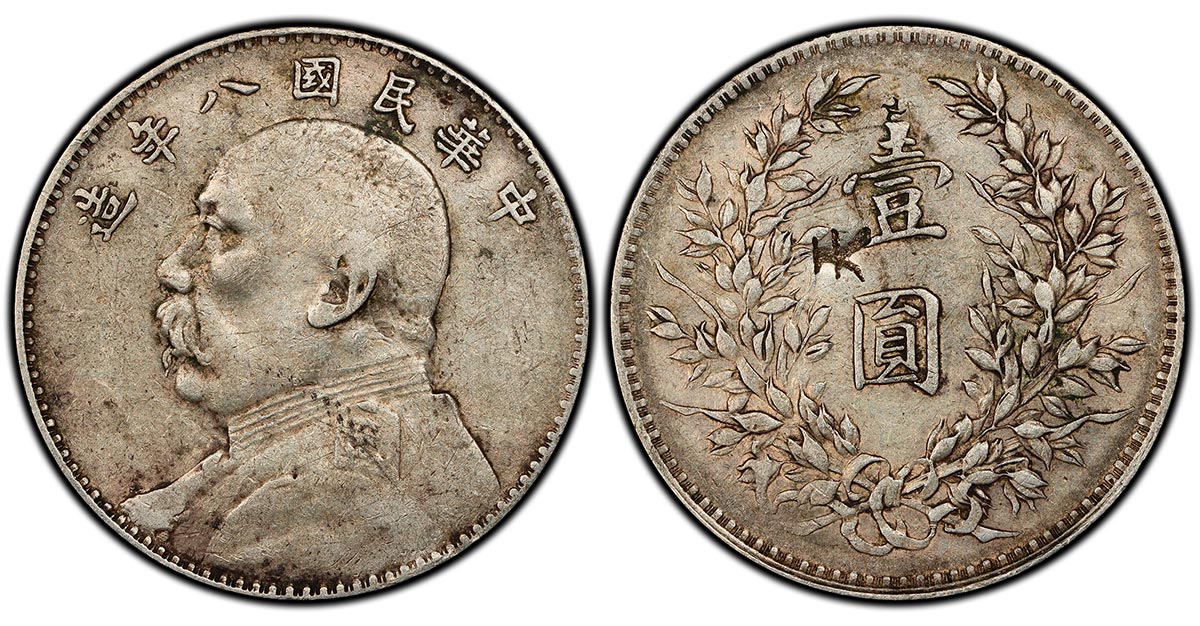
Specifications:
26.4 g, .890 fine silver, .7554 troy oz (actual silver weight)
Recorded mintage: unknownn
Catalog reference: KM 329.6
Details:
The Year 8 (1919) Yuan Shih-kai dollar is generally regarded as scarce when compared to the heavily produced Year 3 (1914) dollars. By 1919, Yuan Shih-kai had been dead for
several years, and centralized silver coinage had largely given way to fragmented production under regional control. Minting during this period was uneven, shaped by
political instability and disruptions following the First World War, and appears to have been carried out on a more limited scale. A fairly scarce, key date for the Yuan Shih-kai
dollar series and especially scarce with chopmarks. Seen here with one large and one small sized chopmark on the reverse.
Notable chopmarks:
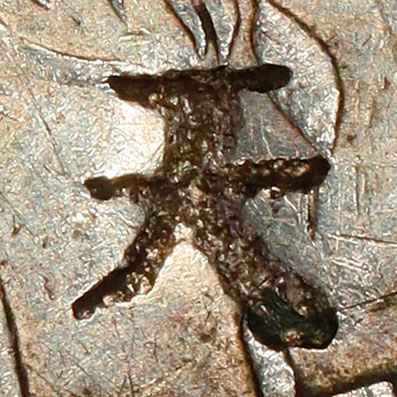 天 - tiān - heaven, sky, day
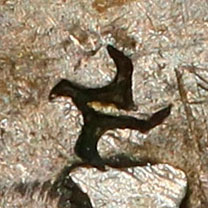 Unknown symbol chop
Provenance:
Purchased on eBay in October 2023 from a seller in Albany, New York.
"Year 10" (1921) China Yuan Shih-kai Dollar (large chopmarks)
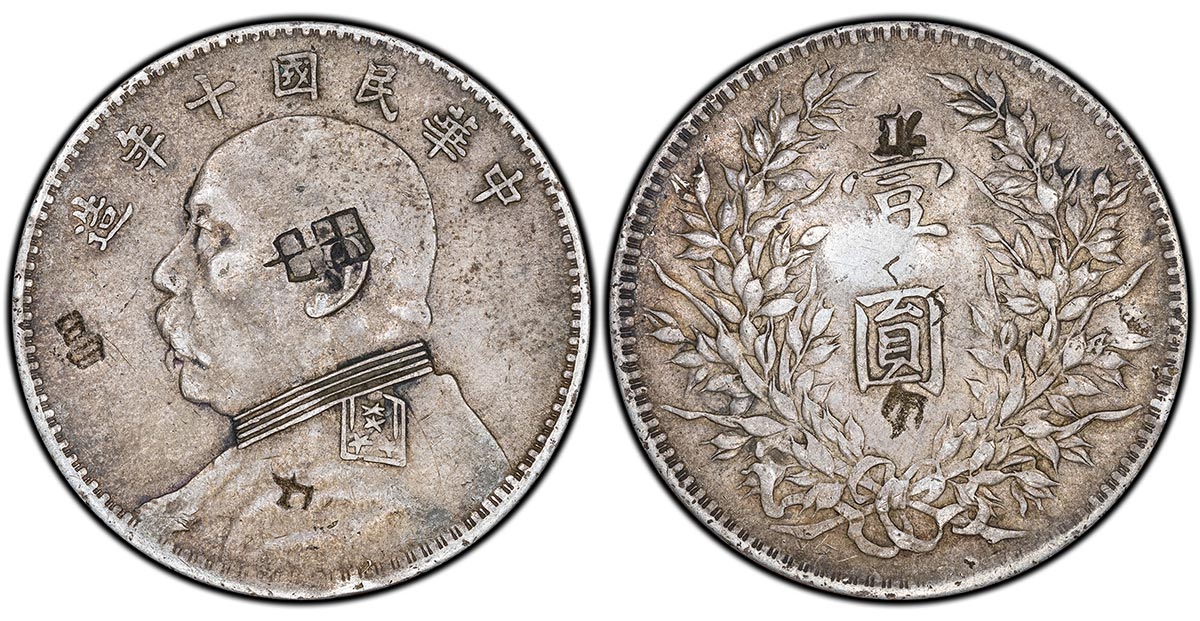
Specifications:
26.4 g, .890 fine silver, .755 troy oz (actual silver weight)
Recorded mintage: unknown but common
Catalog reference: KM 329.6
Details:
The Year 10 (1921) Yuan Shih-kai dollar occupies a very late position in the series and is especially scarce with chopmarks. By the time this issue appeared, Yuan Shih-kai had
been dead for several years and the monetary environment had shifted markedly from that of the mid-1910s. Chopmarking, once a routine practice in coastal and commercial centers,
had by this point largely ceased, reflecting tighter control over silver currency, reduced acceptance of freshly struck dollars for testing, and the growing dominance of earlier,
well-known issues already entrenched in circulation. As a result, while the Year 10 dollar itself is encountered less frequently than common early Republican dates, examples
bearing chopmarks are distinctly uncommon, their rarity driven not by limited circulation alone but by the fact that the practice of chopping was already in rapid decline by 1921.
When examples of this date are found with chopmarks, they are almsot always tiny little peck marks, so this example with large chopmarks should be considered rare.
Notable chopmarks:
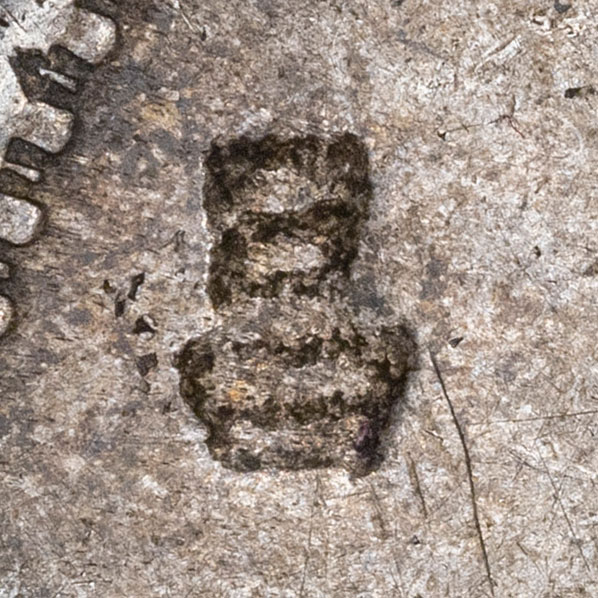 昌 - chāng - prosperous, flourishing
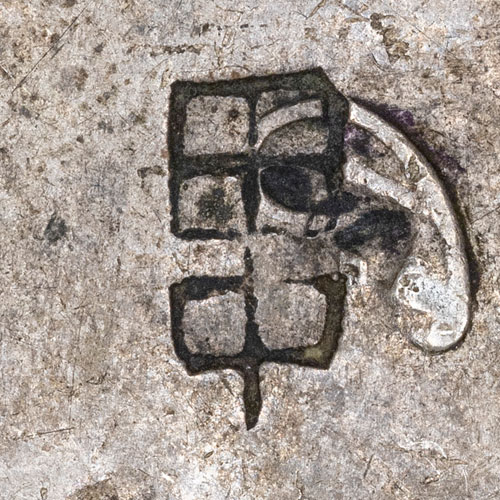 田中 - tián zhōng - the Japanese surname Tanaka (田 ta, 'rice field' + 中 naka, 'middle'); on this coin a Japanese family-name mark rather than a Chinese shop name - 田 (tián, 'cultivated field, rice paddy') over 中 (zhōng, 'center, middle'), read top-to-bottom as 田中. In Mandarin this is simply tián zhōng, but the pair is far better known as the Japanese surname Tanaka (Japanese readings 田 = ta, 中 = naka), literally 'in the middle of the rice fields'. Tanaka is one of the most common surnames in Japan, ranking about fourth and borne by well over a million people, so the two characters most plausibly record a Japanese personal or house name rather than a Chinese merchant mark; 田中 is not a natural Chinese shop name, and on its own the single character 田 (Tián) would be the Chinese surname. The order matters: read in reverse the pair becomes 中田 (Nakata), a different and much less common Japanese surname, but this stamp reads 田 then 中, giving Tanaka. A Japanese name is historically at home on a 1921 Chinese silver dollar. By the early 1920s Japanese banks, trading firms and money changers operated heavily across Manchuria and the China treaty ports (the Yokohama Specie Bank alone had branches throughout Manchuria and at Qingdao, Hankou and Tianjin), and Japanese marks, including family crests, are documented on chopped trade silver. As with all chopmarks the specific person or firm behind the stamp cannot be identified; what is firm is that the characters are 田中, the Japanese surname Tanaka.
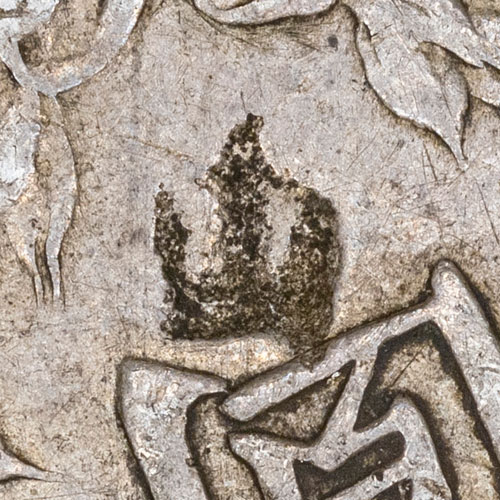 山 - shān - mountain, hill
Provenance:
Purchased from IG dealer Joe Walker (panda_numismatics) in May 2023. Joe works with dealers directly in China to save chopmarked coins from the melting pot.
"Year 10" (1921) China Yuan Shih-kai Dollar (small chopmark)
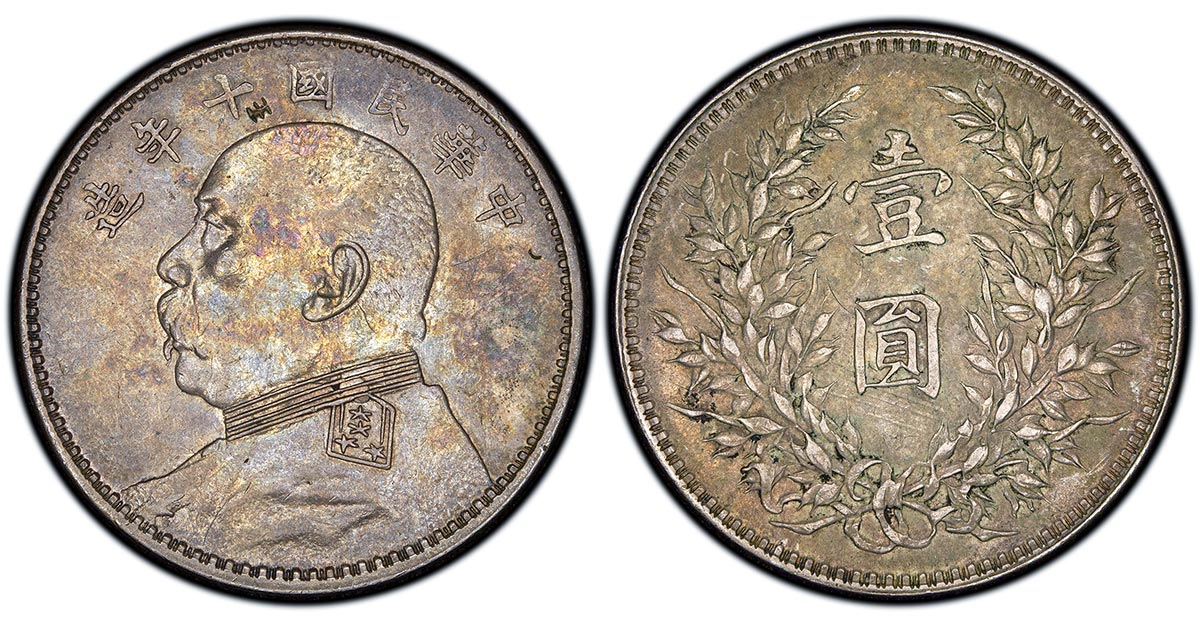
Specifications:
26.4 g, .890 fine silver, .755 troy oz (actual silver weight)
Recorded mintage: unknown but common
Catalog reference: KM 329.6
Details:
The 1921 Yuan Shih-kai dollar is scarce, even when compared with the already difficult 1919 issue. While 1919 saw limited and uneven production during a period of political
fragmentation, the 1921 date represents an even more restricted and irregular emission, with far fewer surviving examples. As a result, the 1921 dollar stands as one of the key
rarity points of the Yuan Shih-kai series, clearly scarcer than 1919 and dramatically so when set against the abundant Year 3 (1914) type.
Shown here to illustrate the tiny "micro-chops" that persisted late into the twilight of the chopmarking peroid. Were these late period Chopmarks so small because the practice of chopping had been outlawed by this time?
Notable chopmarks:
1921dollarchopwang
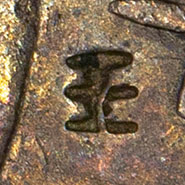 王 - wáng - king, ruler
Provenance:
Purchased on eBay in May 2018 from a seller in Monterey, California.
"Year 16" (1927) China Republic "Memento Dollar"
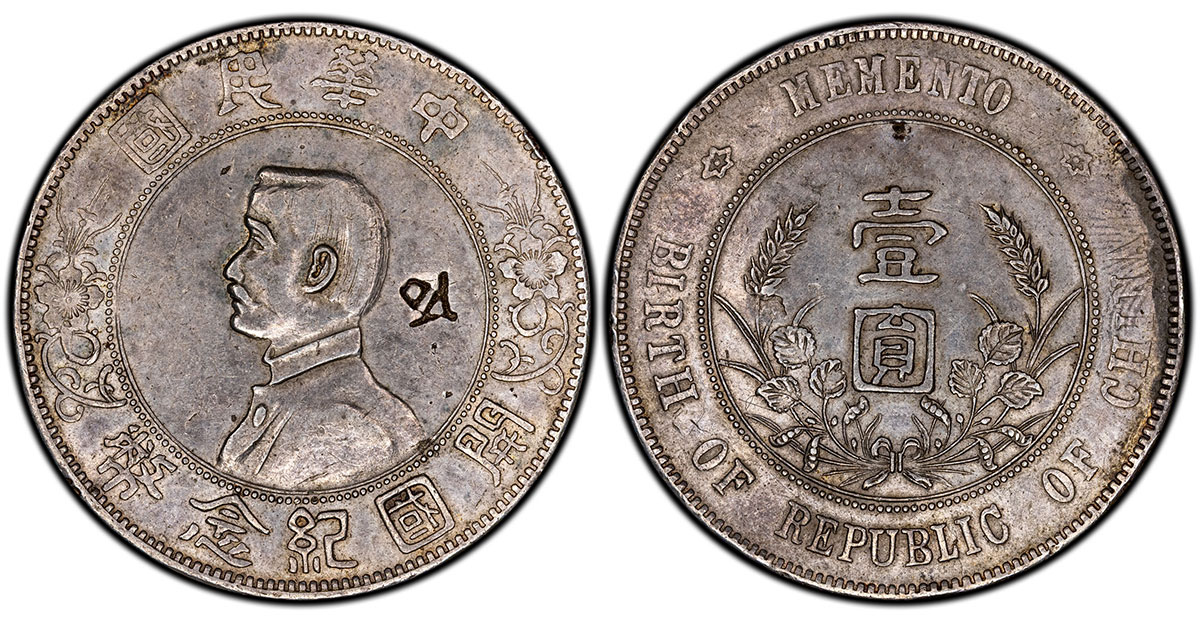
Specifications:
27 g, .890 fine silver, .772 troy oz (actual silver weight)
Recorded mintage: unknown, but restruck more than once
Catalog reference: KM Y318a, L&M 49
Details:
The Year 16 (1927) China Republic “Memento Dollar”, often associated with the commemoration of Sun Yat-sen, was issued during a brief period of relative political calm in
the late 1920s. At that time, Chiang Kai-shek’s Nationalist government had largely defeated the Communists and compelled most major warlords to declare loyalty, allowing the
central government a short window to assert authority and project national unity. During this period, China’s mints produced several handsome commemorative silver dollars,
of which the Year 16 “Memento” issue is among the most notable. The optimism embodied in these issues proved short-lived, however, as the Nationalists were unable to halt
growing Japanese aggression, and renewed large-scale conflict erupted beginning in 1931.
It is very unlikely to find a Year 16 (1927) Republic of China “Memento Dollar” with traditional punch-style chopmarks, as chopmarking had largely fallen out of commercial use by the late 1920s. These commemorative dollars were generally trusted, modern issues that circulated, if at all, through banks and formal channels rather than merchant networks that relied on chopping. When marks are seen on late Republican silver, they are typically small, discreet, or non-punched (such as ink or paper marks), making bold punch chops on this type highly unusual. It's possible that the chopmark seen here had nothing to do with commerce or trade.
Notable chopmarks:
 合 - hé - combine, join, close, suit
Provenance:
From the Río de La Plata Subasta Online #25 Session 1,
Lot #361
Auction Description:
China. República. 1 Yuan ND (1927). Plata 900; 39.0mm; 26.77g. A: 國民華中 - 幣念紀國開 (República de China - Moneda conmemorativa de la fundación), Busto de Sun Yat-sen a izquierda.
R: 壹 圓 (1 Yuan) dentro de corona, MEMENTO - BIRTH OF REPUBLIC OF CHINA. KM Y318a.1 (XF) Chopmark
"Year 23" (1934) China Republic "Junk Dollar" (Ex. Murphy)
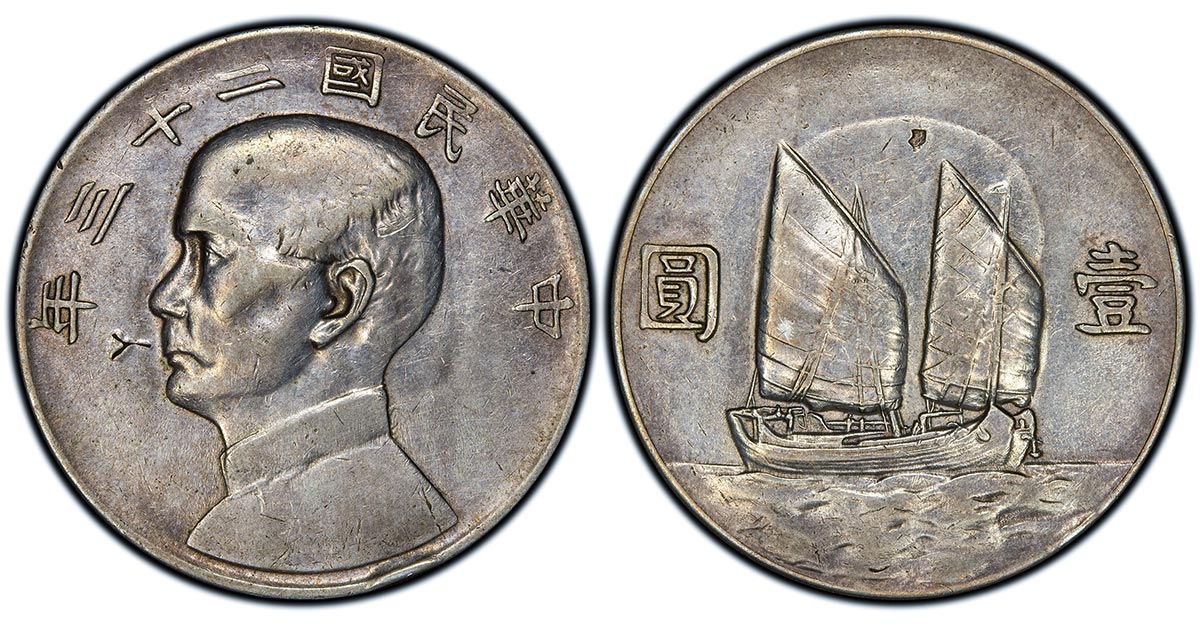
Specifications:
26.4 g, .900 fine silver, .7734 troy oz (actual silver weight)
Recorded mintage: 128,740,000
Catalog reference: KM Y345
Details:
In 1932, the Ministry of Finance formally adopted the silver “Junk Dollar” as a standard coin of the Republic of China, marking a renewed effort to unify and modernize the national
currency during a period of political consolidation under the Nationalist government. The obverse bears the portrait of Sun Yat-sen, revered as the founding father of the Republic
and elevated to national-symbol status following his death in 1925, while the reverse depicts a traditional Chinese sailing junk, a deliberate reference to China’s long maritime and
commercial heritage.
The 1932 issue is especially notable for its reverse details, which include three birds in flight above the mast and a radiant sun positioned to the right of the vessel. At a time of growing tension with Japan, the presence of a sun motif, uncomfortably close to Japan’s national symbol, sparked public criticism. In response, the design was revised for the 1933–1934 issues, removing the sun and simplifying the reverse to eliminate any perceived pro-Japanese symbolism.
Some examples of the Junk Dollar exhibit extremely small chopmarks, as seen on this coin, placing them among the latest silver issues to bear chopmarks. By the early 1930s, traditional merchant chopmarking had largely disappeared, generally thought to have ended by circa ~1920, and the function of these late chops remains debated. They may reflect residual habits, counting marks, or non-commercial annotations rather than true assayer validation in the classical sense.
Regardless of the presence or absence of chops, the Junk Dollar holds strong historical resonance with China’s trading past. The sailing junk had been a central vehicle of Asian maritime commerce from the 16th through 18th centuries, linking China with Southeast Asia and Japan in regional trade networks. Its appearance on a modern Republican silver coin symbolically connected China’s contemporary economic ambitions with a deep legacy of seaborne exchange and commercial identity.
Notable chopmarks:
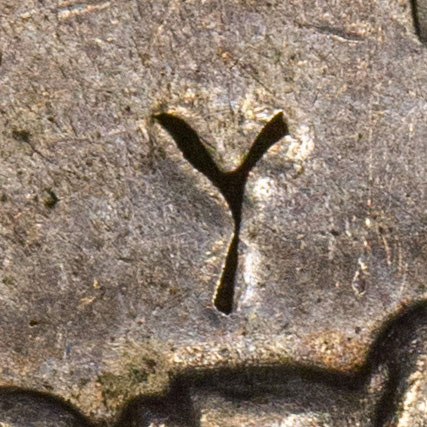 possibly 丫 - yā - bifurcation, fork
Provenance:
From fellow collector Ed Murphy, who compiled one of the broadest and most complete chopmark collections of all time, March 2020.