Examples of Fake Chopmarks
When we say 'fake chopmarks', we mean chopmarks that were not applied in the 1600's - early 1900's by a Chinese shroff. These are modern punches applied to coins, likely an attempt to increase their value. The following examples are displayed to help the reader train their eye to identify marks that aren't legitimate.
Example 1:
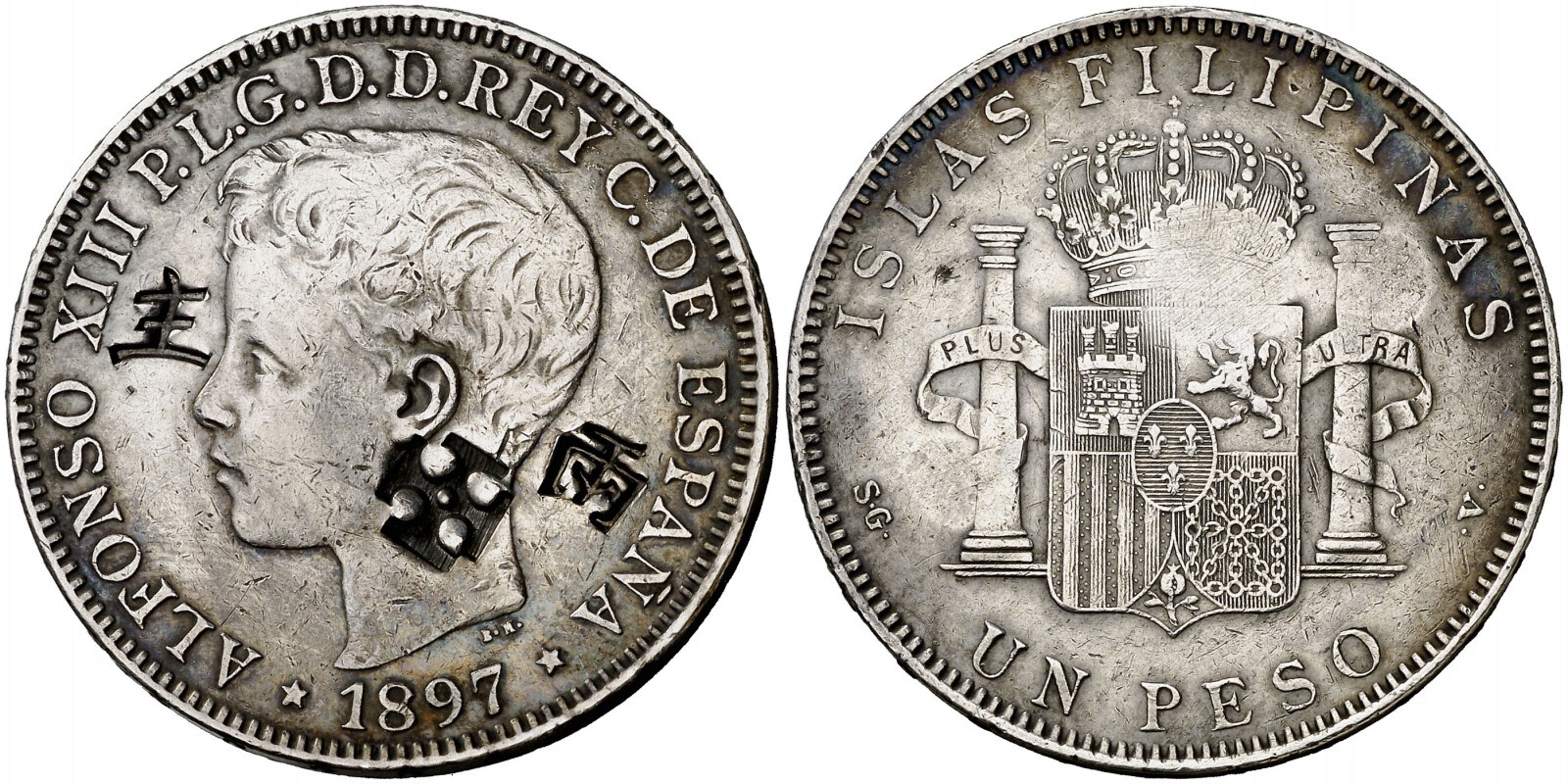 The chopmarks on this coin are found in european auctions from time to time, the same too-sharp marks have been seen across multiple coins in a single auction and are
sometimes seen in combination with fantasy countermarks. Possibly related to the marks in Example 8 below, which are found under similar circumstances, but with less
definition to the chopmarks.
The chopmarks on this coin are found in european auctions from time to time, the same too-sharp marks have been seen across multiple coins in a single auction and are
sometimes seen in combination with fantasy countermarks. Possibly related to the marks in Example 8 below, which are found under similar circumstances, but with less
definition to the chopmarks.
Example 2:
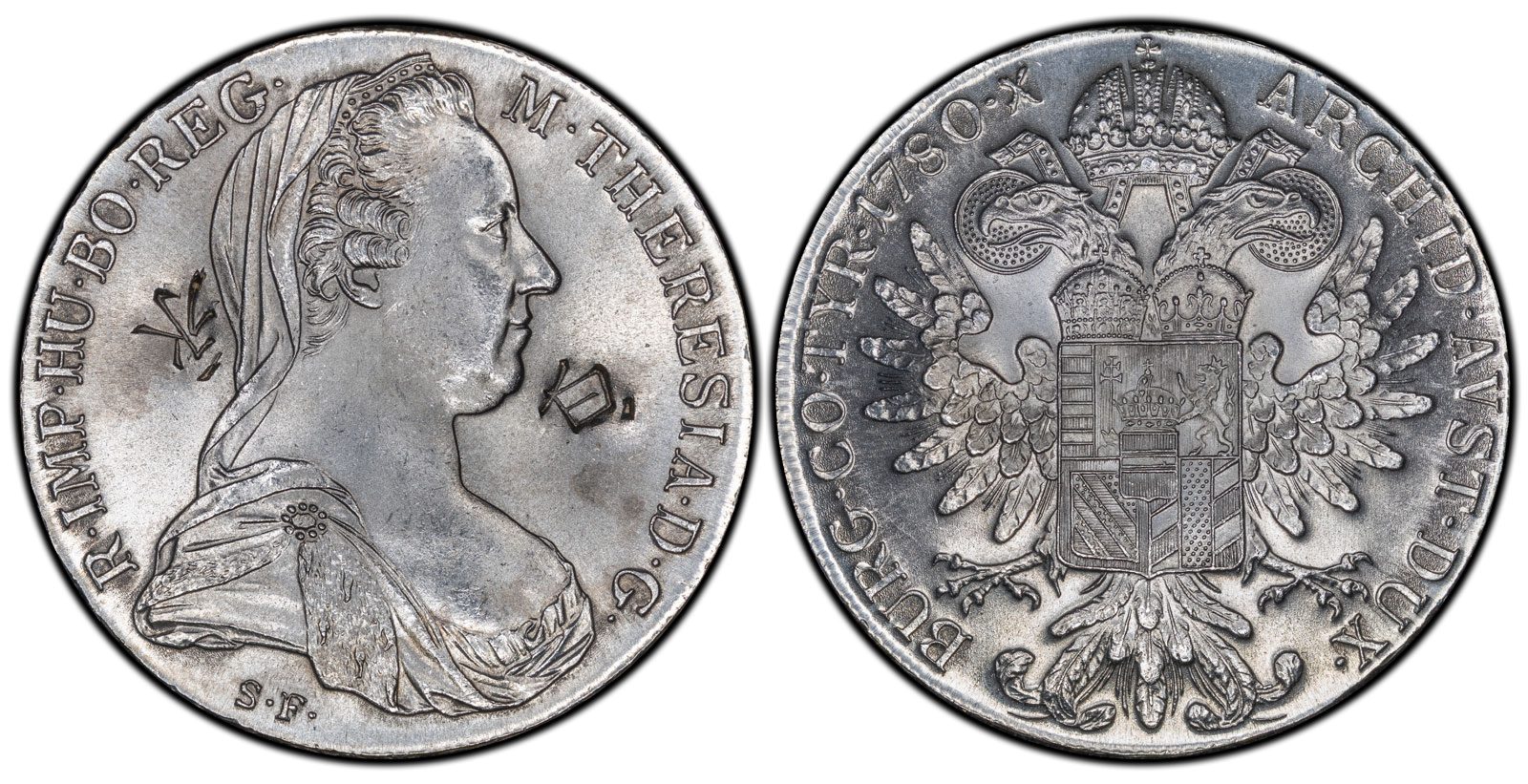 Like Example 1, these chopmarks are too sharp, and found on multiple different coins in the a single sale. The host coin here is a modern restrike, created much later
than when chopmarks were applied in China.
Like Example 1, these chopmarks are too sharp, and found on multiple different coins in the a single sale. The host coin here is a modern restrike, created much later
than when chopmarks were applied in China.
Example 3:
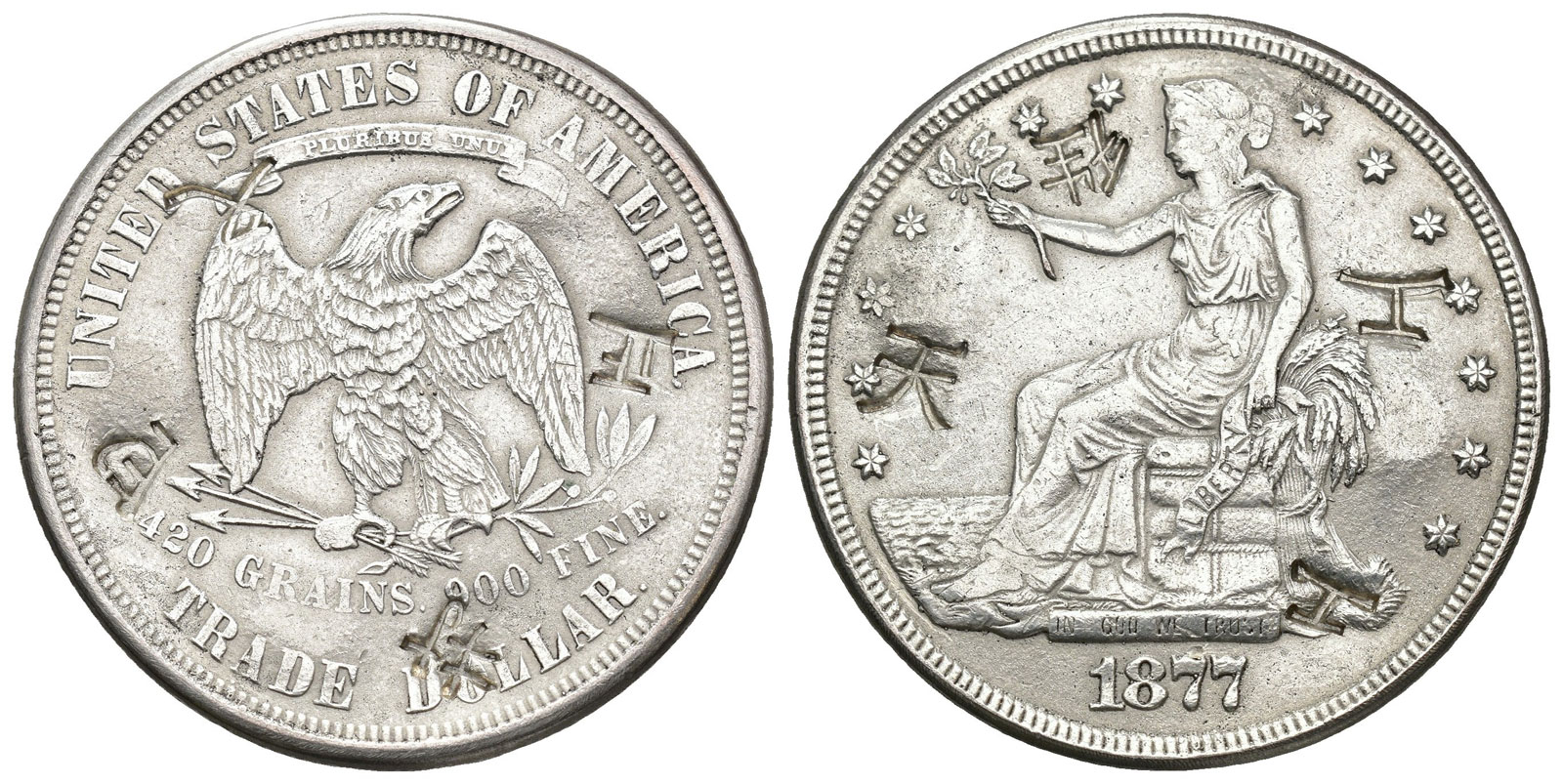 In this case, the host coin looks fake, the chopmarks are too sharp, and they don't match the style of legitimate period chopmarks we see on US Trade Dollars.
Example 4:
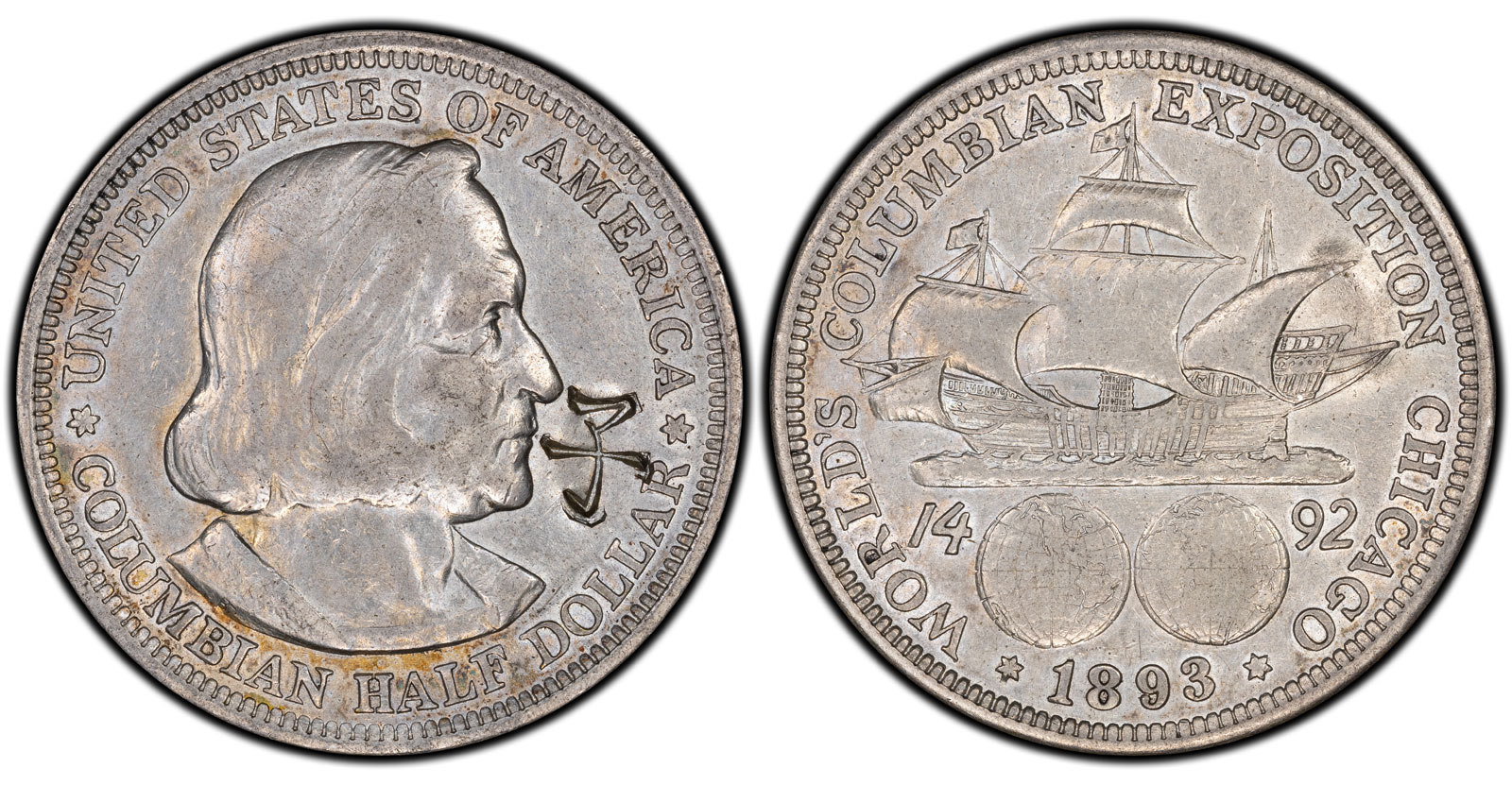 The chopmark on this coin is too sharp and resides on an unlikely host coin. We've seen this same mark on other unlikely host cost coins. Of note, this coin is
ex. Frank Rose, making it a prized example regardless of the chopmark origin. Now that we have access to internet and more pictures, we are able to detect fake
chopmarks more easily.
The chopmark on this coin is too sharp and resides on an unlikely host coin. We've seen this same mark on other unlikely host cost coins. Of note, this coin is
ex. Frank Rose, making it a prized example regardless of the chopmark origin. Now that we have access to internet and more pictures, we are able to detect fake
chopmarks more easily.
Example 5:
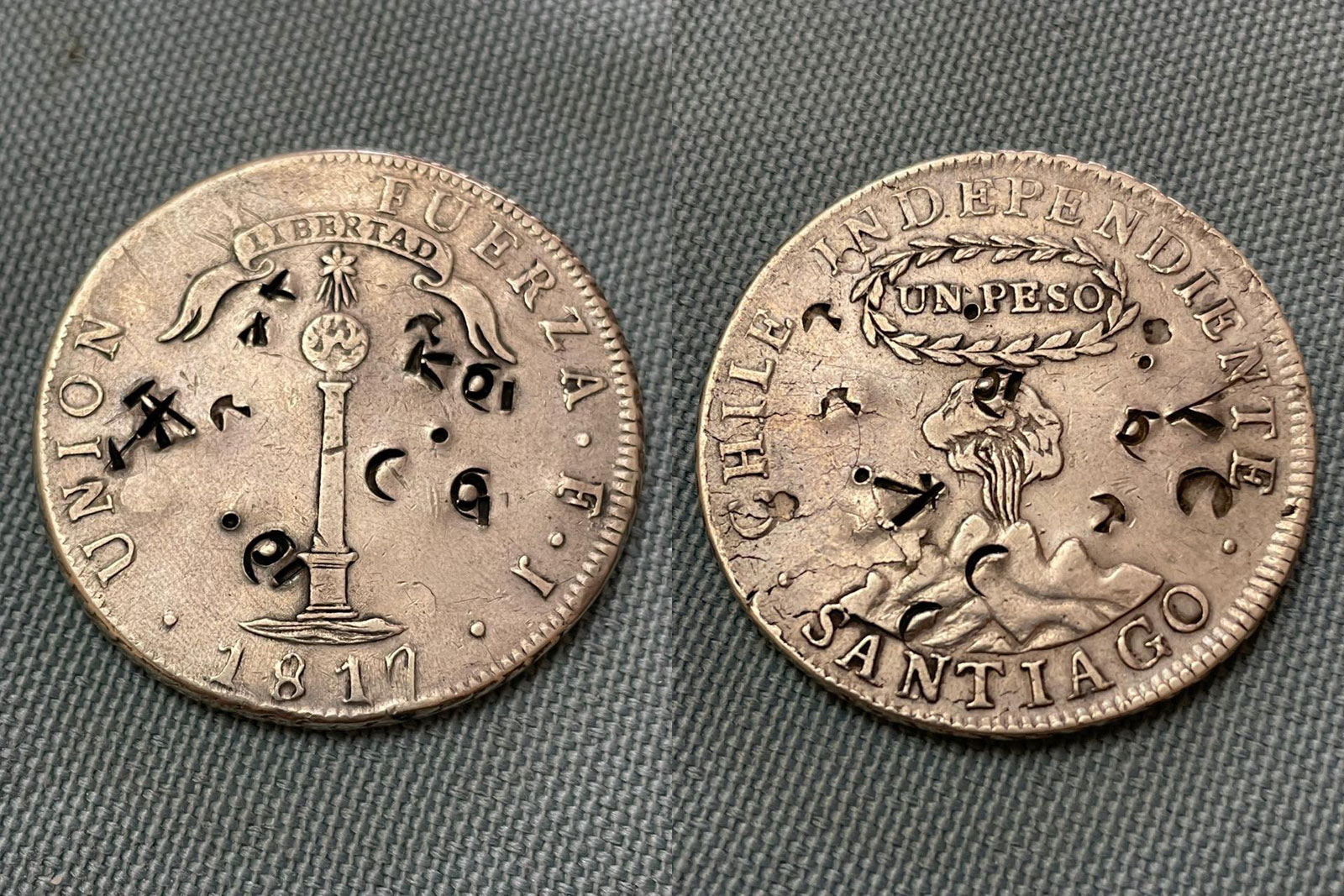 If you look closely at the chopmarks on this coin, the strokes are individually punched and there's some bulging around the punchmarks. Whoever did this may have used
a sharp, screwdriver like tool to make these marks.
If you look closely at the chopmarks on this coin, the strokes are individually punched and there's some bulging around the punchmarks. Whoever did this may have used
a sharp, screwdriver like tool to make these marks.
Example 6:
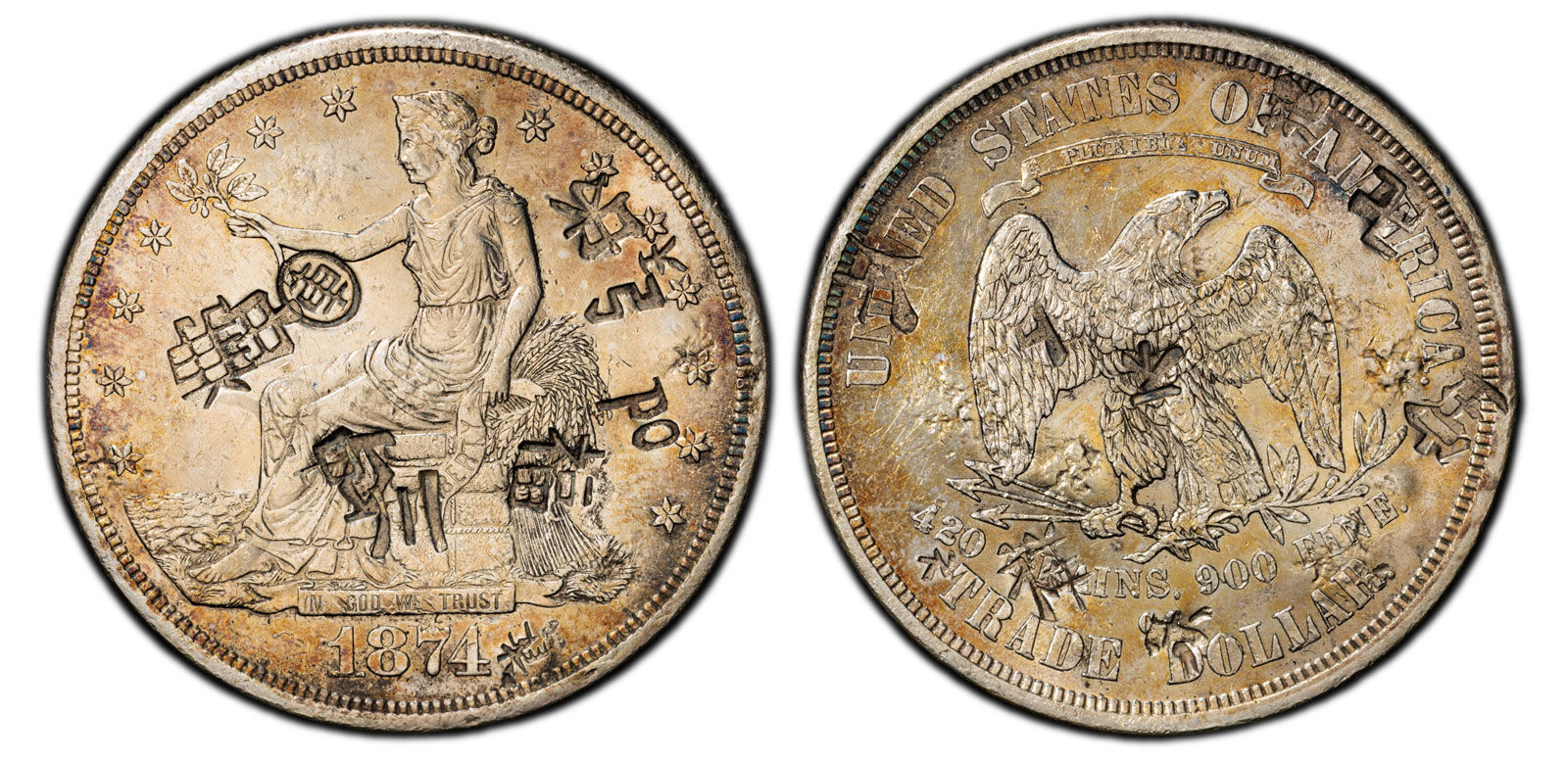
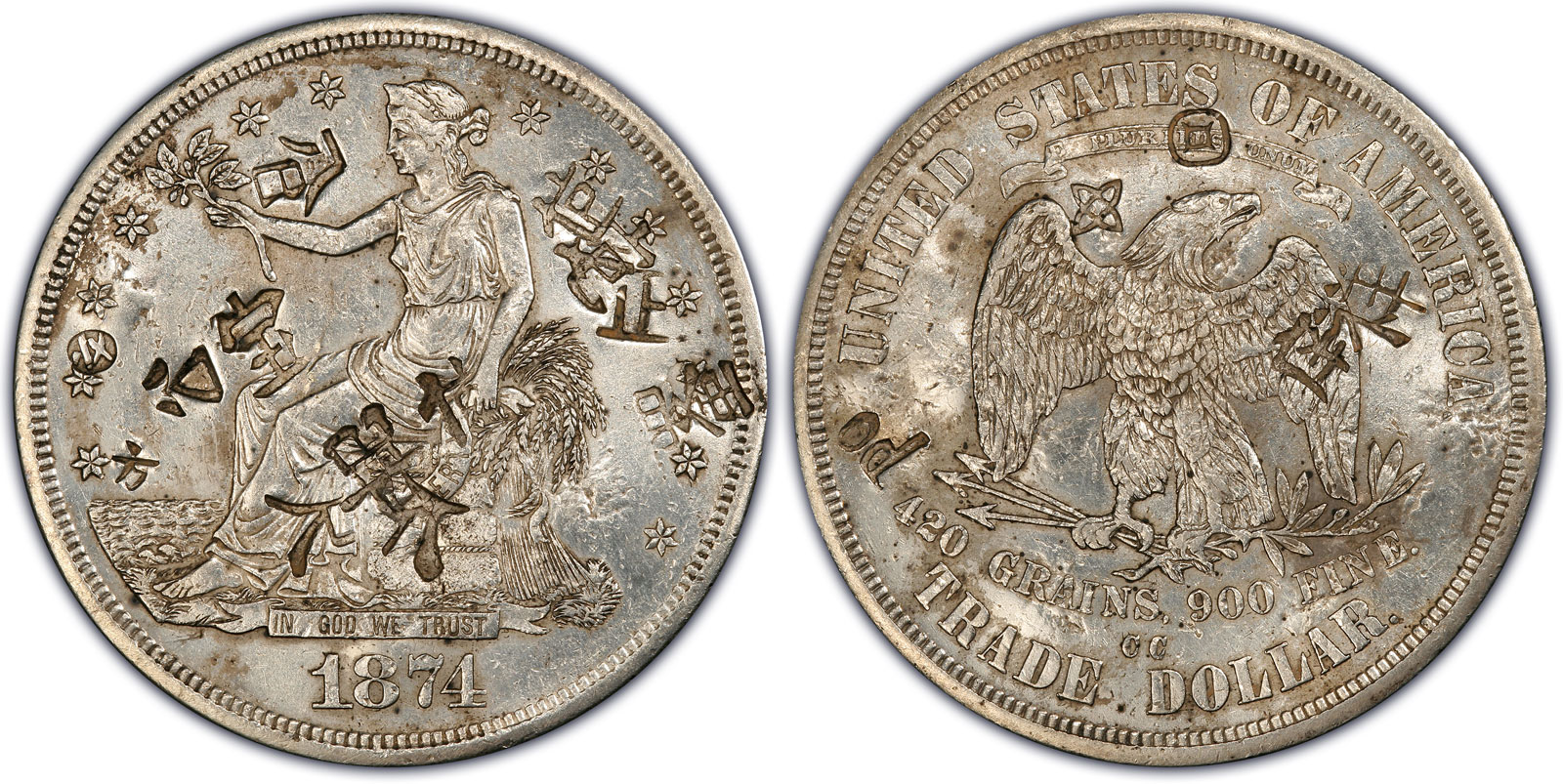
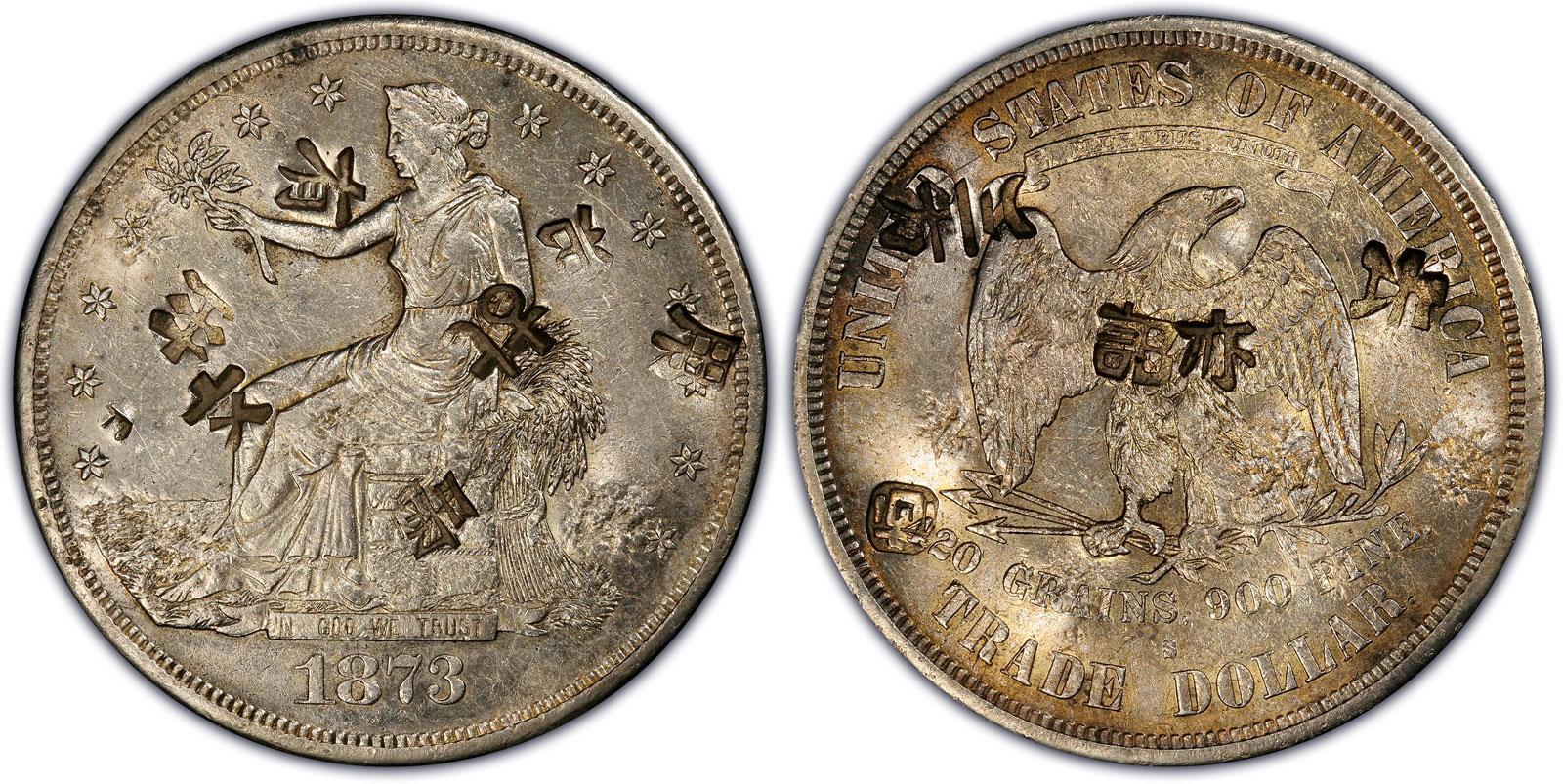 I've seen a group of chopmarked US Trade dollars with chopmarks that look different than most other legitimate chopmarks. 3 examples of these are shown above. The
marks themselves are a little more broad than usual, and less deeply punched. When looking at a few different coins, I also noticed that the diversity of marks is
small, and many of the coins share the same marks between coins. Finally, many of the examples showed a few small or medium sized chopmarks, which is almost never
seen on a US Trade dollar. There's even a small chance these chopmarks are real. Were these coins all marked by a shroff, perhaps in a different part of China where
the chopmarks looked a little different, and the location was small enough that the diversity of chops remained small? I tend to think not, but we can't say for sure.
I've seen a group of chopmarked US Trade dollars with chopmarks that look different than most other legitimate chopmarks. 3 examples of these are shown above. The
marks themselves are a little more broad than usual, and less deeply punched. When looking at a few different coins, I also noticed that the diversity of marks is
small, and many of the coins share the same marks between coins. Finally, many of the examples showed a few small or medium sized chopmarks, which is almost never
seen on a US Trade dollar. There's even a small chance these chopmarks are real. Were these coins all marked by a shroff, perhaps in a different part of China where
the chopmarks looked a little different, and the location was small enough that the diversity of chops remained small? I tend to think not, but we can't say for sure.
Example 7:
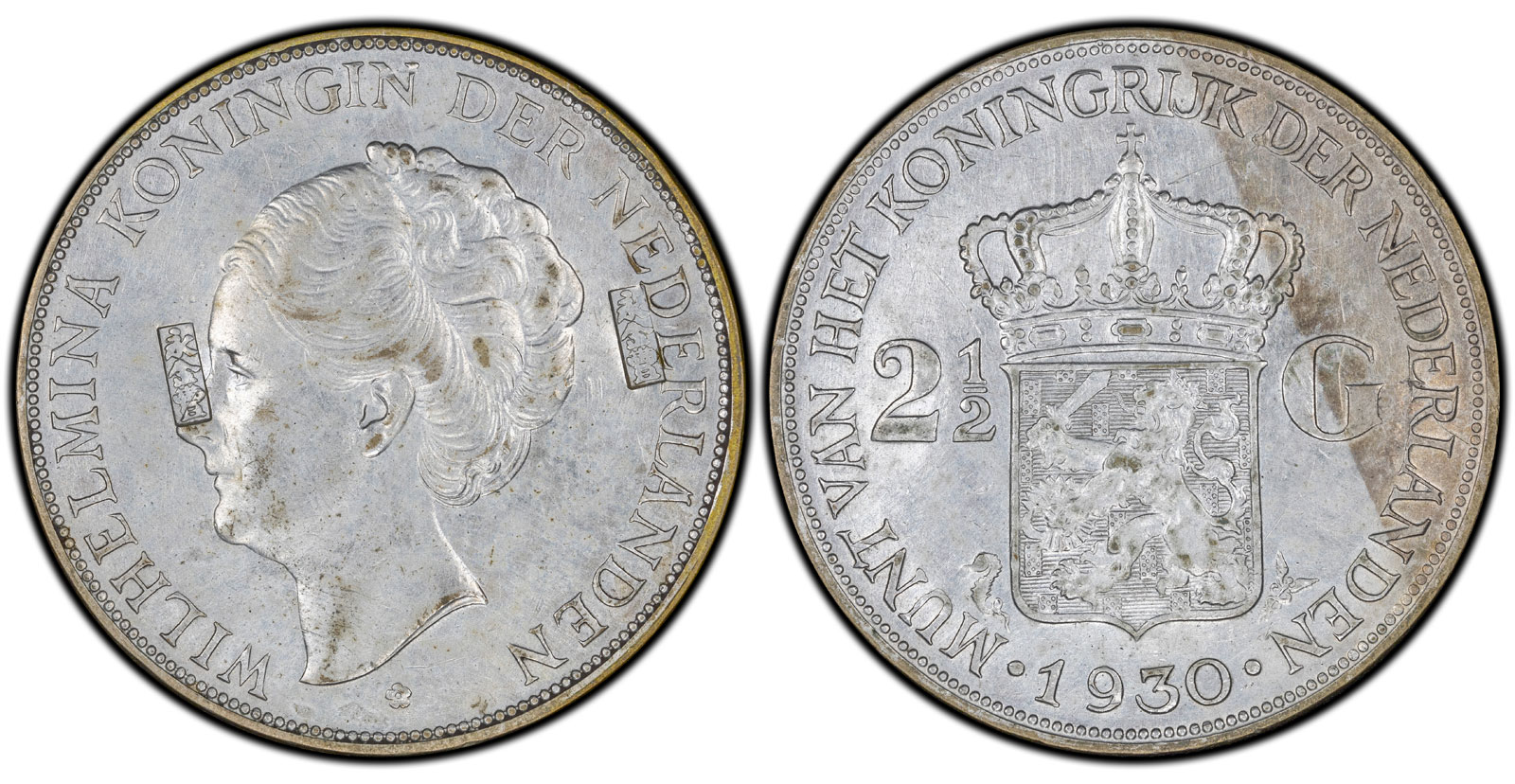
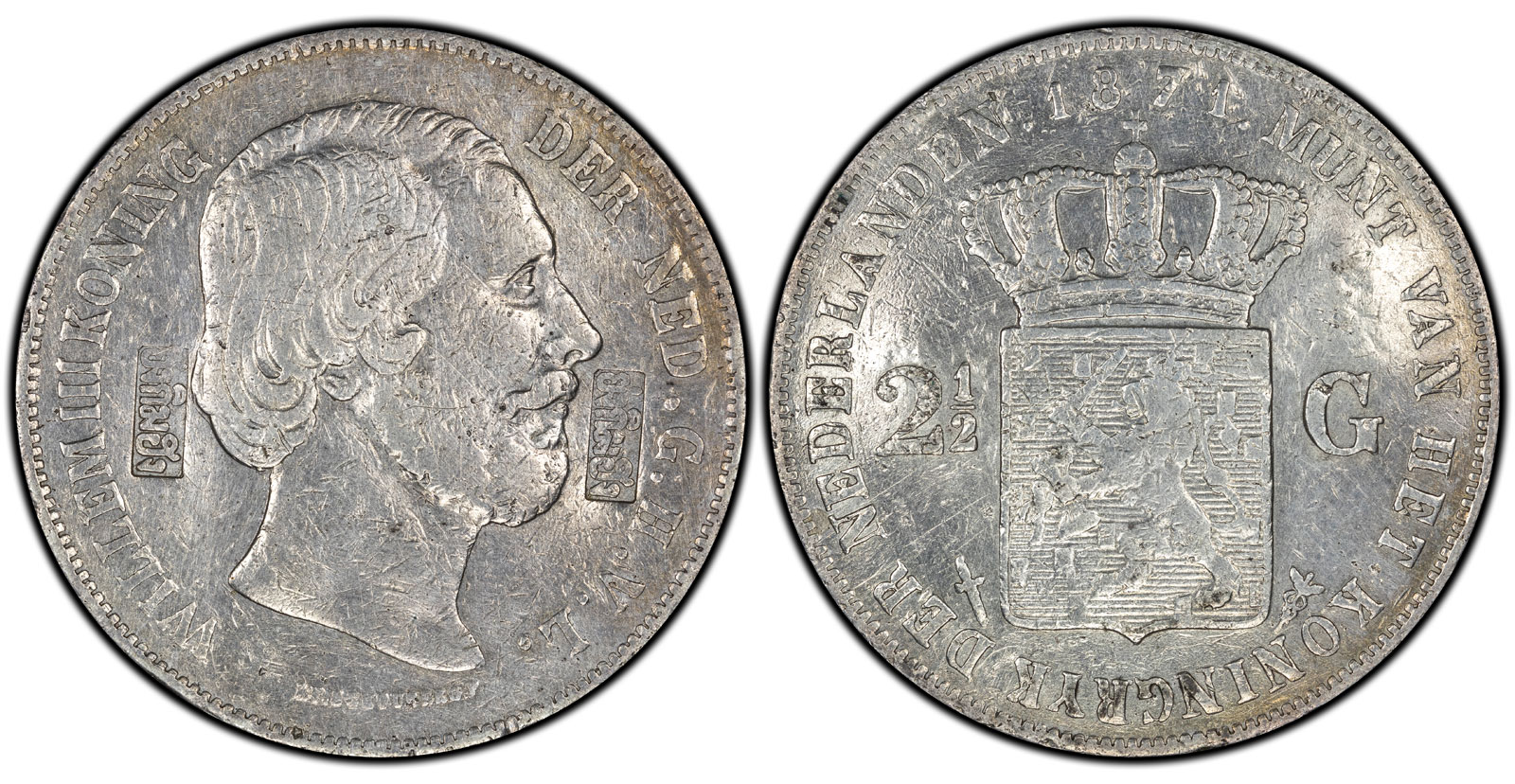 As summarized from Leverage's book on chopmarks, beginning in the mid-20th
century, coins started appearing with paired chopmarks in both Chinese and Thai scripts, attributed to a merchant named Yong Kim Hong. The marks appeared with notable
consistency in their placement and orientation, typically flanking the obverse portrait in matched pairs. While some host coins were plausible with chopmarks, the
collection included types that raised red flags, such as a 1926 Venezuela Bolivar and multiple examples of the 1931 French Indo-China Piastre and Netherlands 2½ Gulden
of Wilhelmina I (c. 1929-1940), none of which would have made sense in a legitimate Chinese trade context. As increasingly unusual examples came to light, questions about
the authenticity of these marks began to grow.
As summarized from Leverage's book on chopmarks, beginning in the mid-20th
century, coins started appearing with paired chopmarks in both Chinese and Thai scripts, attributed to a merchant named Yong Kim Hong. The marks appeared with notable
consistency in their placement and orientation, typically flanking the obverse portrait in matched pairs. While some host coins were plausible with chopmarks, the
collection included types that raised red flags, such as a 1926 Venezuela Bolivar and multiple examples of the 1931 French Indo-China Piastre and Netherlands 2½ Gulden
of Wilhelmina I (c. 1929-1940), none of which would have made sense in a legitimate Chinese trade context. As increasingly unusual examples came to light, questions about
the authenticity of these marks began to grow.
Research eventually traced the chopping tools to Hans Schulman, a prominent numismatic dealer, who is believed to have acquired the original punches and applied the marks to coins for the collector market during the 1960s and 1970s, with U.S. Peace Dollars being a particular target. The tools themselves were considered possibly genuine, if quite late in origin, lending the marks a plausibility that allowed them to circulate as authentic pieces for some time. A firsthand account from a collector active in the Hong Kong market confirmed that Schulman typically applied the chops in pairs, in the correct field placement for official marks, and that his active promotion of the pieces contributed significantly to their spread and initial acceptance.
Example 8:
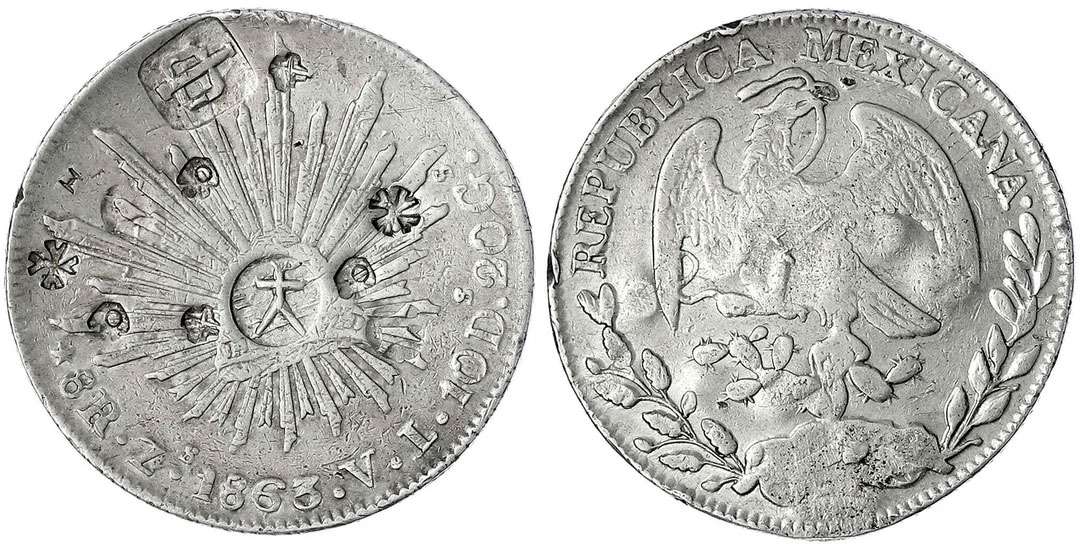
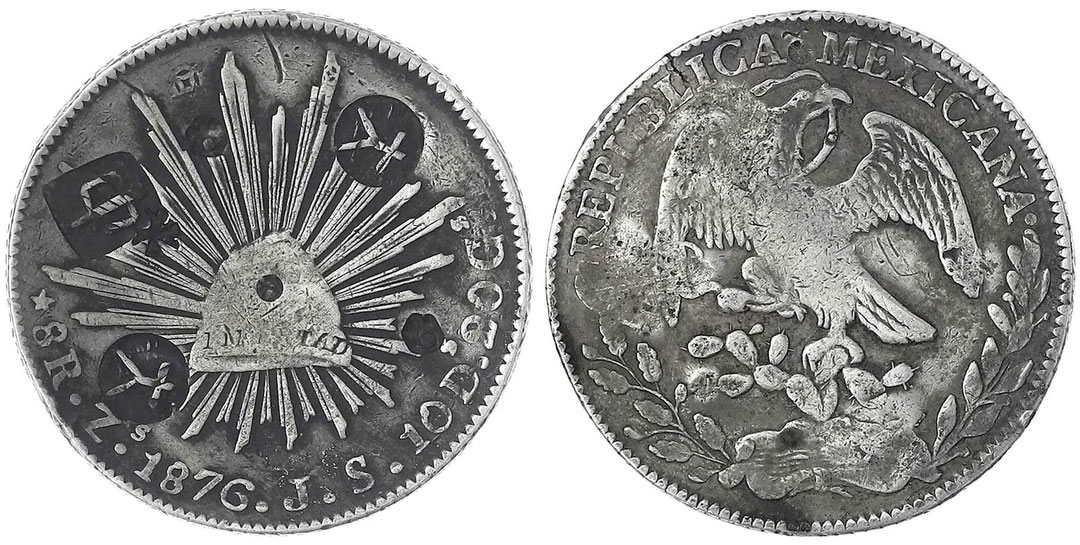 At first glance to the untrained eye, these chopmarks might look ok. But these marks aren't legitimate period chopmarks, the large relief chops aren't of the right style for
this time period, and we see multiple coins show up from time to time in european auctions with all of these same marks, along with fantasy countermarks and unrealistic patina
that are also obviously fake.
At first glance to the untrained eye, these chopmarks might look ok. But these marks aren't legitimate period chopmarks, the large relief chops aren't of the right style for
this time period, and we see multiple coins show up from time to time in european auctions with all of these same marks, along with fantasy countermarks and unrealistic patina
that are also obviously fake.
Example 9:
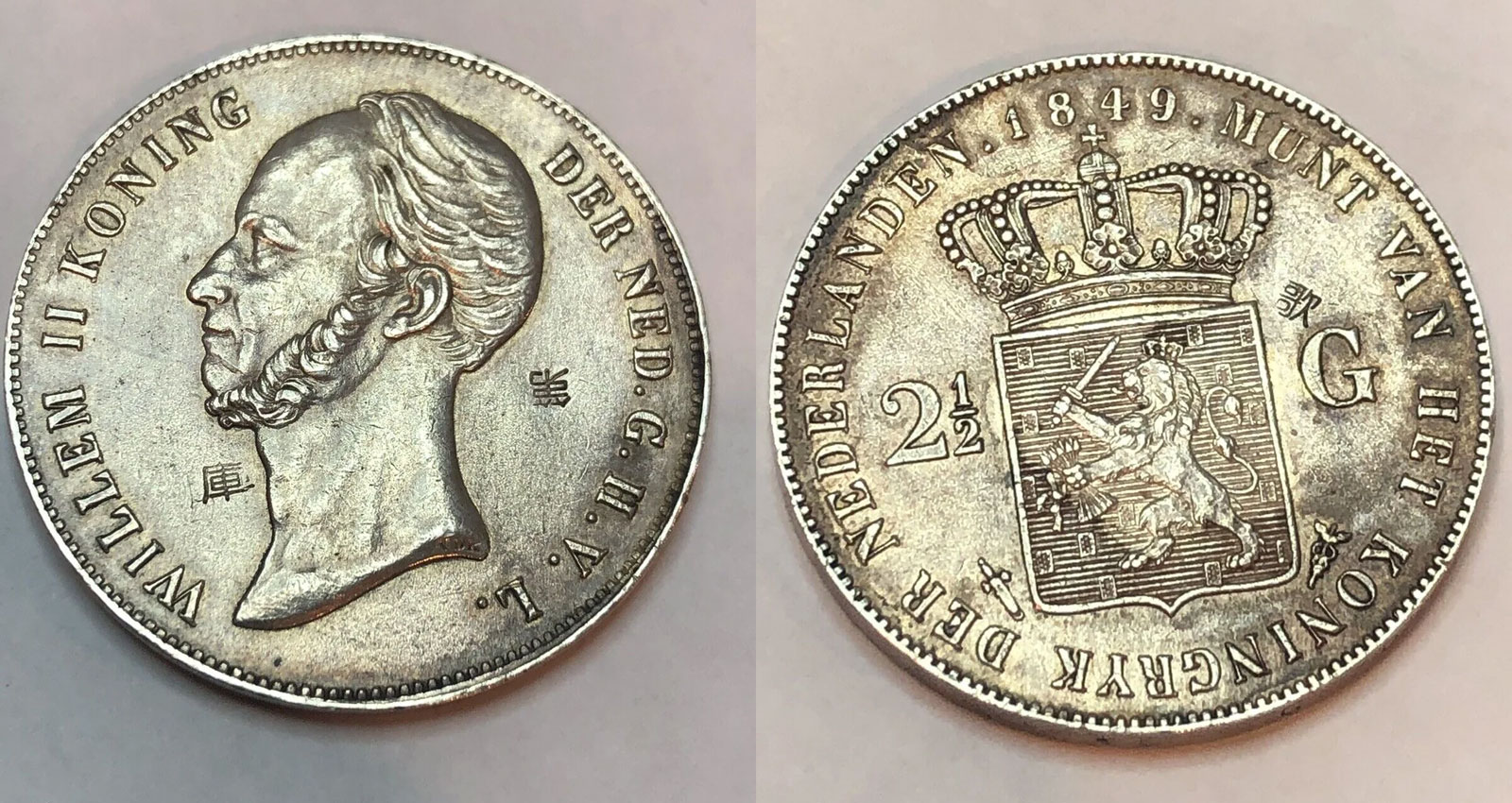 This host is certainly plausible as a chopmarked host coin, however the chopmarks are modern looking and do not match the style of legitimate chopmarks from the 1800's.
Example 10:
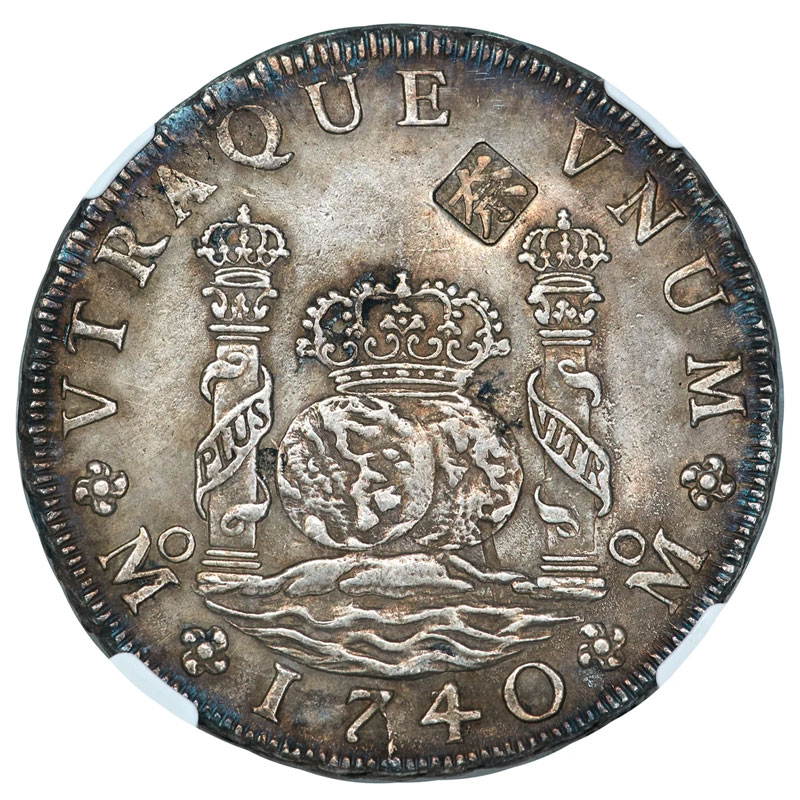
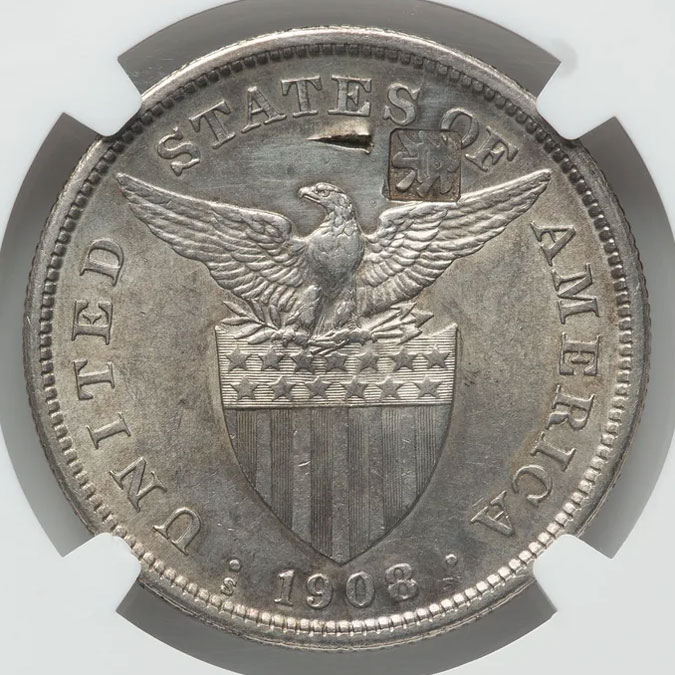
The chopmark on this coin is another modern chopmark, as you can see here placed on multiple coins that have shown up at auction over the last 5 years.