印
Main Collection
Pre-1821 1821-1871 Post-1871 Collection Insights
Other Sets
Mexican Cap & Rays Dragon Dollars Fukien Copper Cash Japan Bar Money With Countermarks & Counterstamps Ink and Paper Bits and Pieces Contemporary Forgeries
Chopmarks
Chopmark Types Unique Chopmarks Silver Stealing How to Identify Chopmarks Fake Chopmarks
Canton Trade
The Canton System People & Roles Shroffing & The Shroff Handbook Production of Goods Along the Pearl River Delta Trade Beyond Canton The Ships of Trade
Resources
Common Questions Online Articles & Publications Recommended Reading Recorded Talks Major Collections The Chopmark Collectors Club
About
About This Page Contact Me
Pre-1821 1821-1871 Post-1871 Collection Insights
Mexican Cap & Rays Dragon Dollars Fukien Copper Cash Japan Bar Money With Countermarks & Counterstamps Ink and Paper Bits and Pieces Contemporary Forgeries
Chopmark Types Unique Chopmarks Silver Stealing How to Identify Chopmarks Fake Chopmarks
The Canton System People & Roles Shroffing & The Shroff Handbook Production of Goods Along the Pearl River Delta Trade Beyond Canton The Ships of Trade
Common Questions Online Articles & Publications Recommended Reading Recorded Talks Major Collections The Chopmark Collectors Club
About This Page Contact Me

Ink and Paper Chopmarks

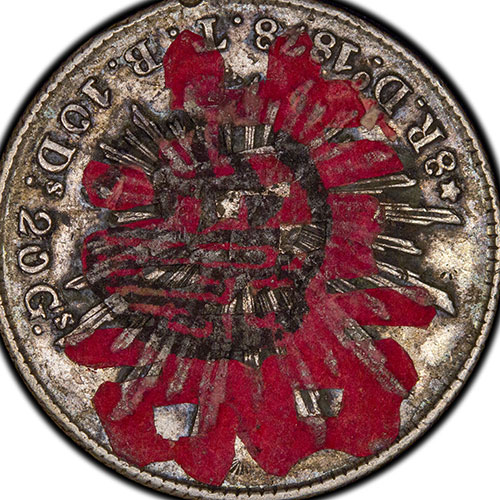
Ink and paper chopmarks are an interesting topic related to physically punched chopmarks. It is believed that ink chopmarks may have acted as a replacement for punched chopmarks, starting in the late 1800's. Paper chopmarks appear to be something different, added to gifts for good luck, but there isn't much documentation to be sure on this topic.

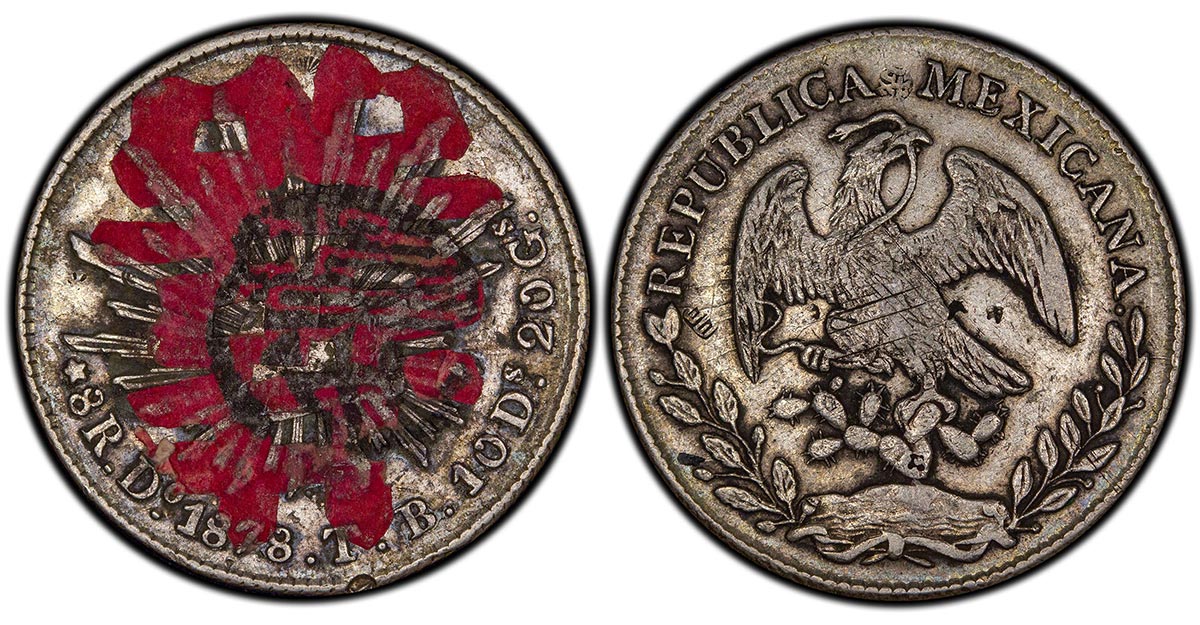
1878-Do TB Mexico 8 Reales with "Happy Wedding" & Ink & normal chopmarks

1878-Do TB Mexico 8 Reales with "Happy Wedding" & Ink & normal chopmarks

Specifications:
27.07 g, .903 fine silver, .786 troy oz (actual silver weight)
Recorded mintage: unknown
Catalog reference: KM 377.4

Details:
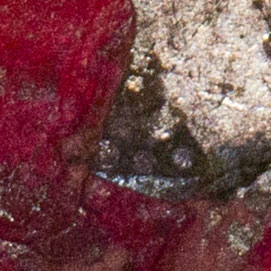
In Chinese tradition, red is the color of joy, prosperity, and good fortune, and its presence at weddings is pervasive, in clothing, decoration, and the red envelopes of lucky money exchanged between families. The 囍 character (shuāngxǐ, "double happiness"), formed by joining two 喜 characters meaning joy, has been the defining symbol of Chinese wedding culture since at least the Tang dynasty, traditionally cut or printed on red paper as a blessing on the couple and their union. Silver coins have long carried auspicious weight in this tradition, substantial, lasting, and valuable, and the 8 reales, as the dominant trade dollar across southern China through much of the nineteenth century, would have been a natural choice for a wedding gift.

We can only guess about the purpose of the black ink stamp over the red paper. It may represent a merchant's or family's personal seal applied to formalize the gift, or possibly a later mark made when the coin changed hands, but whether it was part of the original presentation or added afterward is tough to say with certainty.

Notable chopmarks:

囍 - xǐ - double happiness, a symbol of good luck, especially marriage 囍 - xǐ - double happiness, a symbol of good luck, especially marriage

Small, partial sunburst chopmark Small, partial sunburst chopmark

Unknown chinese character chopmark Unknown chinese character chopmark

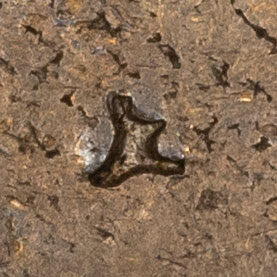
Small 6-dot triangle chopmark Small 6-dot triangle chopmark

昌 - chāng - prosperous, flourishing 昌 - chāng - prosperous, flourishing

Provenance:
From the Ron Waddell Collection
Purchased from Ron via private sale in September 2016

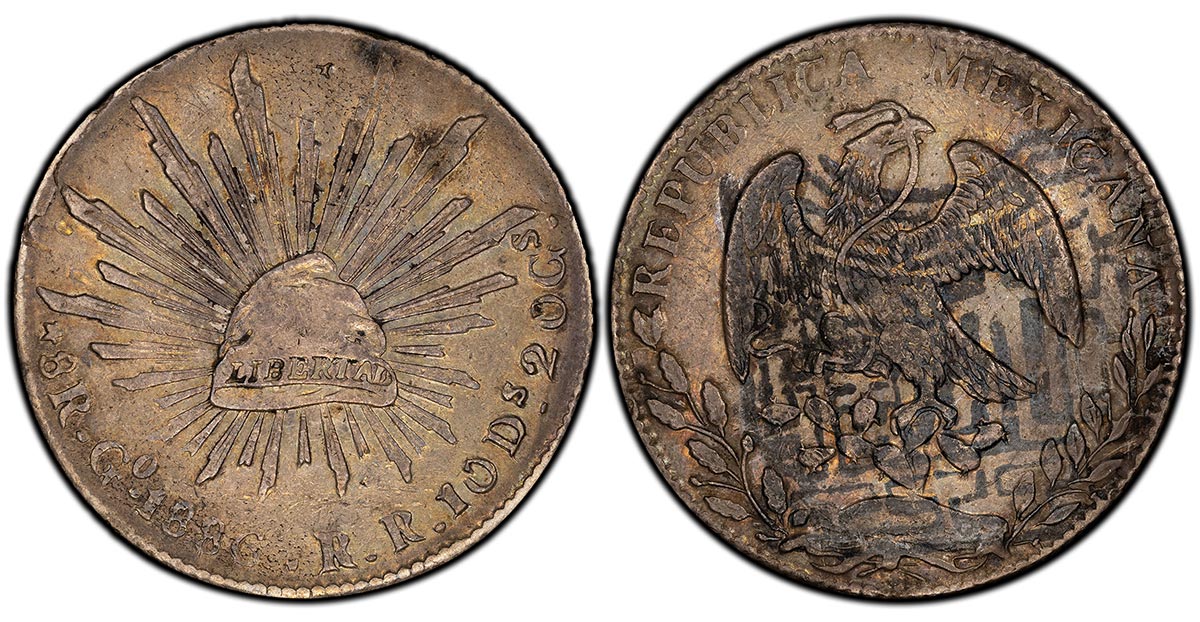
1886-Go RR Mexican 8 Reales with small chopmark & Ink chopmark

1886-Go RR Mexican 8 Reales with small chopmark & Ink chopmark

Specifications:
27.07 g, .903 fine silver, .786 troy oz (actual silver weight)
Recorded mintage: 4,127,000
Catalog reference: KM 377.8

Details:
A handsomely toned coin with wholly original ink stamped on the reverse. One tiny chopmark on the obverse.

Notable chopmarks:

Unknown mark

Unknown mark

Provenance:
Purchased on eBay in December, 2023 from a seller in Roseville, Illinois.

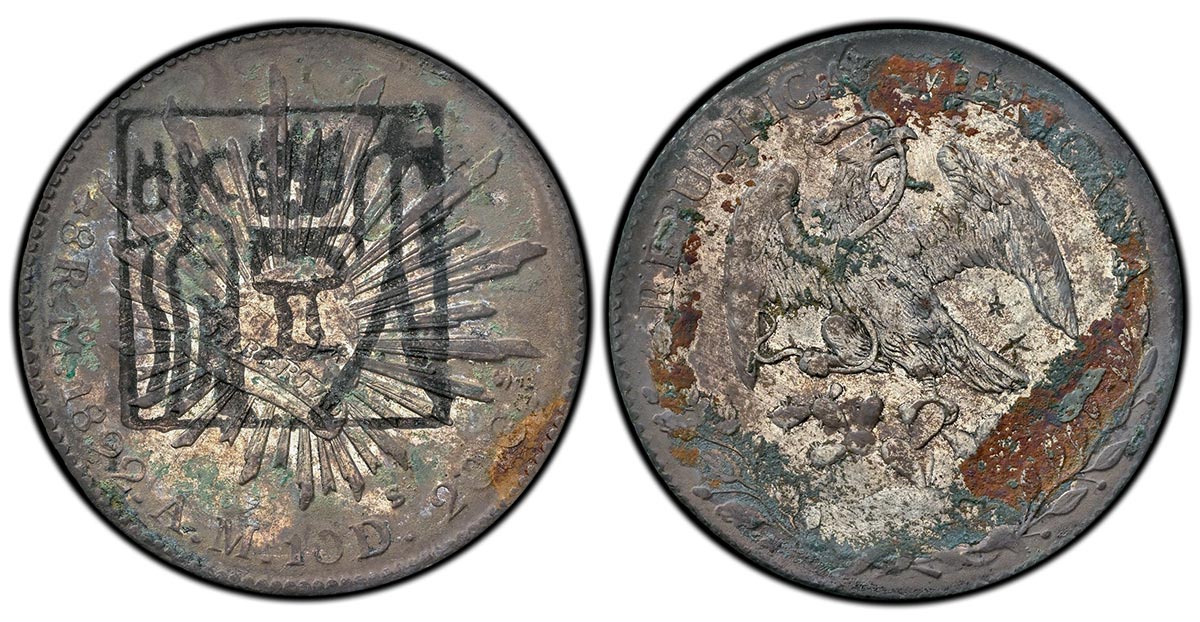
1892-Mo AM Mexican 8 Reales with small chopmarks & Seal ink chopmark

1892-Mo AM Mexican 8 Reales with small chopmarks & Seal ink chopmark

Specifications:
27.07 g, .903 fine silver, .786 troy oz (actual silver weight)
Recorded mintage: 4,127,000
Catalog reference: KM 377.8

Details:
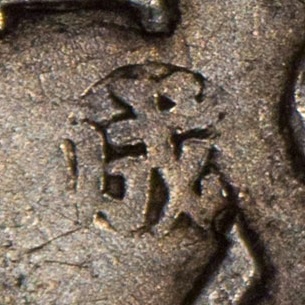
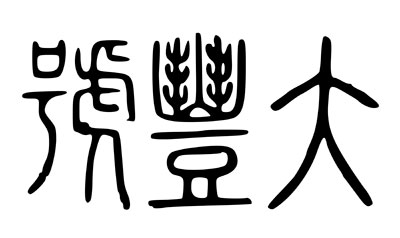
This 1892 Mexican 8 Reales shows a black ink seal stamp reading 大豐號 (Dà Fēng Hào, "Great Prosperity Company"), likely applied by a Chinese merchant firm during the coin's life in China, probably sometime in the late 19th or early 20th century. The coin itself shows significant environmental patina consistent with burial or long-term storage alongside other coins. One possible explanation for this lies in the Nationalist government's currency reform of November 1935, which declared all privately held silver to be state property and required citizens to surrender silver coins and bullion in exchange for the new paper currency, with illegal possession punishable by confiscation and potential charges of treason. Faced with exchanging physical silver for paper issued by a government of questionable stability, many chose instead to conceal their holdings, and coins buried or sealed in containers (such as pottery) would not necessarily have been recovered until many years later. In fact, many chopmarked coins discovered today were only spared the melting pot because they were hidden away around the same period discussed here.
sealstamp

Ink stamps of this type had the practical advantage of leaving the coin's silver undamaged, and they represent a distinct variant of chopmarks whose application was not limited to any single trade or industry. The name 大豐號 follows the traditional merchant-house naming convention in which 號 (hào) identifies a firm organized along older, family or guild-based lines, a style of commercial identity distinct from the more modern Western-influenced 公司 (gōngsī) form that was gaining ground through the Republican period. The characters 大豐, combining "great" and "abundant/prosperous," were among the most auspicious pairings available in Chinese commercial naming, carrying strong associations with bountiful harvest and commercial prosperity. The combination was so appealing that it became common among firms across different cities, trades, and time periods. This makes attribution effectively impossible. Without a geographic marker or additional documentary evidence, the 大豐號 ink stamp tells us that this coin passed through the hands of a Chinese merchant firm and entered local commercial circulation, but which specific 大豐號, in which city, and in which trade, remains a mystery.

Notable Chopmarks inkchop Ink chopmark described above
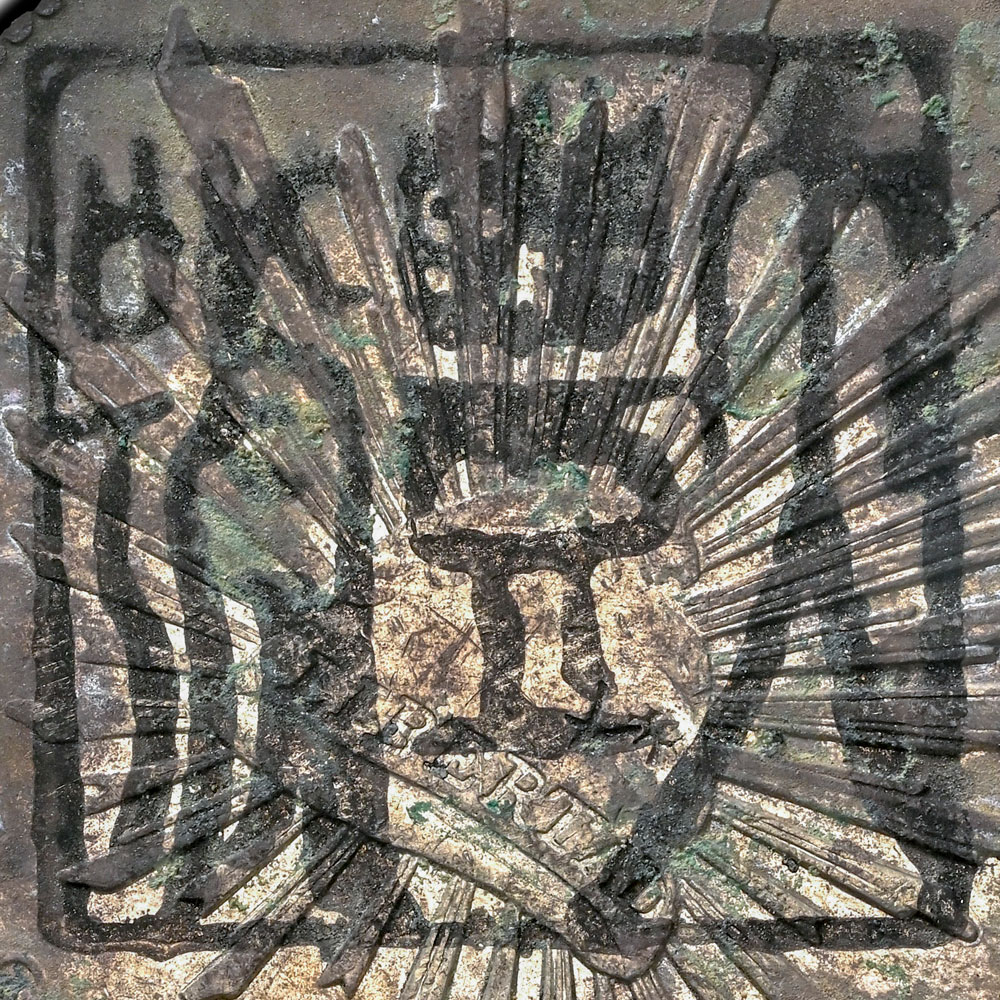
號 - hào - name, mark, symbol, an older family or guild-based commercial business
豐 - fēng - abundant, prosperous
大 - dà - big, great, large

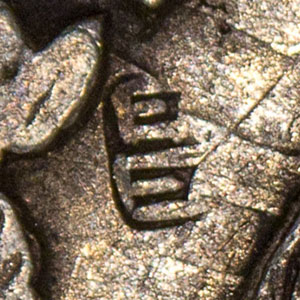
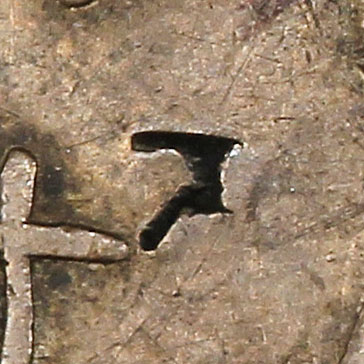
chop1 Two small unidentifiable chopmarks

chop2 One small unidentifiable chopmark

chop3 文 - wén - writing, literature, culture, (old) classifier for coins
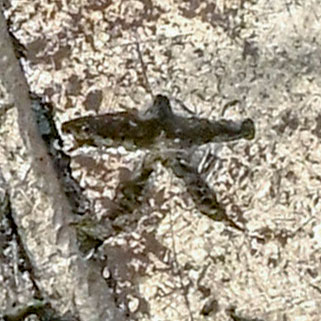
chop4 大 - dà - big, great, large

Provenance:
From the June 2025 Hong Kong (SAR) Collectors Choice Online Auction: Chinese & Asian Coins: Session 3: World Coins Part 2 Lot #33552

Note: The auction description incorrectly described this coin as a Zacatecas 8 Reales, instead of Mexico City.
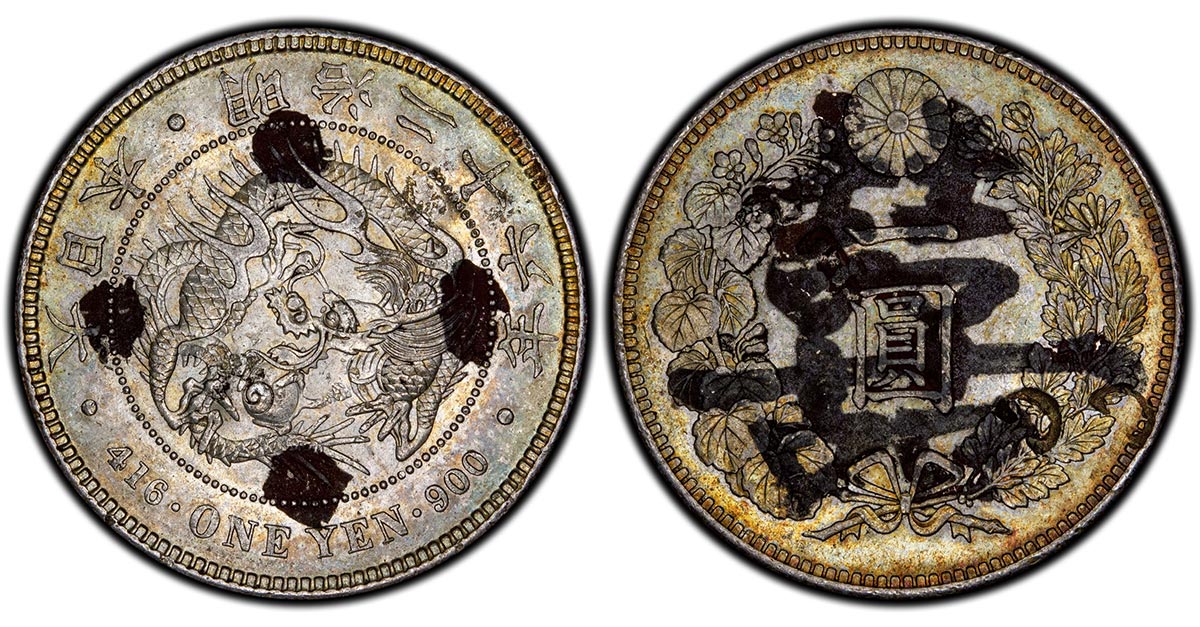
1893 Japan One Yen with regular chopmarks and ink "Double Happiness" mark

1893 Japan One Yen with regular chopmarks and ink "Double Happiness" mark

Specifications:
26.96 g, .900 fine silver, .780 troy oz (actual silver weight)
Recorded mintage: 10,403,477 (a common date)
Catalog reference: Y-A25.3

Details:
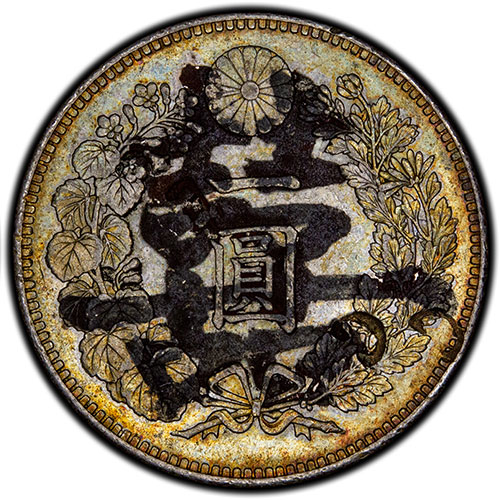
Similar to the paper chopmark shown above, this Japanese Yen features an ink chop with the Chinese word '囍', which figuratively translates to "double happiness" and is one of the most popular of the four common blessings to impart on a newly married couple. Usually we see this word affixed onto silver dollars with red paper and glue, but ink is also acceptable. This coin also features a few merchant chopmarks, as shown below.

Notable chopmarks:

囍 - xǐ - double happiness, a symbol of good luck, especially marriage 囍 - xǐ - double happiness, a symbol of good luck, especially marriage
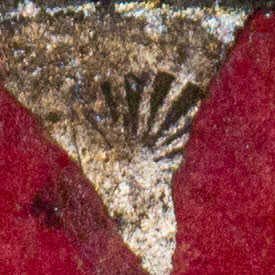
它 - tā - it 它 - tā - it

C - — - Latin letter C (chopmark) C - — - Latin letter C (chopmark)

Provenance:
From Ben Dalgleish, a collector who finds chopmarked coins in the coin markets of Hong Kong, December 2021. Ben found this coin in the Ho Mong Kok market, purchased from a dealer at a shop called Curious Collections in March 2021.

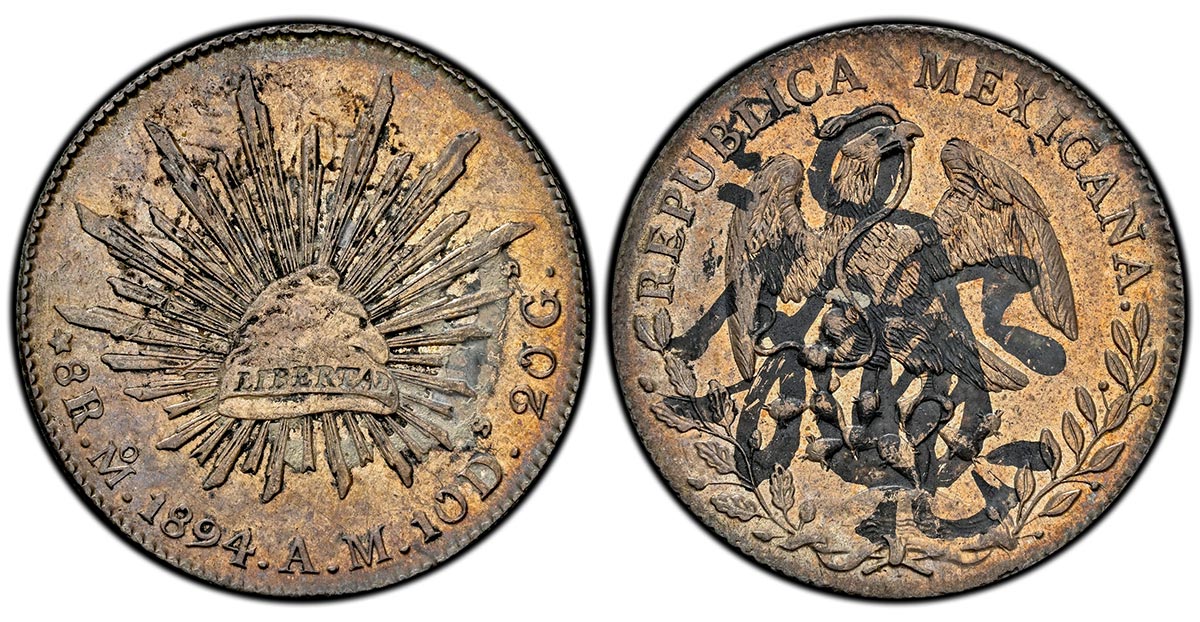
1894-Mo AM Mexican 8 Reales with Ink chopmark

1894-Mo AM Mexican 8 Reales with Ink chopmark

Specifications:
27.07 g, .903 fine silver, .786 troy oz (actual silver weight)
Recorded mintage: 4,127,000
Catalog reference: KM 377.8

Details:
An attractive, semi-prooflike coin with a very bold ink stamp on the reverse side. It also appears there was an ink stamp on the obverse side as well, although that stamp is no longer intact. The auction description mentions the reverse stamp is a "charity" ink mark, this comment requires further investigation.

Provenance:
April 2025 Hong Kong (SAR) Showcase Auction: Session 7: Internet Only: World Coins Part 2 Lot #46110

Auction Description:
MEXICO. 8 Reales, 1894-Mo AM. Mexico City. NGC Unc Details--Stained.
KM-377.10; DP-Mo80. "Charity" Ink Chop. A highly interesting and unusual example with a complex handwritten inscription on the reverse.

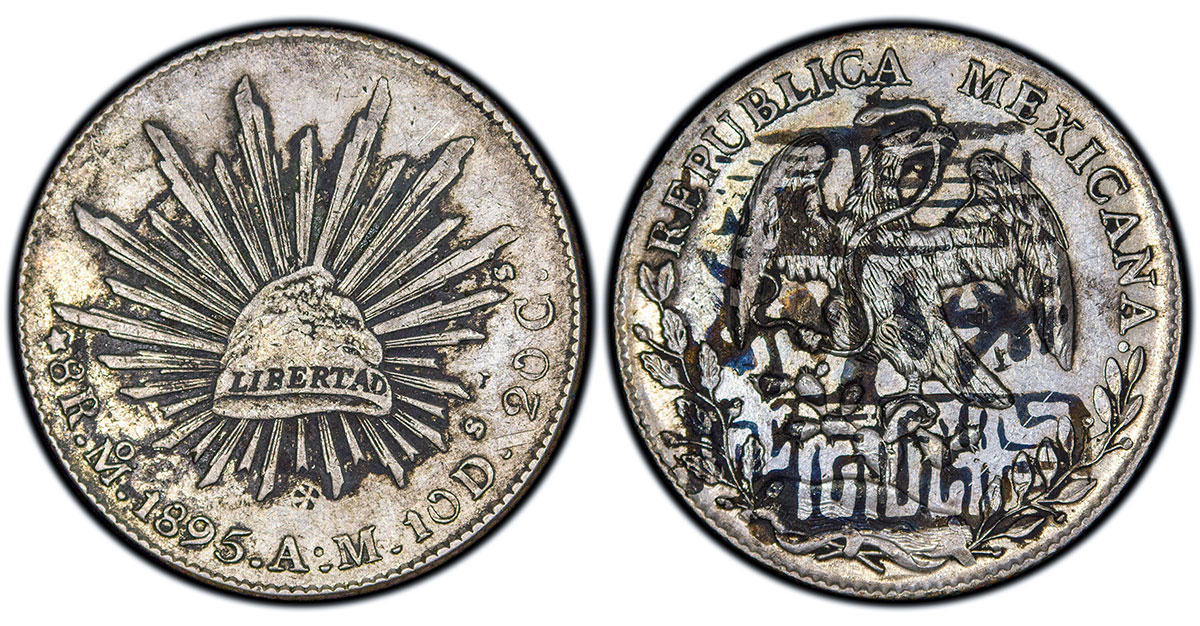
1895-Mo AM Mexican 8 Reales with Ink chopmark

1895-Mo AM Mexican 8 Reales with Ink chopmark

Specifications:
27.07 g, .903 fine silver, .786 troy oz (actual silver weight)
Recorded mintage: 10,474,000
Catalog reference: KM 377.8

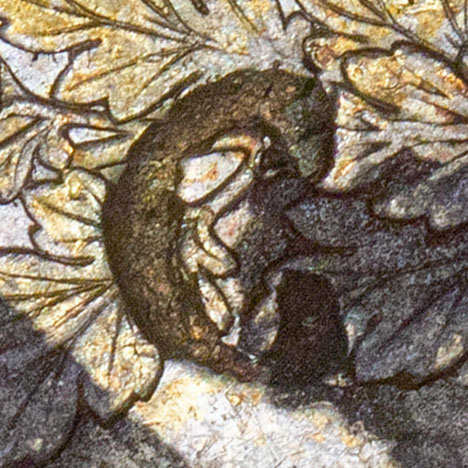
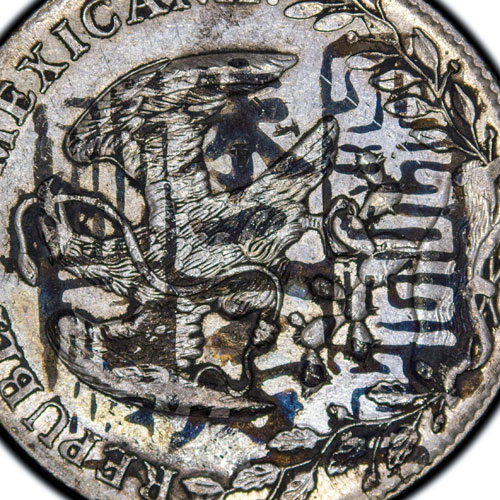
Details: Another ink chopmarked coin showing some ink on the obverse, and a more clear stamp on the reverse. Based on the style of the stamp, I wonder if this ink chopmark is more Japanese than Chinese.

Notable Chopmarks:

inkchop Ink chopmark

chop1 Small sunburst chop

chop2 大 - dà - big, great, large

chop3 上 - shàng - above, up, top

Provenance:
From the Ron Waddell Collection
Purchased from Ron via private sale in September 2016

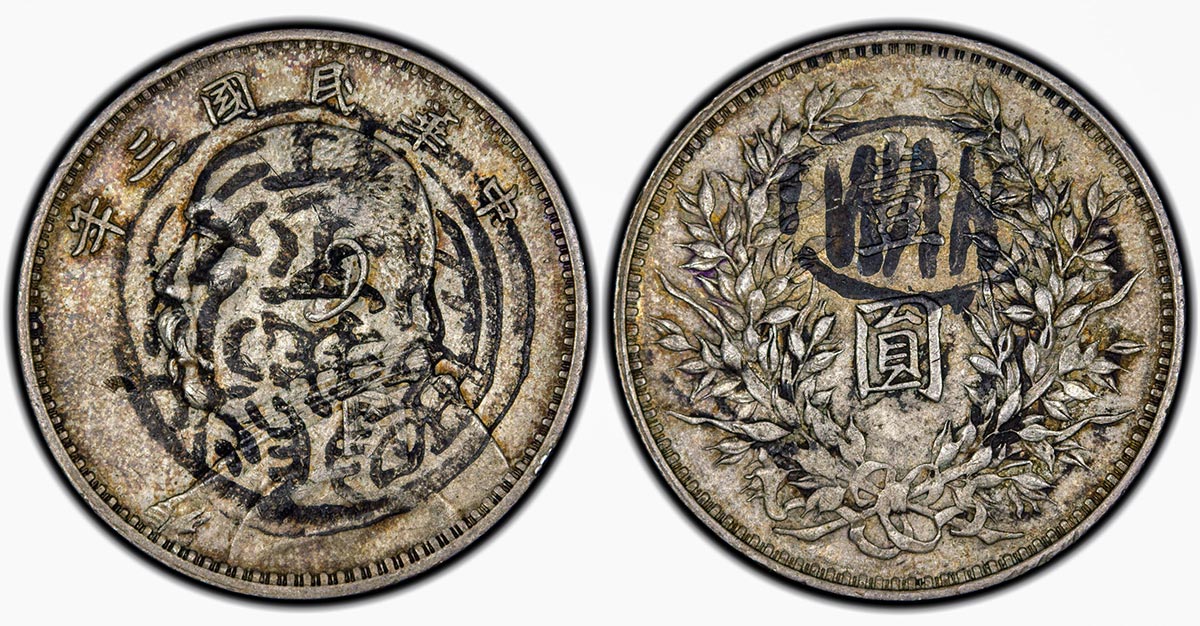
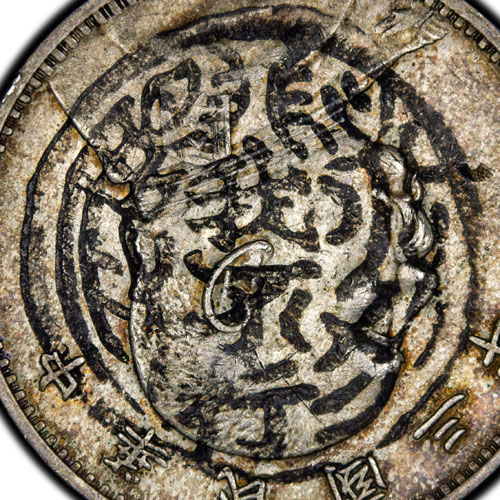
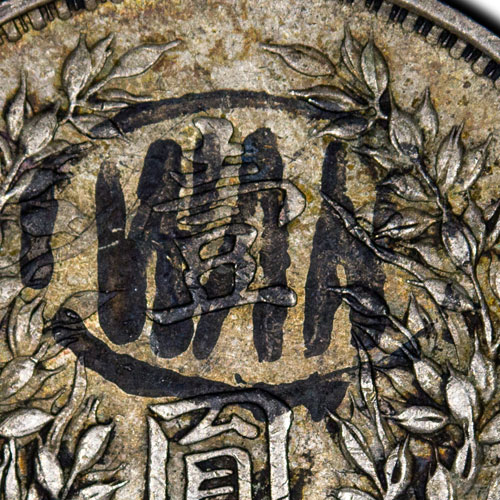
"Year 3" (1914) China Yuan Shih-kai Dollar with Ink Chops

"Year 3" (1914) China Yuan Shih-kai Dollar with Ink Chops

Specifications:
26.4 g, .890 fine silver, .755 troy oz (actual silver weight)
Recorded mintage: unknown
Catalog reference: KM Y329

Details:
In early-20th-century China, ink chopmarks represent a late and often overlooked phase in the long tradition of merchant validation on silver coinage. Unlike punched chopmarks, which physically tested and permanently marked a coin, ink chops were non-destructive and temporary, typically applied by banks, money shops, or commercial houses to indicate short-term acceptance, counting, or clearance rather than metal verification. They were especially useful as machine-struck silver coins such as Yuan Shih-kai dollars and other republican issues became widely trusted, reducing the need for aggressive testing. Ink marks could denote that a coin had been inspected, tallied, or approved for use within a specific transaction or accounting period, and they were often intended to fade or be washed off once the coin moved on. Their presence reflects a transitional moment in China’s monetary culture, where traditional habits of marking silver persisted, but adapted to a modernizing economy that increasingly favored standardized coinage and less intrusive forms of commercial validation.

Ink chops on coins in late Qing and early Republican China typically featured simple, easily recognizable characters or symbols rather than long inscriptions. Common marks include single Chinese characters indicating approval or completion (such as 正, 收, or 合), shop or bank names, abbreviated surnames, and occasionally auspicious symbols or numerals used for counting and accounting. Some ink chops incorporated red cinnabar ink, long associated with official seals, to lend authority and visibility.

Notable chopmarks:

Large circular ink chopmark with calligraphy or script style characters Large circular ink chopmark with calligraphy or script style characters

Oval ink chopmark with letters "WAN" Oval ink chopmark with letters "WAN"

Provenance:
From the Ron Waddell Collection
Purchased from Ron via private sale in September 2016
Previously purchased from Peter Hamilton, San Mateo CA.

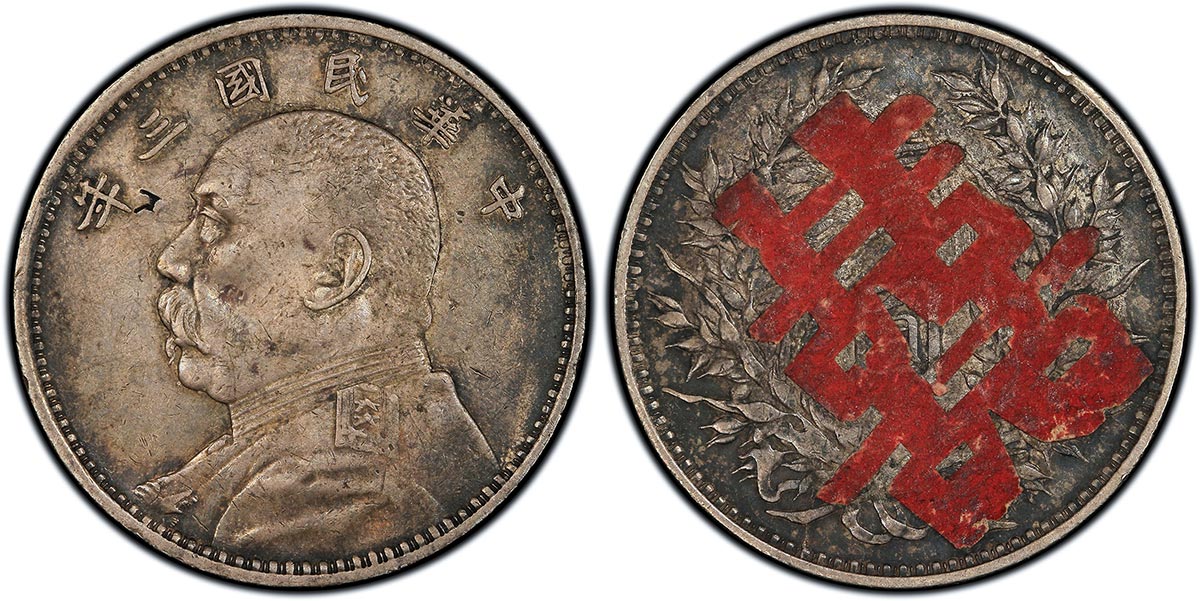
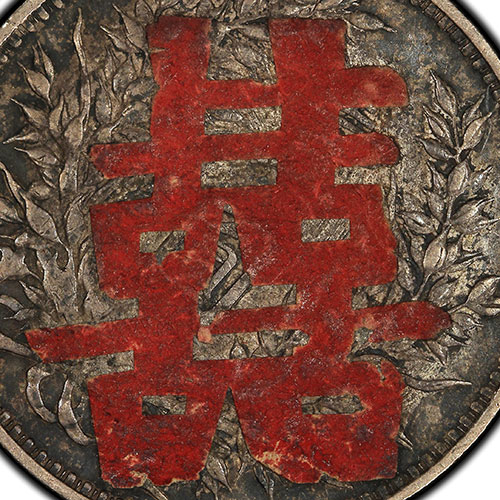
"Year 3" (1914) China Yuan Shih-kai Dollar (regular chopmark and "Happy Wedding" paper chopmark)

"Year 3" (1914) China Yuan Shih-kai Dollar (regular chopmark and "Happy Wedding" paper chopmark)

Specifications:
26.4 g, .890 fine silver, .755 troy oz (actual silver weight)
Recorded mintage: unknown
Catalog reference: KM Y329

Details:
One more "double happiness" paper chopmark, used as a wedding gift, along with one tiny normal chopmark.

Notable chopmarks:

囍 - xǐ - double happiness, a symbol of good luck, especially marriage 囍 - xǐ - double happiness, a symbol of good luck, especially marriage
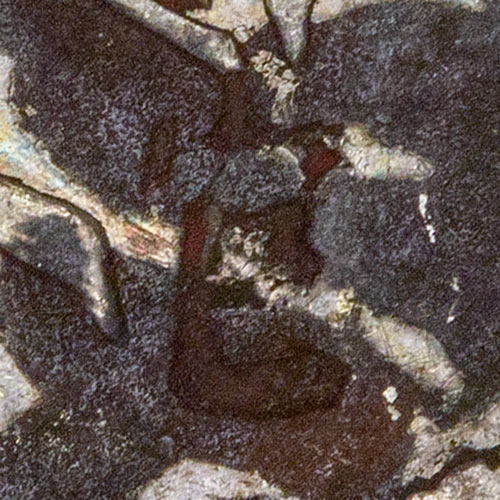
Small, unknown normal chopmark Small, unknown normal chopmark

Provenance:
Purchased on eBay in March 2013 from a seller in Chicago.

© 2026 chopmarkedcoins.com. All rights reserved. Terms of Use & Copyright