Trade Ports Beyond Canton
For much of the eighteenth century, Canton was the only Chinese port open to Western merchants, and all foreign trade was funneled through its tightly controlled system of licensed dealers. The treaties that followed the Opium Wars in the 1840s shattered that monopoly, opening new ports along the China coast and accelerating a commercial network that already stretched from the South Atlantic to the Pacific. The ports represented here trace the full reach of that network, from the provisioning stations that sustained the long voyage east to the treaty ports and entrepots where the actual exchange of goods took place.
Amoy Waterfront
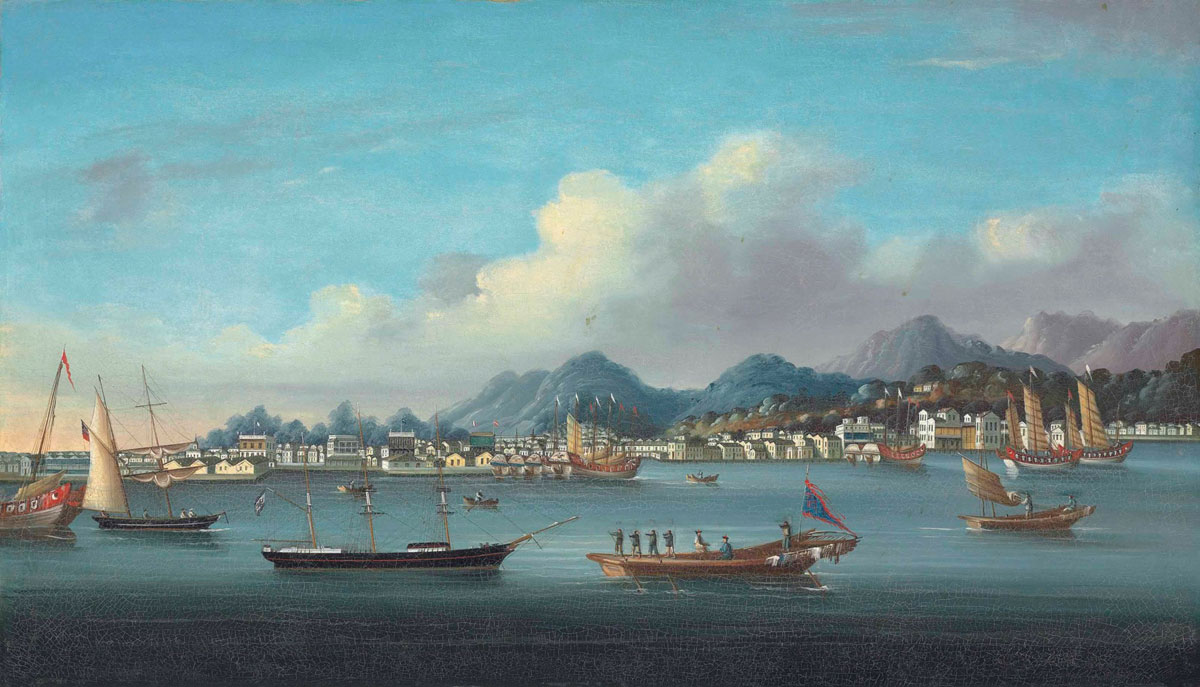
Amoy, situated on an island off the coast of Fujian province, was one of the five treaty ports opened to foreign trade following the First Opium War in 1842. Its proximity to the tea-growing regions of southeastern Fujian made it China's principal tea export port through the nineteenth century, a trade that peaked in the 1870s before declining as production shifted to Formosa and Indian estates. European and American settlement concentrated on nearby Gulangyu Island, where thirteen nations eventually maintained consulates.
The Bund at Shanghai
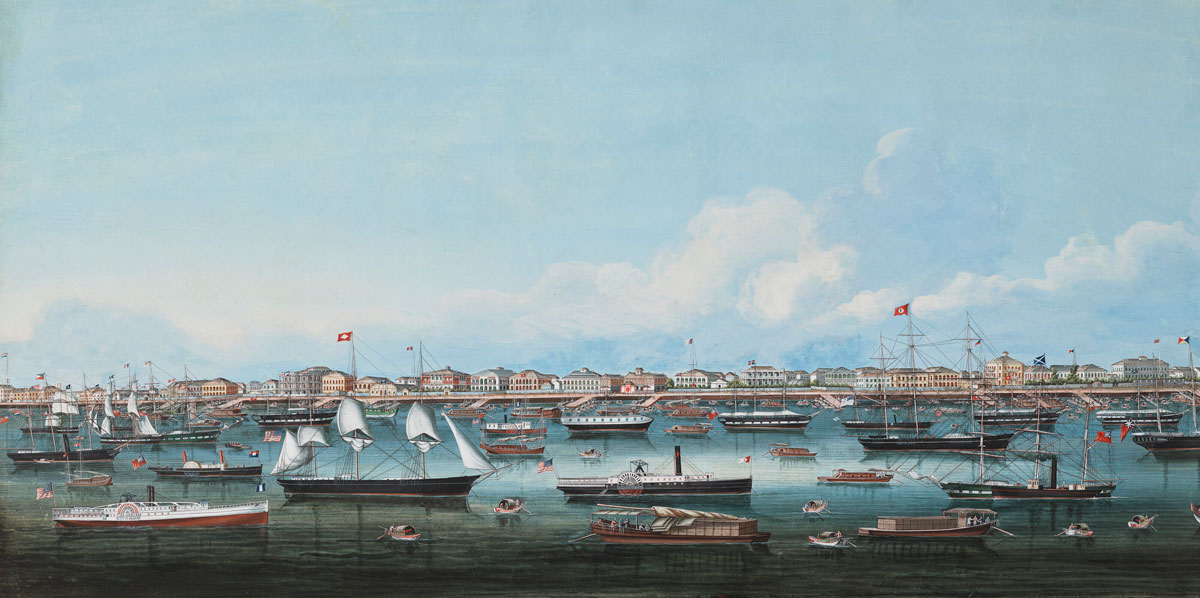
Shanghai was opened to foreign trade in November 1843 as one of five treaty ports established under the Treaty of Nanking following China's defeat in the First Opium War. British and American firms, among them Jardine, Matheson & Co. and Russell & Co., were among the first to establish operations along the Huangpu River waterfront that became known as the Bund. The port's position near the mouth of the Yangtze gave foreign merchants direct access to the vast tea, silk, and cotton markets of China's interior, and by 1852 Shanghai had overtaken Canton to handle more than half of all Chinese foreign trade. The British and American settlements merged into the International Settlement in 1863, while the French maintained a separate concession to the south.
Hong Kong Harbor
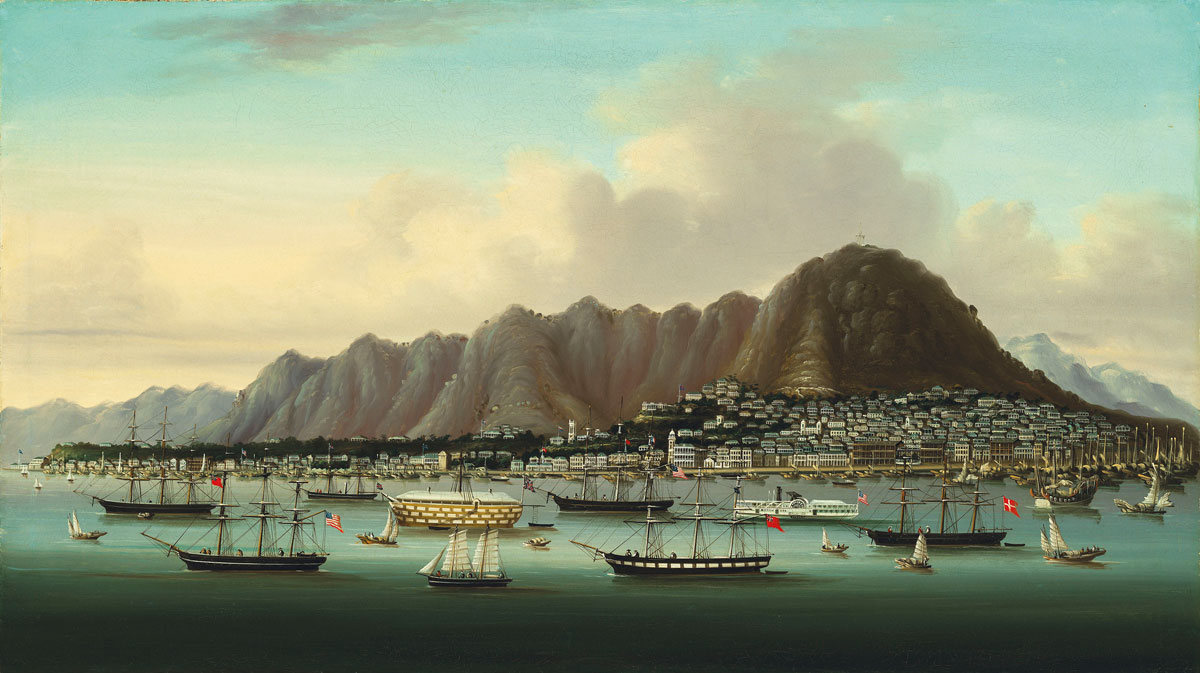
Ceded to Britain under the Treaty of Nanking in 1842, Hong Kong was immediately established as a free port, and its deep natural anchorage at Victoria Harbour quickly made it the foremost entrepot in East Asia. British firms such as Jardine Matheson and Dent & Co. anchored the early commerce, soon joined by American merchants, and the colony served as the primary transshipment point for goods flowing between China and the wider world. By 1880, Hong Kong's harbor handled roughly a quarter of China's exports and more than a third of its imports, with tea, silk, and opium accounting for the bulk of that traffic. Its position at the mouth of the Pearl River also placed it within close reach of both Canton and Macao, two ports with centuries of established foreign trade.
Singapore Waterfront
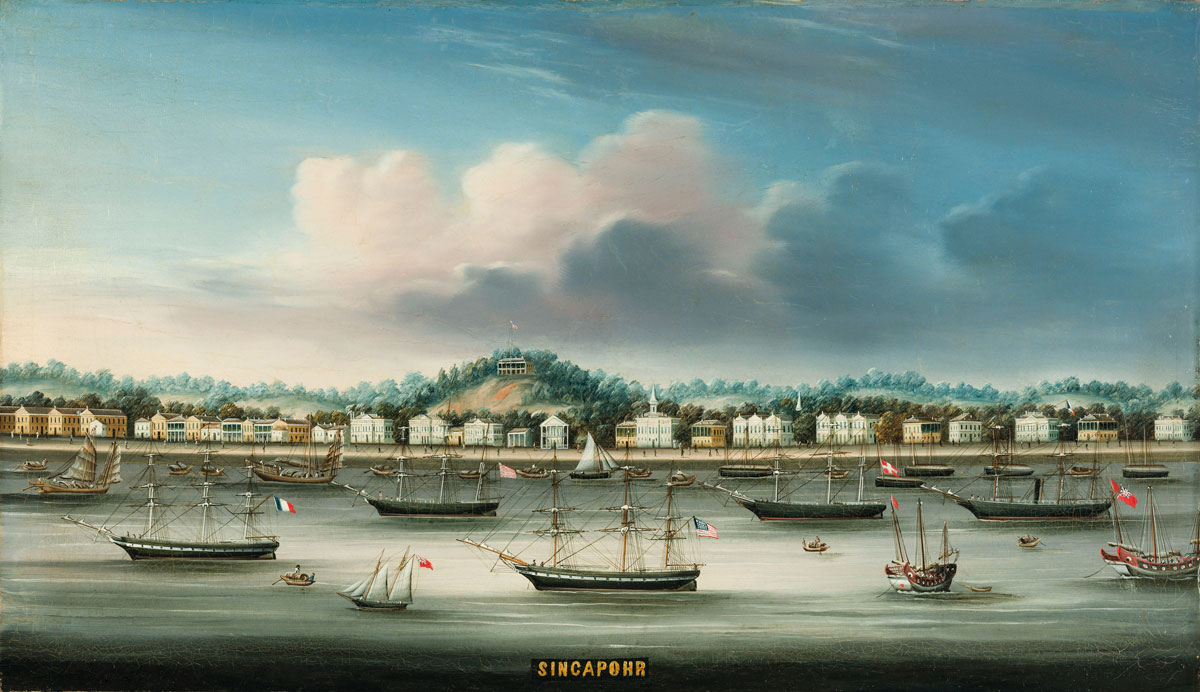
In 1819, Sir Stamford Raffles founded a British trading post on the island of Singapore, situated at the southern tip of the Malay Peninsula where the straits connecting the Indian Ocean and the South China Sea converge. Declared a free port from the outset, it drew Malay, Chinese, Arab, and Indian traders seeking to bypass Dutch commercial restrictions across the archipelago. Trade grew at an extraordinary pace, reaching $22 million Spanish dollars by 1825, surpassing the long-established British port at Penang. Singapore's position along the main sailing route between India and Canton made it a natural collecting point for Southeast Asian goods bound for China and a distribution hub for European imports entering the region.
Malacca, Malaysia
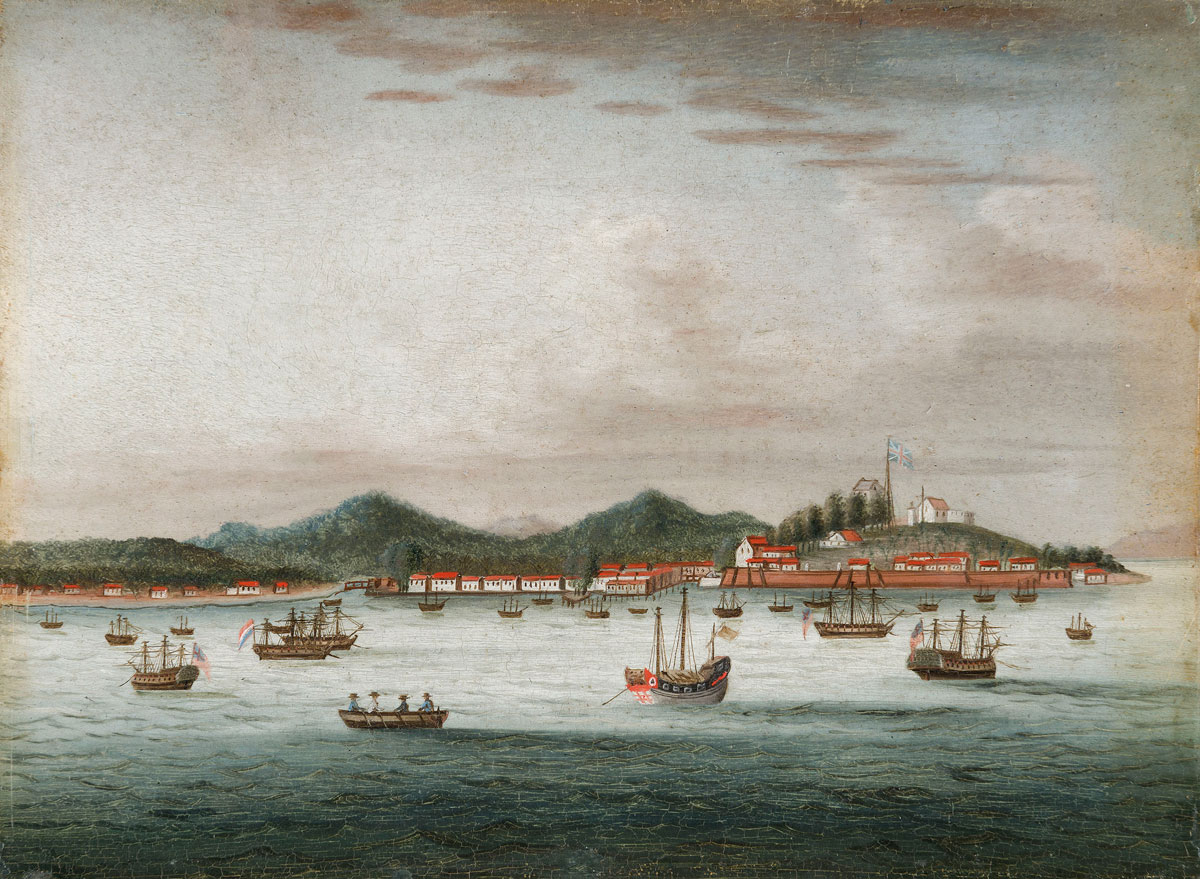
Malacca commanded the narrowest point of the strait bearing its name, the principal sea passage between the Indian Ocean and the South China Sea. Founded as a Malay trading port around 1400, it grew within decades into one of the wealthiest commercial centers in Asia, drawing merchants from China, India, and the Arab world to trade in spices, silk, tin, and textiles. The Portuguese seized the port in 1511 to control the spice route, only to lose it to the Dutch in 1641, who in turn ceded it to the British under the Anglo-Dutch Treaty of 1824. By then Malacca had long been eclipsed by newer rivals, first by Dutch Batavia and later by the British free port at Singapore, just 150 miles to the south.
Penang, Malaysia
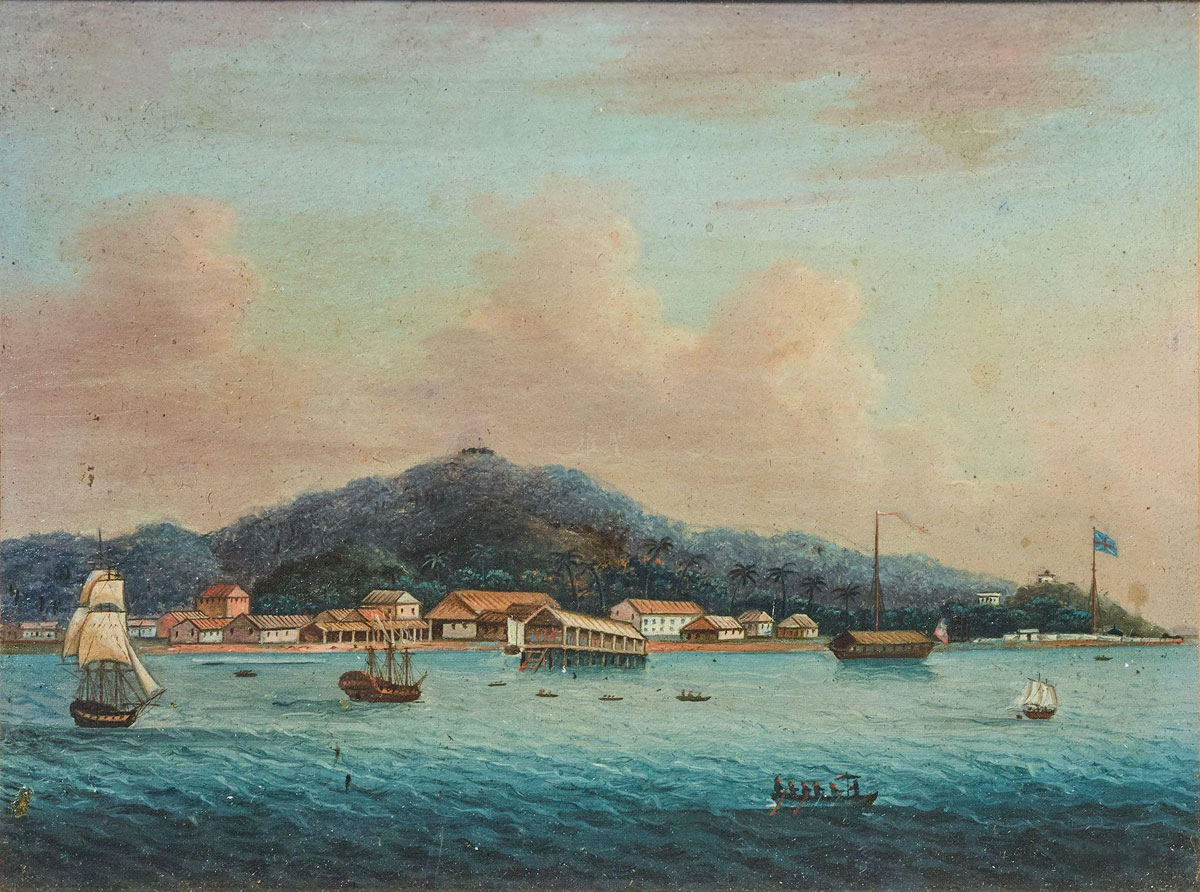
In 1786, Captain Francis Light of the British East India Company obtained Penang Island from the Sultan of Kedah, establishing George Town as the first British settlement in Southeast Asia. Declared a free port to lure merchants away from Dutch-controlled harbors, it attracted Chinese, Indian, Arab, and Malay traders, and the population grew from virtually nothing to 10,000 by the end of the century. Penang sat at the northern entrance of the Strait of Malacca along the main sea route between India and China, and its early commerce centered on spices, opium, and Indian textiles. Though it lost its primacy after the founding of Singapore in 1819, the port found new life later in the century as the chief export point for Malayan tin.
Calcutta, India
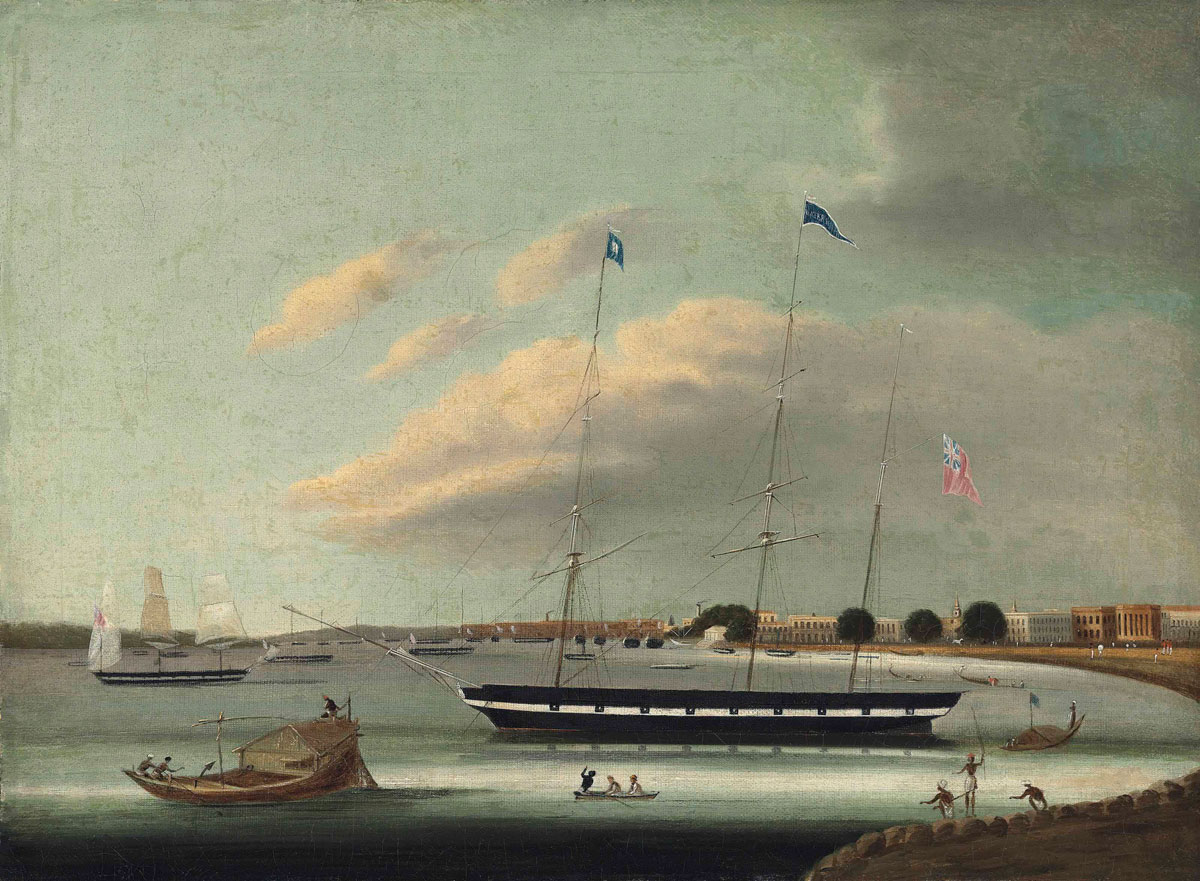
Calcutta, situated on the Hooghly River in Bengal, served as the administrative and commercial headquarters of the British East India Company in India. The Company held a monopoly on opium cultivation in the surrounding provinces of Bihar and Benares, and processed opium was brought downriver to Calcutta where it was sold at public auction to private merchants and country traders. Those buyers then shipped the drug to the China coast, where it was exchanged for the silver needed to purchase tea, silk, and porcelain at Canton. The opium revenues generated through Calcutta underpinned the entire triangular trade between Britain, India, and China, and the tensions it created ultimately led to the First Opium War in 1839.
St. Helena, The Roads
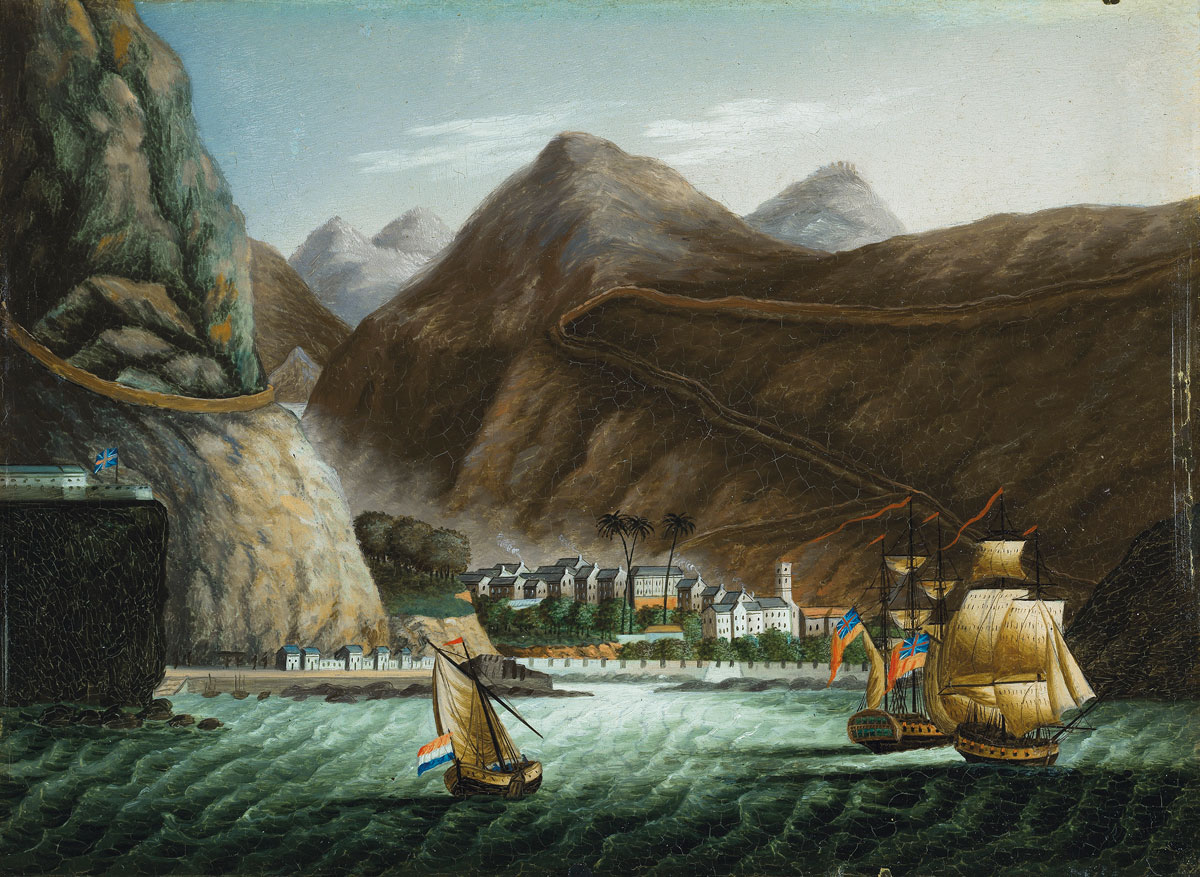
St. Helena, a remote volcanic island in the South Atlantic, lay directly in the path of the trade winds that carried homeward-bound ships from the Cape of Good Hope toward Europe. The British East India Company settled the island in 1659 and governed it for nearly two centuries, maintaining it as a watering and provisioning station where fleets returning from India and China could anchor, take on fresh supplies, and assemble convoys for the final passage to England. East Indiamen laden with tea, silk, and porcelain from Canton and Calcutta called there as a matter of routine, anchoring off Jamestown in the sheltered waters known as "the Roads," so called from the old nautical term for a place where ships could safely ride at anchor. The island is perhaps best remembered as the place of Napoleon's exile from 1815 until his death in 1821.
Cape Town (Cape of Good Hope)
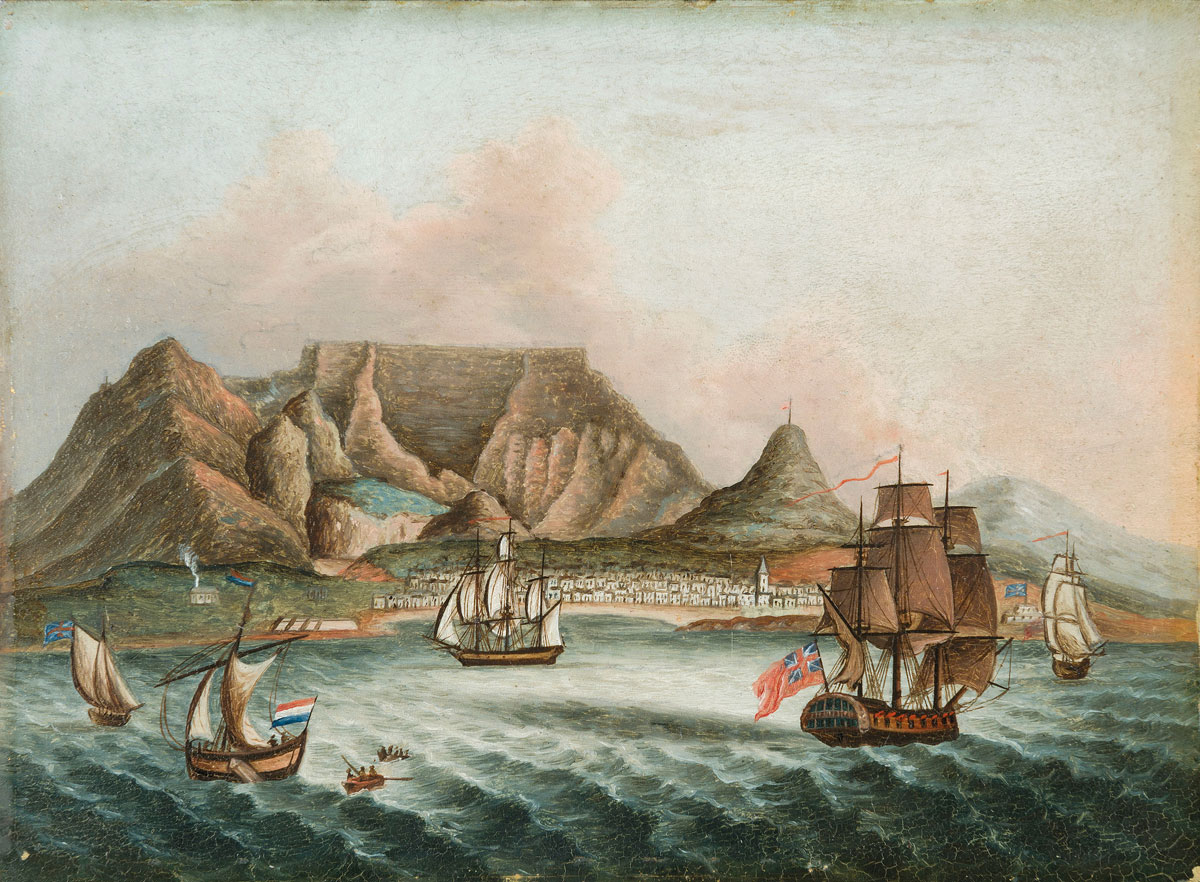
The Cape of Good Hope, at the southern tip of Africa, served for centuries as the critical midpoint on the sea route between Europe and the trading ports of Asia. The Dutch East India Company established a permanent resupply station at Table Bay in 1652, providing fresh water, provisions, and repair facilities for vessels bound for Batavia, Canton, and the ports of the South China Sea. Ships of every major European trading nation called there, including British East Indiamen that routinely stopped at the Cape on their passage to India and China before returning home laden with tea, silk, and porcelain. The British seized the colony from the Dutch in 1795 and held it permanently from 1806.
Valparaiso, Chile
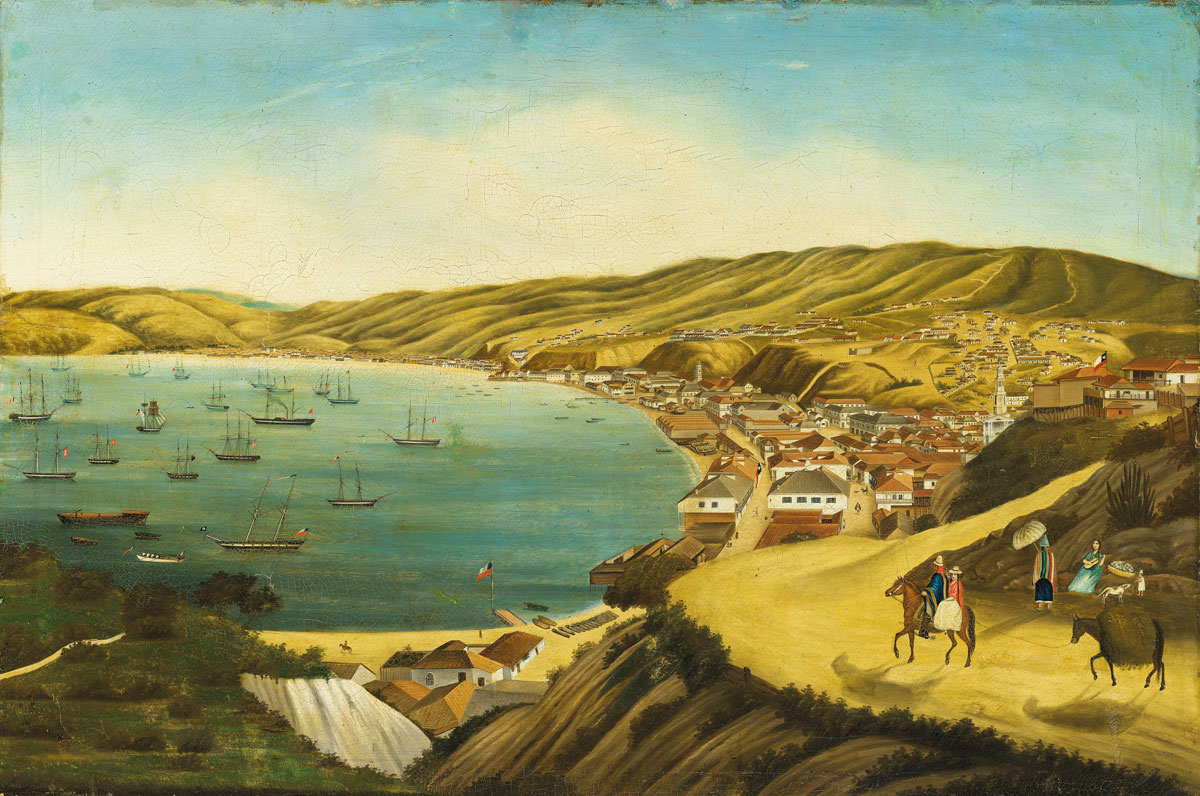
Valparaiso was a modest colonial settlement until Chilean independence in 1818 opened the port to international commerce. Its position on the Pacific coast, north of the Strait of Magellan and Cape Horn, made it the first major provisioning stop for vessels that had survived the passage from the Atlantic, and from the 1830s onward it served as the leading commercial port on the Pacific coast of South America. British merchants dominated its foreign trade, establishing banks, warehouses, and trading houses that linked Valparaiso to a network stretching from Liverpool to Canton. The port's importance faded after the opening of the Panama Canal in 1914, which redirected Pacific shipping away from the southern route entirely.
Yerba Buena (San Francisco, California)
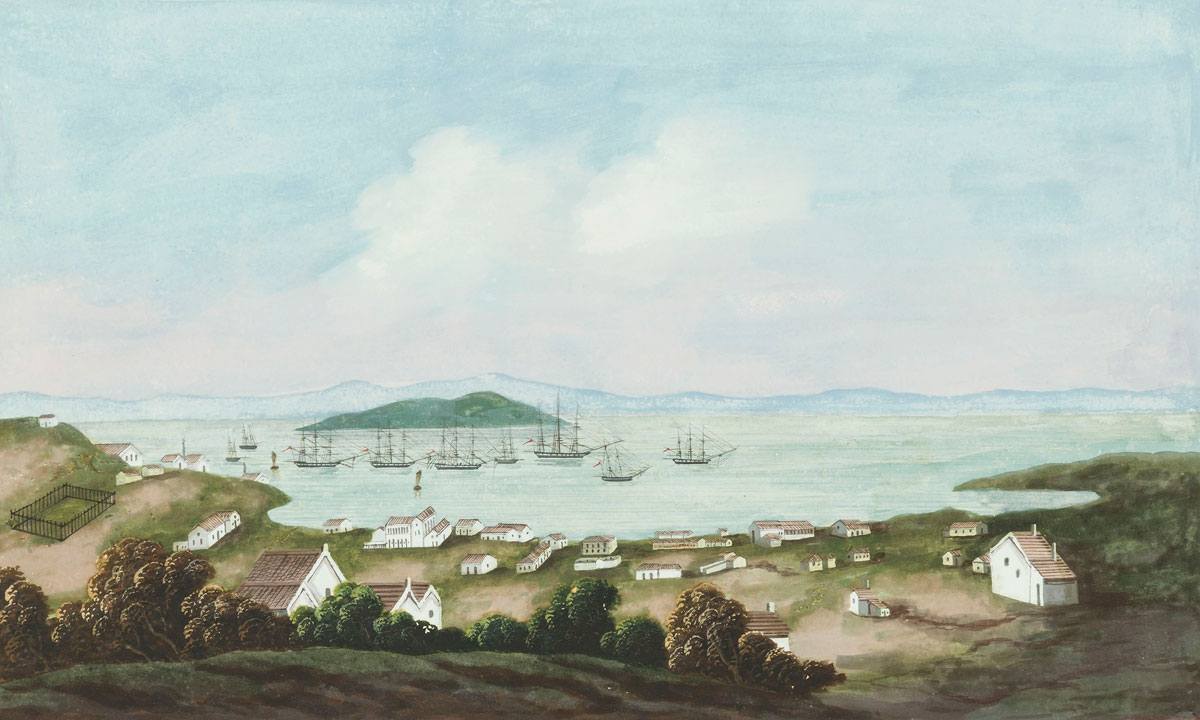
Yerba Buena was a small trading settlement established in 1835 on the shore of San Francisco Bay, then part of Mexican Alta California. American and British hide and tallow traders had long recognized the bay's potential, and when the United States claimed the settlement in 1846 it was renamed San Francisco. The discovery of gold at Sutter's Mill in 1848 transformed the quiet anchorage almost overnight; by 1849, hundreds of ships crowded Yerba Buena Cove, many abandoned by crews who had fled to the goldfields. The port quickly became the Pacific gateway for American clipper ships running goods from the East Coast around Cape Horn, and those same vessels often continued west across the Pacific to Canton and Hong Kong, returning with tea, silk, and porcelain.