Along the Pearl River Delta, into Canton
Between the mid-eighteenth and mid-nineteenth centuries, the Pearl River Delta was the sole gateway for Western trade with China. The Qing court restricted all foreign commerce to the port of Canton, and reaching it meant navigating a long, controlled corridor of waterways, anchorages, and checkpoints stretching from the open South China Sea to a small strip of riverfront buildings on the edge of the city. The paintings and drawings that accompany this page are examples of Chinese export art, produced in Canton for the foreign merchants who made this journey, and they offer a visual record of each stop along the way.
The Open Sea
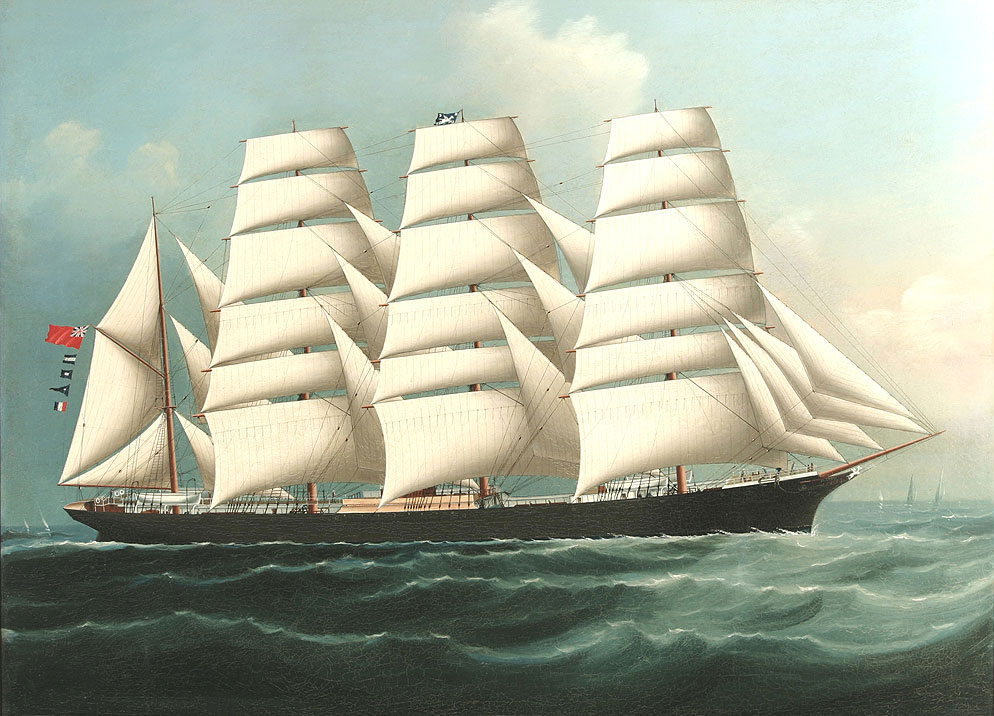
For European and American merchants bound for Canton, the final approach began long before the Pearl River came into view. Ships arriving from the west had already endured months at sea, rounding the Cape of Good Hope or crossing the Pacific before threading through the Straits of Malacca or Sunda into the South China Sea. East Indiamen, country traders, American vessels heavy with furs and silver: by the late eighteenth century they all converged on the same waters, which had become some of the most heavily trafficked commercial lanes on earth. Western demand for tea, silk, and porcelain funneled toward a single bottleneck, the estuary of the Pearl River and the only port where the Qing court permitted foreign trade.
The South China Sea tested even experienced crews. Typhoon season could pin a ship at its last provisioning stop for weeks, and the navigational charts of the period, while improving, still left stretches of coastline only loosely mapped. Pirates operated along the approaches, sometimes in organized fleets large enough to threaten armed merchantmen. As a vessel closed on the coast of Guangdong, the sea itself changed character. The deep blue of open ocean gave way to turbid green-brown water carrying silt from the river system ahead. Junks and fishing boats appeared in growing numbers, and the low hills of the Guangdong coast slowly took shape on the horizon. For a first-time supercargo or junior officer, this was the threshold of a world that nothing in London or Salem could have prepared him for.
Macao and the Praya Grande (staging stop)
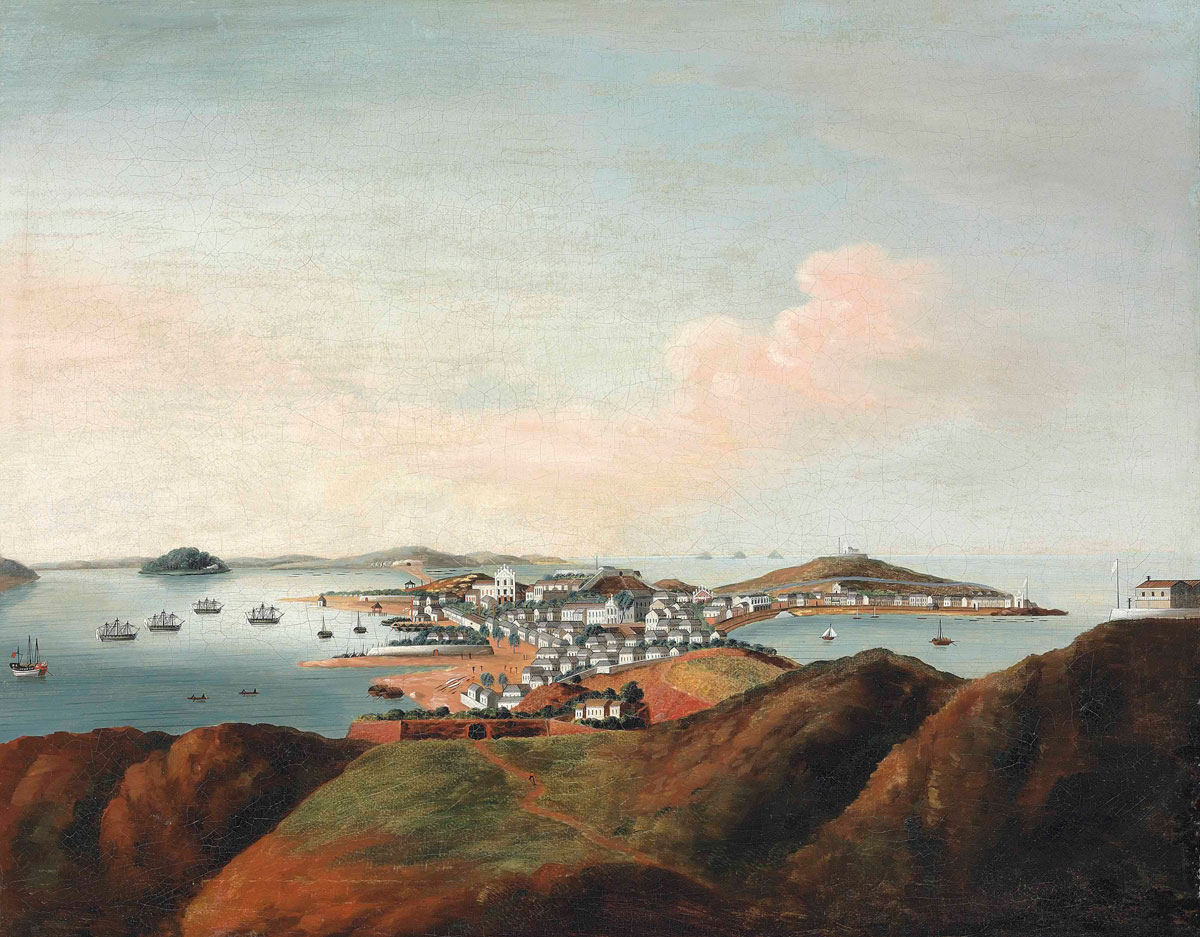
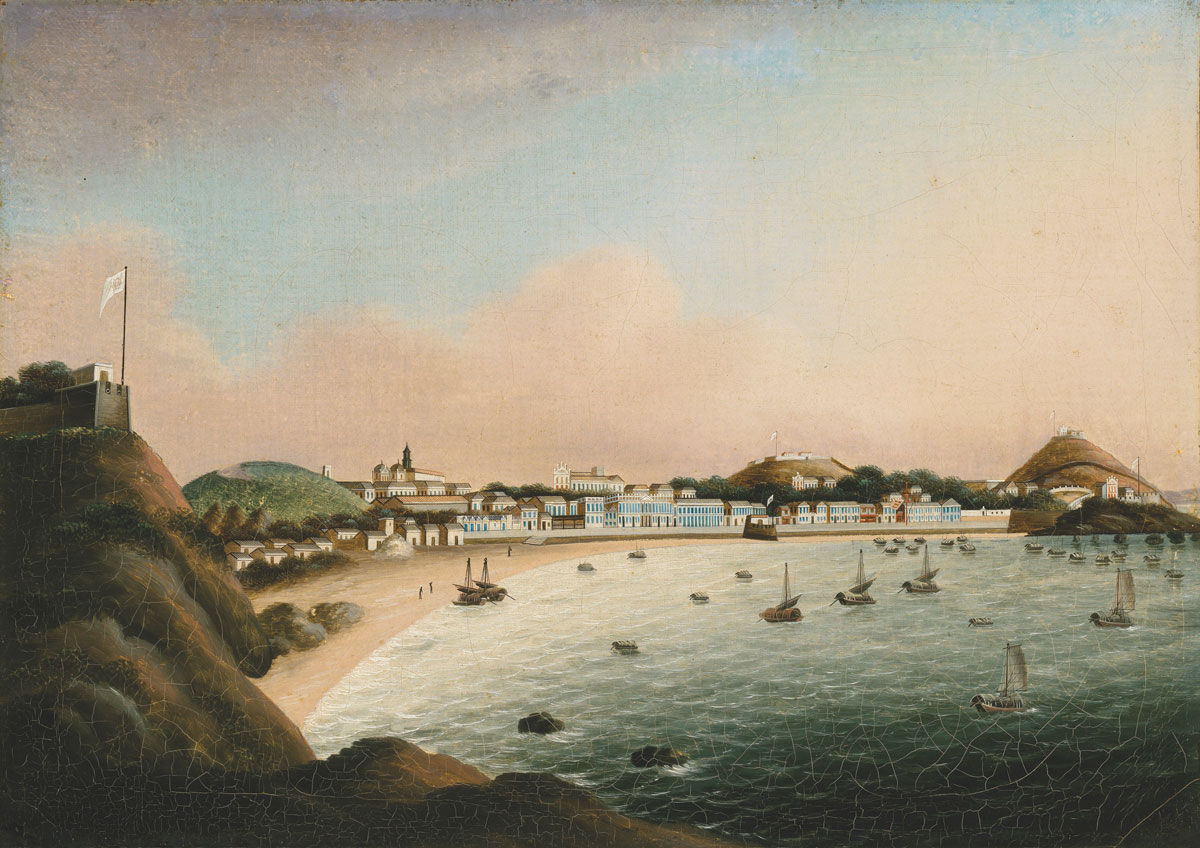
Macao was the first landfall for most Western ships, and it had been a European foothold in China for over two centuries by the time the Canton trade reached its peak. The Portuguese had settled the peninsula in the 1550s, and by the late eighteenth century it functioned as a staging ground for the China trade. Ships anchored in the harbor while their captains secured permission to proceed upriver, engaged a Chinese pilot, and arranged for a comprador to handle provisions and local logistics. Nothing about the Canton trade moved quickly, and Macao was where foreign merchants first learned that the pace of commerce here would not be set by them.
The town itself was unlike anything else on the China coast. Portuguese churches and colonial buildings lined the hills above the waterfront, their plaster facades worn by the subtropical heat. The Praya Grande, the broad curving quay along the harbor, served as Macao's public stage, where Portuguese officials, foreign traders, Chinese merchants, and sailors of every nationality crossed paths. During the off-season it also served as a refuge. Women and families were forbidden at Canton, so the small European community that gathered in Macao between trading seasons gave the place a domestic quality that the factories upriver never had.
Lintin anchorage (outer holding area)
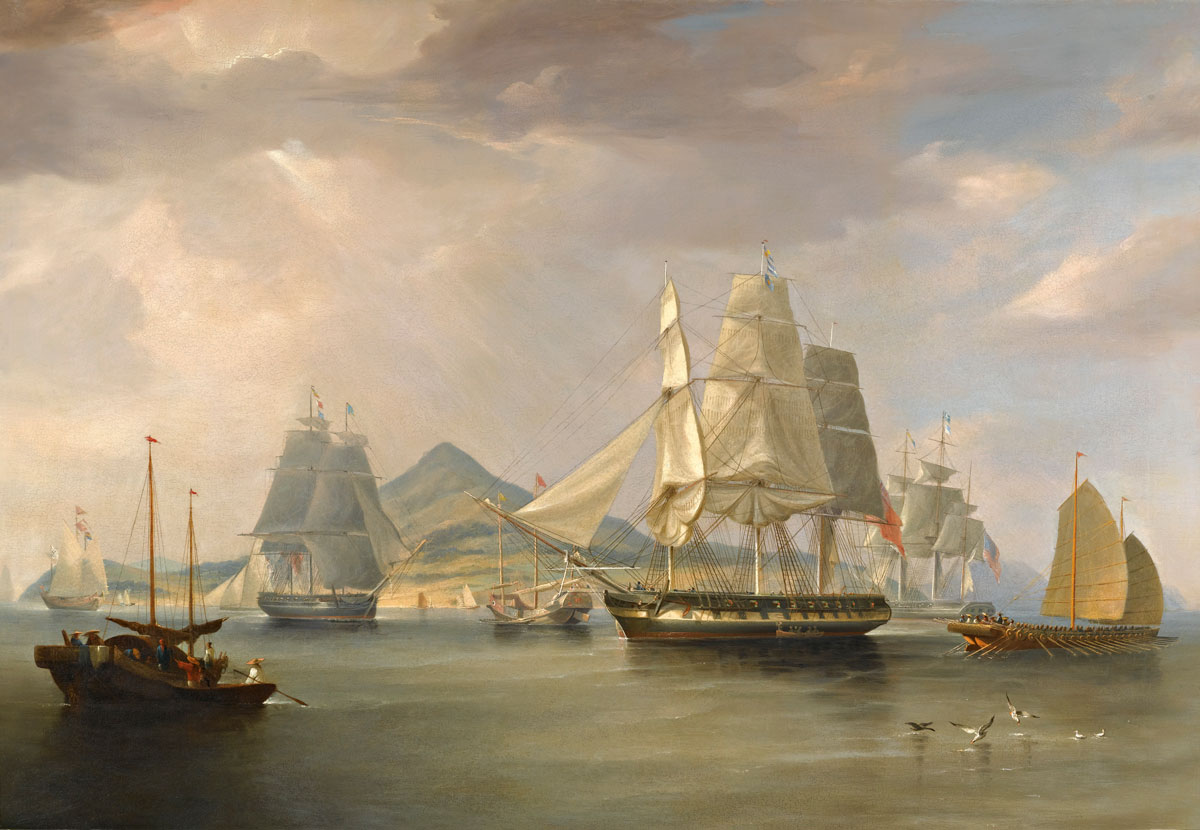
Lintin Island lies about thirty miles northeast of Macao, out in the broad waters of the Pearl River estuary. Most foreign ships stopped here on their way upriver, anchoring in the open roadstead while they waited for tides, paperwork, or word from their agents in Canton. It was not a comfortable place to linger. The anchorage was exposed, the shoreline flat and scrubby, and the island itself offered little beyond a windbreak. Some vessels, especially those carrying opium, never went further than Lintin, offloading their cargo to hulks anchored permanently offshore. But for a merchant headed to Canton, Lintin was just another delay in a journey that had already taken months.
What a crew would have noticed most was the traffic. The estuary here was busy with junks and sampans of every size, moving cargo and people between the outer coast and the river. Chinese customs boats patrolled the area, and the whole scene had a rough, working feel that contrasted sharply with the colonial elegance of Macao. Lintin offered the first real glimpse of the Pearl River trade system at work, not the version dressed up for foreign visitors, but the ordinary daily business of moving goods on the water.
Bocca Tigris (river gate)
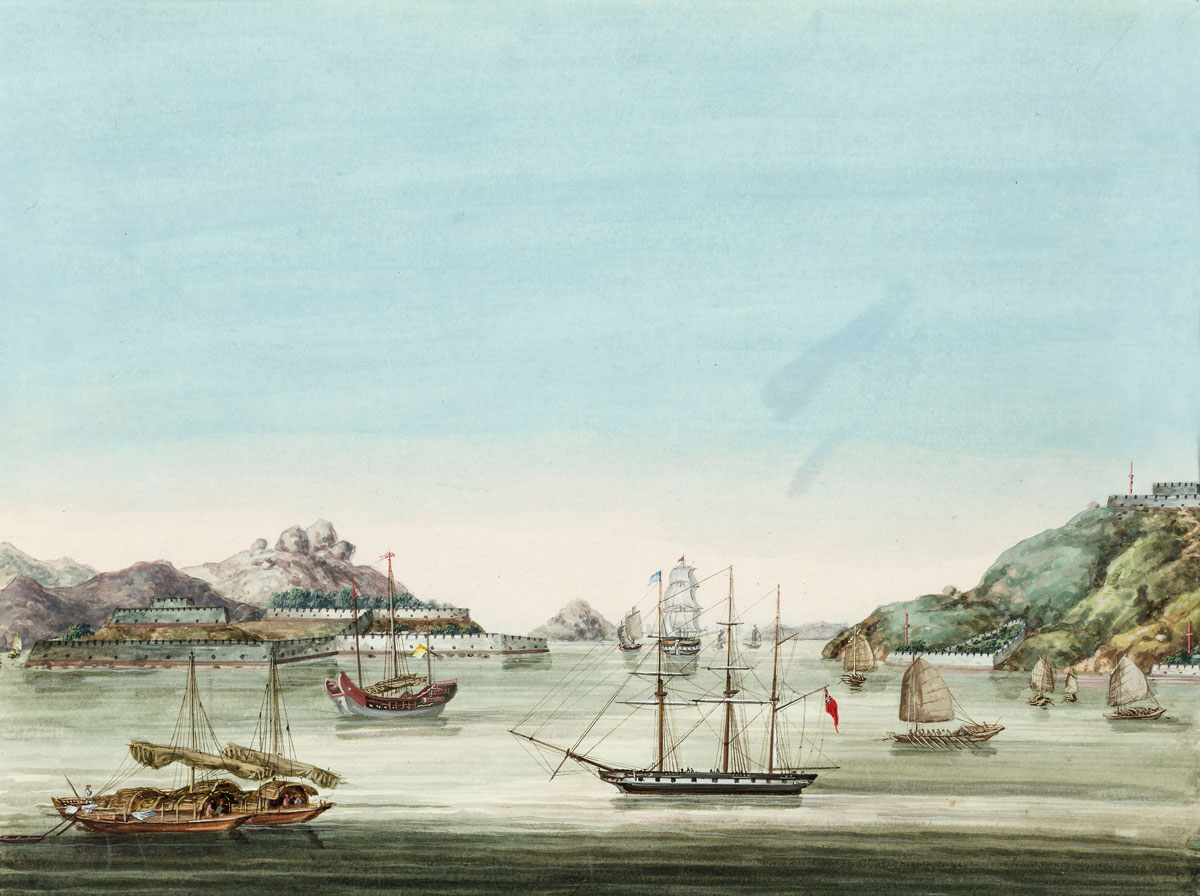
The Bocca Tigris, or Tiger's Mouth, marked the point where the Pearl River estuary narrowed into the river itself. Rocky hills closed in on both sides, and the waterway squeezed down to a passage that could be watched and controlled. The Qing government understood this perfectly well. Forts lined the heights on either bank, their cannon covering the channel, and every foreign vessel had to stop here for inspection before being allowed to continue. A mandarin boat would come alongside, paperwork would be examined, and the ship's guns were sometimes required to be surrendered or sealed. For a captain who had crossed an ocean under his own authority, this was an unmistakable reminder of whose waters he was now in.
Once through the Bocca Tigris the landscape changed. The open expanse of the estuary gave way to a river lined with green hills, cultivated fields, and small villages. Pagodas appeared on the ridgelines. The banks were busy with foot traffic and river commerce, and the foreign ship, now under the guidance of a Chinese pilot, moved through a countryside that felt densely inhabited in a way that nothing on the voyage so far would have suggested. After months at sea and weeks of delays, the river passage to Canton was finally underway.
Whampoa Anchorage (last deep-water stop for large vessels)
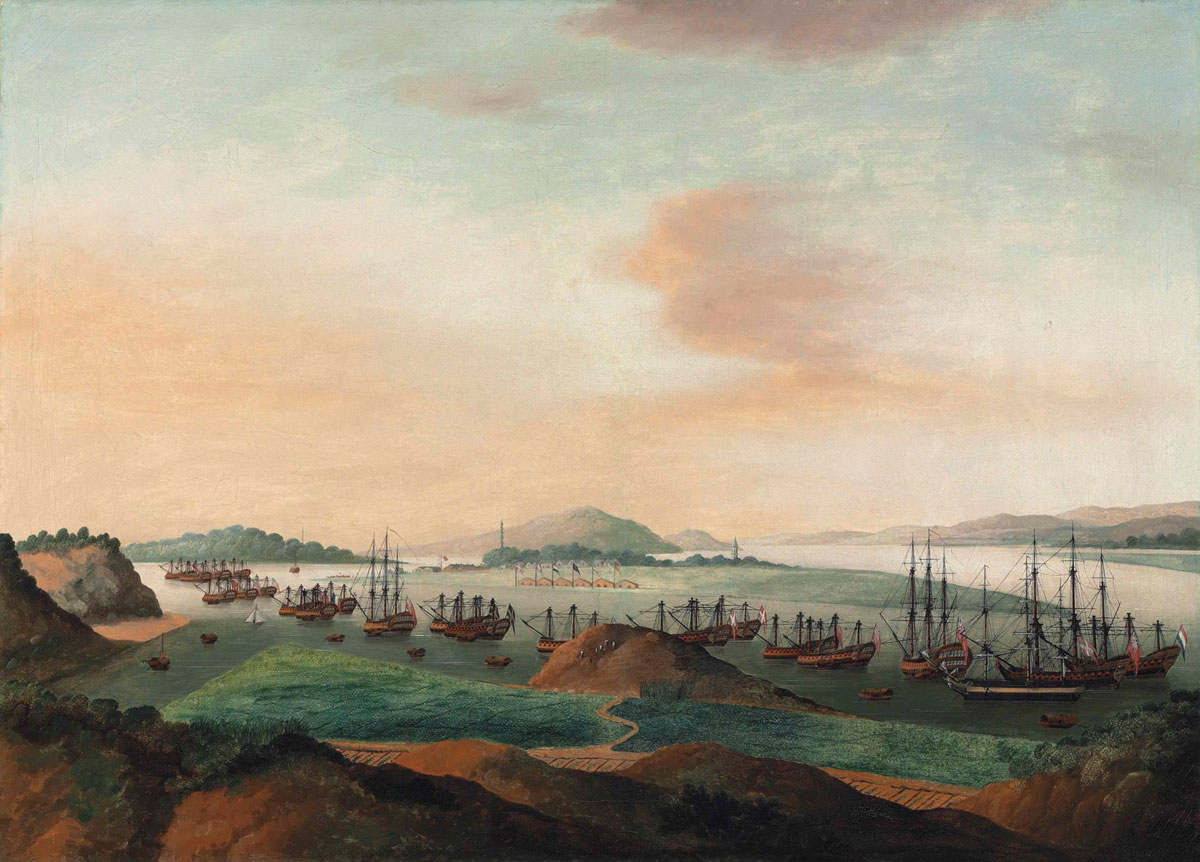
Whampoa lay about twelve miles downriver from Canton, and it was as far as any large foreign vessel could go. The river shallowed beyond this point, and the big Indiamen and American traders had no choice but to drop anchor here and wait while their cargo was transferred to smaller boats for the final leg. The anchorage was crowded. During the trading season, dozens of foreign ships might be moored in the reach at the same time, packed in alongside one another with Chinese boats of every description filling the gaps between them. Whampoa was where a ship could sit for weeks or even months while its supercargo conducted business upriver in Canton.
For the crews left behind, Whampoa was tedious and confined. Sailors were generally not permitted ashore, and the daily routine revolved around ship maintenance, lightering cargo, and taking on provisions supplied by local compradors. The surrounding area was flat and low, with rice paddies and small settlements visible from the deck. Nearby Dane's Island served as a cemetery for foreign sailors who had died at anchor or on the voyage out, a grim reminder of the toll these long trading voyages took. The officers and merchants, meanwhile, made the short trip upriver to Canton by sampan or chop boat, leaving the ship and its crew behind.
Whampoa to Canton (by smaller craft)
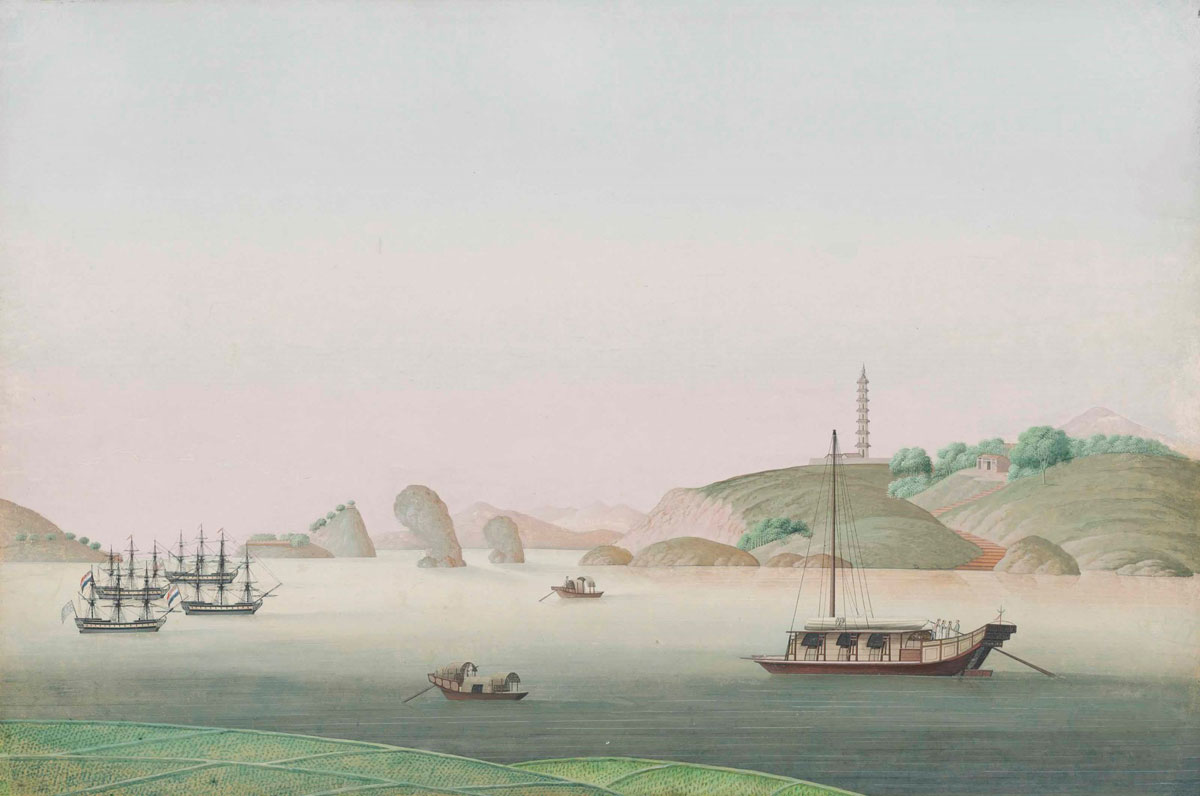
The final stretch from Whampoa to Canton was made by sampan or chop boat, smaller craft that could navigate the shallowing river. For a merchant making this trip for the first time, it was the most vivid leg of the entire journey. The river narrowed and the traffic thickened. Cargo boats, passenger ferries, floating kitchens, and houseboats jostled for space on the water, and the banks grew steadily more built up as Canton drew closer. The noise alone was something new after months aboard a sailing ship: shouting boatmen, livestock, temple bells, the clatter of goods being loaded and unloaded at every landing.
The river life here was its own world. Entire families lived and worked on their boats, and the waterway carried a permanent floating population alongside the commercial traffic. For the foreign merchant sitting in the back of a hired boat, it was an overwhelming introduction to the scale and density of Chinese life along the Pearl River. By the time the boat rounded the final bend and the foreign factories came into view, the journey from open sea to crowded river was nearly over.
The Thirteen Factories (trade district)
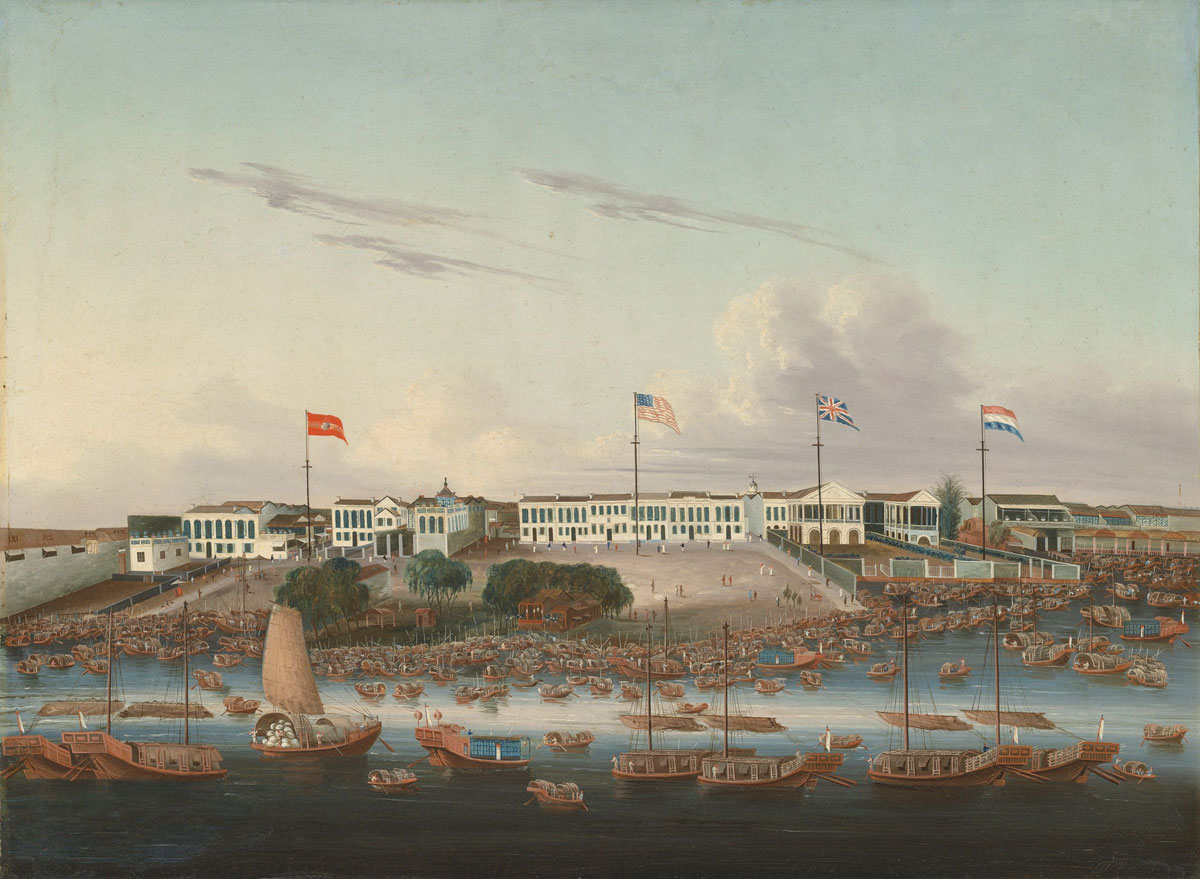
The Thirteen Factories were a narrow strip of buildings along the Canton waterfront, wedged between the river and the walls of the Chinese city. This was the only place where foreign merchants were permitted to live and conduct business, and the compound was small enough that a person could walk its length in a few minutes. Each "factory" was not a manufacturing site but a trading house, known by the flag of the nation it served: the British, Dutch, French, American, Swedish, and others each had their own hong. Inside these buildings, merchants negotiated with their Chinese counterparts, the hong merchants licensed by the Qing government to handle all foreign trade.
Life in the factories was tightly regulated. Foreigners could not enter the walled city, could not bring women into the compound, and could not travel freely beyond a small garden area in front of the buildings. Business was conducted through the hong merchants, who acted as both trading partners and guarantors of foreign behavior. Despite these restrictions, enormous quantities of tea, silk, porcelain, and silver passed through this tiny strip of riverfront every trading season. The factories were noisy, crowded, and alive with commerce conducted in pidgin English and broken Cantonese. For all the months of travel it took to get here, the actual stage on which the Canton trade played out was remarkably small.
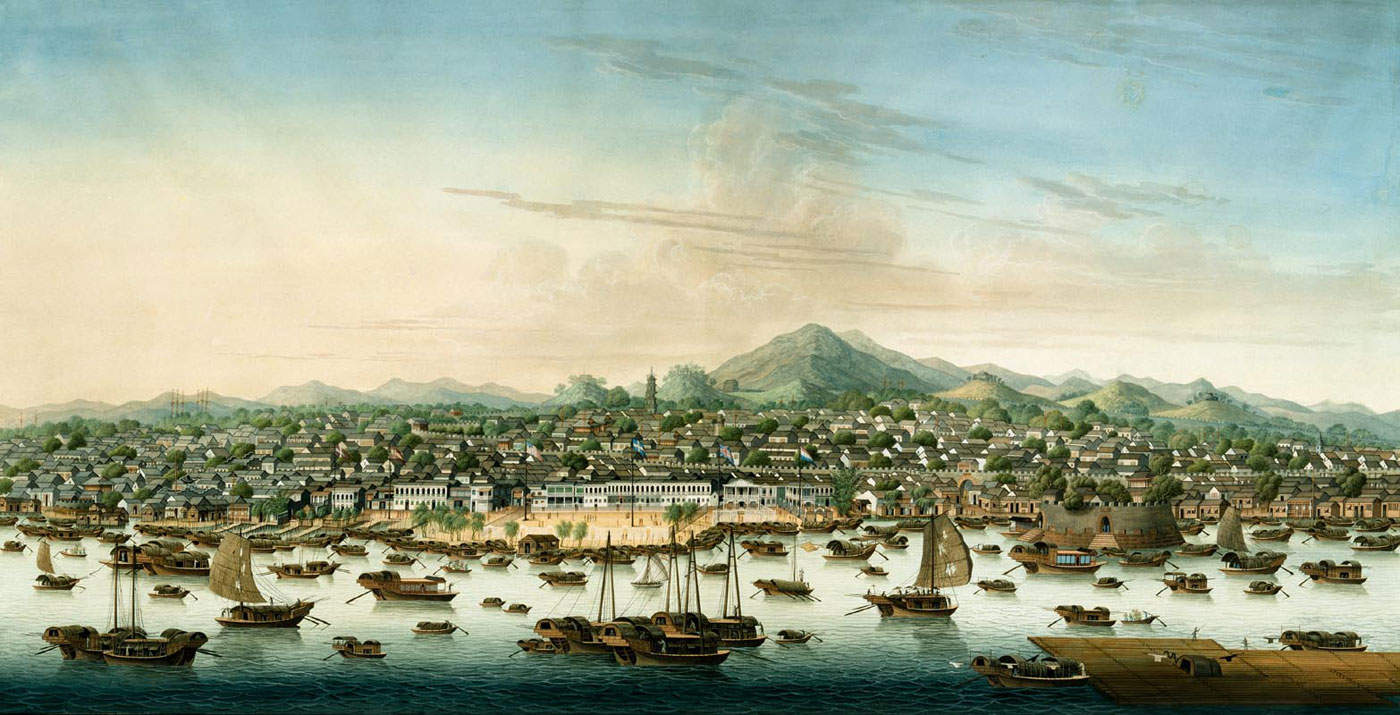
The journey from the open waters of the South China Sea to the Canton waterfront could take weeks or even months, depending on the season, the weather, and the patience of Qing officials. At every stop along the way, foreign merchants gave up a little more control, submitting to inspections, pilots, regulations, and restrictions that grew tighter as the river narrowed. Yet they kept coming, year after year, because the trade was worth it. Foreign silver, mostly Spanish and Mexican dollars, flowed into Canton to pay for tea, silk, and porcelain, and the coins that survived this journey are what we now treasure in our collections today. The goods and silver that moved through this corridor shaped markets on both sides of the world, and for nearly a century the Pearl River Delta was the only door through which they could flow.