Specifications:
approx. 6.77 g, .917 fine silver, .199 troy oz (actual silver weight)
Details:
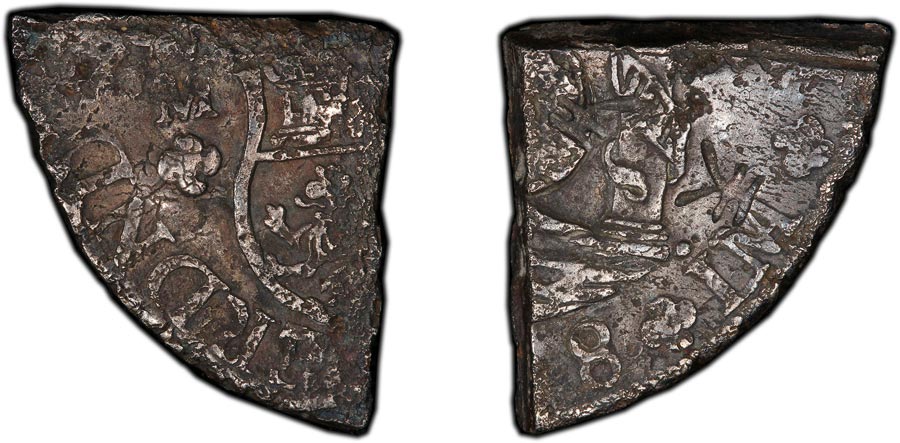
The practice of cutting 8 reales into fractional pieces was common in regions where small change was scarce, and a quartered piece circulating as 2 reales
reflects a practical solution to a familiar problem of the time.
The Chinese chopmarks show that the coin circulated within Chinese or China-facing trade networks, tying it to the commercial systems of Southeast Asia and
southern China. Their presence confirms that the piece, whether still whole or already cut, was accepted for use within those markets and moved beyond purely
local circulation. The original host coin is surprisingly identifiable, being the only quarter segment showing enough of the date, mint mark, monarch, and
assayer to permit a unique attribution.
Its reported recovery from the Musi River near Fort Kuto Besak situates the piece within the Dutch East Indies trade sphere, a major conduit for Spanish American
silver moving between the Indian Ocean and the South China Sea. Palembang was a significant regional port connected to VOC commerce and Chinese merchant communities,
making it a plausible waypoint for silver that had already been fractioned and accepted in trade. As a cut, chopmarked Lima coin recovered in this context, it stands
as a tangible record of global silver movement, from Peru to Southeast Asia, through Chinese validation, and into localized monetary use.
Fort Kuto Besak, constructed beginning in 1780 and inaugurated in 1797, was the seat of the Palembang Darussalam Sultanate in its final decades before the Dutch
annexed the city in 1821. Strategically positioned on a river-bounded island formed by the Musi, Sekanak, Kapuran, and Tengkuruk rivers, the fort controlled access
to Palembang's inland and maritime trade routes and later served as a Dutch administrative post, placing it within the VOC commercial network that handled large
quantities of Spanish American silver. This setting provides credible historical context for the coin's presence in the Musi River.
Notable chopmarks:
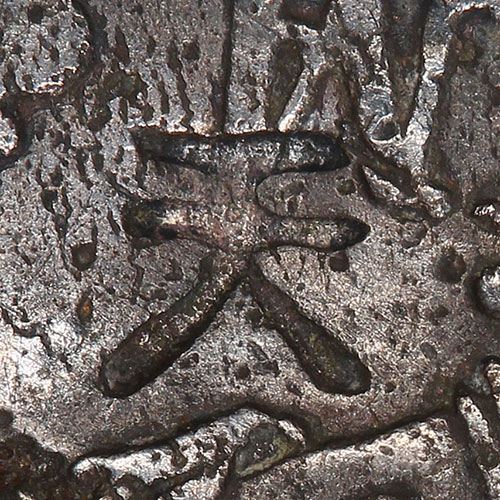 天 - tiān - heaven, sky, day
Provenance:
Purchased on eBay in February 2015 from a seller in India.
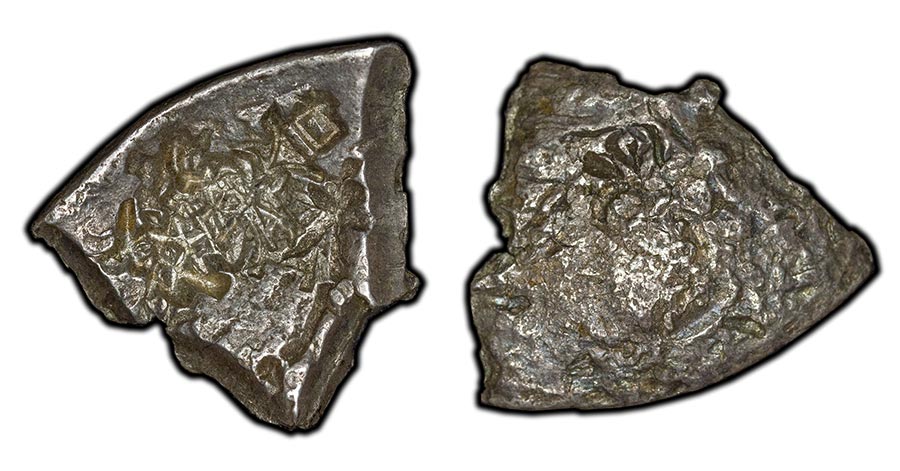
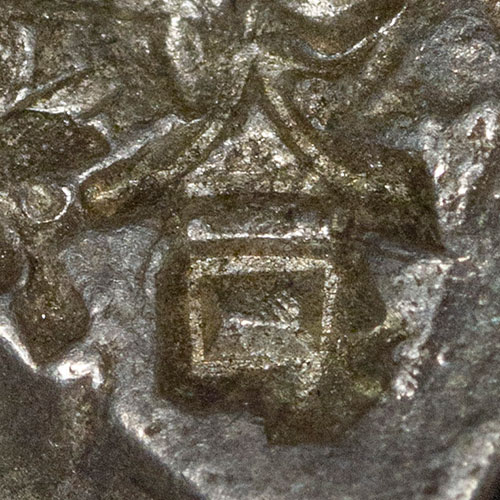 合 - hé - combine, join, close, suit
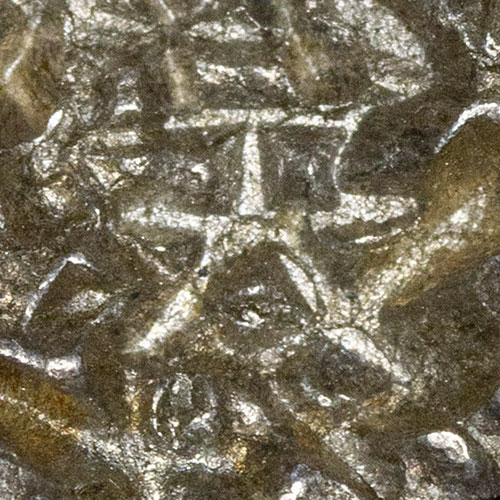 天 - tiān - heaven, sky, day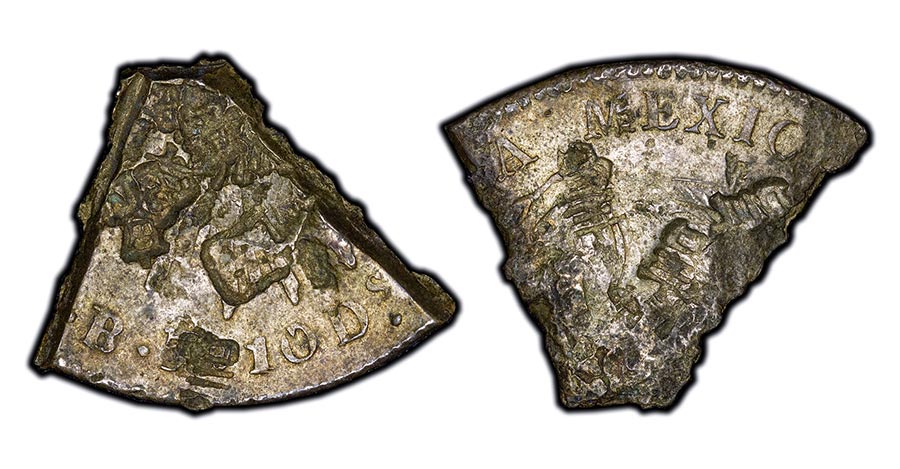
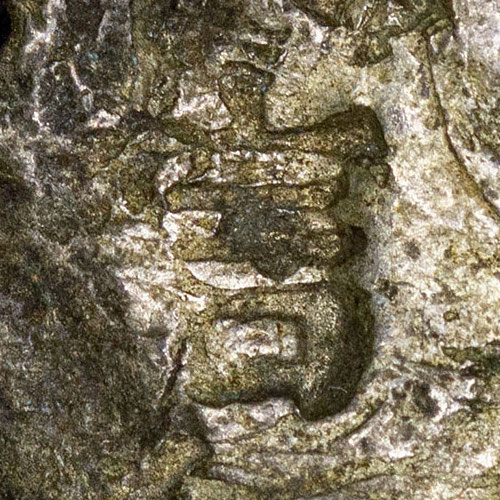 言 - yán - to say, speak, discuss, comment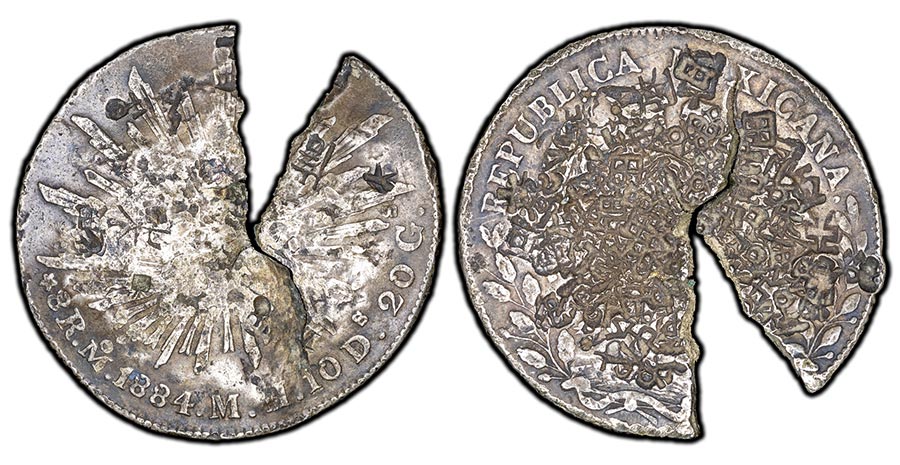
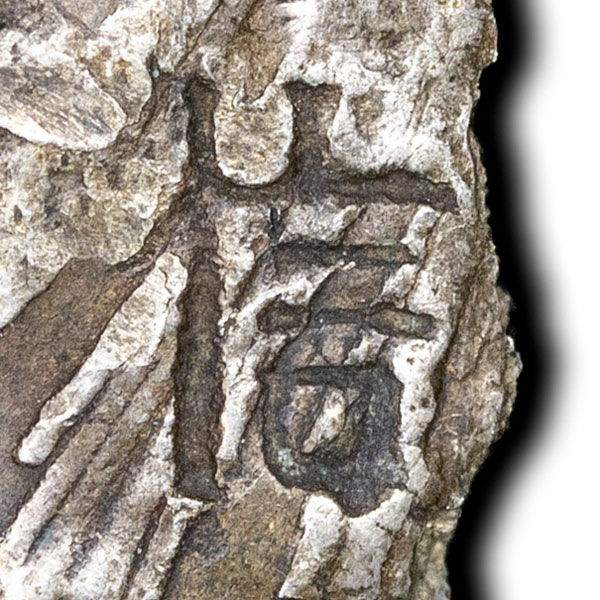 信 - xìn - trust, letter, believe
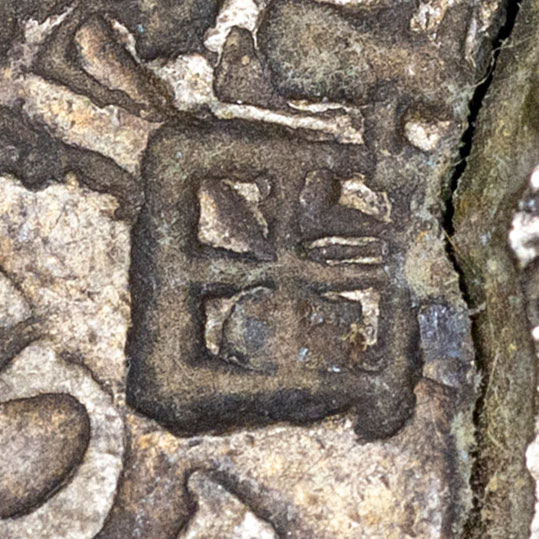 田 - tián - field, farmland
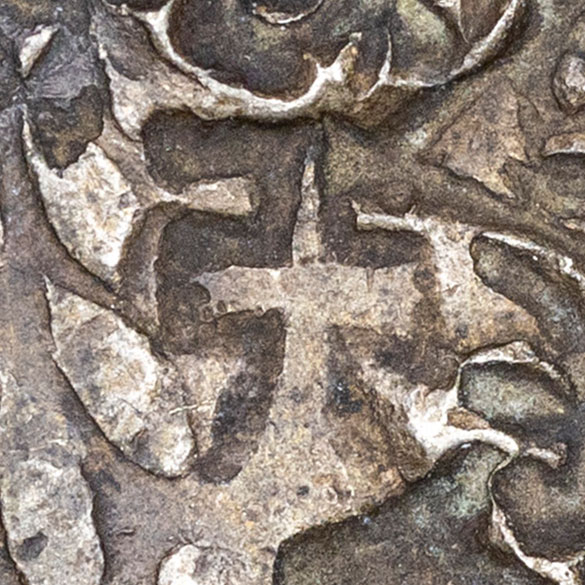 戼 - (variant of 卯) mǎo - 4th earthly branch
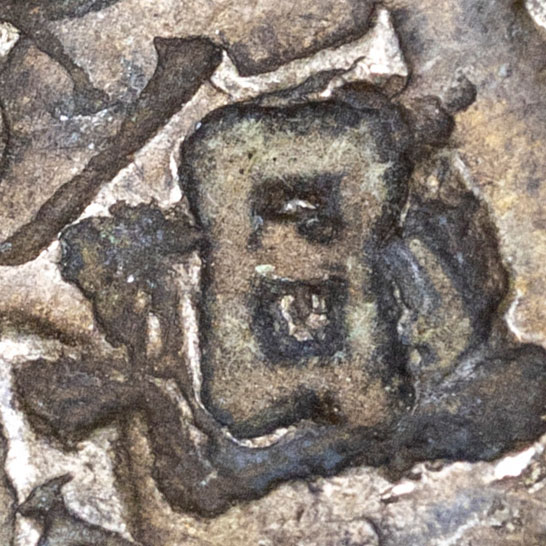 日 - rì - sun, day