1889 Mauritius 20c
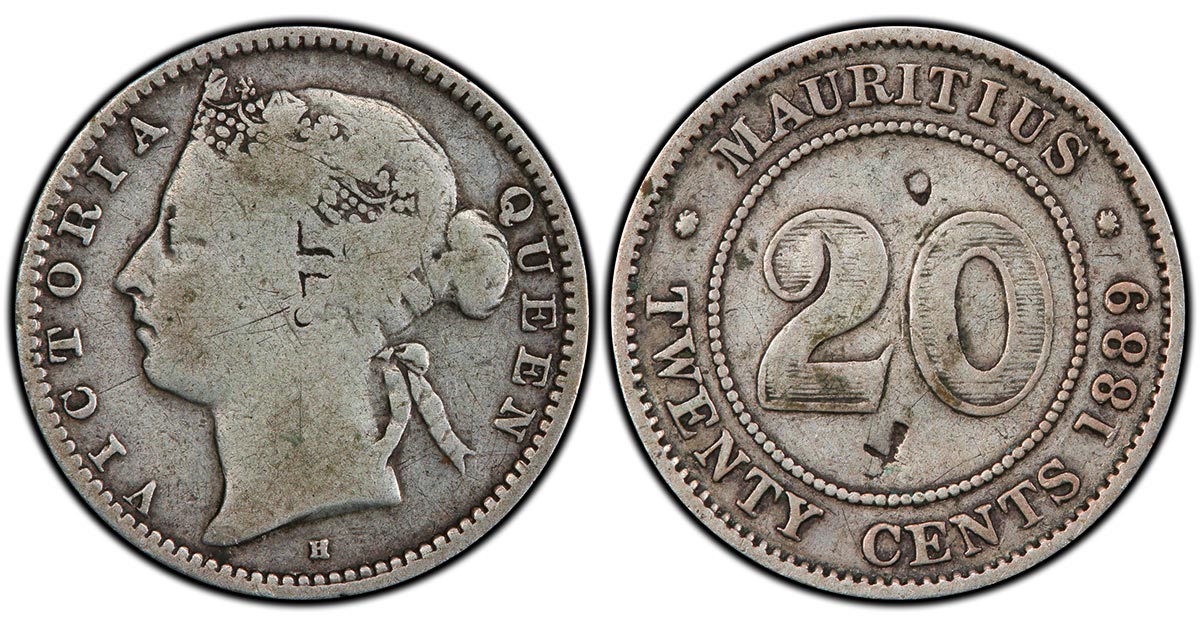
Specifications:
2.33 g, .800 fine silver, .060 troy oz (actual silver weight)
Recorded mintage: 125,000
Catalog reference: KM 11.1
Details:
The 1889 Mauritius 20 Cents, London (Royal Mint) mint, was struck with a weight of 2.33g and a fineness of .800, with a mintage of 125,000. The obverse features the "Jubilee Head"
portrait of Queen Victoria (1887–1893) facing left, with the legend "VICTORIA QUEEN". The reverse displays the denomination "TWENTY CENTS" within a circular border, flanked by
stylized ornaments, with the legends "MAURITIUS" and the date "1889" at the periphery. This type was part of a decimalized rupee system introduced in 1877 to stabilize the currency
of the colony, replacing a chaotic circulation of Indian Rupees and British Sterling.
Mauritius served as a strategic maritime station for the British Empire following the opening of the Suez Canal (1869), acting as a link between European markets and the Indian Ocean. The island's economy during the late 19th century was heavily dependent on the export of sugar, and the colonial administration issued these fractional silver pieces to facilitate local transactions and plantation wage payments. The choice of .800 silver standard for these lower denominations was a deliberate move to prevent the mass exportation of small change, ensuring a steady supply of currency for the local population during the 1880s economic expansion.
While primarily intended for domestic use, this type is documented by Gullberg as a "very rarely chopmarked" coin that occasionally entered the China trade. Its presence in the East was likely the result of maritime movement along the trade routes between the Indian Ocean and the Pacific treaty ports. Unlike the standard trade dollars, these small 20-cent pieces were not a staple of the silver flow into China.
Notable chopmarks:
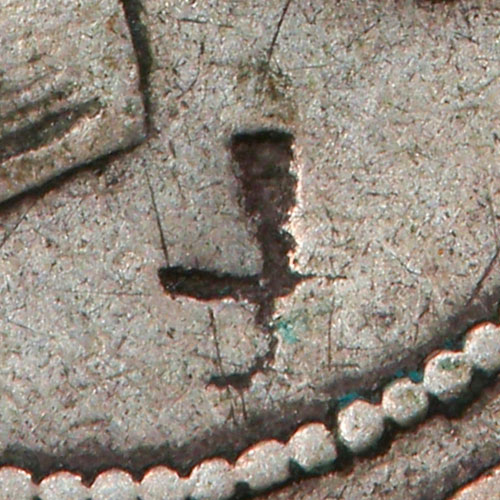 士 - shì - scholar, gentleman, soldier
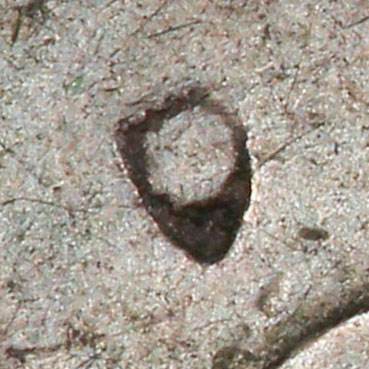 Small partial chopmark
Provenance:
Purchased on eBay in October, 2019 from a seller in Santa Maria, Philippines.