1871-R Guatemala Peso
Specifications:
25.00 g, .900 fine silver, .723 troy oz (actual silver weight)
Recorded mintage: 72,616
Catalog reference: KM 190.1
Details:
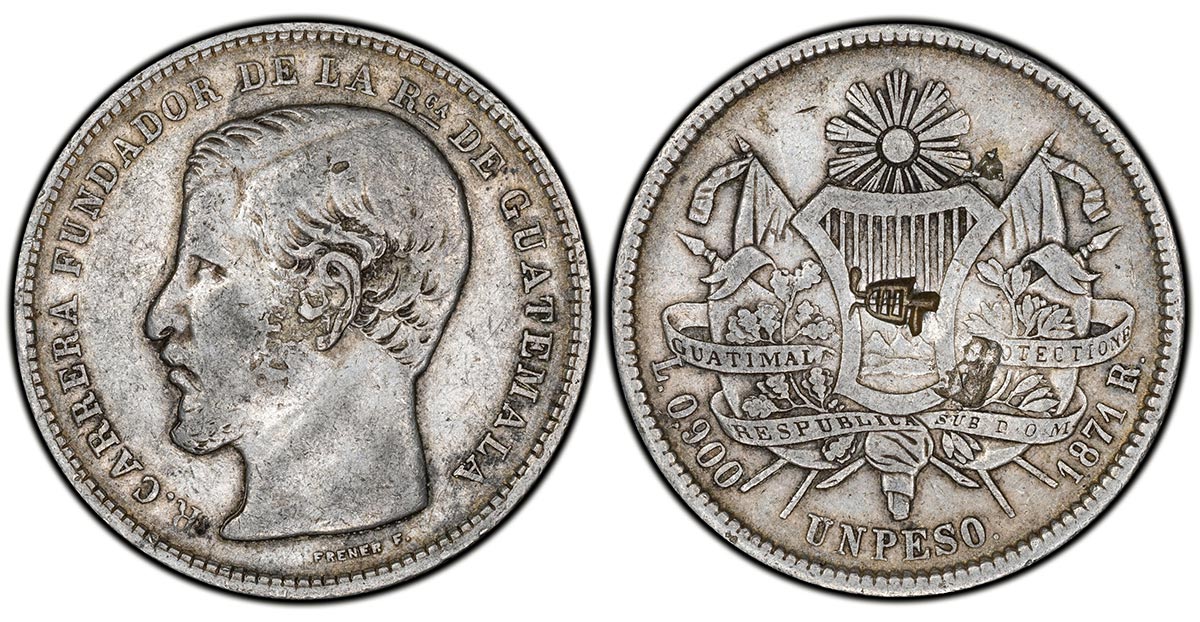
The 1871-R Guatemala Peso was struck at the Casa de Moneda de Guatemala and belongs to a type minted from 1869 to 1871. The coin contains 25.0g, .900 fine silver, approximately
92.6% of the standard Spanish 8 Reales, with a mintage of 72,616 pieces. The obverse features a left-facing bust of Rafael Carrera with the legend "R. CARRERA FUNDADOR DE LA
RCA. DE GUATEMALA" (R. Carrera, Founder of the Republic of Guatemala). Below the bust, the engraver's name "FRENER F." (Johann-Baptist Frener) is visible. The reverse displays
the national coat of arms with the legend "L. 0.900 UN PESO. 1871 R.", where the "R" denotes the assayer, Rafael Romaña.
This issue coincided with the collapse of the conservative era during the Liberal Revolution of 1871. As documented in Brian Stickney’s A Monetary History of Central America, the regime of Rafael Carrera, whose likeness remained on the coinage for six years following his death, was finally ousted by liberal forces under Miguel García Granados and Justo Rufino Barrios. This Peso represented an ambitious attempt to align Guatemala with the Latin Monetary Union (LMU) by adopting the 25-gram standard. However, the subsequent political reorganization led the new government to abandon these international standards, eventually reverting to the traditional, heavier "Real" system and making these LMU-standard pesos a short-lived numismatic experiment.
This type is rare with chopmarks, in fact this is the only chopmarked example of this type I know of. While Central American silver was frequently exported as bullion, the 1871 pesos were produced in relatively small quantities and many were withdrawn or melted during the subsequent monetary reforms following the revolution. The presence of a chopmarked 1871-R indicates that the coin managed to exit the volatile Central American political landscape, likely through the Pacific port of San José. From there, it would have been carried by merchant vessels to San Francisco or directly across the Pacific to the treaty ports of China, where it circulated alongside the more dominant Mexican and Spanish trade dollars.
The coin shows one drill mark and two large chopmarks on the dated side of the coin.
Notable chopmarks:
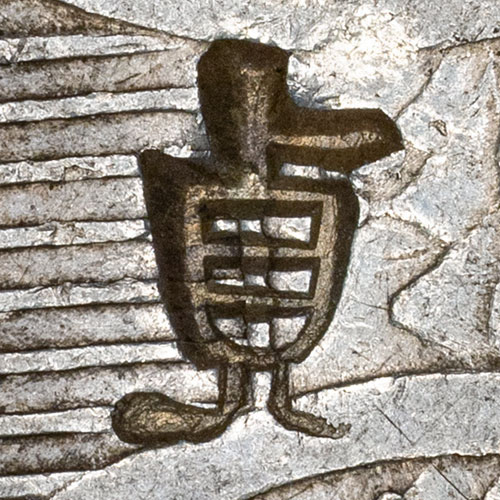
 - Liushutong script variant of 貞 - zhēn - virtuous, chaste
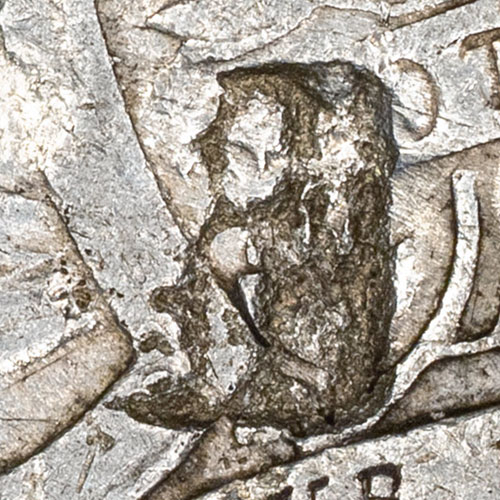 Partial chop
Provenance:
Purchased via private sale from Brandon Ge, a California dealer who sources coins directly from China, September 2025