1870-CC United States Seated Dollar, Carson City, Nevada Mint
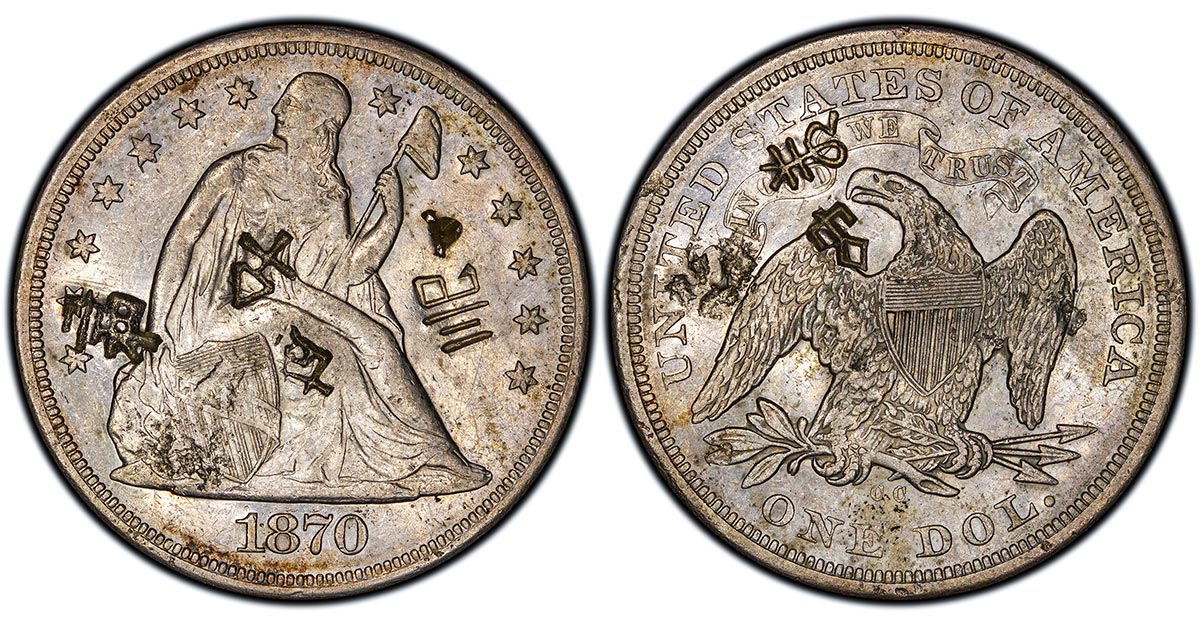
Specifications:
26.73 g, 0.900 fine silver, 0.7734 troy oz (actual silver weight)
Recorded mintage: 12,462
Catalog reference: PCGS #6964
Details:
The 1870-CC Seated Liberty Dollar was struck at the newly established Carson City Mint in Nevada and belongs to a type minted from 1840 to 1873. The coin contains 26.7g,
.900 fine silver, approximately 98.4% of the standard Spanish 8 Reales. The mintage for this specific date and mint was 12,462 pieces, marking it as a significant rarity
within the series. The obverse features the Christian Gobrecht design of Liberty seated on a rock, holding a staff topped with a Phrygian cap, while the reverse depicts
an eagle clutching an olive branch and arrows. The legend "UNITED STATES OF AMERICA" and the denomination "ONE DOL." surround the eagle, with the distinctive "CC" mintmark
positioned below.
The political and economic context of this coin is inextricably linked to the American "Wild West" and the discovery of the Comstock Lode. The Carson City Mint was established specifically to convert Nevada’s massive silver deposits into coinage, reducing the need to transport bullion over the Sierra Nevada mountains to San Francisco. At the time of mintage, the United States was navigating the post-Civil War Reconstruction era and debating the future of the silver standard. Numismatically, the Seated Dollar was a "heavy" unit intended for domestic use and international settlement, though much of the silver from the Comstock would eventually be diverted to the production of the Trade Dollar in 1873 intended to compete in the markets of East Asia.
This type is rare with chopmarks. The Seated Liberty Dollar did not reach the Far East in nearly the same quantities as the US Trade Dollar. Most 1870-CC dollars remained in the American West or were lost to the melting pot following the Specie Payment Resumption Act. This coin likely reached the China coast via the port of San Francisco, perhaps carried by a merchant or a returning laborer involved in the burgeoning trans-Pacific trade between the American West and the Pearl River Delta.
Notable chopmarks:
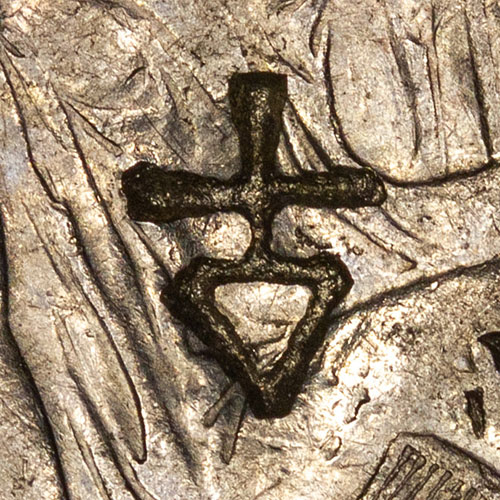 古 - gǔ - ancient, old
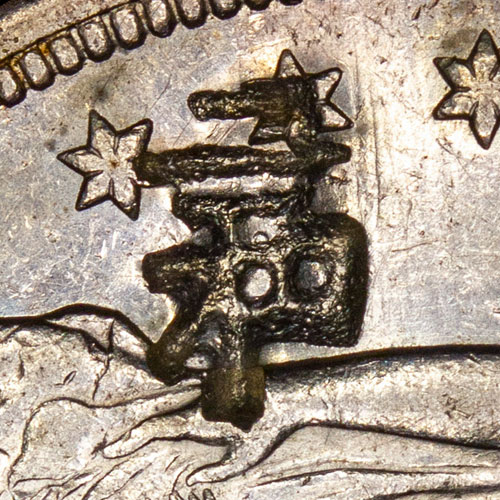 和 - hé - harmony, peace, and
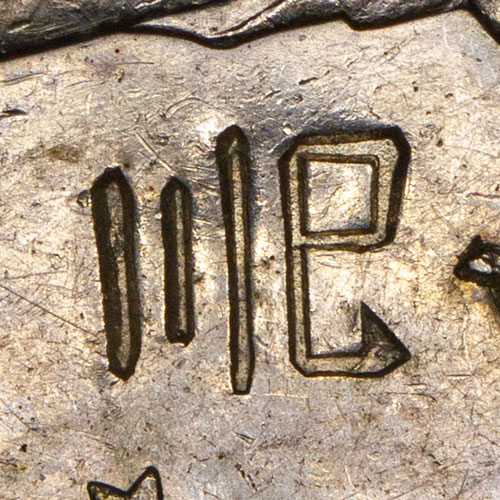 Combination of 川 and 巳 - unknown meaning
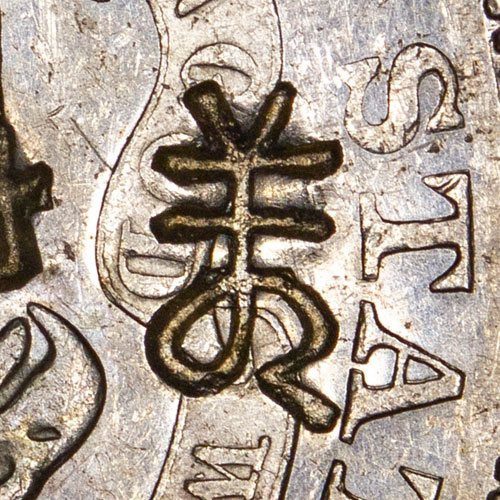
 - Cursive (Caoshu) script variant of 羊 - yáng - a sheep, surname Yang
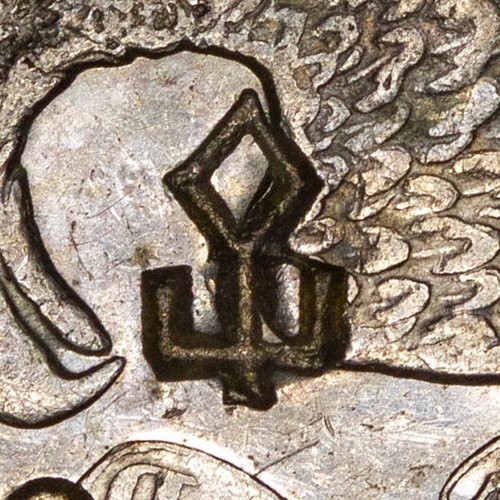 Possibly 旵 or 仚 or 屳
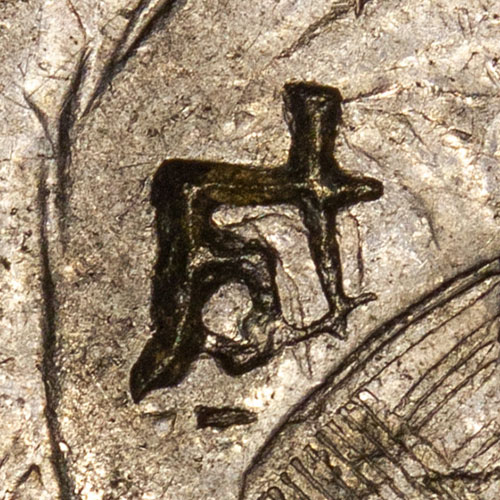 成 - chéng - accomplish, become, complete
Provenance:
Purchased from New York dealer Andy Lustig in November 2019