1839/7-NG MA/BA Central American Republic 8 Reales (9/7 overdate, MA/BA over-assayer) (Ex. Waddell)
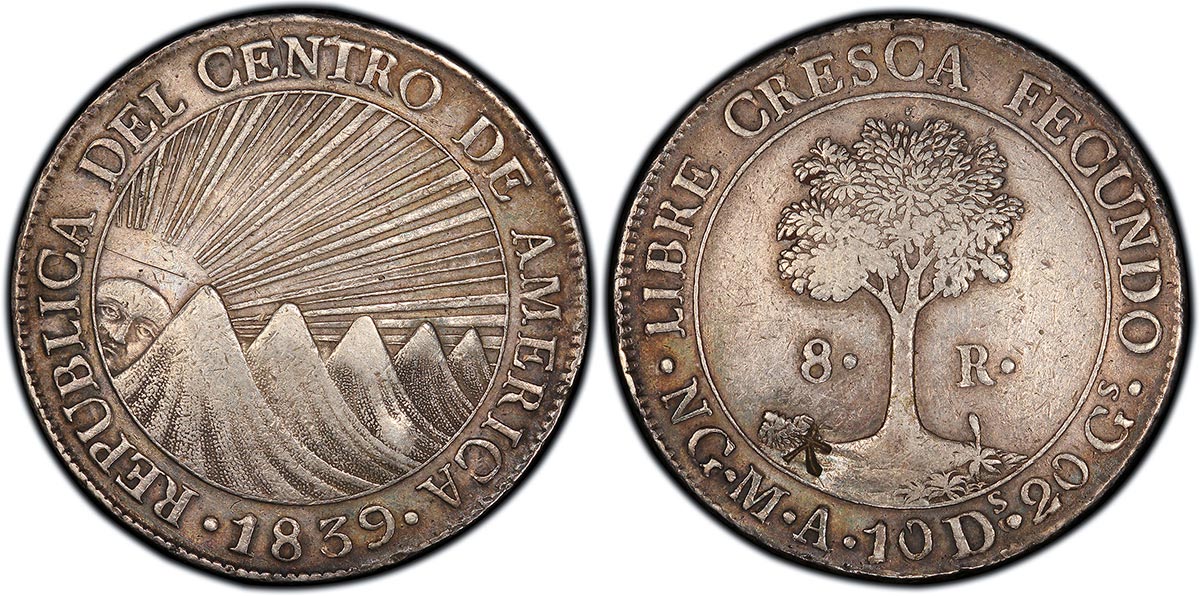
Specifications:
27.07 g, .903 fine silver, .786 troy oz (actual silver weight)
Recorded mintage: unknown, but not a rare date
Catalog reference: KM 4
Details:
The 1839-NG MA (Manuel Muñoz) Central American Republic 8 Reales (KM-4) is a crown-sized silver piece struck at the Nueva Guatemala mint, part of the long-running 8-reales
series dated 1824–1847. It follows the familiar Spanish-dollar spec, with the fineness expressed in the old colonial style (10 Ds 20 Gs, i.e., 10 dineros 20 granos) and a
weight around 27.07 g, .880 fine. The design is distinctive: a radiant “sun-face” above a range of volcanoes on one side, and a ceiba tree with the denomination and date
on the other, surrounded by the motto LIBRE CRESCA FECUNDO (“Grow Free and Fertile”). The silver feeding the Guatemala mint in this period would have come from a mix of
regional bullion, with some mining activity in Honduras, and the practical recycling/remelting of older Spanish-American silver taken from local circulation.
The Central American Republic, more formally the United Provinces / Federal Republic of Central America, was a short-lived federation formed in 1823 after the former Captaincy General of Guatemala broke away from both Spain (1821) and the First Mexican Empire. It attempted to unite five member states, Guatemala, El Salvador, Honduras, Nicaragua, and Costa Rica, under a federal constitution adopted in 1824, with power divided between state governments and a weak central authority. From the outset the federation was strained by regional rivalries and recurrent conflict between liberal federalists and conservative centralists, culminating in civil wars and successive secessions; by 1838–1841 the member states had effectively withdrawn and the federation collapsed into the separate republics that followed.
Chopmarked examples are uncommon but documented. Gullberg noted: a Taiwan shroff handbook recorded the type with the nickname: “sun’s shadow 88 silver” - likely a reference to the .880 fineness, evidence that at least some pieces did, in fact, enter the China trade. When they did, the route was likely indirect: carried as recognizable crown-silver through Pacific and entrepôt channels rather than as a purpose-made China-trade coin, and then treated on its silver the same way as other “foreign money” once it crossed into those circuits.
Very rare with chopmarks, Gullberg estimates 6-10 known.
Notable chopmarks:
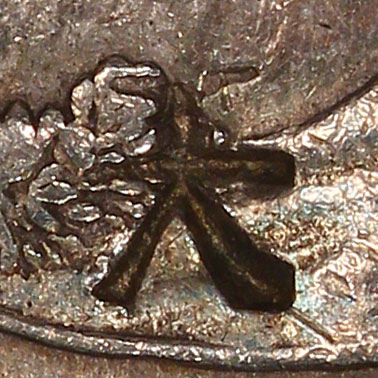 天 - tiān - heaven, sky, day
Provenance:
From the Ron Waddell Collection
Purchased from Ron via private sale in June 2016
Ex: Michigan State Numismatic Society's 46th Anniversary & Spring Convention Public & Mail Bid Sale, Craig A. Whitford Numismatic Auctions May 10-11, 2002 Lot #158
Auction Description:
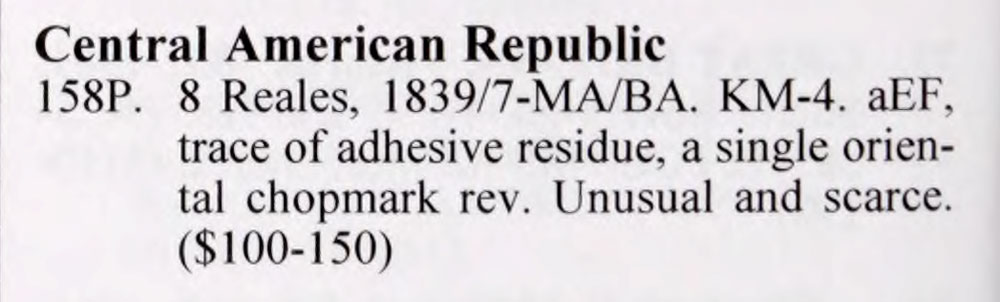
Central American Republic, 8 Reales, 1839/7-MA/BA. KM-4. aEF,
Trace of adhesive residue, a single oriental chopmark rev, unusual and scarce. ($100-150)
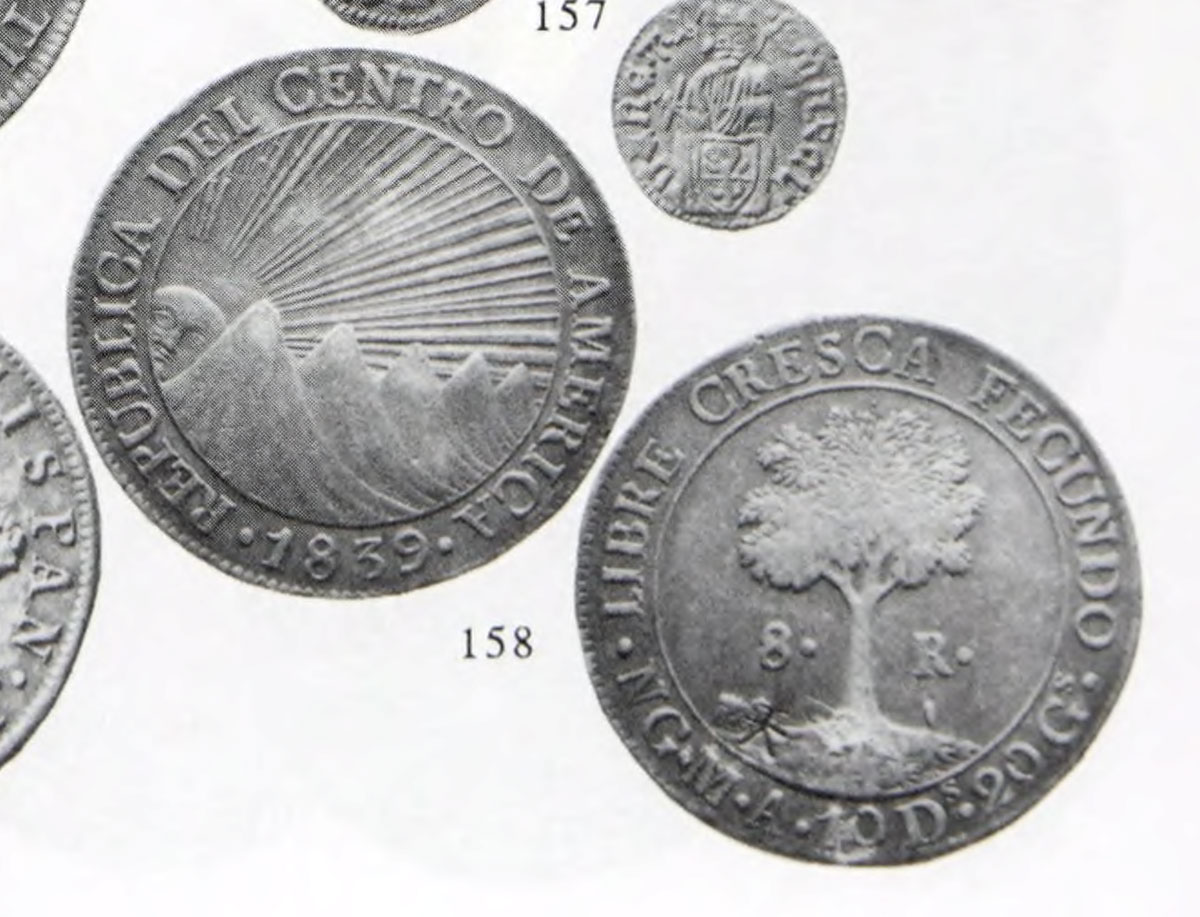
Featured as the plate coin in Gullberg's Chopmarked Coins - A History, p.49