1817 Russia Alexander I Ruble
Specifications:
20.73 g, .868 fine silver, .5785 troy oz (actual silver weight)
Recorded mintage: 11,775,000
Catalog reference: KM C130, Dav-281
Details:
The 1817 Russian ruble, struck under Alexander I (1801–1825), belongs to the standard imperial silver coinage of the early nineteenth century, issued in the aftermath of the
Napoleonic Wars as Russia reaffirmed a stable silver-based currency. The type was struck for a number of consecutive years with a consistent design and monetary standard,
primarily at the St. Petersburg mint, and was intended for domestic circulation and state payments rather than overseas trade. With a standard of approximately 20.73 grams of
.868 fine silver, the ruble contained less total silver than a contemporary Spanish 8 reales, but remained substantial enough by weight to be readily assessed and accepted as
bullion in markets accustomed to evaluating crown-sized foreign silver.
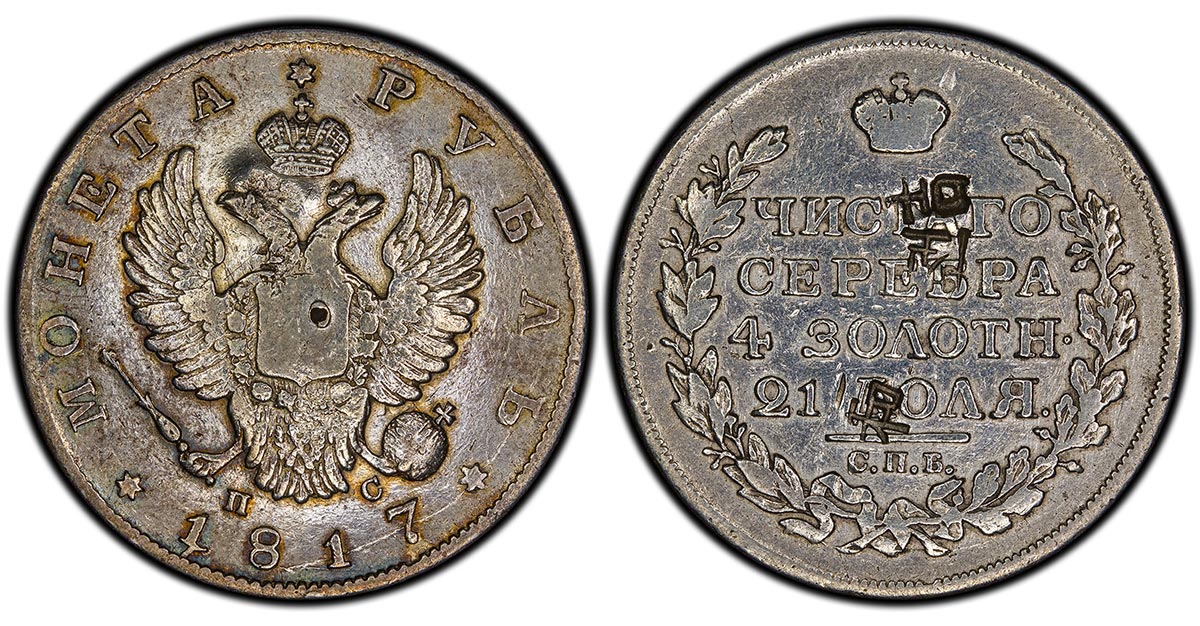
The 1817 Russian ruble (KM C130; Dav-281) employs the eagle-type design, with the crowned double-headed imperial eagle occupying the obverse, holding orb and scepter as symbols of imperial authority, with the date placed below. The reverse presents a crown above a multi-line Cyrillic inscription stating the denomination РУБЛЬ (“ruble”) and issue formula, enclosed within a laurel wreath tied at the base, with mint and official letters incorporated into the reverse layout.
Russian silver entered China through a distinct pathway from the maritime trade that carried Spanish American and later Mexican dollars to the southern ports. Overland commerce between Russia and Qing China was regulated through frontier exchange systems centered on Kyakhta and related routes, where silver functioned as a settlement medium in trade involving tea, furs, and manufactured goods. Within these networks, coins circulated by weight and assay, and unfamiliar foreign pieces were subject to testing before acceptance. While Russian rubles are documented in this context, they appear far less frequently than Spanish or colonial crowns, reflecting both the geographic limits of their distribution and the specialized nature of Sino-Russian trade.
Chopmarked Russian silver remains exceptionally rare in the numismatic record. In Chopmarked Coins – A History, Colin Gullberg records only two authenticated examples of chopmarked Russian coins, both from the F. M. Rose collection, underscoring how infrequently Russian imperial silver entered commercial environments where chopmarking was practiced. This rarity aligns with the fact that most rubles reaching China did so through controlled overland channels rather than open maritime bullion flows. An 1817 ruble bearing Chinese chopmarks represents an unusual intersection between Russian imperial coinage and Chinese merchant validation practices.
Notable chopmarks:
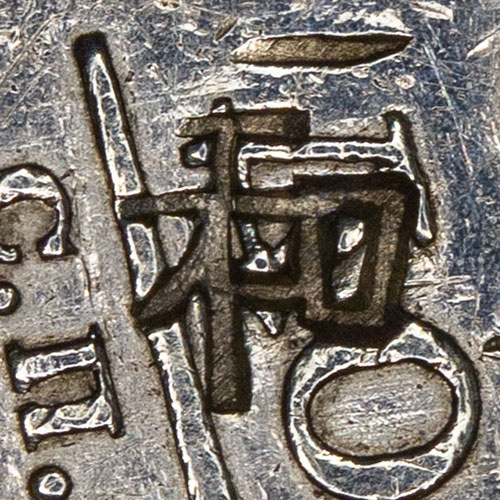 和 - hé - harmony, peace, and
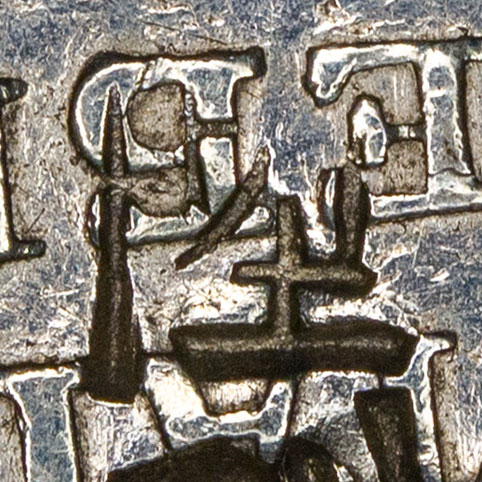 Partial chopmark, tough to decipher without the missing pieces
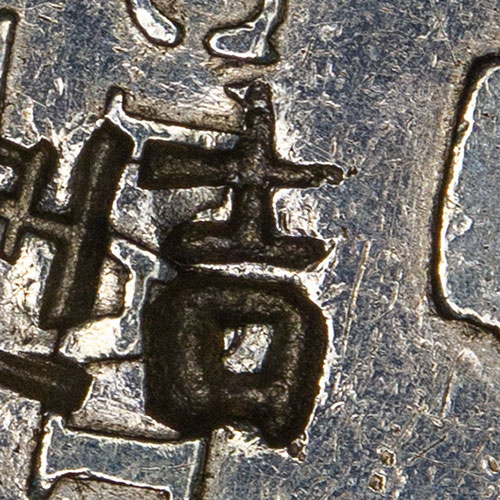 吉 - jí - auspicious, lucky
Provenance:
From Ben Dalgleish, a collector who finds chopmarked coins in the coin markets of Hong Kong, March 2020