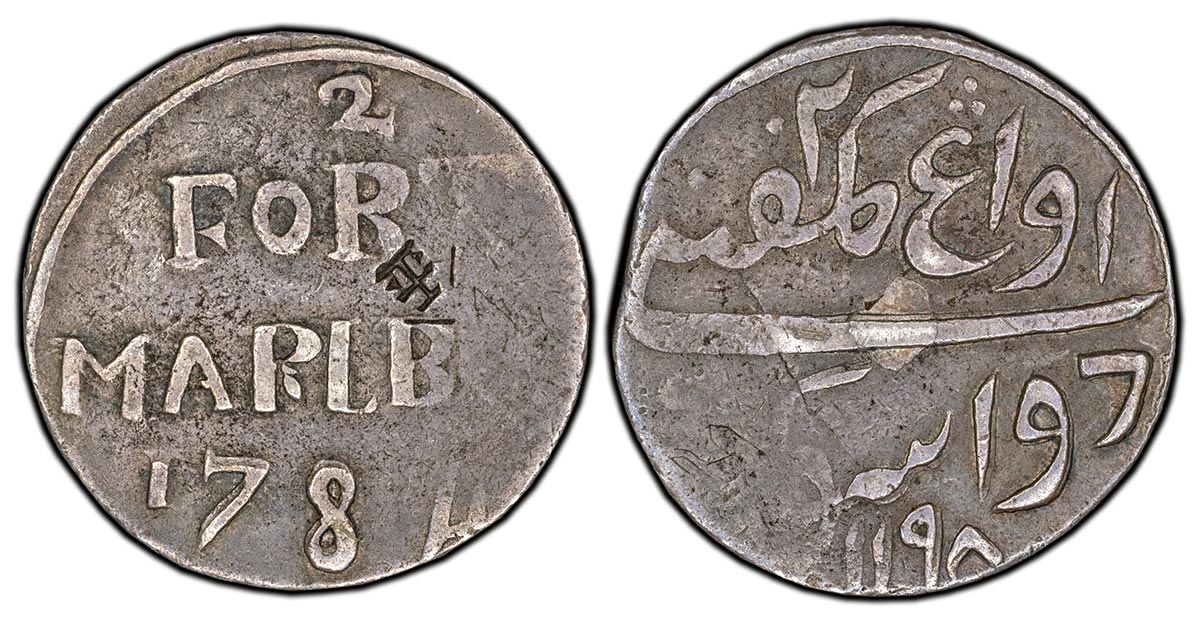
1784 Fort Marlborough 2 Sukus, Sumatra, Indonesia, British East India Company, Calcutta Mint (Ex. Pridmore)
Specifications:
12.69 g silver
Recorded mintage: unknown
Catalog reference: KM 271, Pridmore-2
Details:
This 1784 Fort Marlborough 2 Sukus, struck at the Calcutta Mint for use in Sumatra, is a product of the British East India Company’s (EIC) short-lived experiment in localized colonial
coinage. Fort Marlborough, established by the English in 1685 near modern Bengkulu (Benkoelen), served as Britain’s principal outpost on Sumatra’s west coast and a strategic counterweight
to Dutch power in the region. The fort functioned primarily as a pepper-trading center, but chronic shortages of suitable small change made commerce difficult. To address this, the EIC
authorized the striking of coins denominated in sukus, a locally understood unit of account, rather than attempting to force unfamiliar British denominations into circulation. The
denomination of 2 sukus equaled 4 reales or a half Spanish milled dollar.
Minting of the Fort Marlborough sukus coinage was brief, it was struck for only two years - 1783 and 1784, and production ceased once the experiment proved inefficient and the fort itself declined in importance. Coins were struck in Calcutta, then shipped to Sumatra, reflecting both the absence of local minting infrastructure and the centralized control exercised by the EIC. These issues were never intended for wide imperial circulation; they were strictly regional utility coinage, designed to function in local markets alongside foreign silver and indigenous monetary practices. Their limited mintage and narrow circulation window make surviving examples historically significant, and rare.
The presence of a Chinese chopmark on a 2 Sukus piece is notable and suggests that the coin entered China-facing trade channels despite its local intent. Sumatra had long-standing commercial ties with Chinese merchants, particularly in pepper, tin, and regional trade goods, and Chinese traders were active along the Indonesian archipelago. It is plausible that the coin was accepted as bullion-weight silver rather than fiduciary currency, tested and validated by a Chinese merchant before being reused in settlement or exchange. Such a chopmark indicates that even specialized EIC colonial coinage could be drawn into broader Asian silver networks, where acceptance depended not on issuing authority, but on metal content and merchant trust.
Obverse (Arabic script):
(Uang kompeni) اواڠ كمفني
(Uang kompeni) دوا سوكو
(AH 1198) ١١٩٨
Obverse translation:
Company money
Two suku
AH 1198
Reverse:
2
FORT
MARLBRO
1784
This coin was pictured in The Chopmark News Volume 13, Issue 1 on page 13-12, under the title "Which ChopMarked Coins are Unique?"
Notable chopmarks:
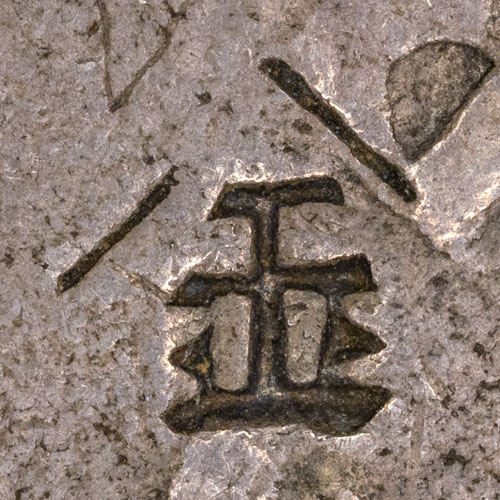 金 - jīn - gold, metal, money
Provenance:
Stephen Album Rare Coins Auction 52, May 16 2025, Lot #1237
Auction Description:
SUMATRA: AR 2 sukus (12.69g), Fort Marlbro, 1784//AH1198, KM-271, Prid-2, British East India Company issue struck at the Calcutta Mint for circulation
in and around Fort Marlborough; some weakness, clear date, one small chopmark on the obverse (possibly Chinese), VF, RR, ex Solar Collection.
The denomination of 2 sukus equaled 4 reales or a half Spanish milled dollar. They were the last silver coins struck for this area. From then on they would rely
on Spanish silver and the copper coins struck locally and at the Soho Mint in England. Fort Marlborough was the main fort in the Bencoolen Presidency and was a
British possession in Sumatra based in the area of what is now Bengkulu City. In 1785 it was downgraded to Bencoolen Residency and placed under the Bengal Presidency.
The British ceded Fort Marlborough and the City of Benculen (Bengkulu) to the Dutch as part of the Anglo-Dutch Treaty of 1824.
Previously from the Heritage Auctions January 2008 New York, NY Signature World Coin Auction #458, Lot #52523
Auction Description:
Fort Marlbro Silver 2 Sukus 1784 - AH1198, KM271, toned VF, one chop mark on the obverse, very scarce and popular type struck for this British settlement in the East Indies.
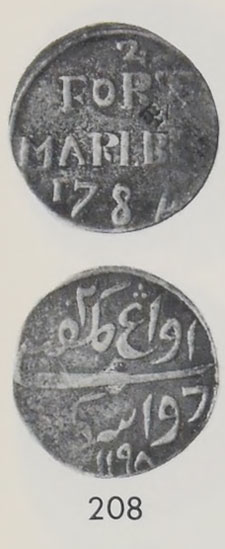
Previously from the Glendining & Co October 18-19, 1982 sale of The Pridmore Collection of the Coins of the British Commonwealth of Nations, Part II (in conjunction with A.H. Baldwin & Sons), Lot #208
Auction Description:
Fort Marlborough, 2-Sukus or Half-Dollar, 1784 (Pr. 2). One edge flat and chop mark on obverse, fine, the rarer date.

Major Fred S. Pridmore was one of the chief experts in British Commonwealth coins, authoring multiple books on the subject. His books were not reproductions from past works, rather they were meticulously researched original material. He exposed a large number of fakes and fantasies and he was one of the first to realise the historical importance of tokens. His numbering system is still used today for many British coins, including British Trade Dollars, and coins from his magnificent collection are prized by the next generation of collectors.